The chair seat is the single highest-stress surface in furniture. It bears body weight continuously, endures friction from clothing and entry/exit motion, absorbs perspiration and body oils, faces accidental spills, and often sits in direct sunlight near windows. No other furniture surface experiences this combination of mechanical, chemical, and environmental stress simultaneously — yet many furniture manufacturers specify seat leather using the same criteria they use for decorative panels and trim that nobody touches.
This article identifies the six material specifications that determine whether a chair seat lasts 3 years or 10+ years — from abrasion resistance and flex fatigue to cleanability and body-fluid resistance — and shows how silicone leather meets every specification through inherent material properties rather than chemical additives that deplete over time.
Request Chair Seat Leather Samples

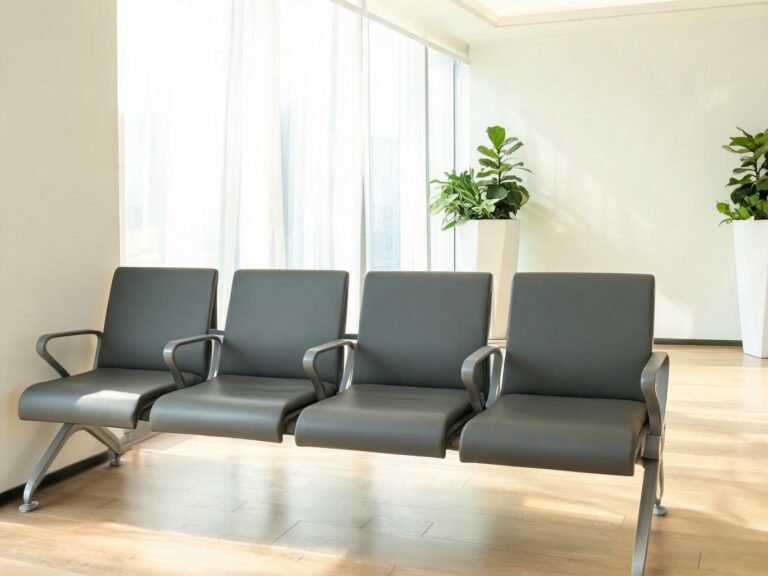
Chair seat leather — the surface where durability, comfort, and cleanability must coexist
Spec 1: Abrasion Resistance — The Daily Wear Threshold
A chair seat experiences more abrasion cycles than any other furniture surface. Every time someone sits down, shifts position, and stands up, the seat surface undergoes friction equivalent to dozens of Martindale test cycles. Over a year of daily use, a single chair seat may accumulate the equivalent of 15,000–25,000 Martindale cycles — before accounting for the additional friction from clothing fabrics, especially denim and textured synthetics that act as abrasive surfaces.
Industry recommendations for residential seating typically specify 25,000–50,000 Martindale cycles. For commercial and hospitality applications, the threshold rises to 50,000–100,000 cycles. PU leather typically achieves 10,000–30,000 cycles — meaning a residential chair seat in PU leather may show visible wear within 12–18 months of daily use. Silicone leather achieves 200,000+ Martindale cycles — 2–4× the highest commercial specification, effectively eliminating abrasion as a failure mode. For more on abrasion testing, see our leather furniture quality specs.
Spec 2: Flex Fatigue — The Sitting-Down Cycle Count
Every time someone sits on a chair, the seat surface flexes — the leather compresses under body weight and returns to shape when they stand. Over years of use, this repeated flexing fatigues the material at the molecular level. In PU leather, the polyurethane coating flexes independently from the fabric backing, eventually causing delamination at the coating-substrate interface. In PVC leather, plasticizer migration under repeated flexing causes the surface to stiffen and crack at flex points.
The relevant test standard is ISO 5402 (flex resistance) or the equivalent Bally flex test. TOPSUN’s silicone leather achieves ≥ 50,000–100,000 flex cycles without cracking or delamination — because the silicone polymer’s cross-linked network flexes cohesively with the fabric backing, maintaining adhesion through millions of sit-down/stand-up cycles. For a deeper look at flex testing, see our technical data sheet.

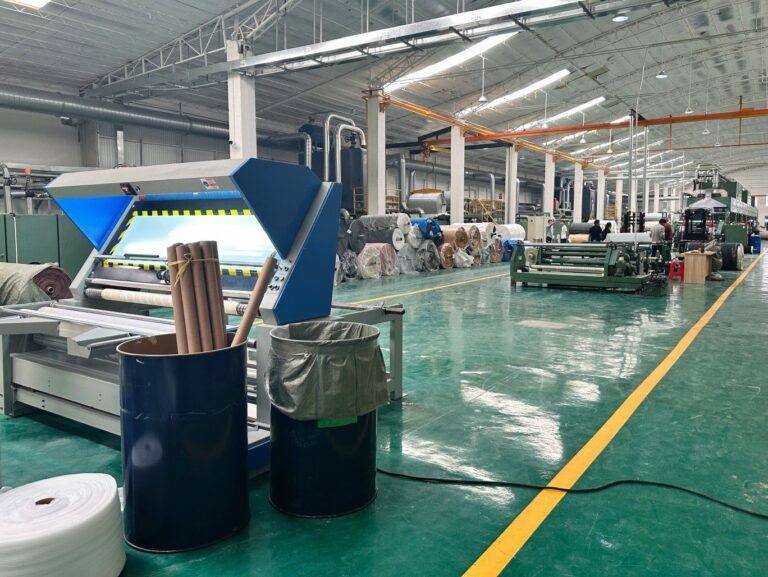
Flex fatigue tester — simulating millions of sit-down cycles to predict real-world chair seat performance
Spec 3: Body Fluid Resistance — Sweat, Oils, and Spills
A chair seat absorbs perspiration, body oils, sunscreen, hand lotion, and occasional food and beverage spills. These substances penetrate porous leather surfaces and degrade the material from within — body oils oxidize polyurethane coatings, sweat’s salt content draws moisture into the substrate, and acidic food residues break down polymer bonds. Over time, the seat surface that was clean and uniform develops dark patches, stiffness, and localized degradation at high-contact zones.
Silicone leather’s non-porous surface prevents fluid penetration entirely. Perspiration, oils, and spills bead on the surface and can be wiped clean with water or disinfectant — the material doesn’t absorb them. This is why silicone leather is specified for healthcare seating, restaurant booth seating, and senior living furniture where fluid exposure is constant. The non-porous property is inherent to the silicone polymer — not a surface treatment that wears off. For related applications, see our dining chair upholstery material guide.
The dark-patch problem: If you’ve ever seen a chair seat with darkened areas on the sitting surface and armrests, that’s body oil absorption — the leather has absorbed sebum and perspiration that oxidized inside the material. No amount of surface cleaning reverses this because the degradation is internal. Silicone leather’s non-porous surface prevents absorption at the molecular level.
Spec 4: Cleanability and Disinfection — Post-Pandemic Reality
Since 2020, chair seat cleanability has evolved from a maintenance convenience to a specification requirement. Commercial furniture in offices, restaurants, healthcare facilities, and public spaces must withstand repeated disinfection with alcohol-based cleaners, quaternary ammonium compounds, and increasingly, bleach solutions. PU leather degrades under repeated alcohol exposure — the solvent attacks the polyurethane coating, causing gloss loss, cracking, and eventual peeling. Genuine leather requires specialized cleaners and conditioning — standard disinfectants strip the topcoat and dry the leather.
Silicone leather is bleach-safe and alcohol-disinfectant compatible. The material shows no surface degradation after repeated cleaning with 70% isopropyl alcohol, 10% bleach solution, or commercial quaternary ammonium disinfectants. This isn’t a coating resistance — it’s the chemical inertness of the silicone polymer itself. For B2B furniture buyers specifying materials for post-pandemic commercial environments, cleanability with standard disinfectants is no longer optional. See our cleaning and maintenance guide for detailed protocols.
Spec 5: Comfort and Ergonomics — The Sitting Experience
Durability without comfort produces a chair that lasts 10 years but is uncomfortable for 10 years. The ideal chair seat leather balances surface softness (for tactile comfort) with structural support (to distribute body weight without bottoming out). This is measured through Shore A hardness — the durometer scale for flexible materials.
TOPSUN’s silicone leather is available in Shore A 40–80, allowing furniture manufacturers to tune the sitting experience by application: 40–50 for plush lounge seating where softness is prioritized, 60–70 for dining and office chairs where structural support matters, 70–80 for bar stools and commercial seating where firmness signals quality. Unlike PU leather, where softness comes from plasticizers that migrate and deplete over time, silicone leather’s softness is an inherent property of the polymer formulation — it doesn’t change over the product’s lifespan. For more on comfort engineering, see our leather upholstery chairs guide and our accent armchair upholstery analysis.
Spec 6: Dimensional Stability — The Sagging Prevention
Chair seats experience sustained body weight — typically 40–100 kg concentrated on 0.1–0.3 square meters of surface area. Over time, leather that lacks dimensional stability stretches, sags, and wrinkles. This is especially problematic for PU leather, where the polyurethane coating and fabric backing have different elastic moduli — the backing stretches while the coating doesn’t, creating wrinkling and eventual delamination at the tension interface.
Silicone leather’s tensile strength (≥ 10–15 N/mm) and elongation at break (≥ 250–300%) provide the dimensional stability that prevents sagging. The silicone coating and fabric backing flex cohesively because the adhesion between them is chemical (the silicone bonds to the fabric during the curing process), not mechanical (glue layer that degrades). For more on structural performance, see our sofa upholstery material guide.
| Spec | PU Leather | Genuine Leather | Silicone Leather |
|---|---|---|---|
| Martindale abrasion | 10–30k cycles | 30–80k cycles | 200k+ cycles |
| Flex resistance | 10–30k cycles | 50k+ cycles | 50–100k cycles |
| Fluid penetration | Yes (porous coating) | Yes (natural pores) | No (non-porous) |
| Bleach/alcohol cleaning | Degrades surface | Strips topcoat | No degradation |
| Shore A hardness | Fixed (formulation) | Variable (natural) | Tunable (40–80) |
| Sagging resistance | Poor (differential stretch) | Good (natural elasticity) | Excellent (cohesive flex) |
| Chair seat lifespan | 3–5 years | 10–15 years | 10+ years |
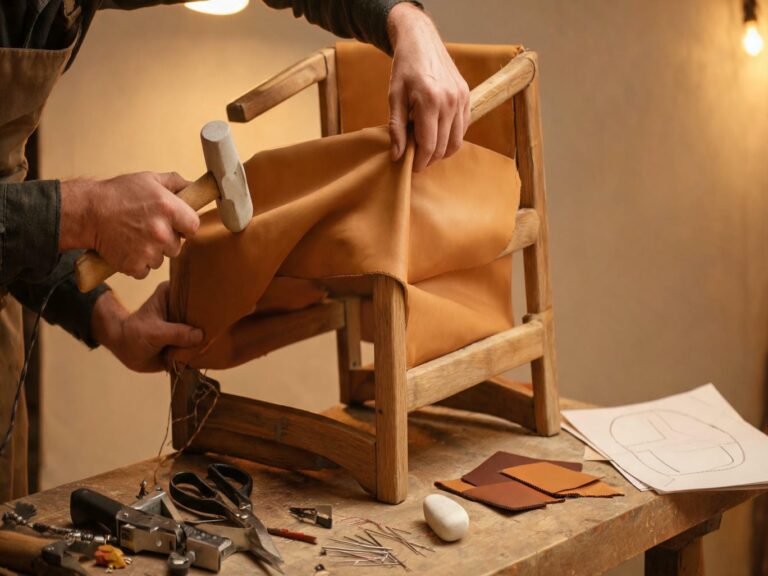
Office chair silicone leather — where all six chair seat specs converge
FAQ: Leather for Chair Seat
What is the best leather for chair seats?
The best leather for chair seats balances abrasion resistance, flex fatigue resistance, cleanability, comfort, and dimensional stability. Full-grain genuine leather offers excellent comfort and durability (10–15 years) but requires conditioning and is vulnerable to fluid absorption. Silicone leather offers superior abrasion (200,000+ Martindale), non-porous fluid resistance, bleach-safe cleanability, tunable comfort (Shore A 40–80), and 10+ year lifespan without maintenance — making it the best specification for commercial and high-use residential chair seats.
What thickness of leather is best for chair seats?
For genuine leather, 1.2–1.8mm is standard for chair seats — thick enough to resist tearing at tension points but thin enough to conform to seat contours. For silicone leather, 0.8–1.5mm is typical — the material’s higher tensile strength (≥ 10–15 N/mm) means less thickness is needed for equivalent structural performance. Thicker isn’t always better: a 2.0mm silicone leather is appropriate for commercial bar stools and public seating where maximum rigidity is desired, while 0.8mm suits plush lounge seating where softness matters. See our Classic Collection for thickness options from 0.8–2.0mm.
Specify for the Surface That Bears Everything
A chair seat that fails in 3 years costs more than a chair seat that lasts 10+ years — when you factor in reupholstery labor, downtime, and brand damage from visible degradation. The six specifications in this article — abrasion, flex, fluid resistance, cleanability, comfort, and dimensional stability — are the minimum procurement criteria for any chair seat material. Specify each one with test data, not marketing claims. Silicone leather is the material that passes all six through inherent polymer properties, without additives that deplete, coatings that peel, or maintenance that buyers eventually skip. For furniture manufacturers building chairs that earn their warranty period, the material specification is the product specification. For more on furniture applications, see our furniture and sofa applications page and our furniture leather TCO analysis.
Get Chair Seat Material Samples
About TOPSUN
TOPSUN manufactures silicone leather that meets all six chair seat specifications — 200,000+ Martindale abrasion, 50,000–100,000 flex cycles, non-porous fluid resistance, bleach-safe cleanability, tunable Shore A 40–80 comfort, and cohesive flex dimensional stability — for furniture manufacturers producing residential, commercial, and hospitality seating that must last a decade without maintenance.
200,000+ Martindale · 50–100k flex cycles · Non-porous · Bleach-safe · Shore A 40–80 · 0.8–2.0mm · 10+ year lifespan · ISO 10993 · FDA · EN 71 toy-safe · 500,000+ m monthly capacity