When GB/T 43287-2024 took effect on January 1, 2025, it halved the allowable VOC ceiling for automotive interior materials — from ≤50 mg/m³ down to ≤28 mg/m³. If you are still specifying leather for car interiors using 2023 compliance data, your next OEM audit could be an unpleasant surprise. The truth is, not every synthetic leather on the market can clear that bar anymore. Here is a straight comparison of four interior leather types against the standards that actually matter in 2026, and why one material is pulling ahead while another is quietly being dropped from OEM BOMs.
View Automotive Interior Solutions

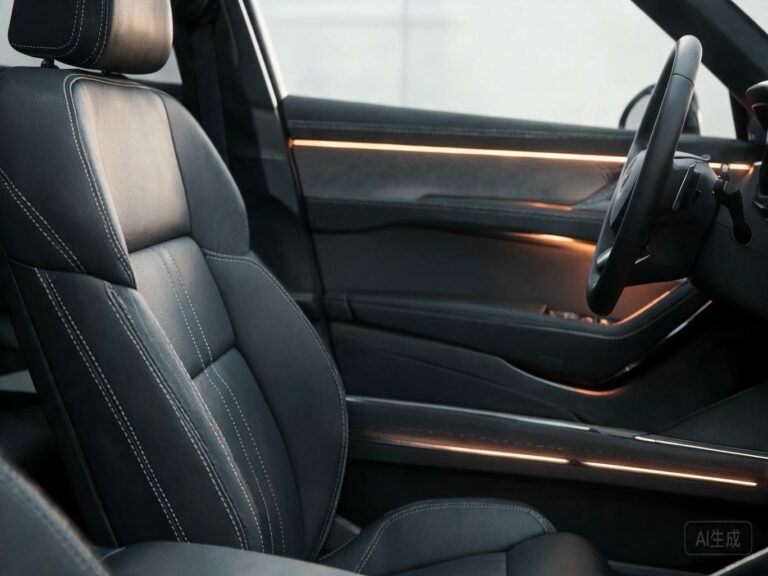
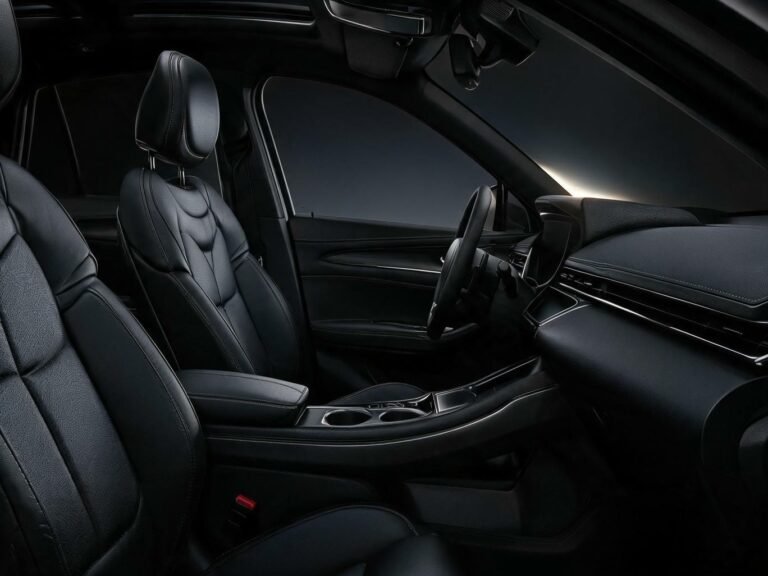
EV cabin interior featuring advanced synthetic leather upholstery
Why 2026 VOC Standards Reshape Leather for Car Interiors
Two regulatory shifts happened almost simultaneously. China’s GB/T 43287-2024 standard, effective January 2025, tightened formaldehyde limits from 0.12 mg/m²·h to 0.06 mg/m²·h. In the US, EPA Tier 3 VOC restrictions took effect in January 2026, capping volatile organic compounds in leather coatings at ≤50 µg/m³. These are not aspirational targets — they are pass/fail gates for material homologation.
The problem is that conventional PU leather relies on solvent-based polyurethane topcoats. Those solvents — DMF, MEK, toluene — are exactly what the new standards restrict. In our testing lab, we have seen PU samples that passed VOC limits in 2023 now fail the same test under the tightened thresholds. EV interior leather specifications are particularly sensitive because sealed cabins with recirculating air concentrate whatever the material off-gases.
Silicone leather sidesteps this entirely. The Si-O backbone is inherently solvent-free — no DMF, no plasticizers, no phthalate migration. VDA 277 total carbon emission results for silicone formulations can reach ≤15 µgC/g, well inside the OEM tolerance band of ≤30 µgC/g. That is the kind of margin that lets procurement teams sleep through an audit.

Color fastness testing for automotive-grade interior leather
Abrasion and Flex: Which Interior Leather Survives 100K+ Martindale Cycles
VOC compliance gets you through homologation. Durability gets you through warranty claims. The numbers below come from independent Martindale abrasion testing across four common leather types used in car interiors vs PVC vs PU applications:
| Property | Genuine Leather | PU Leather | PVC Leather | Silicone Leather |
|---|---|---|---|---|
| Martindale cycles | 35,000–50,000 | 28,000–42,000 | 12,000–18,000 | 100,000+ |
| VDA 277 (µgC/g) | Varies | 30–60 | 40–80 | ≤15 |
| FMVSS 302 burn rate | Pass (treated) | Borderline | Pass (additives) | Pass (inherent) |
| Flex at -40°C | Cracks | Cracks | Shatters | Flexible |
The gap is not marginal. PVC leather fails at 12,000–18,000 cycles — that is a driver’s seat after 18 months of daily use. PU does better at 28,000–42,000, but still shows visible wear within three years. Silicone leather clears 100,000+ Martindale cycles because the silicone layer does not degrade through friction the way polymer chains in PU and PVC do. In our production runs for automotive OEM clients, we routinely verify this threshold before shipment.

Direct flame test demonstrating inherent fire resistance of silicone leather
Flame Retardancy and Thermal Stability in EV Cabins
FMVSS 302 requires passenger-vehicle interior materials to self-extinguish or burn at no more than 102 mm/min. Both PU and PVC can meet this — but only by adding halogenated flame retardants, which are themselves under regulatory pressure. EU Regulation 2023/1457 restricts certain flame retardants in articles placed on the European market, and several OEMs have begun phasing them out voluntarily.
Silicone leather achieves FMVSS 302 compliance inherently. The Si-O bond is thermally stable up to 250°C and does not support combustion without an external flame source. No additives, no halogens, no chemical loading that could fail the next REACH amendment. For automotive silicone leather with VDA 277 and flame-retardant certification, this is a structural advantage — not a coating that wears off.
Key takeaway: Silicone leather passes FMVSS 302 without chemical additives, while PU and PVC depend on flame retardants that EU REACH is progressively restricting. Specifying silicone now avoids a forced material change later.
Watch how TOPSUN silicone leather meets automotive certification standards — from VDA 277 to FMVSS 302
How Leather for Car Interiors Scores on the 2026 Sustainability Checklist
Every gram matters in an EV. Silicone leather can be produced as thin as 0.23mm while maintaining structural integrity — roughly half the weight of a comparable PU specification. Across a full vehicle interior (seats, door panels, dashboard, headrests), that translates to measurable range improvement. Some OEMs we work with now list material weight as a line item in their sustainability scorecards, not just a footnote.
Beyond weight, the 2026 procurement conversation is about end-of-life. EU automakers face ESG commitments that require demonstrable recyclability and traceability. Genuine leather has a complex tanning footprint. PVC is not recyclable in practical terms. PU biodegrades slowly and releases microplastics. Eco-friendly silicone leather is recyclable through mechanical reprocessing, contains no plasticizers, and carries no PFAS — which brings it into alignment with the EPA’s evolving chemical management framework.
If you are building a material shortlist for automotive applications and scoring on lifecycle emissions, recyclability, and cabin health, the best leather for car interiors in 2026 is not the one that looks best on a swatch card. It is the one that will still be compliant when your vehicle is three years into its warranty.

Automotive-grade silicone leather rolls in custom OEM colors on the production floor
Frequently Asked Questions
Does silicone leather meet FMVSS 302 for vehicle interiors?
Yes. Silicone leather passes FMVSS 302 inherently — the Si-O backbone is thermally stable and does not sustain combustion without an external flame. No halogenated flame retardants are added. This is verified through direct burn-rate testing in our lab before each automotive production batch ships.
How does the total cost of silicone leather compare to PU per vehicle?
Silicone leather has a higher upfront cost per meter — typically $12–25 versus $5–12 for PU. However, the total cost of ownership over a 5-year warranty period favors silicone because it eliminates reupholstering labor from premature wear, avoids VOC-related material rejection, and does not require flame-retardant additive reformulation when regulations tighten. For high-volume programs, the gap narrows further through optimized production yields.
The Material Decision That Stays on the BOM
Choosing leather for car interiors in 2026 is not just about feel or color matching. It is about passing VOC thresholds that just doubled in stringency, surviving 100,000+ abrasion cycles without warranty claims, meeting flame standards without additives that may be banned next year, and keeping the cabin light enough for acceptable EV range. Silicone leather clears all four gates. PU and PVC each fail at least one. That is why OEMs are quietly revising their BOMs — and why the material you specify today should be the one that stays on the approved list tomorrow.
Request Automotive Interior Samples
About TOPSUN
TOPSUN manufactures silicone leather for car interiors engineered to meet 2026 OEM cabin health and flame-retardancy standards across EV and ICE platforms. The company supplies Tier-1 automotive programs with ultra-thin, low-VOC, inherently flame-resistant interior materials.
Production capabilities include 0.23mm ultra-thin lamination, VDA 277-compliant formulations at ≤15 µgC/g, FMVSS 302-rated flame-retardant grades, and full Pantone custom color matching for OEM-specific interiors.