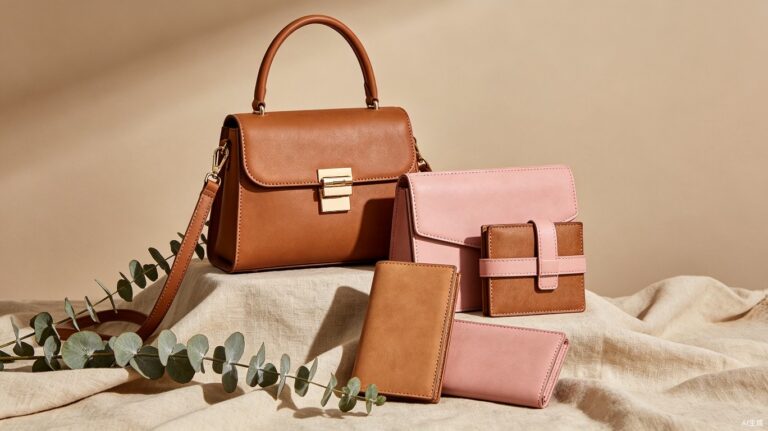
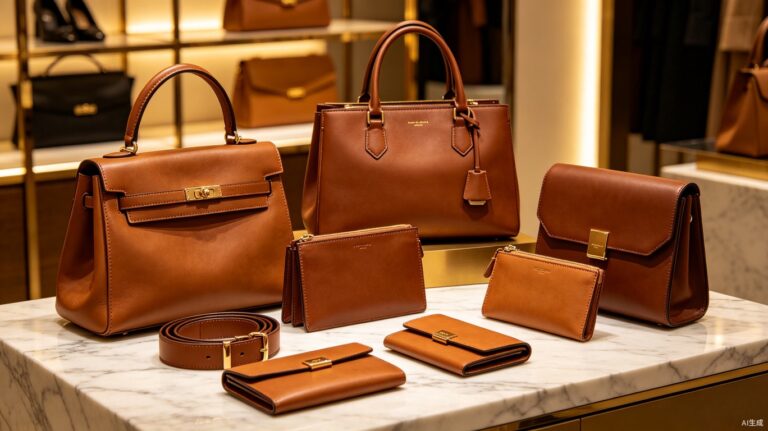
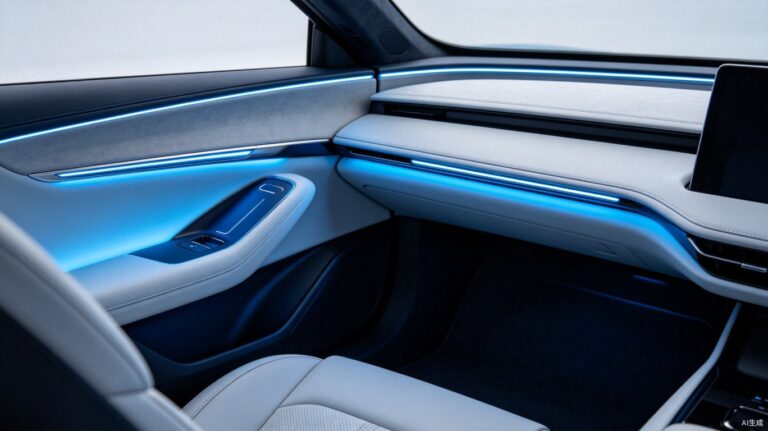
A creative director presents a mood board: crocodile grain with a matte finish, a rose-petal texture with a champagne metallic sheen, and a geometric deboss pattern carrying the brand logo. The factory quotes 12 weeks for custom plate engraving, adds a 30% surcharge for “non-standard textures,” and warns that the metallic finish will rub off within 18 months on PU. The gap between the design vision and the manufacturing reality is where most leather product innovation dies. As someone who has sat on both sides of this table — sketching concepts at 2am and arguing with production engineers at 9am — I can tell you that 2026 is the year this gap closes. New embossing technologies, silicone-based substrates, and rapid custom tooling are making textures that were impossible two years ago now standard. Here are the five leather design trends that are reshaping how premium products look, feel, and perform.
The 2026 Leather Design Landscape
Leather design in 2026 is no longer about choosing from a supplier’s existing texture catalog. It’s about engineering surfaces — combining embossing depth, finish chemistry, color theory, and material science to create textures that are both visually distinctive and durably permanent. The traditional approach (select a grain, pick a color, accept the factory’s standard finish) is being replaced by a design-led process where the creative director specifies the surface down to the micron level, and the manufacturer produces custom embossing plates or rollers to match.

Macro texture closeup — lychee grain embossing at high magnification, showing the depth and definition that 2026 design trends demand
The critical enabler of this shift is silicone leather. Unlike PU and PVC, where embossed textures degrade as plasticizers migrate and the surface softens, silicone leather retains embossing definition permanently — the material doesn’t plasticize, migrate, or soften over time. An embossed grain on silicone leather stays sharp after 200,000 Martindale abrasion cycles. The same grain on PVC loses peak definition within 50,000 cycles. For designers investing in custom textures, that’s the difference between a surface that looks designed for 10 years and one that looks generic after 2. For more on the custom leather texture design process, our production guide covers the full workflow.
Trend 1: Deep 3D Embossing (Biological Replication)
Conventional embossing creates shallow, hair-thin grain impressions — essentially stamped patterns that look flat under angled light. The 2026 trend is deep 3D embossing that replicates biological surface structures with dimensional accuracy. Crocodile scales, python patterns, and ostrich quill follicles are embossed with depth sufficient to cast shadows, creating a tactile and visual experience that reads as “real” rather than “printed.”
The technical requirement: hydraulic embossing at 120-180°C and 50-150 bar pressure, using engraved rollers or plates with micro-detail precision. The material must accept deep embossing without tearing, thinning, or losing structural integrity — a challenge that PU and PVC struggle with because their softening point is close to the embossing temperature. Silicone leather’s thermal stability (-40°C to 250°C) means it accepts deep embossing at higher temperatures without surface distortion, producing sharper, deeper, and more durable patterns.
Trend 2: Metallic and Pearlescent Finishes

2026 bespoke leather design — custom textures, metallic finishes, and brand-specific patterns driving product differentiation
Metallic finishes — gold, silver, champagne, gunmetal — and pearlescent effects are moving from fashion accessories into automotive interiors, furniture accents, and consumer electronics. The challenge with traditional PU and PVC is that metallic coatings sit on the surface as a topical layer. Friction, UV exposure, and chemical cleaning all wear the metallic layer away, leaving patchy, uneven surfaces that look damaged within 12-24 months.
Silicone leather accepts metallic and pearlescent finishes differently. Because silicone is a non-porous, chemically stable surface, metallic pigments can be integrated into the coating layer rather than applied on top. The result: metallic finishes that don’t rub off, fade, or transfer. For brands targeting the designer collection tier where visual differentiation drives pricing, this permanence is what makes the finish worth specifying.
Trend 3: Soft-Structure Draping
The 2026 trend toward soft structure — leather that holds its shape when placed but drapes naturally when carried — is driving demand for materials with engineered flexibility. This isn’t just about thinness. It’s about the relationship between coating flexibility, substrate structure, and overall hand feel. Soft-structure designs need materials that are pliable enough to drape but stable enough to maintain structural integrity under load.
Silicone leather, particularly in the 0.4-0.8mm range, delivers a drape quality that PU can only approximate with plasticizer loading — which inevitably degrades. The silicone coating remains flexible without any additive, meaning the hand feel on day one matches the hand feel on year ten. For furniture and accessory designers creating soft-structure products, this consistency eliminates the “stiffening” that PU products develop as plasticizers migrate out.
Trend 4: Bespoke Brand Patterns
Custom embossing plates engraved with brand-specific patterns — logos, geometric designs, heritage motifs — are becoming the standard for premium product lines. Rather than accepting the factory’s stock grain (cowhide, pigskin, lychee), brands are commissioning proprietary textures that become part of their visual identity. The texture itself becomes a brand asset, recognizable at touch as well as sight.

Multi-color leather fan display — the range of texture and finish options available for bespoke brand pattern development
TOPSUN produces custom embossing rollers in 7-10 days from a design file, physical sample, or reference photo. The process: scan or photograph the reference surface at 600 DPI, engrave the pattern onto a metal roller, calibrate temperature and pressure for the specific material formulation, and run a production sample for sign-off. With Pantone and RAL color matching at Delta E ≤1.0 accuracy, the result is a fully bespoke surface — texture, color, and finish — that no competitor can replicate without access to the same custom tooling.
Trend 5: Matte “Dead-Flat” Finishes
The move away from glossy finishes toward ultra-matte “dead-flat” surfaces is driven by two factors: a consumer aesthetic shift toward understated luxury, and a practical benefit — matte surfaces hide fingerprints, dust, and minor scratches better than glossy ones. The challenge: achieving a true dead-flat finish on PU requires matting agents that reduce surface durability. The matte effect often wears unevenly, creating patchy gloss patterns within 6-12 months of handling.
Silicone leather achieves dead-flat finishes naturally through its surface chemistry, without matting additives that compromise durability. The matte finish is integral to the silicone coating, not a topical treatment. It won’t rub off, wear unevenly, or develop gloss patches. For products that are handled daily — phone cases, wallets, pouches, automotive trim — this is the difference between a surface that looks designed on day 365 and one that looks worn.
Texture Retention: PU/PVC vs Silicone Leather
| Design Element | PU / PVC Retention | Silicone Retention | Trend Relevance | Brand Impact |
|---|---|---|---|---|
| Deep 3D Embossing | Flattens within 50K cycles | Sharp after 200K+ cycles | Trend 1 — biological replication | Texture looks premium for 10+ yrs |
| Metallic Finish | Topical — rubs off in 12-24 mo | Integrated — permanent | Trend 2 — metallic/pearlescent | No patchy wear, no re-finishing |
| Soft Drape | Stiffens as plasticizers migrate | Consistent hand feel for 10+ yrs | Trend 3 — soft-structure | Product feels premium throughout lifecycle |
| Bespoke Pattern | Definition degrades with surface | Pattern stays crisp permanently | Trend 4 — brand-specific texture | Brand identity remains tactile |
| Matte Finish | Wears unevenly, gloss patches | Integral — no degradation | Trend 5 — dead-flat matte | Consistent finish, no touch-up |
A luxury automotive brand commissioned a custom geometric deboss pattern for their EV door panel trim. The initial prototype ran on PU leather — within 6 months of testing, the pattern had flattened at high-contact areas and the matte finish had developed visible gloss patches. The same pattern on TOPSUN silicone leather showed zero definition loss after 200,000 Martindale cycles and the matte finish remained dead-flat throughout. The brand adopted silicone leather for the full production run, citing “design permanence” as the deciding factor over the 40% material cost difference.
From Design to Production: The Customization Workflow
TOPSUN’s leather design customization follows a structured four-gate process. Each gate requires sign-off before the next begins — ensuring the design vision reaches production without compromise:
Gate 1 — Design Input: The client sends a design drawing, physical sample, or reference photo. TOPSUN scans or photographs the surface at 600 DPI to capture micro-detail. If the client wants a trend-research look, the team references current runway and automotive releases.
Gate 2 — Pattern Engineering: The scanned data is converted into a tooling specification — engraving depth, peak-to-valley ratio, repeat pattern geometry. A custom embossing roller or plate is produced in 7-10 days.
Gate 3 — Sample Production: A production sample is run with the custom tooling at the specified material thickness, color, and finish. The sample goes to the client for tactile and visual sign-off.
Gate 4 — Production Run: Upon sign-off, the full production run begins. Color consistency is maintained at Delta E ≤1.0 across batches. Lead time: 7-15 days. MOQ: 500 meters.
For more on the full workflow, see our custom leather texture design guide and color customization protocols.
Pattern customization overview — from design concept to production-ready custom texture on silicone leather
How to Brief Your Leather Design
1. Provide a reference: A sketch, a physical swatch, a photo, or even a mood board. 600 DPI scans capture the most detail, but even a smartphone photo of a texture you want to replicate is a valid starting point.
2. Specify the tactile goal: “Smooth and flat,” “textured with defined peaks,” “soft suede-like,” or “deep 3D with shadow-casting depth.” Tactile language is more useful than technical specifications at the design stage.
3. Define the color: Pantone or RAL reference. For metallic or pearlescent finishes, provide a physical sample of the target sheen level.
4. State the finish: Matte (dead-flat), glossy, two-tone, or metallic. If uncertain, request finish samples on the same texture at different gloss levels.
5. Confirm the application: Furniture, automotive, fashion, electronics, or marine. The application determines the required thickness, backing fabric, and formulation — all of which affect how the texture performs in end use. For full customization options, our custom manufacturing page provides the complete specification form.
Frequently Asked Questions
Can silicone leather achieve the same textures as genuine leather?
Yes. TOPSUN produces 100+ standard textures including cowhide grain, pigskin, sheepskin, lychee, and nappa patterns on silicone leather. The embossing process uses the same hydraulic pressing and engraved roller technology as genuine leather finishing, producing textures that are visually and tactilely indistinguishable from the animal hide originals. The key difference: on silicone leather, the texture is permanent — it won’t flatten, soften, or degrade over time, whereas genuine leather textures can compress and smooth with wear. Custom textures (brand-specific patterns, geometric designs, exotic animal replications) can be produced from custom-engraved rollers in 7-10 days.
How long does custom leather texture development take?
From design input to production-ready sample: 7-10 days for custom embossing roller production, plus 3-5 days for sample production and quality verification. The full timeline from brief to production sample is typically 10-15 days. Once the sample is approved, production runs of 500+ meters complete in 7-15 days depending on volume. This is significantly faster than the industry standard of 4-12 weeks for custom texture development on genuine leather, because silicone leather’s thermal stability allows higher-temperature, higher-pressure embossing without the risk of surface damage that limits processing speed on PU, PVC, or genuine leather.
Design That Lasts as Long as the Product
The five leather design trends of 2026 — deep 3D embossing, metallic finishes, soft-structure draping, bespoke patterns, and dead-flat matte — share one requirement: the material must hold the design permanently. PU and PVC can accept these textures and finishes, but they can’t keep them. Plasticizer migration softens embossing, topical metallic layers rub off, and matte additives wear unevenly. Silicone leather solves this at the molecular level — no plasticizers to migrate, no topical layers to wear, no additives that compromise the surface. For creative directors and product designers who are investing in distinctive textures as brand assets, the question isn’t just “can the factory produce this design?” but “will this design still look intentional in year five?” With silicone leather, the answer is yes. Design the surface. Specify the material. Make it permanent.
Start Your Custom Design Project
About TOPSUN
TOPSUN manufactures silicone leather for B2B creative directors and industrial designers who need custom textures, metallic finishes, and bespoke patterns that remain visually permanent — not textures that degrade into generic surfaces within 2 years.
100+ standard textures | Custom embossing rollers in 7-10 days | Metallic and pearlescent finishes | Dead-flat matte — integral, not topical | Pantone/RAL matching at Delta E ≤1.0 | 600 DPI design input scanning | 0.23-2.0mm thickness range | 500m MOQ, 7-15 day production | 10+ year texture retention verified at 200,000+ Martindale cycles