The eco friendly fashion movement faces a material problem. Brands committed to sustainability are specifying “vegan leather” — but 90% of that material is PU-coated polyester with DMF solvent residues, produced from petroleum, lasting 3-5 years before hydrolysis-driven failure. The EU Green Claims Directive enforcement beginning September 2026 will penalize unsubstantiated eco claims at up to 4% of annual EU turnover. Meanwhile, the global vegan leather market reached $48.97 billion in 2025, and fashion accounts for 39.9% of synthetic leather demand. The gap between eco friendly fashion marketing and material reality has never been wider. This article compares the four leather materials used in eco fashion — PU, PVC, plant-based, and silicone — by the only metric that matters: verified sustainability ROI over a 10-year horizon.
Request Fashion Material Swatch Kit
Eco Friendly Fashion: The Material Challenge
Eco friendly fashion brands face a dual mandate: deliver materials that are genuinely sustainable (verified by lifecycle data, not marketing claims) and commercially viable (durable enough to justify premium pricing, compliant enough to pass regulatory scrutiny). Most leather alternatives satisfy neither requirement. PU leather carries DMF residues above REACH thresholds. PVC leather contains 30-40% phthalate plasticizers. Plant-based leathers rely on PU binders and offer only 2-5 years of service life. The question for fashion brands is not whether to move away from animal leather — the market has already decided that — but which alternative material delivers both the sustainability narrative and the performance data that eco fashion demands.
The material specification process for eco fashion must evaluate four dimensions simultaneously: environmental footprint (carbon, water, VOC), regulatory compliance (REACH, Prop 65, ECGT), performance durability (Martindale, flex, UV), and total cost of ownership over the product’s expected lifecycle. Below is the data that drives each dimension.
4 Leather Materials for Eco Fashion: ROI Showdown
| Material | CO2/m2 | Martindale | Service Life | Compliance | 10-Yr Cost/m |
|---|---|---|---|---|---|
| PU Leather | 4-8 kg | 20K-50K | 3-5 yrs | DMF risk | $30-60 |
| PVC Leather | ~2 kg | 100K-150K | 2-5 yrs | Phthalate risk | $20-50 |
| Plant-Based | 6-10 kg | <20K | 1-3 yrs | PU binder risk | $80-200 |
| Silicone Leather | 3-5 kg | 200K+ | 10+ yrs | Full REACH+FDA | $20-30 |
The 10-year cost calculation tells the real story. PU leather at $10-18/meter seems cheaper than silicone at $20-30/meter — but PU requires 2-3 replacement cycles over 10 years, tripling the material cost and adding labor, logistics, and warranty overhead. Plant-based leather at $8-20/meter sounds sustainable but lasts only 1-3 years and carries PU binder compliance risk, making it the most expensive option per year of service. Silicone leather’s 10+ year lifespan and zero compliance overhead make it the lowest 10-year total cost.

Lychee texture leather closeup — surface aesthetics matter in fashion, but underlying chemistry determines sustainability claims.
Why PU and PVC Fail the Fashion Sustainability Test
PU leather fails the eco friendly fashion test on three fronts. First, the DMF solvent used in conventional PU production leaves residual concentrations of 0.3-1.0% — above the REACH Annex XVII Entry 76 threshold of 0.3%. Under the ECGT Directive effective September 2026, any environmental claim about PU leather requires verified lifecycle evidence that accounts for this chemical content. Second, PU hydrolyzes within 3-5 years, meaning fashion products made with PU leather become waste — the opposite of sustainability. Third, the carbon footprint of PU leather (4-8 kg CO2/m2) exceeds that of silicone leather (3-5 kg CO2/m2), undermining any “lower carbon” claim.
PVC leather fails even more dramatically. The 30-40% phthalate plasticizer content puts PVC leather in direct conflict with California Prop 65, which lists six phthalates commonly used in PVC production. The Textile Exchange and major fashion sustainability initiatives have flagged PVC as a material to phase out. Under ECGT, calling PVC leather “eco friendly” without disclosing its phthalate content and chlorine chemistry would constitute a banned generic claim.
Plant-based leathers — cactus (Desserto), apple (AppleSkin), pineapple (Pinatex), mycelium (Mylo) — offer a compelling sustainability narrative but face commercial reality checks. All four still use PU binders for structural integrity, carrying the same DMF and VOC risks as conventional synthetic leather. Service life ranges from 1-5 years, with Martindale results below 20K cycles. A Cologne court banned the term “apple leather” in July 2025 as misleading. For B2B fashion brands, plant-based materials work in limited-edition retail segments but cannot scale to meet production volumes or durability requirements.

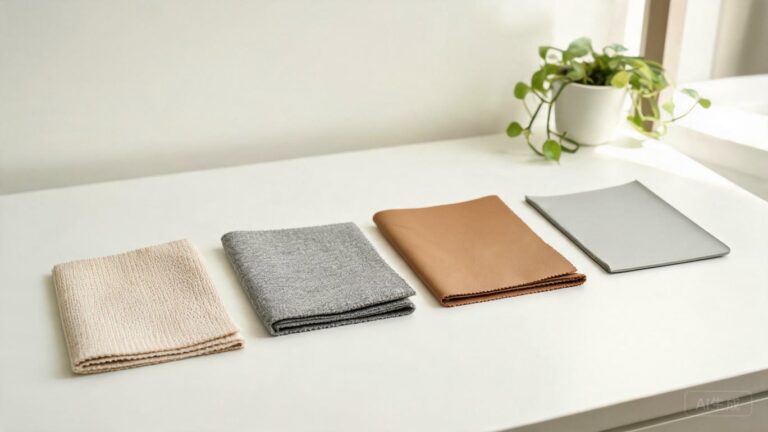
Color and texture sample rack — eco fashion requires both sustainability credentials and aesthetic versatility across color ranges.
Silicone Leather: The Eco Fashion Material That Lasts
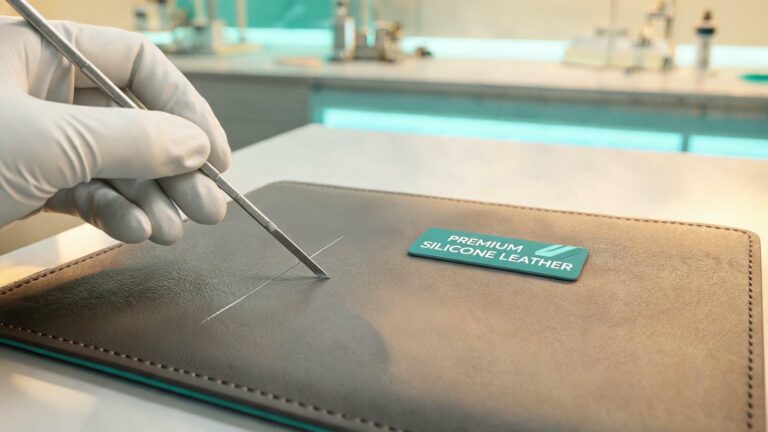
Silicone leather is the only material in the eco fashion landscape that delivers verified sustainability without compromising on performance or compliance. The silicone resin backbone (Si-O bonds) is inherently resistant to hydrolysis, UV degradation, and thermal breakdown — the three failure modes that end PU and PVC service life. The solvent-free dry coating process produces zero VOC emissions, zero DMF, and zero phthalates. The material is 100% recyclable and carries REACH, ISO 10993, and FDA certifications that pre-substantiate any environmental claim under ECGT.
For eco fashion brands, this means three things. First, you can make environmental claims that survive regulatory audits — because the certified test data already exists. Second, your products last 10+ years instead of 3-5, which is the most fundamental sustainability metric: a product that lasts three times longer uses one-third the resources per year of service. Third, the material customization options — unlimited Pantone and RAL colors, 100+ textures, metallic and pearlescent finishes — give fashion designers the aesthetic range they need without sustainability trade-offs.
The silicone leather market, valued at $1.48 billion in 2025, is growing at 7.8% CAGR — driven partly by fashion brands moving beyond PU and PVC toward materials with genuine sustainability credentials. According to Global Fashion Agenda, the industry’s shift toward verified sustainable materials is accelerating as ECGT enforcement approaches.
Specification Verdict: Which Material for Your Fashion Line?
After comparing the four materials across environmental footprint, regulatory compliance, performance durability, and 10-year total cost, the specification verdict for eco friendly fashion is clear.
| Fashion Application | Best Material | Why |
|---|---|---|
| Fast fashion (1-2 seasons) | PU Leather | Lowest upfront cost; durability not required |
| Accessories & bags (3-5 yr) | Microfiber PU | Better flex resistance; still hydrolysis risk |
| Premium fashion (5+ yr) | Silicone Leather | 10+ yr life, full compliance, verified eco claims |
| Sustainable narrative pieces | Silicone Leather | ECGT-ready claims, zero hidden chemistry, 100% recyclable |
| Limited edition / storytelling | Plant-Based | Marketing narrative value; not scalable or durable |

Custom texture samples for fashion design — silicone leather offers 100+ embossed patterns with unlimited color matching.
For brands targeting the premium and sustainable fashion segments — where product lifecycles exceed 5 years and environmental claims must survive regulatory scrutiny — silicone leather is the only material that delivers verified eco friendly fashion credentials without performance compromise. The 2026 customization trends show fashion brands increasingly specifying silicone for its combination of aesthetic versatility, compliance readiness, and 10+ year durability. PU and PVC serve the fast-fashion segment where cost dominates and sustainability claims are secondary. Plant-based materials serve storytelling pieces where narrative outweighs performance. For everything in between — the growing market of durable, certified, genuinely eco friendly fashion — silicone leather is the specification that works.
About TOPSUN
TOPSUN manufactures silicone leather for eco friendly fashion brands requiring verified sustainability credentials and premium aesthetic performance. Our solvent-free dry coating process delivers zero-VOC, zero-DMF, zero-phthalate materials with 200K+ Martindale cycles, unlimited Pantone color matching, 100+ textures, and full REACH, ISO 10993, and FDA certification — enabling fashion brands to make ECGT-ready environmental claims backed by certified test data.