A furniture brand in Europe sourced PU leather from a factory that passed ISO 9001 and delivered clean samples. Eighteen months later, 40% of their sectional sofas showed peeling cushions. The leather company had switched coating formulations mid-contract to cut costs — same appearance, different chemistry. The recall cost $250,000 in replacements, not counting the damaged retail relationships. The root cause wasn’t bad luck. It was a procurement process that validated the first invoice and never audited what came after.
The $250K Mistake: When Samples Pass But Production Fails
The scenario above isn’t hypothetical — it’s a pattern we’ve seen across multiple B2B engagements. A leather company produces flawless golden samples for approval. The buyer signs the contract based on those samples. Then production batches arrive with different coating weights, different plasticizer levels, or a quietly substituted backing fabric. Without mid-contract material verification, the buyer discovers the problem only when end-customers start returning products.

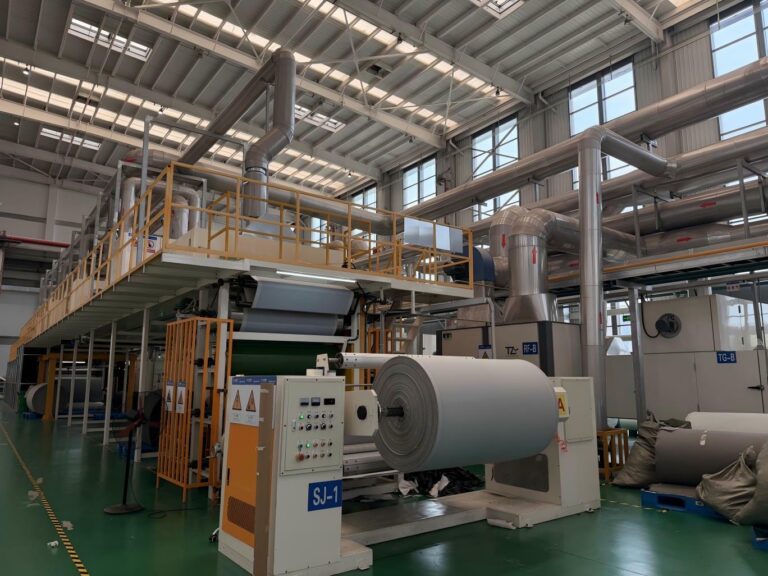
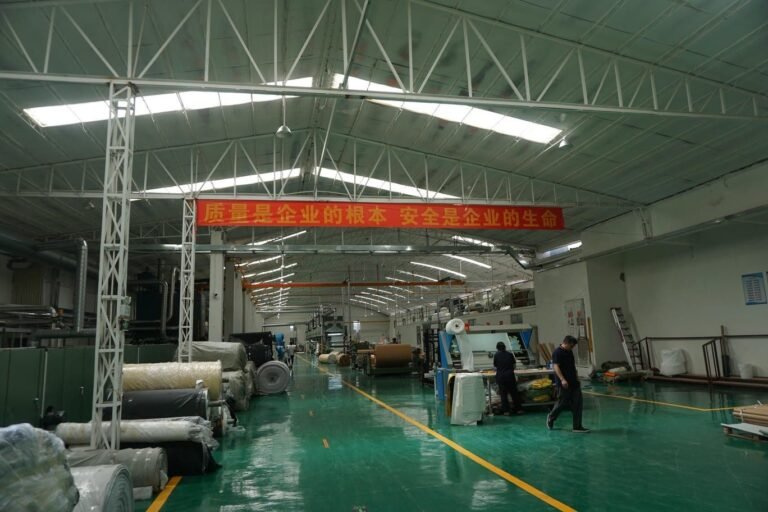
A visible quality and safety culture on the production floor signals a leather company that maintains standards beyond the sample stage.
The fix isn’t more frequent factory visits. It’s structural: embed material verification into the contract itself. Specify that every production batch must include a Martindale test report from a certified lab, and that any formulation change requires written buyer approval before shipment. A factory production audit should verify not just the equipment, but the change-control process.
7 Red Flags in a Leather Company’s Quality Documentation
Most B2B buyers request certifications and move on when the PDFs arrive. But documents tell different stories depending on how closely you read them. Here are seven warning signs we check during every supplier evaluation:
| Red Flag | What It Signals |
|---|---|
| LWG cert forwarded as PDF only | Cannot be verified in the official member directory at leatherworkinggroup.com |
| ISO 9001 cert over 3 years old | Recertification may have lapsed; request current surveillance audit report |
| No AQL sampling plan in QC docs | 100% inspection claim is unverifiable; AQL 2.5 is industry minimum |
| Martindale report from unnamed lab | Self-testing without third-party verification; insist on SGS or Intertek |
| SDS identical across product lines | Template copy-paste; real formulations differ between collections |
| No change-control clause in contract | Supplier can switch formulations mid-contract without notification |
| MOQ below industry floor | Too-good pricing often means compromised substrate or coating weight |
In our quality control process, every batch undergoes AQL 2.5 sampling with documented defect classification, and our silicone leather production includes third-party Martindale verification through SGS-CSTC. This isn’t because we enjoy paperwork — it’s because the $250K scenario above is preventable with documentation that actually means something.
Production Capacity vs. Capability: Don’t Confuse Them
A leather company listing “500,000m monthly capacity” on their website tells you volume. It doesn’t tell you whether they can produce your specific embossing pattern, your exact color match, or your required coating thickness within tolerance. Capacity is the ceiling. Capability is whether your order fits under it.

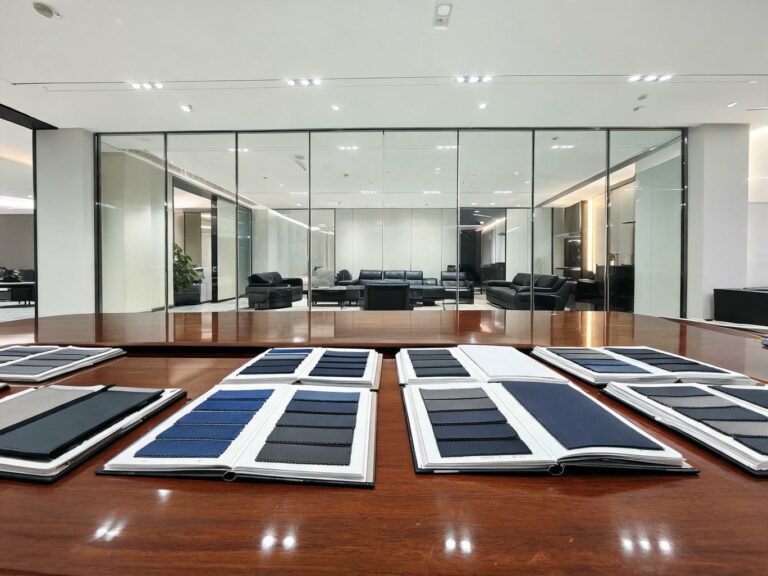
In-house testing laboratories with calibrated equipment indicate a leather company that verifies quality before shipping, not after complaints.
During supplier evaluation, ask three capability questions that capacity metrics can’t answer: Can you produce custom embossing rollers within 7–10 days? Can you match a Pantone shade to Delta E ≤ 1.0 across three consecutive batches? Can you switch substrate weight without changing coating chemistry? If the answers come slowly or with hedging, the factory may have volume but not the engineering depth your specification requires.

On-site quality inspection during production — not just at sampling stage — separates reliable leather companies from those who cut corners after contract signing.
The 5-Year TCO Audit: Beyond Unit Price
Unit price is the first question most buyers ask. It should be the fifth. The real cost of a leather company relationship unfolds over years — in defect rates, replacement cycles, formulation drift, and dispute resolution. Here’s a leather manufacturer evaluation framework that accounts for what actually happens after the first PO clears:
5-Year TCO decision tree:
- If unit price is lowest but Martindale < 50K cycles → Add replacement cost at year 3 → TCO likely higher than premium supplier
- If supplier passes ISO 9001 but has no change-control clause → Add risk premium for formulation drift → Require mid-contract test reports
- If MOQ is 300m but your program needs 500m+/month → Verify actual capacity, not theoretical → Ask for last 6 months of production logs
- If supplier offers custom embossing but lead time exceeds 15 days → Add delay cost to TCO → Compare against suppliers with 7-10 day custom capability
- If supplier red flags appear in any of the 7 categories above → Walk away regardless of pricing
Factory quality control walkthrough — see how AQL sampling, lab testing, and change-control documentation work in practice.