Choosing a leather manufacturer for your B2B supply chain is not a decision you make on price alone. One bad batch can damage your brand, delay your product launch, or trigger costly recalls. Over the years, we have hosted dozens of procurement teams at our production facilities. The buyers who ask the right questions always walk away with better partnerships.
This guide gives you a practical quality audit checklist. Use it to evaluate any leather manufacturing company before you sign a contract. Whether you source for automotive interiors or furniture upholstery, these steps will protect your investment.
What to Look for in a Leather Manufacturer
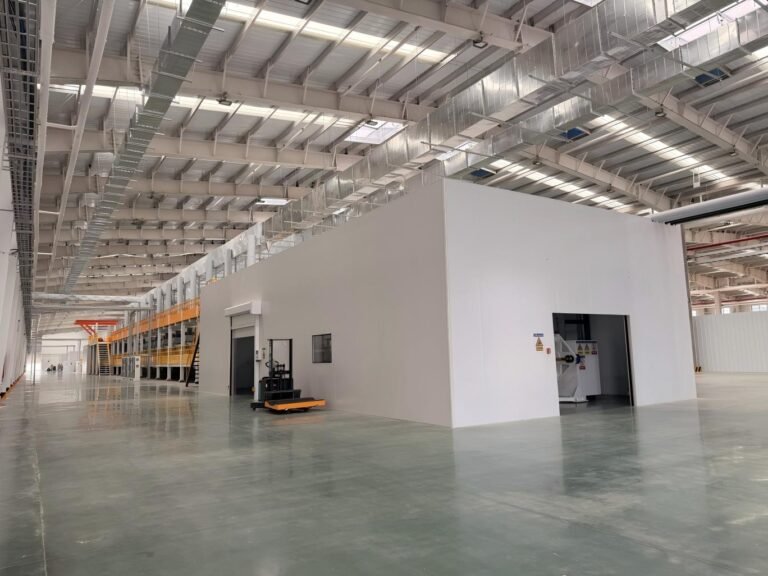
The first thing to check is whether the leather factory operates as a true manufacturer or a trading middleman. Ask to see the production floor. A real leather processing factory will have coating lines, curing ovens, embossing equipment, and quality inspection stations on site. If your contact hesitates to show you the workshop, that is your first warning sign.
During your factory audit, focus on these four areas:
- Raw material storage: Are silicone or PU resins stored in climate-controlled conditions?
- Production flow: Is there a logical sequence from mixing to coating to curing?
- Equipment age: Modern automated lines deliver more consistent thickness and color than aging manual equipment.
- Cleanliness: A well-organized workshop usually signals strong process discipline.
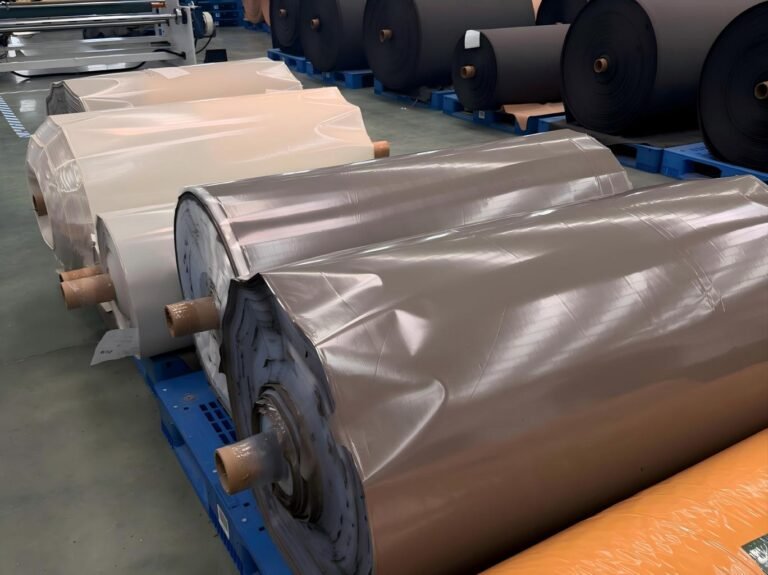
At TOPSUN, we welcome factory tours at our three production bases. Buyers can trace every roll from raw material intake to finished goods warehouse. Transparency is not a buzzword for us. It is how we build long-term partnerships with global brands.
A well-organized leather factory should offer clear traceability from raw materials to finished rolls.
Certifications Every Leather Manufacturing Company Should Hold
Certifications are not just paperwork. They prove that a leather goods manufacturer has submitted its products to independent third-party testing. Before you place a bulk order, request copies of these key documents and verify their authenticity on the issuer’s website.
| Certification | Why It Matters | Relevant Market |
|---|---|---|
| REACH | Screens 247+ SVHC substances for chemical safety | European Union |
| FDA 21 CFR 175.300 | Confirms safety for food contact applications | United States |
| ISO 10993-5 | Proves biocompatibility for skin-contact use | Global (Medical/Baby) |
| EN 13773 / FAR 25.853 | Validates flame retardancy for transport interiors | EU / Aviation |
Always verify that test reports come from accredited labs like SGS or Intertek. Check the report number on the laboratory’s official website. At TOPSUN, all certificates are issued by SGS and are available for download on our certificates page.
If you are sourcing for baby products or medical devices, do not compromise on ISO 10993-5. A single failed biocompatibility test can shut down your entire product line. Read our automotive OEM guide to see how certification requirements vary by industry.
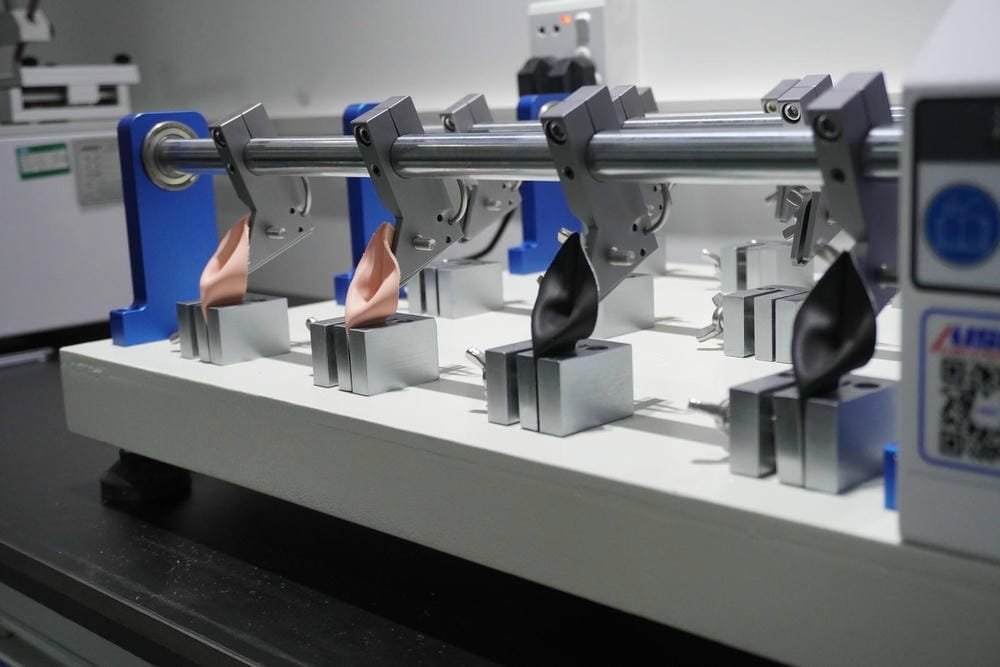
Independent lab testing is the only way to verify flame retardancy, biocompatibility, and chemical safety claims.
How to Test Samples from a Leather Product Manufacturer
Never skip sample evaluation. Request A4-sized swatches in multiple colors and thicknesses. Then run these simple but revealing tests in your own office or lab:
- Scratch test: Use a fingernail or coin. Quality silicone leather should resist surface damage without leaving visible marks.
- Flex test: Fold the sample repeatedly at the same spot. Cracking or whitening at the crease indicates poor formulation.
- Burn test: For automotive or aviation buyers, a small vertical burn sample can confirm flame-retardant claims.
- Odor test: Leave the sample in a sealed bag for 24 hours. Strong chemical smells suggest high VOC content.
In our experience, buyers who test samples under their own application conditions catch potential issues early. If you need flame-retardant materials for automotive interiors, test under heat and UV exposure that mimics real cabin conditions. What looks good in a showroom may fail in a 70-degree Celsius dashboard environment.
Want to compare how different synthetic leathers perform under stress? Our factory selection guide explains what to look for during sample review.
Assessing Production Capacity at a Leather Processing Factory
Capacity mismatches are a common source of supply chain headaches. A leather manufacturer might promise 100,000 meters per month but struggle to deliver 30,000 during peak season. Ask direct questions and demand evidence.
Here is what to verify during your audit:
- What is your daily output across all product lines?
- How many automated lines do you operate, and what is the utilization rate?
- What is your current order backlog, and how do you prioritize urgent orders?
- Can you support both small custom runs and large OEM programs?
Look for a leather manufacturing company with multiple production bases. This reduces risk if one facility faces disruption from maintenance, regulatory inspection, or raw material shortages. Geographic diversification is especially important for buyers with tight seasonal deadlines.
TOPSUN operates three major production bases with a combined annual capacity of 6 million meters and a daily output exceeding 16,000 meters. That scale supports everything from 500-meter custom color trials to 100,000-meter automotive programs. You can see our full production workflow on the factory production page.
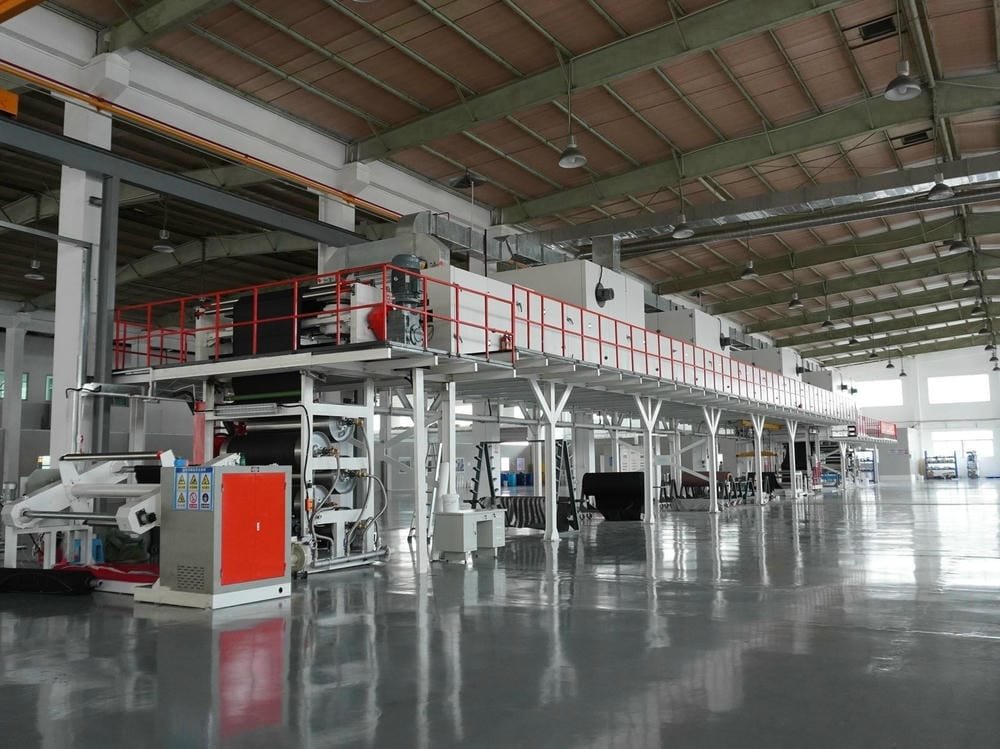
See how automated coating lines deliver consistent thickness and color batch after batch.
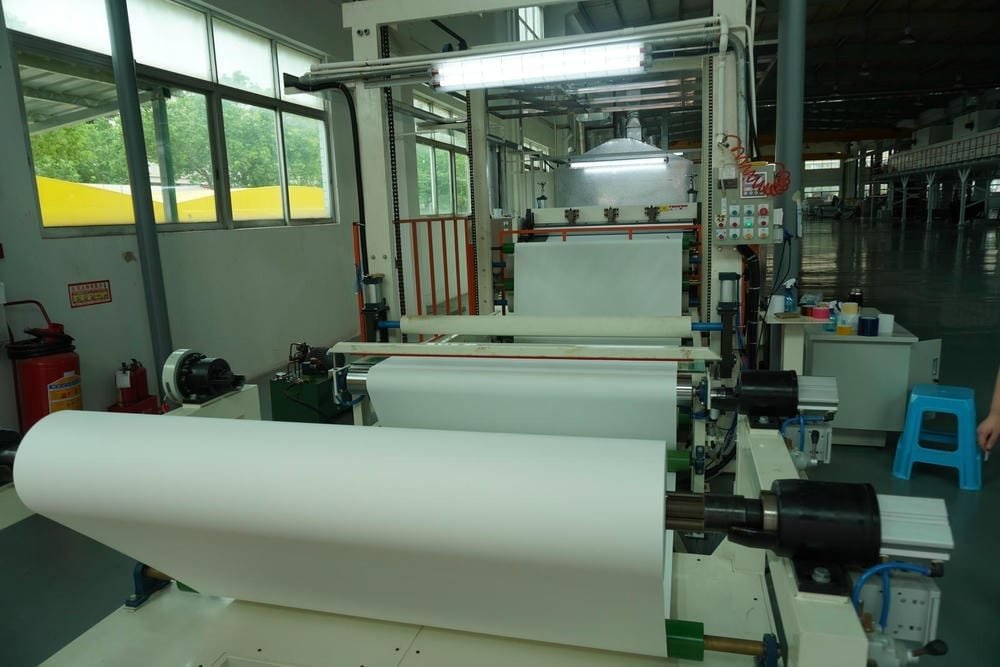
Automated lines are a strong indicator of consistent output and quality control.
Red Flags to Watch for When Visiting Leather Manufacturers
Not every leather factory deserves your business. Here are warning signs we have seen buyers encounter during factory audits across Asia:
- Refusal to show the production floor. Trading companies often rent temporary space for tours. If you cannot see real-time production, be skeptical.
- Outdated or idle equipment. If most machines are not running during your visit, capacity claims are suspect.
- Missing traceability records. A professional leather goods manufacturer can trace each roll back to its raw material batch and production date.
- Vague certification claims. “We meet REACH standards” is not enough. Demand the actual SGS or Intertek test report with a verifiable number.
- Pressure to pay 100% upfront. Standard terms for established B2B buyers are 30% deposit, 70% before shipment. Full prepayment for a first order is unusual.
Trust your instincts. If something feels off during the audit, dig deeper or walk away. The cheapest quote often becomes the most expensive mistake. A reliable leather manufacturing company will answer tough questions patiently and provide documentation without hesitation.
Frequently Asked Questions
How long does a factory audit typically take?
A thorough audit of a leather manufacturer takes one to two days. Plan to inspect raw material storage, production lines, quality labs, and finished goods warehouses. Request meetings with the quality manager and production director. Bring a checklist and take photos (with permission) for your internal records.
Should I hire a third-party inspection agency?
For first-time orders above $50,000, yes. Agencies like ISO-accredited firms can verify facility claims independently. Many automotive OEMs require third-party audits as a standard supplier qualification step. The cost is small compared to the risk of a failed production batch.
What MOQ should I expect from a leather manufacturing company?
MOQs vary by product complexity. Standard faux leather rolls often start at 500 meters. Custom colors or embossed textures may require 1,000 to 3,000 meters. Always confirm MOQ, lead time, and sample policy before requesting development swatches. Some leather manufacturers offer stock programs for faster turnaround on popular colors.
Is This Leather Manufacturer the Right Fit for Your Business?
Selecting the right leather manufacturer comes down to three factors: verified quality, proven capacity, and transparent communication. Use the checklist in this guide during your next factory visit. Take notes. Ask hard questions. The best suppliers will welcome your scrutiny because they have nothing to hide.
If you are sourcing for automotive interiors, furniture upholstery, or medical applications, material performance is non-negotiable. Partner with a leather manufacturing company that invests in certified labs, automated production, and traceable quality systems. Your end customers may never see your supplier’s factory, but they will feel the difference in every product you ship.
About TOPSUN
TOPSUN is a leading silicone leather manufacturer with three production bases in China, serving global B2B clients across automotive, furniture, medical, marine, and consumer electronics sectors. Our materials are certified by SGS for REACH, FDA, ISO 10993-5, EN 13773, and FAR 25.853 standards.
Key Certifications: REACH (247 SVHC screened) | FDA 21 CFR 175.300 | ISO 10993-5 Biocompatibility | EN 13773 Class 4 Flame Retardancy | FAR 25.853 Aviation | PAHs compliant. Annual capacity: 6 million meters. Tour our facilities or request free samples to evaluate our materials firsthand.