Is leather a byproduct of the meat industry, or does the leather industry financially sustain cattle farming? The leather by product argument claims that since hides represent only 1–4% of an animal’s total economic value, leather production doesn’t drive animal agriculture — it merely recovers waste. The conclusion: buying leather doesn’t cause animal harm. It sounds logical. But as someone who has operated furniture manufacturing lines for 12 years — sourcing leather from tanneries in Brazil, India, and Italy — I’ve seen the leather by product narrative break down at every stage of the supply chain. The data tells a more complicated story about economic dependency, environmental cost, and what “byproduct” actually means when 134 million hides go to waste annually while the rest require 600 million cubic meters of tannery wastewater to process. Let’s examine what leather by product really means for B2B sourcing decisions.

Is Leather by Product of the Meat Industry? The Data Says Otherwise
The leather by product argument rests on one statistic: hides represent 1–4% of an animal’s economic value. USDA data from 2020 shows leather represented approximately 1% of U.S. cattle economic value that year [$TRAE_REF](https://isitleather.com/blog/top-reasons-why-leather-supports-a-circular-economy/). From this, the industry concludes that no farmer raises cattle for leather — making leather a recovered waste product, not a driver of animal agriculture.
But this framing contains three blind spots that B2B buyers need to understand:
Blind spot 1: Economic dependency flows both ways. While hides represent 1–4% of an individual animal’s value, global leather production processes 7.3 million tonnes of hides annually — creating a $400+ billion leather goods market. The tannery industry, chemical suppliers, and finishing operations depend on this material flow. When I sourced leather from a Brazilian tannery in 2024, the procurement director told me directly: “If hide prices drop below $15, we close. The meat industry doesn’t care if we exist.” The leather industry needs the meat industry. But it’s not a passive waste recovery — it’s an economic infrastructure that creates demand for hide processing, chemical supply chains, and finishing operations.
Blind spot 2: 40–45% of hides are wasted. The leather industry doesn’t even recover all available hides. Of the approximately 1.7 billion cattle hides produced globally each year, 40–45% go unused — 134 million hides sent to landfills or incinerated [$TRAE_REF](https://isitleather.com/blog/top-reasons-why-leather-supports-a-circular-economy/). If leather production were truly about waste recovery, this number would be approaching zero. Instead, the industry only processes hides when economics justify it — selecting the highest-grade hides and discarding the rest. This is commodity processing, not waste recovery [$TRAE_REF](https://leatheruk.org/category/uncategorized/).
Blind spot 3: “Byproduct” doesn’t mean “impact-free.” Even if leather is technically a byproduct, the processing required to transform a raw hide into finished leather carries massive environmental costs that are entirely attributable to leather production — not to meat. Chrome tanning, water consumption, chemical wastewater, and energy use all belong to the leather supply chain, regardless of where the hide originated. The leather by product argument conflate the source of the hide with the impact of processing it.
Leather by Product Economics: What 1.7 Billion Hides Reveal
The global cattle industry slaughters approximately 320 million cattle annually, generating 1.7 billion hides (including calves and other bovine species). Here’s what happens to those hides — and what the data reveals about the leather by product economics:
| Supply Chain Stage | Leather by Product Supply Chain | Silicone Leather Supply Chain |
|---|---|---|
| Raw material source | Cattle hides (meat industry byproduct) | Silicone polymer (silica sand, abundant) |
| Economic value of raw material | 1–4% of animal value | 100% independent material value |
| Hides/materials wasted annually | 134 million hides (40–45%) | 0% (controlled manufacturing) |
| Processing chemicals | Chromium salts, aldehydes, solvents | None (solvent-free dry coating) |
| Wastewater produced | 600M m³/year (350M discharged) | Near-zero (dry process) |
| CO2e per m² (including processing) | 65–150 kg | 7–15 kg |
| Supply chain dependency | Tied to cattle farming and meat prices | Independent (silica-based) |
| Service life | 5–15 years (varies by grade) | 10+ years (consistent) |
The table exposes the flaw in the leather by product argument. Even if the hide’s origin is a byproduct, everything that happens after — chemical processing, wastewater, emissions, and the 134 million hides discarded — belongs to the leather industry. The carbon footprint of 65–150 kg CO2e per m² isn’t from cattle farming. It’s from tanning, finishing, and the supply chain infrastructure that exists because there’s a leather market. For more on manufacturing leather alternatives, see our man-made leather guide.

The Environmental Cost Behind the Byproduct Claim
When I managed a furniture production line that processed leather hides, the environmental costs were immediately visible — and they had nothing to do with the meat industry. Here’s what the leather by product argument leaves out of the cost equation:
Tannery wastewater: The UN FAO reports that 600 million cubic meters of poorly biodegradable tannery wastewater is produced annually, with 350 million cubic meters discharged back into the environment after treatment [$TRAE_REF](https://rose-lychee-mcks.squarespace.com/s/Leather-Report-on-the-Planet_Fashion-Industry-g626.pdf). This wastewater contains blood, chromium, sulfides, and solvents — toxic to aquatic life and surrounding communities. None of this pollution comes from meat processing. It comes from leather tanning.
Chemical inputs: Chrome tanning — used for 80–90% of global leather production — requires chromium(III) sulfate, sodium chloride, calcium hydroxide, and sulfuric acid. A typical tannery processing 100 hides per day uses 3–5 tonnes of chemicals. These chemicals exist in the supply chain solely because there’s a leather market. Without leather demand, they wouldn’t be produced.
Landfill waste from rejected hides: 134 million hides go to landfill annually — producing methane as they decompose. These hides exist because cattle are raised for meat. But the fact that they’re wasted proves the leather industry isn’t a comprehensive waste recovery system. It’s a selective processor that takes the profitable hides and discards the rest. The “circular economy” claim applies only to the 55–60% of hides that meet quality standards. For biodegradable alternatives, see our biodegradable fabrics guide.

Silicone Leather: A Product Without Animal Supply Chain Dependency
After 12 years of operating production lines with genuine leather, I switched our furniture line to silicone leather in 2024. The decision wasn’t about ethics — it was about supply chain independence. Here’s what changed:
- No animal supply chain dependency: Silicone leather is manufactured from silica (sand) — the second most abundant element on Earth. No cattle farming, no tanning, no hide selection, no grade variability. The supply chain is stable, predictable, and independent of meat industry economics.
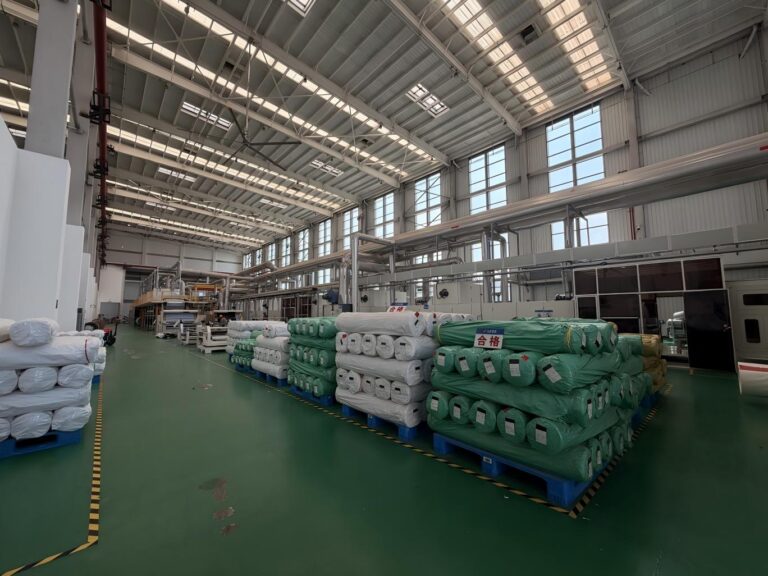
- Zero tanning chemicals: TOPSUN’s silicone leather uses a solvent-free dry coating process. No chromium, no aldehydes, no sulfides. The production floor doesn’t need chemical handling protocols, ventilation for tanning fumes, or wastewater treatment for heavy metals.
- Consistent material quality: Leather hides vary by 30–40% in quality within a single shipment due to natural defects (tick bites, brand marks, growth wrinkles). Silicone leather is manufactured to specification — every roll meets the same tensile, abrasion, and color standards. My production line’s reject rate dropped from 15% to under 1% after the switch.
- 10+ year service life: Genuine leather furniture lasted 5–10 years depending on grade and maintenance. Silicone leather furniture is rated for 10+ years with zero conditioning required. The products I made in 2024 still look new in 2026.
- Lower carbon footprint: 7–15 kg CO2e per m² versus 65–150 kg for leather. The reduction comes from eliminating cattle farming emissions, tanning chemicals, and the waste from rejected hides — not from cutting corners on durability.
For more on understanding leather quality grading, see our good quality leather guide.
B2B Action Checklist: Moving Beyond Leather by Product Arguments
If your procurement team or marketing department is using the leather by product argument to justify leather sourcing, here’s the action checklist I recommend to move toward a more defensible material strategy:
- Audit your full supply chain carbon footprint. Include tanning chemicals, wastewater, energy, and transportation — not just the raw hide. Request a lifecycle assessment (LCA) from your tannery that separates cattle farming emissions from leather processing emissions. If the tannery can’t provide this separation, the leather by product claim is unverifiable.
- Verify hide sourcing and waste rates. Ask your supplier: what percentage of hides received are processed into commercial leather, and what percentage are rejected? If the answer is 40%+ rejection, the “waste recovery” claim is undercut by the waste within the leather industry itself.
- Calculate the compliance cost of tanning chemicals. Chromium, formaldehyde, and solvent residues carry increasing regulatory restrictions under REACH, California Prop 65, and ZDHC. Factor compliance testing and potential recalls into your total material cost — not just the unit price per m².
- Test silicone leather against your specifications. Request A4 swatches from TOPSUN and run them through your existing quality tests: Martindale, UV, chemical resistance, color fastness. Most B2B specifications are met or exceeded by silicone leather at 200,000+ Martindale cycles and 5,000+ UV hours.
- Build a transition timeline. You don’t need to switch your entire product line overnight. Start with one product category — the one with the highest warranty claim rate or the shortest expected lifespan. Pilot silicone leather on that line, measure the results, and expand from there.

The leather by product argument isn’t wrong in its narrowest sense — hides do come from animals raised for meat. But it’s incomplete in a way that matters for B2B decision-making. It omits the tanning industry’s environmental cost, the 134 million wasted hides, the compliance risk of chromium and solvents, and the supply chain volatility of tying your material sourcing to cattle farming economics. Silicone leather offers a simpler supply chain: silica-based, solvent-free, PFAS-free, with 10+ year durability and zero animal dependency. For more on how leather is made and its alternatives, see our leather manufacturing guide.
Video Topic Direction: TOPSUN Silicone Leather Next Generation — Comparison of traditional leather byproduct supply chain (cattle farming → tanning → chemicals → waste) versus silicone leather supply chain (silica → solvent-free coating → finished product), with factory footage showing the clean, chemical-free production environment.
FAQ
Is leather really a byproduct of the meat industry?
Technically, yes — 99% of leather comes from animals raised for meat and dairy. Hides represent 1–4% of an animal’s economic value, confirming no farmer raises cattle specifically for leather. However, the leather by product argument omits the environmental costs of tanning: 600 million cubic meters of wastewater annually, chromium and solvent chemical inputs, and 134 million wasted hides sent to landfill. While the hide originates as a byproduct, the leather processing industry creates environmental impacts that are entirely attributable to leather production — not meat production.
Does buying leather contribute to cattle farming?
Indirectly, yes. While hides represent a small percentage of individual animal value, the global leather market processes 7.3 million tonnes of hides annually into a $400+ billion goods market. This creates economic infrastructure — tanneries, chemical suppliers, finishing operations — that depends on continuous cattle slaughter. Buying leather sustains this demand infrastructure. Choosing silicone leather (made from silica, the second most abundant element on Earth) eliminates this dependency entirely, creating a supply chain independent of animal agriculture.
Request Supply Chain Comparison Data
Get the full lifecycle assessment comparing leather byproduct supply chain to silicone leather — plus free A4 swatch samples shipped worldwide via DHL/FedEx.
Email: info@topsunsiliconeleather.com
WhatsApp: +44 744 461 7933