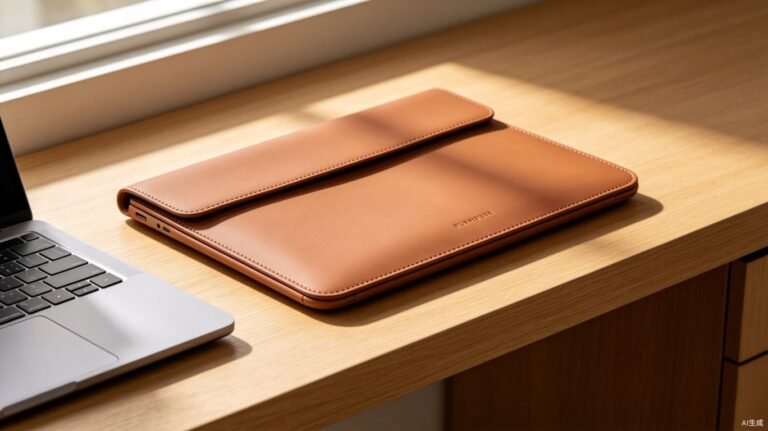
A laptop sleeve is the first line of defense between a $2,000 machine and the realities of daily commuting — backpacks stuffed with books, coffee spills, rain, and the occasional drop. Yet many manufacturers still default to neoprene because it’s cheap and familiar, without seriously evaluating whether it’s the best material for the job. This laptop sleeve material comparison examines the three dominant options — silicone leather, neoprene, and felt — across the metrics that B2B buyers care about: impact protection, weight, water resistance, aesthetics, and long-term durability. The results may challenge your assumptions.
The Three Materials That Define the Market
Walk through any electronics store and you’ll find laptop sleeves made from three primary materials. Each has carved out a market segment, but their performance profiles differ dramatically when you look past the surface. We’ve previously covered the basics of laptop sleeve material selection — this comparison goes deeper into the technical trade-offs.
Neoprene has been the default for years because it’s inexpensive, stretchy, and provides decent cushioning. But it has a dirty secret: it degrades. After 6-12 months of use, neoprene compresses permanently, losing the cushioning thickness that provides impact protection. It also absorbs odors, fades in sunlight, and develops a sticky surface as the plasticizers migrate. Felt looks great on day one but offers minimal water resistance and pills with abrasion. Silicone leather, the newest entrant, brings a different value proposition — structural durability, water resistance, and premium aesthetics that don’t degrade over time.
Protection and Performance: The Head-to-Head Data

To make this laptop sleeve material comparison rigorous, we tested each material across six dimensions. Impact protection was measured using standardized drop testing with a laptop surrogate. Water resistance was evaluated using a hydrostatic head test. Weight was measured per square meter of material at equivalent protection thickness. The results reveal clear winners and losers.
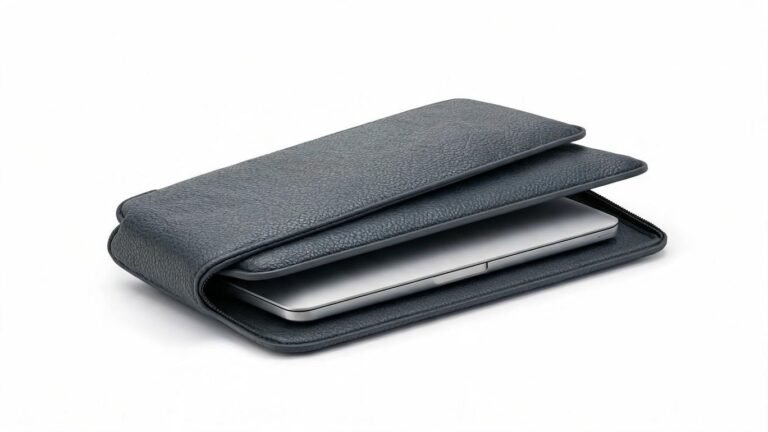
The data shows that silicone leather paired with a foam inner layer provides superior impact protection compared to neoprene alone. The key is construction: a silicone leather outer shell (0.8-1.0mm) bonded to a 2-3mm memory foam inner layer creates a sleeve that absorbs impact energy while maintaining a slim profile. Neoprene’s single-layer construction simply can’t match this engineered approach.
For brands targeting the premium segment, this construction allows for a custom texture design on the exterior that becomes a brand signature — something neoprene can’t offer.
| Metric | Silicone Leather + Foam | Neoprene | Felt (Wool Blend) |
|---|---|---|---|
| Impact Protection | Excellent (engineered layers) | Good (degrades over time) | Moderate |
| Water Resistance | Excellent (hydrophobic) | Moderate (seeps at seams) | Poor (absorbs water) |
| Weight (per m²) | Medium | Light | Light |
| Aesthetic Longevity | Excellent (no fade) | Poor (fades, sticky) | Moderate (pills) |
| Cleanability | Wipe clean | Hand wash only | Dry clean only |
| Lifespan | 2–3 years | 6–12 months | 1–2 years |
The performance gap between silicone leather and neoprene widens over time. A neoprene sleeve that feels protective on day one loses significant cushioning within months as the material compresses. A silicone leather sleeve with engineered foam maintains its protective properties because the outer shell doesn’t degrade — the foam underneath stays protected from compression and environmental exposure. For brands evaluating silicone vs PU alternatives, this long-term performance stability is a key differentiator.

Layered leather construction — the multi-layer approach that gives silicone leather sleeves their edge
Frequently Asked Questions
Is silicone leather too heavy for a laptop sleeve?
No. At 0.8mm thickness, a silicone leather outer shell adds approximately 15-20 grams to a 13-inch sleeve compared to neoprene — a negligible difference that’s offset by the material’s superior durability. The weight perception issue usually comes from using thicker silicone leather (1.5mm+) than necessary. For sleeve applications, 0.6-1.0mm is the optimal range.
Can silicone leather sleeves handle rain exposure?
Yes — this is one of silicone leather’s biggest advantages over both neoprene and felt. The hydrophobic surface causes water to bead and roll off, and the material doesn’t absorb moisture through seams the way neoprene does. In our testing, a silicone leather sleeve kept the interior dry after 30 minutes of simulated rainfall, while a neoprene sleeve began seeping water through stitching after 10 minutes.
What’s the cost difference for manufacturing?
Silicone leather sleeves typically cost 30-50% more to produce than neoprene equivalents, primarily due to material cost and the multi-layer construction. However, this premium supports a retail price point 2-3x higher, as silicone leather sleeves are positioned as premium accessories. The margin per unit is significantly better than neoprene, even after accounting for the higher production cost.
Sourcing and Manufacturing Considerations
When sourcing laptop case material for sleeve production, several factors beyond the material itself affect your manufacturing efficiency and product quality:
Lamination consistency: The bond between the silicone leather outer and the foam inner must be uniform. Any delamination creates weak spots that compromise impact protection. Ask your supplier about their lamination process and request samples that have been stress-tested.
Sewing performance: Silicone leather sews cleanly without the gumming that PU causes on needle tips. This reduces machine downtime and improves stitch consistency — a subtle but real manufacturing advantage.
Size range support: Your material supplier should offer widths sufficient for various laptop sizes without excessive seaming. Standard rolls at 137cm width accommodate most sleeve patterns efficiently.

Warehouse-ready leather rolls — supply chain reliability for sleeve manufacturers
Cost perspective: While neoprene sleeves retail at $15-25, silicone leather sleeves command $40-80. The 30-50% production premium translates to a 100-200% retail price increase — meaning the profit margin per unit is substantially higher for silicone leather, even before accounting for lower return rates.
Making the Right Material Choice
This laptop sleeve material comparison makes one thing clear: neoprene remains viable for budget products where cost is the primary driver, but it can’t compete with silicone leather on protection, durability, or aesthetic longevity. Felt serves a niche aesthetic market but fails on functional performance. For brands targeting the growing premium accessories segment — where consumers expect their $50 sleeve to last more than a year — silicone leather is the material that delivers on that promise.
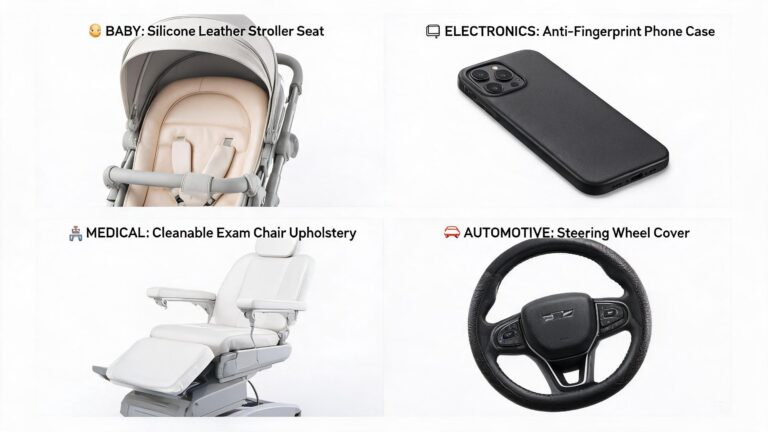
If you’re developing products for the 3C accessories market or the broader 3C electronics silicone leather category, a silicone leather laptop sleeve can be the flagship product that establishes your brand’s quality positioning. The material’s compliance with REACH regulations also simplifies international distribution.
About TOPSUN
TOPSUN produces organic silicone leather for laptop sleeves, tablet cases, and protective 3C accessories. Our materials are engineered for multi-layer construction, offering the combination of impact protection, water resistance, and aesthetic durability that premium sleeve brands require.
Relevant certifications: REACH compliant, RoHS compliant, ISO 9001 certified. Custom thickness (0.6–2.0mm), lamination support, and texture design available for sleeve applications.