The global silicone synthetic leather market is forecast to expand from USD 355.94 million in 2026 to nearly USD 5 billion by 2035 — a compound annual growth rate of 34.1%. But behind that headline number lies a more significant story: consumer demand, not supplier push, is driving adoption. End-users are reading material labels, questioning what “vegan leather” actually contains, and rejecting products that off-gas chemicals into their homes and vehicles. These five silicone leather consumer trends trace how that demand is reshaping five application segments.
Request Silicone Leather Trend Samples
Trend 1: Automotive Buyers Reject “New Car Smell”
The “new car smell” — once marketed as a luxury cue — is now recognized by consumers as volatile organic compound (VOC) off-gassing from PU leather, adhesives, and plasticizers. BMW confirmed in its 2024 Sustainability Report that all 2026 model year iX and i4 variants sold in the EU ship exclusively with synthetic leather interiors. This is not a cost-cutting decision; it is a response to consumer demand for cabin air quality.
OEMs now specify materials that pass VDA 277 (total carbon emission ≤ 30 μgC/g) and VDA 278 (VOC ≤ 100 μg/g, fogging ≤ 250 μg/g). Silicone leather achieves ≤ 15 μgC/g and ≤ 40 μg/g respectively — well under OEM thresholds — because its polymer structure contains no solvents to release. For procurement teams, this means VDA 277 compliance data is now a purchase-decision document, not a regulatory footnote.

Automotive interior 2026: consumers now prioritize cabin air quality over traditional leather aesthetics
Trend 2: Parents Drive Baby Product Material Transparency
The fastest-growing consumer segment for silicone leather is baby and children’s products — playmats, stroller fabrics, high chair covers, and crib bumpers. Parents who research material safety data have discovered that many “eco-friendly” PU leathers contain residual DMF (dimethylformamide), a reproductive toxicant restricted under REACH Annex XVII. PVC alternatives contain phthalates linked to endocrine disruption.
Silicone leather is made from the same material as baby bottle nipples and food-contact bakeware. It is certified to FDA 21 CFR Part 177.2600 for repeated food contact, passes ISO 10993-5 cytotoxicity testing, and contains zero plasticizers, zero phthalates, and zero solvent residues. This positions it as the only synthetic leather that meets the material safety standards parents now demand — a trend that has pushed the antibacterial leather technology category into mainstream retail.
Consumer data point: A 2026 market report found that 73% of millennial parents check material composition labels before purchasing children’s products — up from 41% in 2022. Silicone leather’s “food-grade” certification directly answers this consumer behavior.
Trend 3: Consumer Electronics Demand Anti-Fingerprint Surfaces
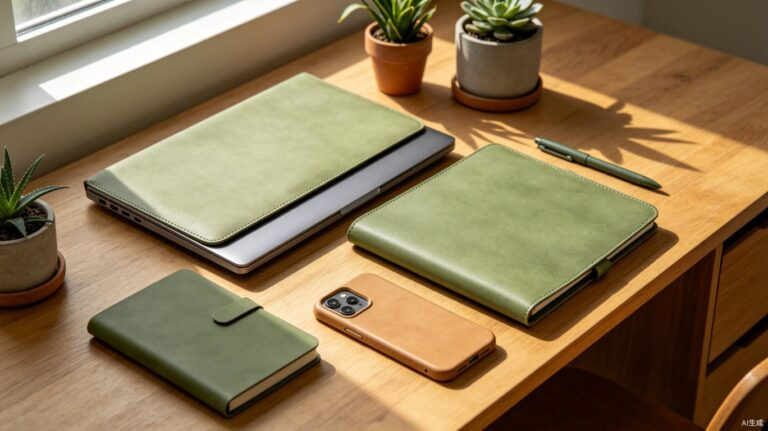
The silicone leather for 3C (computers, communications, consumer electronics) market is projected to reach approximately USD 9.1 billion by 2034 at a 7.3% CAGR. Phone cases, tablet covers, laptop sleeves, smartwatch bands, and VR headset facial interfaces are driving this growth. The consumer demand driver: anti-fingerprint performance and tactile feel that PU leather cannot match.
PU leather phone cases develop a sticky residue within 6–12 months as plasticizers migrate to the surface. Silicone leather’s surface energy is inherently low — fingerprints wipe clean with a dry cloth, and the material does not degrade with repeated handling. For wearable devices that contact skin continuously, silicone’s hypoallergenic and breathable properties eliminate the contact dermatitis cases reported with PU and PVC bands.

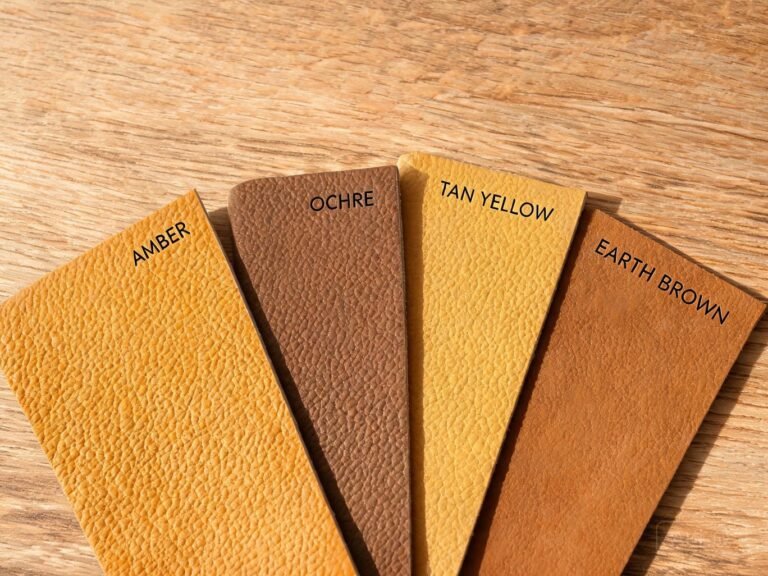
Full-color silicone leather swatch range: unlimited color matching for consumer brand differentiation
Trend 4: Healthcare Facilities Specify Disinfectable Surfaces
Post-2020, healthcare procurement has permanently shifted toward materials that withstand repeated disinfection with alcohol, bleach, and quaternary ammonium compounds. PU leather surfaces degrade within months under hospital cleaning protocols — the alcohol dissolves the polyurethane coating, causing peeling and cracking that harbors bacteria in surface micro-fissures.
Silicone leather is chemically inert to alcohol, bleach, and hospital-grade disinfectants. Its ISO 10993 biocompatibility certification confirms it does not cause cytotoxic, skin irritation, or sensitization responses. This has made it the fastest-growing material segment for hospital seating, examination tables, wheelchair upholstery, and medical device covers — applications where material failure has direct patient safety consequences.

Healthcare seating: silicone leather withstands repeated alcohol and bleach disinfection without surface degradation
Trend 5: Sustainable Fashion Rejects Greenwashing
The vegan leather market is projected to reach USD 355.23 million by 2032 at a 7.34% CAGR. But consumers are becoming sophisticated: a 2026 brand guide survey found that 68% of fashion buyers distinguish between “vegan” (meaning animal-free) and “sustainable” (meaning environmentally responsible). PU leather is vegan but petroleum-based, non-biodegradable, and sheds microplastics when the surface breaks down — typically within 18 months.
| Property | PU Vegan Leather | Silicone Leather |
|---|---|---|
| Base Material | Petroleum | Silicon dioxide (sand) |
| Plasticizers | Yes (sometimes phthalates) | None |
| VOC Off-gassing | Yes, over time | Zero |
| Microplastic Shedding | Yes, when surface breaks down | No |
| Surface Lifespan | ~18 months avg | 10+ years |
| Recyclability | Limited (composite material) | Recyclable (silicone recovery) |
Silicone leather does not biodegrade — but its 10+ year service life and recyclability position it as a circular-economy material. Dow’s LUXSENSE™ silicone leather brand confirms this positioning with solvent-free fabrication processes and lower cradle-to-gate carbon emissions than animal leather, which carries high livestock methane impact.

Color and texture range: fashion brands now demand sustainable materials with premium aesthetic options
Silicone leather properties overview: the performance foundation behind consumer adoption trends
About TOPSUN
TOPSUN serves brands and manufacturers across all five consumer trend segments above — from automotive OEMs requiring VDA 277 compliance to baby product companies needing FDA food-contact certification. Our silicone leather production line delivers custom color matching, embossed grain patterns, and thickness specifications from 0.4mm to 2.0mm, supported by ISO 10993, REACH, and FDA certifications from SGS and Intertek.
We track the consumer trends driving material specification in real time. For brands developing products that require silicone leather — whether for a new EV interior line, a baby product collection, or a healthcare seating program — our team provides material specification sheets, compliance documentation, and production samples tailored to each application’s consumer demands.
Frequently Asked Questions
What is driving the growth of silicone leather?
Three consumer forces: demand for non-toxic materials (zero VOC, no plasticizers), demand for durability (10+ year lifespan vs 18-month PU failure), and demand for genuine sustainability (silica-based, recyclable, not petroleum-derived). Market data shows CAGR ranging from 7.3% (3C electronics) to 34.1% (broader synthetic leather) depending on segment definition.
Is silicone leather the same as vegan leather?
No. “Vegan leather” means animal-free — it includes PU, PVC, and plant-based materials. Silicone leather is vegan but also non-toxic, zero-VOC, plasticizer-free, and does not shed microplastics. Most vegan leather (PU-based) off-gasses VOCs and degrades within 18 months; silicone leather lasts 10+ years.
Why is silicone leather more expensive than PU leather?
Silicone resin costs more than polyurethane resin due to raw material processing. However, lifecycle cost favors silicone: PU leather requires replacement every 2–3 years in demanding applications, while silicone leather maintains performance for 10+ years. For OEMs, the reduced warranty claims and product returns offset the higher unit cost.
Which consumer product categories are adopting silicone leather fastest?
The five fastest-adopting categories are: (1) baby and children’s products, (2) consumer electronics accessories, (3) automotive interiors, (4) healthcare seating and medical devices, and (5) premium fashion accessories. Each is driven by a different consumer demand vector — safety, tactile feel, air quality, disinfection, and sustainability respectively.
Is silicone leather biodegradable?
Silicone leather is not biodegradable, but it is recyclable through silicone recovery processes. Its environmental advantage comes from longevity — a material that lasts 10+ years and is recyclable has a lower lifecycle footprint than a biodegradable material that must be replaced every 2 years and sheds microplastics during degradation.
Position Your Products on the Right Side of Consumer Trends
Consumer demand for non-toxic, durable, and genuinely sustainable materials is not a passing trend — it is a permanent shift in purchasing behavior. Brands that specify silicone leather now are building products that meet 2026 consumer expectations and regulatory requirements. Request samples and compliance documentation to evaluate silicone leather for your next product line.