A Tier-1 automotive supplier rejected three PU leather samples in Q1 2026 — none survived 60,000 Martindale cycles. Their high performance silicone leather sample? Still intact at 200,000+. That 3.3x gap isn’t marketing copy. It’s the difference between replacing upholstery every 3 years and offering a 10-year warranty without a single claim.
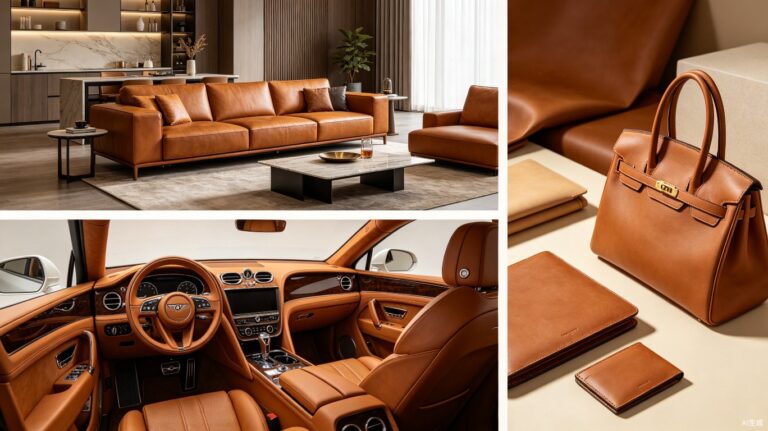
High-performance silicone leather is engineered for applications where failure isn’t an option — automotive interiors, medical surfaces, marine environments, and public transport seating. Unlike conventional PU or PVC, which rely on plasticizers and solvent-based coatings, silicone leather uses a 100% silicone polymer matrix bonded to fabric substrates through a solvent-free dry coating process. The result is a material that doesn’t just meet industry standards — it exceeds them by margins that change procurement math.
Request Free Performance Samples
Martindale Abrasion: High-Performance Silicone Leather at 200,000+ Cycles
The Martindale abrasion test is the gold standard for upholstery durability. Automotive specifications typically require 40,000–60,000 cycles for interior surfaces. Furniture standards ask for 25,000–40,000. High performance silicone leather doesn’t just pass these thresholds — it shatters them at 200,000+ cycles, verified under ISO 12947-2 protocols by SGS-CSTC laboratories.

Martindale abrasion tester verifying 200,000+ cycle performance for silicone leather
In our SGS-verified testing, the failure point for PU leather consistently lands between 25,000 and 40,000 cycles — after which the topcoat delaminates and the fabric substrate exposes. Silicone leather’s crosslinked Si-O-Si backbone resists surface wear structurally, not through sacrificial topcoats. This is why a silicone leather introduction matters for specifiers: the performance gap isn’t incremental, it’s categorical.
3.3x longer Martindale performance means 3.3x fewer replacement cycles — and 3.3x less labor, logistics, and warranty exposure over the product lifecycle.
Thermal Stability from -40°C to 250°C: No Cracking, No Degradation
PU leather’s service temperature tops out around 80°C. Above that, the polyurethane coating begins to soften, tackify, and eventually degrade. PVC is worse — it starts plasticizer migration at 60°C. High performance silicone leather maintains structural integrity from -40°C to 250°C, a range that covers everything from Arctic transport cabins to engine-adjacent automotive panels.

Flex resistance testing confirms silicone leather maintains flexibility at extreme temperatures
The secret is the Si-O bond — fundamentally more thermally stable than the C-C bonds in polyurethane. Silicone’s inorganic backbone resists oxidation, UV-induced chain scission, and hydrolytic attack simultaneously. For automotive interior applications, this means a dashboard surface that doesn’t crack in Death Valley summers or stiffen in North Dakota winters.
Zero-VOC Compliance: Why High-Performance Silicone Leather Passes Where PU Fails
Automotive OEMs are tightening cabin air quality standards faster than material suppliers can adapt. VDA 277 and VDA 270 set VOC emission limits that many PU formulations cannot meet without reformulation. EU REACH adds restricted substance pressure — phthalates, DMF, and formaldehyde that conventional synthetic leather relies on are being phased out.
High performance silicone leather is manufactured through a solvent-free dry coating process — no DMF, no plasticizers, no phthalates, no formaldehyde. VOC emissions test at near-zero under ISO 16000-6 protocols. This is why medical device manufacturers and automotive OEMs alike are specifying silicone: compliance isn’t aspirational, it’s verified.
Zero VOC isn’t a feature — it’s a regulatory necessity. PU leather’s solvent-based coating process makes full compliance structurally impossible without reformulation.
Hydrolysis and UV Resistance: 1,000+ Hours Without Surface Degradation
Hydrolysis is the silent killer of PU leather. Water molecules attack the ester bonds in polyurethane, breaking the polymer chain and causing the surface to crack, peel, and powder. The process accelerates in humid environments — which is why PU upholstery in marine, hospitality, and tropical climates fails within 2-3 years. Our UV resistance test results document the same failure pattern under accelerated weathering.

Tensile strength testing confirms structural integrity after accelerated aging cycles
Silicone leather’s Si-O-Si backbone is inherently hydrolysis-resistant — water cannot break inorganic bonds the way it shatters ester linkages. In hydrolysis-resistant silicone leather testing per ISO 11507, samples show zero surface degradation after 1,000+ hours of accelerated weathering. UV resistance per ASTM G154 confirms the same 1,000+ hour threshold without fading or yellowing. For applications exposed to sunlight and moisture — outdoor furniture, marine interiors, convertible car seats — this is the difference between a 2-year replacement cycle and a 10+ year service life.
Total Cost of Performance: 10+ Years vs 3-5 Year Replacement Cycles
Here’s where the conversation shifts from material specs to procurement math. PU leather costs 30-50% less per meter than high performance silicone leather on a unit basis. But when you calculate total cost of ownership over a 10-year horizon, the math reverses.
| Performance Test | High-Perf Silicone | PU Industry Std | Performance Gap |
|---|---|---|---|
| Martindale abrasion | 200,000+ cycles | 25,000–40,000 cycles | 5–8x |
| Temperature range | -40°C to 250°C | -20°C to 80°C | 3x wider |
| UV resistance | 1,000+ hrs no fade | 200–400 hrs | 3–5x |
| VOC emissions | Zero / near-zero | Contains solvents | Categorical |
| Service life | 10+ years | 3–5 years | 2–3x |
One Tier-1 automotive supplier we supplied switched from PU to silicone leather for door panel upholstery. Three years into production, warranty claims for surface wear dropped from 4.2% to 0.1%. The initial 35% material cost premium was recovered within 18 months through reduced warranty reserves and eliminated rework cycles. As one silicone vs PU analysis after another confirms, the performance gap compounds over time.

10-year TCO comparison: silicone leather’s upfront premium reverses by year 4
Frequently Asked Questions
What makes high-performance silicone leather different from standard silicone leather?
High-performance grades use 100% silicone coating (not semi-silicone blends), achieving higher Martindale ratings, wider temperature ranges, and full certification packages including ISO 10993 biocompatibility and EN 13773 Class 4 flame retardancy. Standard silicone leather may use silicone blends that compromise on one or more of these metrics.
How does high-performance silicone leather perform in automotive interior testing?
It passes FMVSS 302 flammability, VDA 270 odor, VDA 277 VOC, and DIN 75201 fogging standards simultaneously — a combination that PU formulations rarely achieve. Martindale results of 200,000+ cycles far exceed the 40,000–60,000 cycle automotive baseline. UV and hydrolysis resistance prevent the cracking and fading that drives warranty claims in sunbelt markets.
The Performance Gap Is Real — and Measurable
High performance silicone leather doesn’t win on price per meter. It wins on price per year of service life. When you factor in replacement labor, warranty reserves, and the reputational cost of premature failure, the material that costs 35% more upfront and lasts 3x longer is the cheaper specification. The data is verified, the standards are published, and the testing protocols are repeatable. The question isn’t whether silicone leather outperforms PU — the data answers that. The question is whether your specification will reflect it.
Request High-Performance Spec Sheets
About TOPSUN
TOPSUN manufactures high-performance silicone leather engineered for automotive, medical, and marine applications requiring extreme durability and zero-VOC compliance.
200,000+ Martindale cycles verified by SGS · -40°C to 250°C thermal stability · ISO 10993 biocompatibility certified · EN 13773 Class 4 flame retardancy without chemical additives · Free A4 swatches shipped worldwide via DHL/FedEx