A client recently showed us two clutch bags from the same production batch — same design, same leather specification, same factory. After 18 months of use, one looked new; the other had a cracked flap hinge and peeling edges. The difference wasn’t manufacturing quality; it was a 3% variance in the leather’s flex resistance that the supplier never tested for. When sourcing clutch leather material, the gap between premium and commodity performance comes down to specifications most buyers never think to request. Here’s what actually determines whether a clutch bag survives five years or fails in eighteen months.
Full-grain leather for clutch shells runs 1.0–1.4 mm thickness, with raw material costs at $20–30/m². It can last 20+ years with proper care, achieving tensile strength of 30 MPa and 30,000 abrasion cycles. But genuine leather carries supply chain risks — hide availability, tanning consistency, and weight that makes shipping expensive. For brands seeking the leather aesthetic with better supply predictability, the real question is which synthetic alternative actually matches genuine leather’s performance profile.

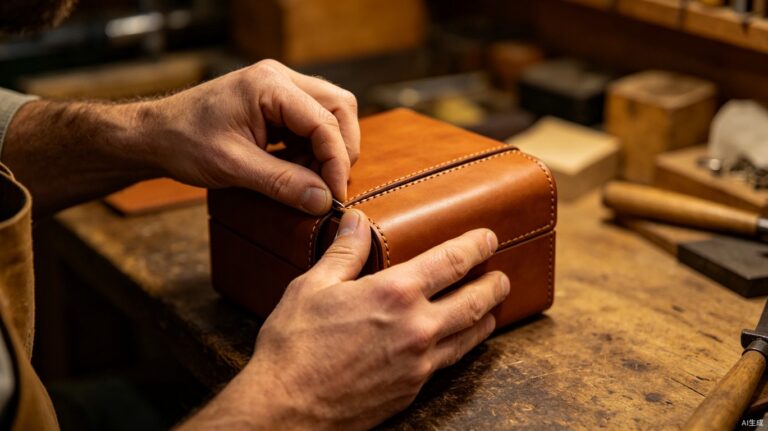
Softness fold display — the hinge point on a clutch bag is where flex resistance matters most
Clutch Leather Material Types: Performance Comparison
The handbag material types market offers three primary options for clutch production. Each carries distinct performance characteristics that affect warranty rates, customer satisfaction, and brand positioning:
| Property | Full-Grain Leather | PU Leather | Silicone Leather |
|---|---|---|---|
| Thickness | 1.0–1.4 mm | 0.8–1.2 mm | 0.8–2.0 mm |
| Martindale Abrasion | 30,000 cycles | 15,000 cycles | 200,000+ cycles |
| Flex Resistance | 50,000+ cycles | ~15,000 cycles | 50,000–100,000 cycles |
| Weight | Heavy | Light | Light (half of full-grain) |
| Cost/m² | $20–30 | $5–10 | $12–18 |
| Lifespan | 20+ years | 6–18 months | 10+ years |
The flex resistance gap tells the real story. PU leather’s 15,000-cycle threshold means the flap hinge — the highest-stress point on any clutch — will begin cracking within 6–12 months of daily use. Our silicone vs PU comparison testing shows silicone leather maintaining structural integrity past 50,000 cycles, matching full-grain leather’s performance at roughly half the weight.

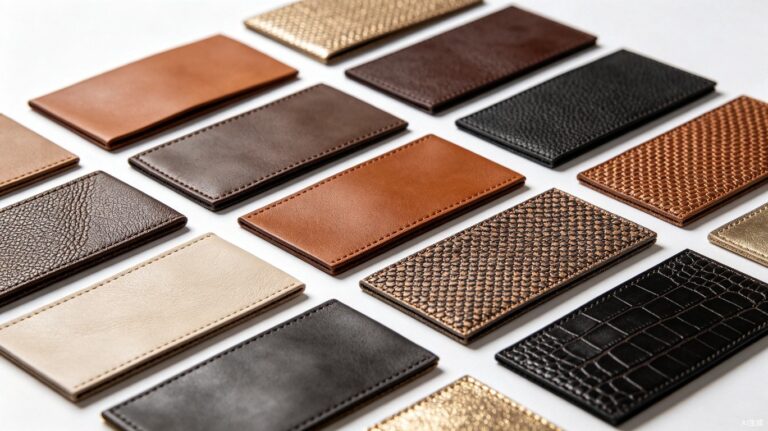
Warm-tone lychee texture swatches — clutch leather must combine aesthetics with the flex specs above
Why PU Leather Fails in Clutch Applications
PU leather dominates the budget clutch market ($25–50 retail) because it’s cheap and looks acceptable on day one. The problem is what happens by month six. PU leather relies on plasticizer additives for flexibility — the same chemistry that makes it soft enough for clutch construction also makes it vulnerable to the flex stress that clutches experience daily. The flap hinge flexes every time the bag opens and closes. If that hinge sees 20 flexes per day, that’s 7,300 flexes per year — half of PU’s 15,000-cycle limit.
Add temperature cycling (car interiors, direct sunlight), cosmetic exposure (hand creams, perfumes), and the plasticizer migration accelerates. By month 12, the hinge point shows hairline cracks. By month 18, the surface peels. Premium PU should be 0.8–1.2 mm thick with abrasion resistance ≥15,000 Martindale and hydrolysis resistance of 2–3 years — but even these specs fall short of clutch applications where flex is the primary stress mode.
Designer’s tip: If you’re sourcing clutch leather for a fashion brand positioned above $80 retail, PU leather’s warranty failure rate will eat your margins. Silicone leather at $12–18/m² gives you genuine-leather performance claims at mid-range material cost.
Silicone Leather for Clutch Bags: The TCO Advantage
For silicone leather in clutch applications, the value proposition is straightforward: genuine-leather durability at PU leather weight, with none of PU’s flex failure mode. Silicone polymer doesn’t require plasticizers — flexibility is intrinsic to the Si-O backbone chemistry. The material maintains its elongation capacity (≥ 250–300%) throughout its service life because there’s nothing to migrate or deplete.
In our testing, silicone leather clutch samples showed zero surface degradation after 50,000 flex cycles at the hinge point — the same test where PU samples began cracking at 12,000–15,000 cycles. Combined with 200,000+ Martindale abrasion cycles and Grade 4–5 color fastness, this means a clutch bag that maintains its appearance through years of daily use rather than months. For brands offering warranty or replacement programs, the reduction in claims alone can justify the material cost premium.

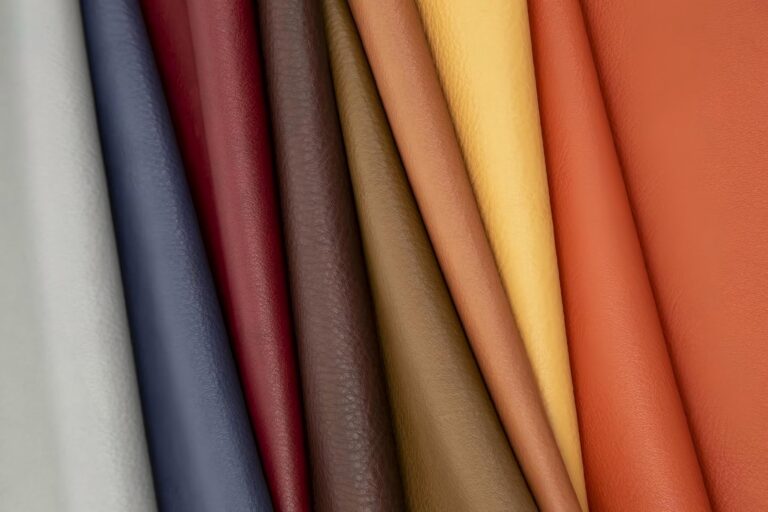
Vegan leather texture — silicone leather offers the leather aesthetic with none of the ethical or performance trade-offs
What to Demand From Your Clutch Leather Supplier
When evaluating clutch leather material suppliers, three documentation requirements separate serious manufacturers from commodity traders:
- Flex resistance test reports — ISO 5402 data showing ≥ 50,000 cycles. This is the single most important spec for clutch applications.
- Color consistency protocols — Pantone matching with Delta E ≤ 1.0, verified per batch. Clutch bags are fashion accessories — color drift kills brand trust.
- Thickness tolerance — ±0.1mm across the roll. Uneven thickness causes visible deformation at the flap hinge after die-cutting.
Beyond documentation, evaluate durability testing protocols and customization capabilities. A supplier who can produce custom embossing rollers in 7–10 days and match any Pantone color within Delta E ≤ 1.0 gives you design freedom that commodity suppliers can’t match. For clutch brands where texture and color differentiation are the product, that capability is non-negotiable.
The Verdict
Clutch leather material selection comes down to a simple equation: flex resistance × abrasion resistance × color stability ÷ cost. Full-grain leather wins on performance but loses on weight, cost, and supply consistency. PU leather wins on cost but fails on flex — the one stress mode that matters most for clutches. Silicone leather splits the difference with genuine-leather durability at synthetic-leather weight, making it the strongest TCO choice for brands positioned above the commodity tier. The clutch bag your customer carries for five years starts with the leather spec you verify today.
Premium bag leather introduction — see how silicone leather performs in fashion bag applications
About TOPSUN
TOPSUN manufactures silicone leather for fashion clutch and accessory applications, combining genuine-leather aesthetics with synthetic-leather weight advantages. Production facilities span 60,000+ m² with Pantone color matching accuracy of Delta E ≤ 1.0 and custom texture development in 7–10 days.
50K+ flex cycles verified | 200K+ Martindale abrasion | Vegan and cruelty-free | 100+ texture patterns available