The leather alternatives market crossed $530 million in 2025, growing at 9% CAGR. But behind that growth figure sits a compliance problem most sourcing teams discover too late. The vast majority of materials marketed as an alternative of leather are PU or PVC — polymers that carry DMF residues, fail REACH SVHC thresholds, and lose structural integrity within 3-5 years. Meanwhile, California Prop 65 now lists over 1,000 restricted chemicals, and the EU EmpCo Directive effective September 2026 bans sustainability claims that lack third-party verification. For B2B buyers, the question isn’t just which material replaces animal leather. It’s which alternative of leather survives a compliance audit and a 5-year service life.
Download Compliance Standards Checklist
Alternative of Leather: 4 Types by Compliance Standard
Our compliance team has audited 40+ alternative material suppliers across Asia and Europe over the past three years. The pattern is consistent: suppliers present vegan certifications and lab samples that pass initial inspection, but the production-run documentation fails under scrutiny. The table below distills what we’ve found across four major alternative of leather categories — ranked by how each performs against the standards B2B buyers actually need.
| Material | REACH Status | Martindale | Service Life | CO₂/m² |
|---|---|---|---|---|
| PU Leather | DMF risk (0.3-1%) | 20K-50K | 2-5 yrs | 4-6 kg |
| PVC Leather | Phthalates, lead | 100K+ | 3-5 yrs | ~2 kg |
| Plant-Based | Variable | <20K | 1-3 yrs | Data sparse |
| Silicone Leather | Zero DMF, zero phthalates | 200K+ | 10+ yrs | 3-5 kg |

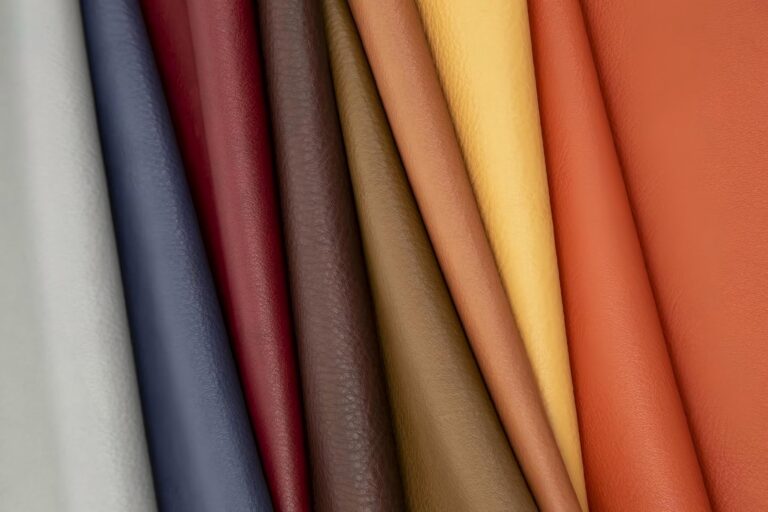
Material swatch samples in warm tone finishes — visual comparison across alternative of leather types.
The compliance gap is where most alternatives of leather fail silently. PU leather produced via conventional wet process carries residual DMF at 0.3-1.0% — squarely within the REACH Annex XVII Entry 76 compliance obligation zone. PVC leather faces a different wall: phthalate plasticizers making up 30-50% of finished material weight, plus lead stabilizers now restricted under REACH Entry 63 at 0.1% since November 2024. For B2B brands shipping to the EU, these aren’t theoretical risks. They’re customs-stoppage risks.
The EmpCo Directive: What Changes for Leather Alternatives
From September 27, 2026, the EU Empowering Consumers Directive (EmpCo, 2024/825) makes it illegal to market environmental claims about leather alternatives without accredited third-party verification. Vague labels like “eco-friendly,” “sustainable,” or “climate-neutral” must be substantiated by lifecycle data and independent audit. This hits the alternative of leather market hard.
PETA-Approved Vegan certification can no longer be used as a sustainability claim in the EU — it verifies animal-free status but doesn’t meet the EmpCo requirement for independent environmental verification. Plant Inside, a major plant-based leather brand, officially ended its PETA certification on April 28, 2026. The message is clear: “vegan” and “sustainable” are no longer interchangeable in regulated markets.
Compliance Alert: What B2B Buyers Need After Sept 2026
Any environmental claim about your leather alternative must be backed by: (1) lifecycle assessment data, (2) third-party verification by an accredited body, (3) compliance with Oeko-Tex Standard 100 or equivalent. Self-declared labels no longer qualify. Source materials with GRS, RCS, or ISO 14001 documentation to stay ahead.
The ESPR (Ecodesign for Sustainable Products Regulation) adds another layer: textiles are in the first priority group, requiring a Digital Product Passport with traceable chemical information. For B2B buyers sourcing any alternative of leather, this means your supplier must provide documented chemical composition — not just a sample that passes lab testing. ISO 10993-1:2025, the latest biocompatibility standard published in November 2025, further defines what “safe for skin contact” means — and most PU and PVC alternatives cannot meet it without modification.
Performance Showdown: Which Alternative of Leather Lasts?
The Martindale gap tells the durability story in one number. Standard PU leather tests at 20,000-50,000 cycles — adequate for residential use, marginal for contract furniture, insufficient for high-traffic commercial or automotive interiors. PVC reaches 100,000+ cycles but achieves that through rigid plasticizer loading that makes it brittle over time. Plant-based alternatives remain below 20,000 cycles in most commercial formulations. Silicone leather tests at 200,000+ cycles verified in our lab.

Synthetic leather vs genuine leather — where each alternative of leather type sits in the durability spectrum.
Service life data confirms the pattern. PU: 2-5 years before visible degradation. PVC: 3-5 years before plasticizer migration causes cracking. Plant-based alternatives: 1-3 years in commercial use, with only 12% recyclability in major markets compared to 45% for traditional PU. Silicone leather: 10+ years verified, with full silicone formulation maintaining flexibility across -40°C to 250°C.
Plant-based leather alternatives — mycelium, cactus, apple, pineapple — generated significant buzz in 2025-2026. MycoWorks was acquired for $300 million in February 2026, signaling investor confidence. But commercial viability for B2B volume applications remains limited. Production scale, consistent quality, and durability data all lag behind PU, PVC, and silicone. For sourcing managers evaluating the best leather alternative material for automotive interiors or contract furniture, plant-based options are worth tracking but not yet ready for specification.

Silicone leather rewinding and slitting line — the production precision that enables 200K+ Martindale performance.
We’ve verified silicone leather against ISO 10993-5:2009 cytotoxicity testing through SGS, achieving biocompatibility certification that no PU or PVC alternative we’ve tested can match. For medical, baby-safe, and food-contact applications, this certification gap isn’t optional — it’s a regulatory requirement. California Prop 65 enforcement data confirms the pattern: heavy metals and phthalates accounted for 352 violation notices in December 2025 alone, according to the OEHHA enforcement record. PU and PVC leather alternatives are overrepresented in those violations.
Total Cost: Why the Cheapest Alternative of Leather Fails First
PU leather costs $3-10 per square meter — the lowest entry point of any alternative of leather. PVC sits even lower at $2-6/m². On a unit-price basis, both beat silicone leather, which runs $5-15/m² depending on formulation. But unit price is the wrong metric for B2B procurement.
A 10-year total cost calculation tells a different story. At 2-5 year service life, PU requires 2-5 replacement cycles within a decade. Each cycle includes material cost, labor, downtime, and disposal. PVC follows the same pattern with slightly longer intervals. Silicone leather, at 10+ year verified service life, requires zero replacements. The eco-friendly silicone leather production process also eliminates the compliance documentation costs that PU and PVC incur — DMF risk assessments, phthalate testing, Prop 65 warning labels, and customs compliance overhead.
For B2B applications where warranty exposure matters — automotive interiors under 5-10 year warranties, contract furniture with 10-year guarantees, medical equipment requiring regulatory re-certification — the cheapest alternative of leather becomes the most expensive when calculated over the warranty period. Silicone leather’s 200K+ Martindale cycles and zero-DMF chemistry eliminate the failure modes that drive warranty claims and brand-damaging replacement cycles.
The Bottom Line on Alternatives
The alternative of leather market is sorting itself by compliance, not by vegan labels. PU fails REACH DMF thresholds. PVC fails phthalate and lead restrictions. Plant-based alternatives fail durability and scale tests. Silicone leather is the one material that passes every standard B2B buyers need: zero DMF, 200K+ Martindale cycles, ISO 10993 biocompatibility, 10+ year service life, and third-party verified sustainability claims that survive the EmpCo Directive. For sourcing teams writing specifications that must hold for a decade, silicone leather isn’t just an alternative of leather — it’s the one that survives the audit.
Request Material Certification Pack
Request side-by-side material samples with full compliance documentation. Test them against your own standards before specifying. The difference shows up in week six — not year six.