Procurement teams specifying fabric upholstery fabric for commercial furniture face a specification maze that most suppliers navigate by cherry-picking the one metric where their product looks good. A fabric that boasts “100,000 Martindale rubs” might still fail pilling at Grade 2, lose color after 200 UV hours, or require chemical fire retardants that leach into indoor air. The result: upholstery that passes the spec sheet but fails in service — forcing premature replacement that destroys the project’s total cost of ownership.
Here is the procurement reality: fabric upholstery fabric and leather upholstery are not interchangeable products competing on price per yard. They are fundamentally different material systems with different failure modes, cleaning protocols, replacement cycles, and compliance pathways. This guide breaks down the six performance specifications that actually determine whether your upholstery survives 3 years or 10, compares the total cost of ownership between fabric and silicone leather across a typical 10-year commercial furniture lifecycle, and gives you a decision framework for when each material system is the right choice.
Request Upholstery Material Samples
What Does “Fabric Upholstery Fabric” Actually Mean?
“Fabric upholstery fabric” refers to woven, knitted, or nonwoven textile materials engineered specifically for furniture surface applications — as opposed to leather, vinyl, or coated fabrics. The term encompasses a wide range of fiber types and constructions: polyester woven velvets, solution-dyed acrylic blends, olefin (polypropylene) flat weaves, cotton-linen blends, and recycled PET (rPET) fabrics. Each fiber type brings different performance characteristics to the finished upholstery.
The distinction matters because “fabric” on a procurement spec sheet tells you almost nothing about performance. A 100% polyester velvet and a 100% olefin flat weave are both “fabric upholstery fabric” — but one pills within 18 months in a hotel lobby while the other maintains surface integrity for 6+ years. The material specification must go deeper than fiber type to include construction method, weight, weave density, and finish chemistry.

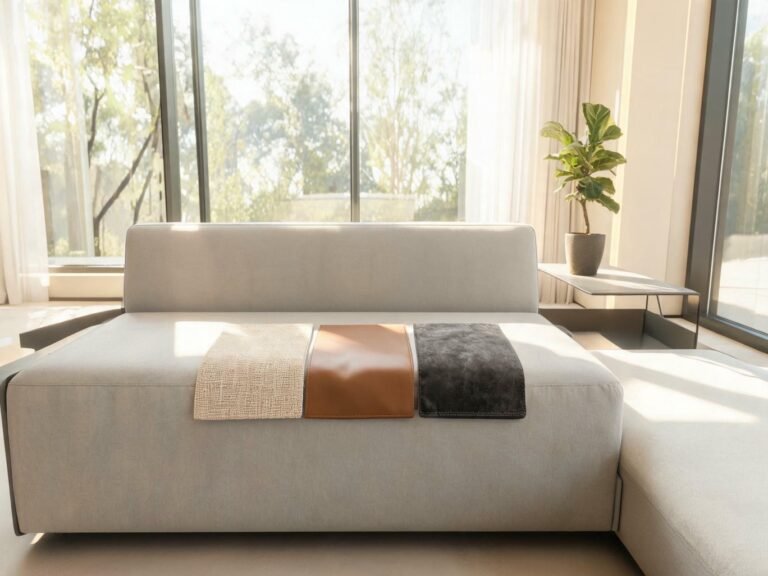
Fabric upholstery inspection: every roll is checked for weave consistency, color uniformity, and defect-free surface
In commercial and contract settings, fabric upholstery competes against coated fabrics — PU leather, PVC leather, and increasingly, silicone leather. The choice between fabric and coated alternatives depends less on aesthetics (both can deliver similar visual outcomes) and more on the operational requirements: cleaning frequency, expected traffic, regulatory compliance, and lifecycle cost. For a detailed breakdown of how these material categories compare, our fabric and upholstery specifications guide provides a specification-by-specification analysis.
The 6 Performance Specs That Determine Fabric Upholstery Quality
When evaluating fabric upholstery fabric for commercial applications, these six specifications form the minimum viable spec sheet. If a supplier cannot provide test data for all six, the material is not qualified for contract use.
| Specification | Test Standard | Contract Grade Minimum | Heavy-Duty Grade |
|---|---|---|---|
| Abrasion resistance | Martindale (ISO 12947) | 30,000 rubs | 50,000+ rubs |
| Pilling resistance | ISO 12945-2 | Grade 4 | Grade 4-5 |
| Color fastness (light) | ISO 105-B02 | Grade 5 | Grade 5+ |
| Color fastness (rubbing) | ISO 105-X12 | Grade 4 | Grade 4-5 |
| Flame retardancy | BS 5852 / CAL 117 | Pass (crib 5 or equivalent) | Pass all applicable standards |
| Stain resistance | AATCC 175 | Grade 4 (with treatment) | Grade 5 (inherent) |
1. Abrasion resistance (Martindale): The single most cited spec — and the most misleading. Martindale measures surface wear under standardized rubbing, but it does not predict pilling, staining, or UV degradation. A fabric rated 100,000 Martindale rubs can still pill, fade, and stain within 2 years. Use Martindale as a floor threshold (30,000 minimum for contract), not as a sole quality indicator.
2. Pilling resistance: Pilling — the formation of fuzzy fiber balls on the surface — is the most common failure mode for fabric upholstery in high-traffic environments. It is caused by fiber migration under friction and is independent of Martindale rating. A Grade 4 pilling rating (ISO 12945-2) is the minimum for commercial use; Grade 5 is preferred for hospitality and healthcare.
3-4. Color fastness: Two separate specs matter — light fastness (ISO 105-B02, how the fabric holds color under UV) and rubbing fastness (ISO 105-X12, how it holds color under abrasion). A fabric with Grade 5 light fastness and Grade 4 rubbing fastness will maintain appearance; a fabric with Grade 3 in either category will show visible fading or color transfer within 12-18 months in sun-exposed commercial spaces.
5. Flame retardancy: For contract furniture, this is non-negotiable. Verify whether the fabric is inherently flame-retardant (the fiber chemistry itself resists ignition) or treated with topical FR chemicals. Treated fabrics lose their fire resistance after repeated cleaning — a hidden liability. BS 5852 crib 5 is the standard for UK contract; CAL TB 117-2013 for US; DIN EN 1021 for European markets.
6. Stain resistance: Most fabric upholstery relies on fluorocarbon (C6) or silicone-based surface treatments for stain resistance. These treatments degrade with washing and professional cleaning, typically lasting 20-30 cleaning cycles before effectiveness drops below functional levels. This is the key hidden cost driver — more on that below.

Quality verification includes visual inspection under standardized lighting for color and weave consistency
Fabric Upholstery vs Silicone Leather: Total Cost Comparison
The most common procurement mistake in commercial furniture is comparing fabric and leather upholstery on material cost per yard alone. This ignores the operational costs that accumulate over the furniture’s service life: cleaning, maintenance, premature replacement, and downtime. The table below models a 10-year total cost of ownership for a hotel lobby sofa program (100 sofas) across three upholstery systems.
| Cost Factor (10-year, 100 sofas) | Fabric Upholstery | PU Leather | Silicone Leather |
|---|---|---|---|
| Material cost/sofa | $180-280 | $220-350 | $320-500 |
| Expected lifespan | 3-4 years | 2-3 years | 8-10 years |
| Replacements needed | 2-3 cycles | 3-4 cycles | 0-1 cycle |
| Annual cleaning cost/sofa | $45-65 (professional) | $20-30 (wipe-down) | $5-10 (damp cloth) |
| Stain treatment/sofa | $15-25/year | $5-10/year | $0/year |
| 10-year TCO/sofa | $950-1,400 | $850-1,350 | $520-700 |
The numbers invert the initial-cost narrative. While silicone leather carries a 60-80% material cost premium over fabric, its 10-year TCO is 30-50% lower — driven by zero stain treatment costs, minimal cleaning labor, and a single replacement cycle instead of three. For a 100-sofa hotel program, that is $40,000-$70,000 in savings over a decade. Our detailed upholstery furniture TCO guide breaks down these calculations line by line.

Commercial furniture programs require upholstery that balances initial cost with 10-year operational cost
Contract Grade Standards: What’s Actually Required
“Contract grade” is not a marketing term — it is a defined specification tier with minimum performance thresholds. Furniture destined for commercial use (hotels, restaurants, cinemas, healthcare, education) must meet contract grade requirements, which vary by market but share common test frameworks.
In the UK and EU, BS 5852 ignition source 5 (crib 5) is the baseline fire safety standard for contract upholstery. In the US, California TB 117-2013 governs flammability. DIN EN 1021 Parts I and II apply in Germany and much of continental Europe. For healthcare environments, additional antimicrobial performance and cleanability requirements apply under FDA and equivalent international medical device regulations.
For fabric upholstery, meeting these standards often requires chemical treatment — typically phosphorus-based or halogenated flame retardants applied as topical finishes. These treatments raise two concerns: they degrade with cleaning (requiring re-treatment every 2-3 years), and they can off-gas into indoor air. Silicone leather, by contrast, achieves BS 5852 crib 5 and CAL TB 117-2013 without any added flame retardant chemicals — the inorganic Si-O backbone is inherently self-extinguishing.
The Hidden Costs of Fabric Upholstery
Beyond the quantifiable TCO numbers, fabric upholstery carries operational costs that rarely appear on a procurement spreadsheet but erode project margins over time:
Downtime during cleaning: Professional hot water extraction of fabric upholstery requires 4-8 hours of drying time per sofa. During this period, the furniture is out of service. For a hotel with 200 upholstered chairs in a conference facility, weekly cleaning means 200+ hours of unavailable seating per month. Silicone leather requires no drying time — a damp cloth wipe restores the surface in under 60 seconds.
Stain treatment degradation: The fluorocarbon or silicone-based stain-resistant treatment on fabric upholstery degrades with each cleaning cycle. After 20-30 professional cleanings, the treatment is functionally gone — leaving the fabric vulnerable to permanent staining from coffee, wine, ink, and food. Re-treatment costs $30-50 per sofa and must be repeated annually.
Dimensional instability: Woven and knitted fabrics stretch and sag under repeated loading — especially in high-use environments. A fabric-upholstered restaurant booth that fits perfectly at installation may show visible sagging and wrinkling within 18 months. Silicone leather’s dimensional stability (backed by polyester knit substrate) resists stretching under identical loading conditions, maintaining a taut surface for 8+ years.
Odor retention: Fabric fibers absorb and retain organic compounds — body oils, food residues, cleaning chemicals. In healthcare and hospitality environments, this creates persistent odor issues that require ozone treatment or full replacement. Silicone leather’s non-porous surface does not absorb organic compounds, eliminating this failure mode entirely. Learn more about long-term synthetic leather durability data for commercial applications.

Fabric weave construction determines performance — but also determines cleaning protocol and replacement timeline
When Fabric Makes Sense vs When Leather Wins
Neither fabric nor leather is universally superior. The right choice depends on the application’s specific demands. Here is a practical decision framework:
Choose fabric upholstery fabric when: The environment is low-traffic residential or light-commercial (e.g., model home staging, low-use executive offices), aesthetic requirements demand specific woven textures or patterns unavailable in coated materials, the project budget cannot accommodate the silicone leather material premium, and cleaning frequency is low (quarterly or less).
Choose silicone leather when: The environment is high-traffic commercial (hotels, restaurants, cinemas, healthcare, public transit), stain resistance is critical, frequent cleaning is required, fire safety compliance is mandatory, the project lifecycle exceeds 5 years, or indoor air quality is a concern (VOC-sensitive environments). For furniture-specific applications, see our furniture and sofa applications page.
Procurement tip: If your specification includes “contract grade” or “heavy-duty commercial” as a requirement, fabric upholstery’s hidden costs (re-treatment, downtime, premature replacement) typically exceed silicone leather’s initial premium within 3-4 years. Run the TCO calculation before committing.
About TOPSUN Silicone Leather
TOPSUN manufactures silicone synthetic leather as a high-performance alternative to both fabric upholstery and conventional PU/PVC coated fabrics. Our material is produced through a solvent-free heat transfer process that bonds a platinum-cured silicone coating to a polyester knit substrate — creating a non-porous, dimensionally stable surface that resists staining, microbial growth, UV degradation, and fire without chemical additives.
Performance verified: 150,000+ Martindale abrasion cycles, 1,500-hour UV stability (ASTM D329), 14-week hydrolysis resistance, 200,000 low-temperature flex cycles at -30°C, and inherently self-extinguishing flame retardancy certified to BS5852, DIN EN 1021, CAL TB 117-2013, and 16 CFR 1610. Learn more about the material technology on our silicone leather introduction page.
Compare Fabric vs Silicone Leather Samples
Frequently Asked Questions
What Martindale rating should fabric upholstery fabric have for commercial use?
Contract grade fabric upholstery requires a minimum of 30,000 Martindale double rubs (ISO 12947). Heavy-duty commercial environments — hotel lobbies, restaurant booths, cinema seating — should specify 50,000+ rubs. However, Martindale alone does not guarantee durability; pilling resistance (ISO 12945-2, Grade 4+), color fastness (ISO 105-B02, Grade 5), and flame retardancy must all be verified alongside the abrasion rating.
How long does fabric upholstery last compared to silicone leather?
In commercial environments, fabric upholstery typically lasts 3-4 years before requiring replacement due to staining, pilling, or sagging. Silicone leather in identical conditions lasts 8-10 years. The difference is driven by the non-porous silicone surface (no stain absorption, no fiber migration, no dimensional instability) versus the porous fiber structure of woven fabrics.
Does fabric upholstery cost less than silicone leather?
On material cost per yard, yes — fabric upholstery is typically 30-50% cheaper than silicone leather. On 10-year total cost of ownership, silicone leather is 30-50% cheaper than fabric due to lower cleaning costs, zero stain treatment, and fewer replacement cycles. For a 100-sofa commercial program, the 10-year TCO difference can exceed $50,000.
Can fabric upholstery meet fire safety standards without chemical treatment?
Some inherently flame-resistant fibers — notably modacrylic blends and certain treated rayon formulations — can meet contract fire standards without topical FR treatment. However, most standard upholstery fabrics (polyester, cotton, linen) require chemical flame retardant treatment to pass BS 5852 or CAL TB 117-2013. These treatments degrade with cleaning and may off-gas. Silicone leather achieves all contract fire standards inherently through its inorganic polymer chemistry.