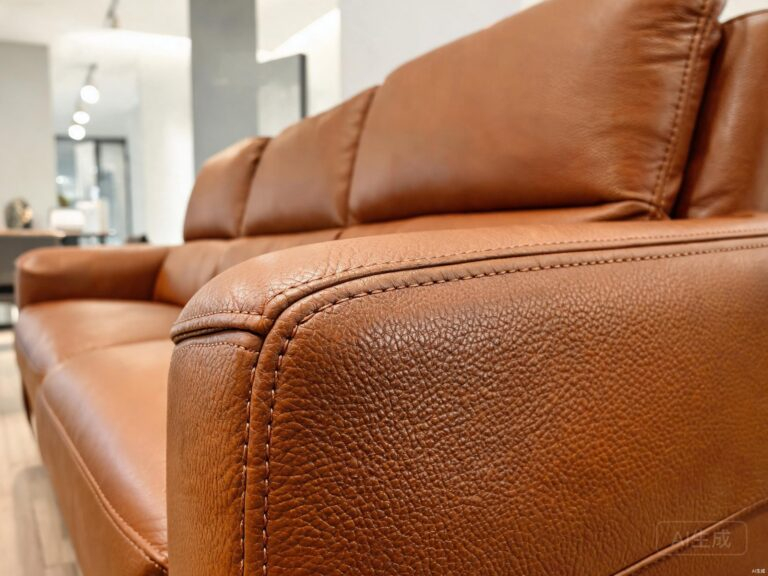
If you are still evaluating the difference between PU and leather by comparing price tags and surface feel, you are working with outdated data. In the last five years, we have replaced PU leather for automotive OEMs, furniture brands, and medical device manufacturers who thought they had already made the right call. They had not. The problem was not their budget. It was the information gap.
This article is not another side-by-side spec sheet. You can find those everywhere. Instead, we are going to look at what actually drives material failure in production environments, what the real lifecycle cost looks like when you factor in hidden expenses, and why an increasing number of procurement teams are bypassing both PU and genuine leather for a third option that solves problems neither material can touch.
The Hidden Cost Nobody Calculates
Here is the math most sourcing managers never see. PU leather runs roughly $8 to $18 per square meter. Genuine leather starts at $25 and can exceed $90 for upholstery-grade hides. On the surface, PU looks like the rational choice. But surface cost is not program cost.
In commercial furniture, PU upholstery typically needs replacement every 3 to 5 years in high-traffic environments. Leather lasts 15 to 25 years with basic maintenance. Over a 15-year ownership period, a hotel chain or cinema operator will replace PU seating two to three times. Each replacement involves removal labor, disposal fees, new material, installation downtime, and lost revenue during refurbishment. When we modeled this for a 200-seat cinema client, the total cost of ownership for PU was 40% higher than leather over the same period.
The catch? Leather introduces its own hidden costs. Supply inconsistency, batch-to-batch color variation, and the need for skilled maintenance create operational friction that many brands underestimate. The PU leather and leather difference is not just about material science. It is about which hidden costs your organization is equipped to absorb.

PU’s Chemical Clock: Why It Fails on a Predictable Timeline
Unlike genuine leather, which degrades gradually and visibly, PU leather carries a chemical failure mechanism that is invisible until it is catastrophic. Understanding this mechanism is critical because it changes how you specify materials for projects in different climates and use cases.
Hydrolysis in Humid Climates
PU leather is built from polyester or cotton fabric coated with polyurethane. The chemical bond between the polymer coating and the base fabric is vulnerable to hydrolysis, especially in environments with relative humidity above 70%. We have seen PU seat covers in tropical markets begin to delaminate within 18 months. The surface looks fine until the topcoat suddenly separates from the substrate in sheets. There is no repair. Only replacement.
UV Degradation and Color Shift
Standard PU leather contains aromatic isocyanates that break down under UV exposure. The result is not just fading. The surface becomes brittle, micro-cracks form, and the embossed grain pattern loses definition. For automotive interiors, marine seating, or any application with sun exposure, this is a known failure mode. Some manufacturers add UV stabilizers, but these additives increase cost and still offer only partial protection compared to inherently stable polymers.
Plasticizer Migration
Over time, the plasticizers in PU leather migrate to the surface, creating a sticky residue and altering hand feel. This is particularly problematic for automotive interior applications where tactile quality is part of the user experience. Once plasticizer migration begins, the material cannot be restored.
Real Leather’s Scaling Problem
Genuine leather solves the durability and chemical stability problems of PU, but it introduces constraints that matter just as much at scale. Every hide is different. Thickness varies. Scar tissue, insect bites, and grain pattern inconsistencies create waste rates of 20% to 40% during cutting. For a furniture manufacturer running 10,000 meters per month, that waste translates directly into unit cost inflation.
Color matching is another friction point. Leather is a biological material. Even within the same dye lot, shade variation is normal. For brands that demand Pantone-level consistency across thousands of units, this creates quality control nightmares. We have worked with automotive suppliers who rejected entire hide batches because the color drift exceeded OEM tolerance.
Then there is the ethical and regulatory dimension. Leather tanning produces chromium waste and consumes large water volumes. In the EU, REACH compliance for tanned leather is increasingly complex. For brands marketing sustainability credentials, the material creates narrative friction that marketing teams would rather avoid.

When Silicone Leather Becomes the Only Rational Choice
Here is the reality that most difference between PU and leather articles ignore: the comparison itself is becoming irrelevant for mid-to-high-specification applications. Over the past three years, we have seen a sharp uptick in procurement teams who started with a PU vs leather brief and ended up specifying silicone leather instead. The reason is simple. Silicone leather solves the core weaknesses of both materials without importing their trade-offs.
Unlike PU, silicone leather does not rely on a polyurethane coating. The silicone polymer structure is inherently hydrolysis-resistant, UV-stable, and free from plasticizers. It will not delaminate in humid climates. It will not get sticky after three years. It will not fade under continuous sun exposure. Our weathering data shows color retention above 95% after 1,000 hours of QUV testing. Standard PU begins to show visible degradation after 200 to 300 hours.
Unlike genuine leather, silicone leather offers batch-to-batch consistency within ±0.05mm thickness tolerance and precise color matching to Pantone or RAL standards. There is no hide waste. There is no supply fluctuation. And unlike both PU and leather, it meets medical-grade biocompatibility (ISO 10993-5), automotive flame-retardant standards (EN 13773 Class 4, FAR 25.853), and FDA food-contact requirements without additional chemical treatments.
For a furniture brand we supply in Northern Europe, switching from PU to silicone leather reduced warranty claims by 78% over a 24-month period. The material cost per meter was higher than PU, but the total program cost dropped because replacement cycles disappeared and customer complaints plummeted.

A Decision Framework for Procurement Teams
If you are deciding between PU leather, real leather, and silicone leather for an upcoming program, here is the decision tree we use with clients during specification reviews:
Choose PU leather if:
- The product lifecycle is under 3 years (promotional items, event furniture, temporary installations).
- The environment is climate-controlled with minimal UV exposure.
- Upfront unit cost is the only decision criterion, and replacement labor is negligible.
Choose real leather if:
- The brand positioning requires genuine leather as a perceived value signal (luxury automotive, high-end furniture).
- You have the supply chain capacity to manage batch variation and skilled maintenance.
- The end user values breathability and natural aging (patina) over consistency.
Choose silicone leather if:
- The application demands 10+ year service life with minimal maintenance.
- The product will be exposed to UV, humidity, temperature cycling, or salt spray.
- Regulatory compliance (REACH, FDA, flame retardancy) is non-negotiable.
- Color consistency and thickness precision matter across large production volumes.
- Total cost of ownership, not unit cost, drives the sourcing decision.
In our experience, the teams who get this decision right are not the ones who default to the lowest bid. They are the ones who model the full cost curve before signing the purchase order. See how silicone leather compares to both PU and leather on the metrics that actually affect your program.
Frequently Asked Questions
Why does PU leather peel even without heavy use?
Peeling is usually caused by hydrolysis or UV breakdown of the polyurethane coating, not mechanical wear. In humid climates, the chemical bond between the PU layer and fabric substrate weakens over time. Once delamination starts, it accelerates. This can happen within 18 to 36 months even in light-use conditions.
Is real leather always more expensive than PU over the full lifecycle?
Not always. In applications where leather requires frequent conditioning, repair, or replacement of damaged sections, operational costs can equal or exceed PU. However, in most upholstery applications with 10+ year horizons, leather’s longevity gives it a total cost advantage. The exception is when silicone leather enters the equation, which often outperforms both on durability and maintenance.
Can silicone leather match the feel of real leather?
Yes, within design parameters. Silicone leather can be embossed with grain patterns and adjusted for surface texture to mimic the hand feel of genuine leather. For furniture and sofa applications, it offers a similar tactile experience with better temperature stability. It does not have the natural smell of leather, which some luxury brands consider either a drawback or an advantage depending on their target market.
What is the minimum order quantity for switching from PU to silicone leather?
At TOPSUN, standard MOQ for custom color and texture matching starts at 500 meters. For existing stock colors, samples are available from 1 meter. We routinely run sample development for brands evaluating a material switch before committing to production volumes.
What the PU vs Leather Debate Is Really About
The difference between PU and leather is not a materials science puzzle. It is a business model question. If your product turns over every three years and replacement costs are invisible to your customer, PU leather is a defensible choice. If your brand trades on longevity and sensory quality, genuine leather earns its premium.
But if your specification demands 10-year durability, color consistency at scale, regulatory compliance, and low total cost of ownership, the traditional dichotomy breaks down. That is exactly where silicone leather has moved from niche alternative to standard specification across automotive, medical, and commercial furniture programs.
If you are rewriting a material spec and want to see how the numbers look for your specific application, our engineers can run a lifecycle cost model against your project parameters. No generic claims. Just data.
About TOPSUN
TOPSUN is a leading silicone leather manufacturer with 12+ years of experience, a 20,000㎡ factory, 8 production lines, and an annual output exceeding 2,000 tons. We specialize in custom B2B solutions for automotive, furniture, medical, marine, and consumer electronics applications.
Certifications: FDA, REACH, PAHs, ISO 10993, RoHS, EN 71, EN 13773 Class 4, FAR 25.853, ISO 9001.