A hotel in Dubai ordered 300 meters of burgundy for its lounge seating. Eighteen months later the chairs beside the floor-to-ceiling windows had drifted to rose, while the identical chairs deeper in the lobby were still burgundy. Same batch, same dye lot, same supplier — the only variable was sunlight. When colored leather fails, it rarely fails evenly, and that’s precisely what makes it expensive: partial replacement never matches the un-faded remainder. The good news is that color performance is testable before you order a single meter. This is the six-check protocol we run in our own color lab before any custom colored leather rolls ship — the same checks that would have caught the Dubai order before it left the factory.
Why Colored Leather Fades: Dyes, Pigments, and UV
Color enters leather through one of two chemistries, and the difference decides everything. Dyes dissolve into the material and bond at the molecular level — vivid, transparent, deep — but UV radiation breaks the electronic bonds inside a dye molecule and destroys the color itself. Pigments sit on the surface as insoluble particles, trade some vibrancy for far higher lightfastness, and are locked in place by whatever coating protects them. This is why aniline leather, with its open pores and minimal coating, is beautiful and doomed near windows, while pigmented leather holds color for years under the same glass. It’s also why the finishing grade belongs on your spec sheet, not just the color code: semi-aniline sits between the two extremes, and the price gap between them is small compared to the replacement cost of getting it wrong in a sun-exposed space.

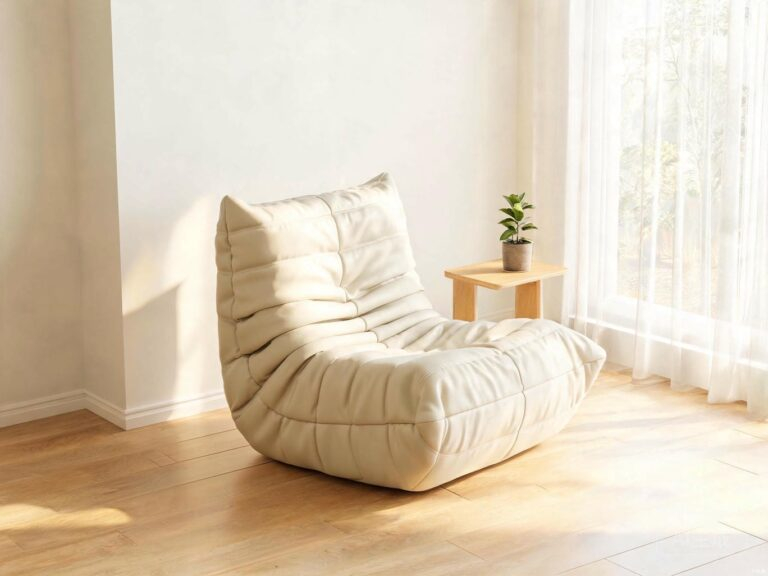
Saturated colors read beautifully in a sample book — the question is what they’ll read after two summers of sun
The Six Checks: From Blue Wool to Batch ΔE
Run these six in order. Each one takes minutes to request from a supplier and eliminates a specific failure mode:
| Check | What it measures | Passing benchmark |
|---|---|---|
| 1. Lightfastness rating | Fade resistance under light, Blue Wool 1–8 scale | Grade 4–5 minimum for interiors |
| 2. Color fastness to rubbing | Color transfer under dry and wet rub | ISO 105-X12, grade 4+ |
| 3. Sample-to-target ΔE | Color distance vs. approved standard | ΔE ≤ 1.0 under controlled lighting |
| 4. Batch-to-batch ΔE | Consistency across production runs | ΔE ≤ 1.0, measured first/middle/last of roll |
| 5. UV aging hours | Accelerated weathering before visible change | 1,000+ hours no fading or yellowing |
| 6. Reorder match record | Can the supplier reproduce the same color a year later? | Documented retention of color formulas |
The Blue Wool reference scale behind check one is the industry’s calibration tool — eight strips of dyed wool with known, graduated fading resistance, where 1 is extremely fugitive and 8 is near-permanent. For a deeper walkthrough of how we apply these thresholds on custom projects, our leather color customization guide documents the full workflow from Pantone code to verified roll.
Colored Leather in Real Projects: Where Colors Drift
In our color lab, no formula ships on the first mix. We produce three variants of every custom color — on-target, slightly lighter, slightly deeper — because material and lighting in the client’s space will shift perception, and the buyer should choose the drift direction deliberately. Production control then measures ΔE at the first, middle, and last sections of every roll and tracks batch trends on control charts; three consecutive batches drifting in one direction, even within tolerance, is treated as an early warning of dye-lot variation and corrected before it becomes a visible mismatch. That discipline exists because the classic failure scenarios are all predictable: sun-exposed and shaded seating in the same room diverging over seasons, reorders arriving a shade off the original install, and dark colors — which absorb more heat — failing faster on thermally stressed surfaces. If you’re weighing specific colors for sunlit interiors, our analysis of blue faux leather color stability quantifies exactly how far uncontrolled color drifts in deep shades.

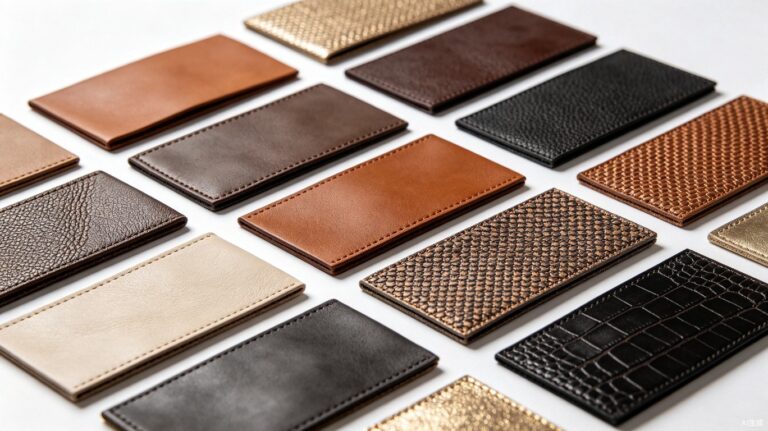
Batch consistency is a color decision as much as a manufacturing one — every swatch must match the approved standard
Color that isn’t tested is a schedule, not a spec. Untested colored leather doesn’t ask whether it will drift — only when, how far, and whether the reorders will match what already faded.
Specifying Color That Stays
The materials that pass all six checks with the widest margin are pigmented systems — and silicone leather takes that advantage further, because the pigment is locked into a UV-stable inorganic matrix rather than suspended in an organic coating that itself yellows. Our rolls hold Grade 4–5 color fastness, pass ISO 105-B06 light exposure testing, and carry 1,000+ hours of UV aging with no fading or yellowing, with unlimited color depth matched to Pantone and RAL references at ΔE ≤ 1.0. For product categories where color is the brand — think consumer electronics skins, branded furniture, and retail interiors — that combination of vibrancy and permanence is the entire purchase argument. Our overview of silicone leather as a material system explains the chemistry, and our 3C and electronics accessories applications page shows what that means where color consistency meets mass production.

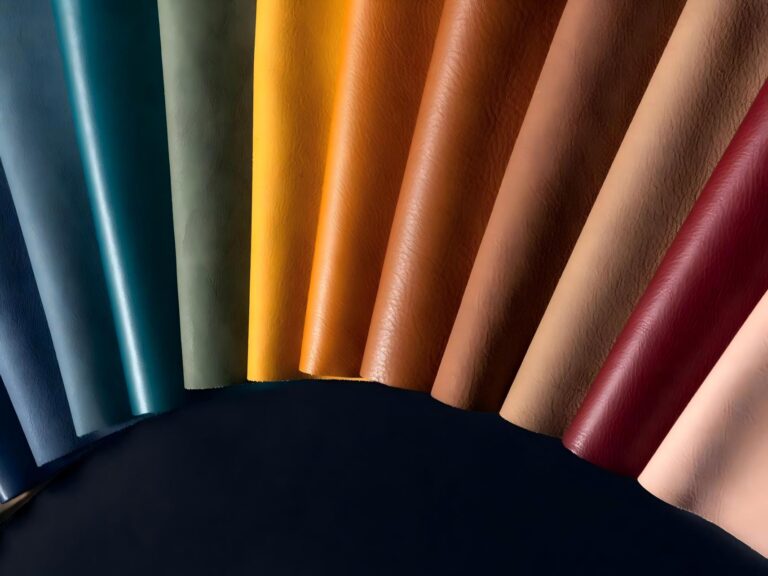
Custom color is a controlled process, not a hopeful one — three variants, verified ΔE, retained formulas
The test behind the grade: color fastness under controlled rub and light exposure
Frequently Asked Questions
Why does my colored leather sofa fade unevenly?
Because UV exposure is uneven. Sun-facing cushions and armrests absorb far more radiation than shaded sections, and dye-based color breaks down under UV molecule by molecule. Uneven fading is the signature of a low lightfastness grade — a material limitation, not a care failure, and no conditioner will reverse it.
What Delta E is acceptable for leather production?
ΔE ≤ 1.0 is the professional standard for upholstery — the point where a difference becomes barely perceptible under controlled lighting. Print tolerances sometimes stretch to ΔE 2.0, but for side-by-side leather panels anything above 1.0 is visible to customers, and for reorders matching an existing install, tighter is safer.
Do darker leather colors fade faster?
Not from UV alone — pigment chemistry drives lightfastness more than depth of shade. But dark surfaces absorb more solar heat, and thermal stress accelerates coating breakdown, so black and deep browns on sun-struck surfaces can fail through heat effects before the color itself gives out. Dark colors in high-sun interiors need the UV-aging hours report, not just the lightfastness grade.
Color Is a Spec, Not a Swatch
The Dubai lounge could have kept its burgundy. The supplier’s swatch was genuine; the lightfastness grade simply wasn’t on the order — nobody asked, nobody volunteered it. Colored leather earns its place in a project the moment color performance moves from adjectives to numbers: a lightfastness grade, a ΔE limit, a UV-aging report, and a supplier who keeps your formula on file for the reorder you haven’t placed yet. Demand the six numbers, and your seating stays one color in every seat, every window, and every season.
About TOPSUN
TOPSUN runs an in-house color laboratory for custom silicone leather programs, delivering brand-matched rolls for furniture, electronics, and retail interiors where color consistency is a contractual requirement.
Unlimited colors with Pantone/RAL matching at ΔE ≤ 1.0 · Grade 4–5 color fastness, ISO 105-B06 verified · 1,000+ hours UV stability · Custom formulas retained for exact reorder matching.