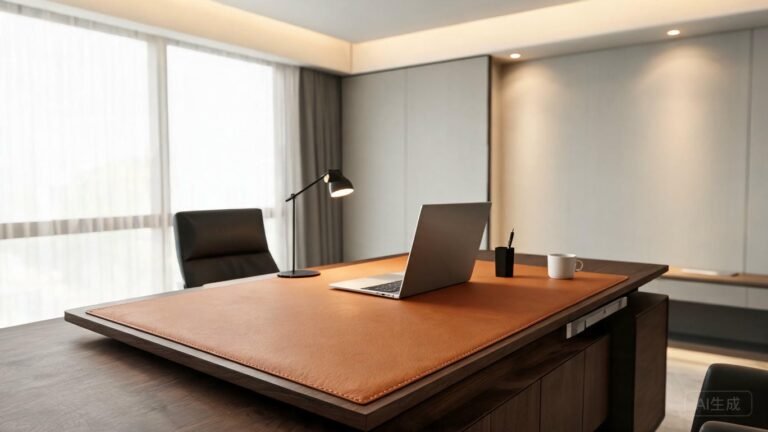
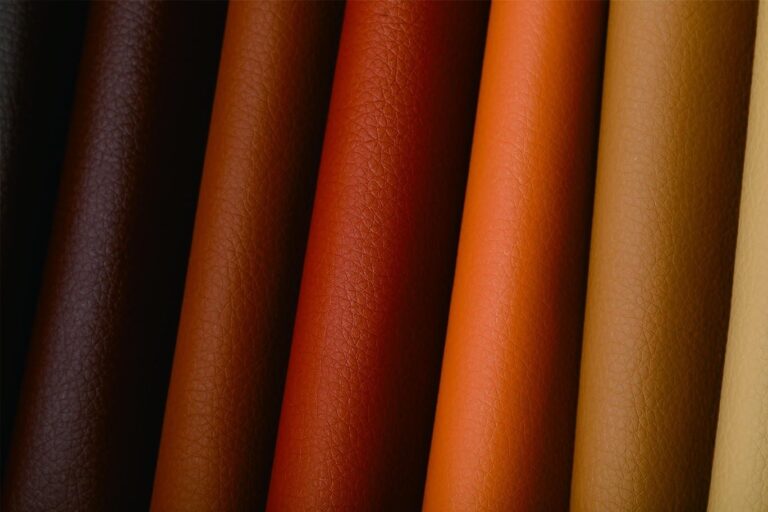
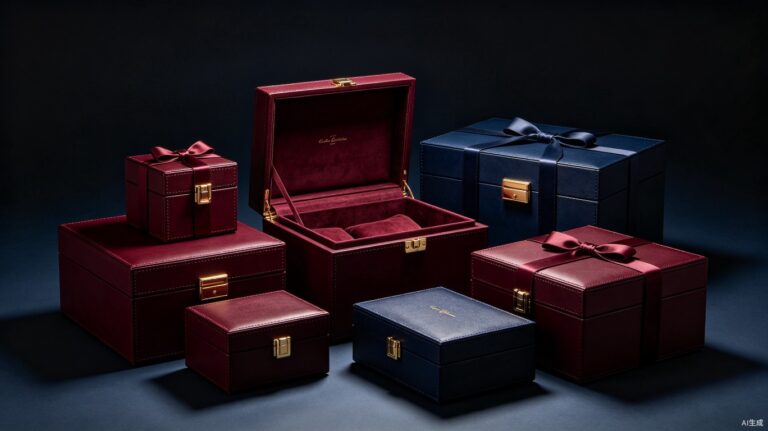
A premium PU leather desk pad looks immaculate on day one. The surface is smooth, the color is rich, the stitching is precise. Six months later, the area under your laptop is discolored from heat exposure. The pen-track zone is permanently scratched. The edges are curling where your wrist rests. And that coffee spill from last Tuesday? It left a stain that won’t come out. This is the desk top leather failure pattern that procurement teams keep repeating — and it’s entirely predictable. The material chemistry determines whether your desk surface lasts six months or ten years. For an overview of suitable leather for table top applications, the distinction matters more than most specifiers realize.
Request Desk Top Leather Samples
Why Desk Top Leather Fails: The 3 Killers
Desk top leather faces a unique combination of stresses that no other leather application encounters simultaneously. A desk pad must survive sustained heat from a laptop base, constant friction from writing and mouse movement, and periodic liquid exposure from ink, coffee, and water. Most materials handle one of these challenges. Very few handle all three.
Killer 1: Sustained Heat. A laptop under load can reach 45-55°C at the base. That heat transfers directly into the desk pad surface, eight hours a day, five days a week. PU leather begins to soften and deform at 80°C — but cumulative heat exposure at lower temperatures gradually breaks down the polymer bonds, causing discoloration and surface degradation long before the softening point. PVC is worse: it begins to plasticizer-migrate at just 60°C. The thermal stress under a laptop is the primary cause of the discolored “laptop shadow” that appears on PU desk pads within months.
The difference becomes obvious when you compare materials. See our silicone vs PU comparison for the full thermal performance breakdown.
Desk Top Material Comparison: What Actually Survives Daily Use
We tested four common desk top leather materials against the three killers: heat, friction, and liquid exposure. The results separate materials that look good on day one from materials that still look good on day 1,000. For related workspace material guidance, see our mouse pad leather specifications.
| Desk Top Material | Heat Resistance | Scratch Resistance (Martindale) | Stain/Ink Resistance | Service Life | Peeling Risk |
|---|---|---|---|---|---|
| PVC Desk Pad | Up to 60°C | 10,000-25,000 cycles | Poor (porous) | 1-2 years | High |
| PU Desk Pad | Up to 80°C | 25,000-40,000 cycles | Moderate | 2-3 years | High |
| Genuine Leather | Up to 100°C | 30,000-50,000 cycles | Moderate (needs conditioning) | 5-8 years | Low (but cracks) |
| Silicone Desk Top Leather | Up to 250°C | 200,000+ cycles | Excellent (non-porous) | 10+ years | None |
The data reveals why PU desk pads fail so predictably. At 25,000-40,000 Martindale cycles, the pen-track zone reaches its abrasion limit within 6-8 months of daily writing. The 80°C heat threshold means sustained laptop heat at 45-55°C doesn’t cause immediate failure — but cumulative exposure breaks down the polymer surface, causing the discoloration and tackiness that signal the beginning of end-of-life.
A PU desk pad costing $8-12 needs replacement every 2-3 years. A silicone desk pad costing $15-20 lasts 10+ years. Over a decade, that’s $30-40 for PU versus $15-20 for silicone — plus the eliminated hassle of procurement, replacement, and disposal.

Scratch resistance tester — the machine that predicts whether a desk pad surface will survive 6 months or 6 years of daily writing.
The Heat Problem: Why Your Laptop Is Destroying Your Desk Pad
The laptop heat problem is the most underestimated killer of desk top leather. Modern laptops, especially performance models used in design, engineering, and finance workstations, can sustain base temperatures of 50°C or higher under load. That heat sits directly on the desk pad surface for 8+ hours per day.
PU leather’s glass transition temperature — the point where the polymer transitions from rigid to rubbery — is approximately 80°C. Below that threshold, the material appears stable. But the cumulative effect of sustained 50°C exposure over months causes gradual plasticizer migration in PVC and polymer chain relaxation in PU. The result: a visible “laptop shadow” — a discolored, slightly tacky rectangle where the laptop sits.
Silicone leather operates on a completely different thermal plane. With a temperature range of -40°C to 250°C, sustained 50°C laptop heat is thermally insignificant. The polymer doesn’t soften, migrate, or degrade at that temperature — not on day one, not on day 3,000. For applications involving electronic devices, our 3C accessories materials page details the thermal performance advantage.
Silicone Desk Top Leather: Engineered for the Workspace
Silicone desk top leather solves all three killer problems simultaneously. The 200,000+ Martindale abrasion rating means the pen-track zone survives years of daily writing without visible scratching. Per ISO 12947-2 testing, the surface shows no degradation even after cycles that destroy PU within months.
The non-porous silicone surface repels ink, coffee, and water. Spills sit on the surface rather than penetrating — a quick wipe with a damp cloth removes them completely. Unlike PU, which absorbs liquid over time and develops permanent stains, silicone’s molecular structure creates a natural barrier against liquid penetration.
For corporate and hospitality projects, the material offers custom sizing, Pantone-matched colors, and custom texture development — including embossed patterns that hide minor wear marks while maintaining a professional appearance over years of use.
Silicone leather scratch resistance test — the surface that handles daily writing without visible wear.
Specifying Desk Top Leather for Corporate and Hospitality Projects
For B2B procurement teams sourcing desk top leather at scale, the specification process should prioritize lifecycle performance over unit price. A corporate office with 500 workstations using PU desk pads at $10 each will replace 500 pads every 2-3 years — a recurring $5,000 expense plus procurement and installation labor. The same office using silicone desk pads at $18 each spends $9,000 once and doesn’t replace them for a decade.
The specification checklist for desk top leather should include: Martindale abrasion rating (minimum 100,000 cycles for commercial use), heat resistance threshold (minimum 150°C for laptop compatibility), surface cleanability (test with ink, coffee, and alcohol), and color fastness per ISO 105-B06. Our product collections include specifications tested to these standards by SGS and Intertek laboratories.
About TOPSUN
TOPSUN manufactures silicone desk top leather engineered to survive sustained laptop heat, daily writing friction, and liquid spills — the three forces that destroy conventional PU and PVC desk pads within 2-3 years.
200,000+ Martindale cycles, heat resistance to 250°C, non-porous stain-resistant surface. Custom sizing, Pantone-matched colors, and embossed textures available. MOQ 500 meters, 7-15 day lead times. Free A4 swatches shipped worldwide via DHL/FedEx.
Frequently Asked Questions
How long does silicone desk top leather last compared to PU?
Silicone desk top leather lasts 10+ years under daily use, while PU desk pads typically show visible wear within 6-12 months and require replacement every 2-3 years. The difference comes down to polymer chemistry: silicone doesn’t hydrolyze, doesn’t soften under laptop heat, and resists abrasion at 200,000+ Martindale cycles versus PU’s 25,000-40,000 cycles. A silicone desk pad is a one-time purchase; a PU desk pad is a recurring expense.
Can silicone desk top leather be customized for corporate branding?
Yes. Silicone desk top leather supports Pantone-matched colors, custom embossed textures, and die-cut sizing for corporate desk pads. The non-porous surface accepts printing and embossing without ink penetration, ensuring logos and branding elements remain crisp over years of use. MOQ is 500 meters with 7-15 day lead times, making it viable for corporate rollouts of 500+ workstations.
The Desk Top Leather That Earns Its Place
Desk top leather isn’t a commodity — it’s a surface that must survive heat, friction, and liquid exposure for years. PU and PVC fail because their polymer chemistry can’t sustain that environment. Genuine leather cracks and stains without constant maintenance. Only silicone desk top leather handles all three killers simultaneously: 250°C heat tolerance, 200,000+ abrasion cycles, and a non-porous surface that repels ink and coffee.
The procurement choice is simple: buy a desk pad you’ll replace in two years, or buy one you won’t. The material chemistry makes that decision for you.