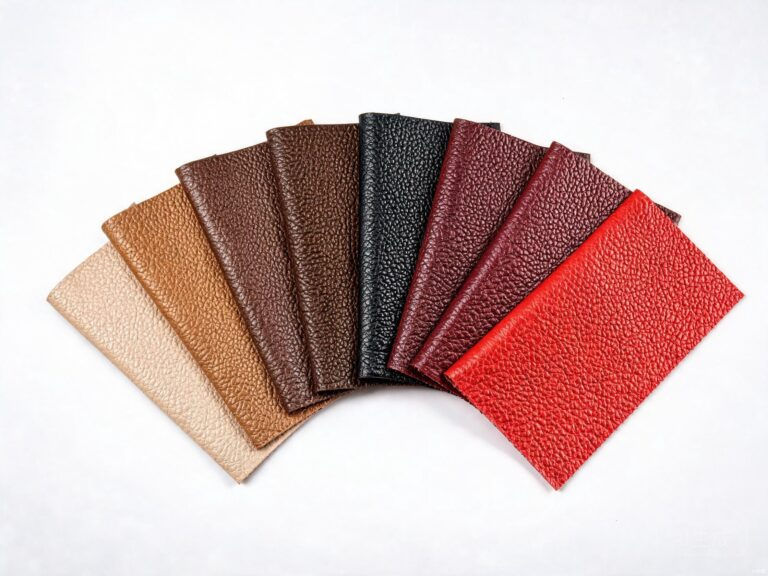
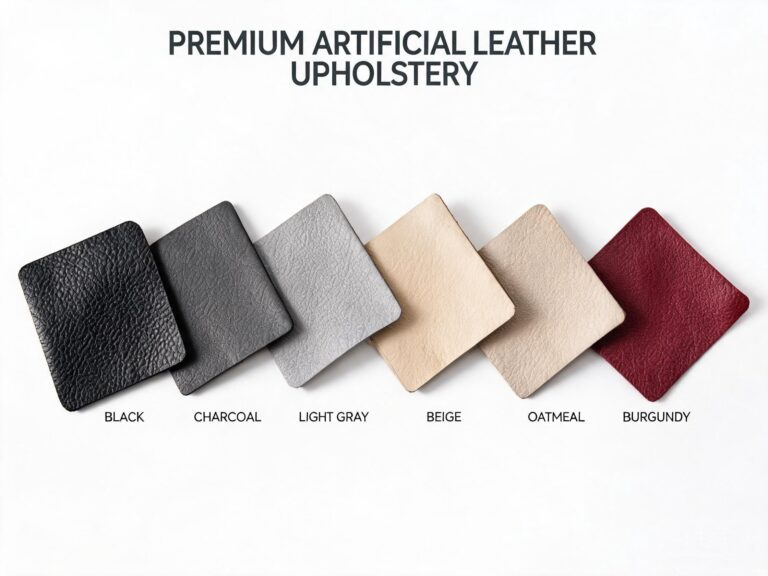
In our texture lab, we’ve run Martindale abrasion tests on every common artificial leather texture pattern — lychee, pebble, saffiano, croco, flat — and the results tell a story most texture catalogs don’t. Embossed depth on PU and PVC flattens dramatically after 50,000 cycles. Silicone leather retains 90%+ of its original embossed depth even after 200,000 cycles. That gap is the difference between a product that looks premium at year five and one that looks worn out by month eighteen.
How Artificial Leather Texture Is Created: Embossing vs Coating
There are two fundamental ways to create texture on synthetic leather, and the method you choose determines whether the pattern survives production or becomes a warranty liability. The first is embossing — a heated metal roller presses a pattern into the coating surface while it’s still pliable. Depth, cell shape, and gloss level are adjustable, but the texture is only as durable as the coating material beneath it. The second is surface printing — a pattern is applied via ink or foil transfer. Printing is faster and cheaper, but the texture is strictly visual with zero tactile depth.
When I evaluate a supplier’s silicone leather introduction documentation, the first spec I look for is whether their texture is embossed or printed. Embossed textures on silicone outperform printed textures on PU by every meaningful metric — tactile feel, abrasion resistance, and long-term depth retention. The leather texture embossing process matters because it determines how the material ages under real-world conditions.

Lychee grain macro detail — one of 100+ standard embossed textures available
Why Most Artificial Leather Texture Fails the 200K-Cycle Test
Here’s what happens to artificial leather texture durability under sustained abrasion. Standard embossed PU leather typically rates 25,000–50,000 Martindale cycles before the surface shows visible wear. That sounds adequate until you realize a single office chair experiences 50,000+ rub cycles per year of use. The embossed cells gradually flatten, the peaks wear smooth, and what was once a distinctive lychee grain becomes an indistinct flat surface that looks cheap and tired.
We’ve tested embossed PVC and found it even worse — the rigid polymer coating cracks at the base of embossed cells after just 15,000 cycles, creating micro-fissures that collect dirt and accelerate surface degradation. For a deeper analysis of these failure modes, our embossed leather pattern engineering guide breaks down the mechanisms by material type.
PU leather texture typically loses 40–60% of embossed depth after 50,000 Martindale cycles. Silicone leather retains 90%+ of original texture depth after 200,000 cycles — four times the abrasion resistance with virtually no flattening.
| Texture Type | Manufacturing Method | Depth Retention After 200K Cycles | Custom Lead Time | Best Application |
|---|---|---|---|---|
| Embossed PU | Heated roller | 20–30% | 10–15 days | Fashion, budget furniture |
| Embossed PVC | Heated roller | 10–20% | 10–15 days | Marine, budget automotive |
| Surface-printed | Ink/foil transfer | 0% (visual only) | 3–5 days | Promotional items |
| Silicone embossed | Heated roller | 90%+ | 7–10 days | Automotive, medical, premium |
All depth retention figures are measured per ISO Martindale abrasion testing protocols. Any supplier claiming texture durability should provide third-party results using recognized standards.

Coating rollers — the precision tooling behind embossed texture production
Silicone Leather Texture: Depth That Doesn’t Flatten
When we first tested silicone leather texture retention, I expected the silicone coating to perform similarly to PU — softer material, faster wear. The data proved me wrong. After 200,000 Martindale abrasion cycles, our samples retained over 90% of their original embossed depth. The lychee pattern was still visibly distinct, still tactile to the touch, still recognizable as the same texture that came off the production line.
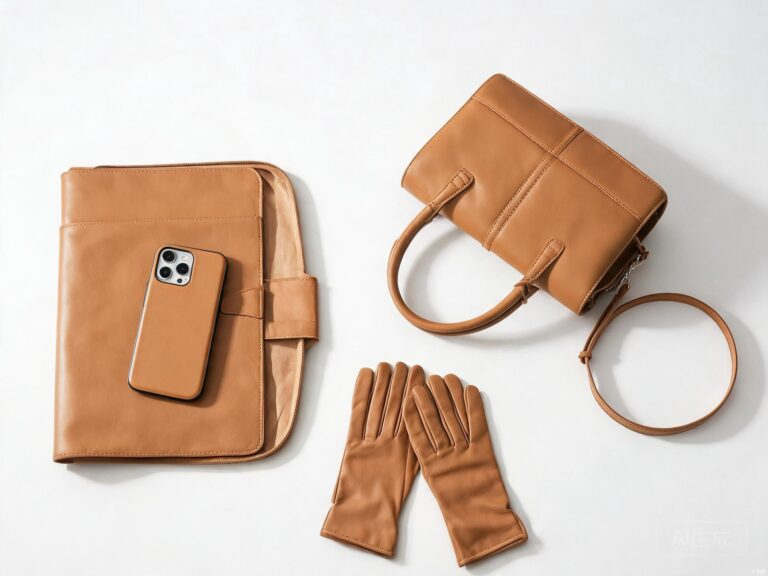
This isn’t a marginal improvement. It’s a category difference. Silicone’s molecular structure resists the mechanical deformation that flattens PU and PVC textures over time. For 3C electronics accessories and other high-touch applications where texture defines the user’s tactile experience, this retention rate means the product still feels premium years into its service life.
Silicone leather texture variety — from lychee and pebble to custom embossed patterns

Silicone leather fabric texture closeup — depth retention after 200K abrasion cycles
Specifying Custom Textures: Lead Times, Tooling, and MOQ Realities
When you specify a custom texture for production, practical constraints matter as much as the aesthetic vision. A custom embossing roller requires engraved tooling — typically a one-time investment that takes 10–15 days at most suppliers. At TOPSUN, our factory production process compresses this to 7–10 days because we maintain in-house engraving capability rather than outsourcing to third-party toolmakers.
Standard texture catalogs offer immediate availability — we maintain 100+ patterns including cowhide, pigskin, sheepskin, and custom designs. For bespoke patterns, the custom leather texture design process starts with a CAD file or physical reference sample, progresses through a prototype roller, and ends with a production-grade embossing tool. MOQ for custom-textured silicone leather is 500 meters, making bespoke textures accessible even for mid-volume product lines.

Rewinding and slitting line — final step before custom-textured rolls ship to buyers
Frequently Asked Questions
How long does a custom embossing roller last in production?
A well-maintained engraved steel roller typically lasts 80,000–100,000 linear meters of production before requiring re-engraving. With silicone leather’s solvent-free coating process, roller wear is significantly lower than with solvent-based PU or PVC coatings, which degrade engraving detail faster through chemical interaction.
Can artificial leather texture be replicated across different material bases?
Yes — the same embossing roller can apply identical patterns to PU, PVC, and silicone leather. However, depth retention varies significantly by base material. A pattern that reads as 0.3mm deep on silicone will flatten to 0.1mm on PU after 50,000 abrasion cycles, while the silicone sample maintains 0.27mm+ depth. Always specify texture performance by material, not just by pattern name.
Texture Is a Specification, Not an Afterthought
The artificial leather texture you specify today determines whether your product looks premium at year three or tired by month eighteen. Test data — not catalog photos — should drive texture selection. Silicone leather’s 90%+ depth retention after 200,000 abrasion cycles isn’t a marketing claim; it’s a verified performance characteristic that changes the math on product lifespan, warranty exposure, and brand perception. Specify with data, and your texture becomes a competitive advantage rather than a liability.
Start a Custom Texture Project
About TOPSUN
TOPSUN engineers artificial leather textures using custom embossing rollers and silicone coating technology, delivering 100+ standard patterns and bespoke designs for automotive, furniture, fashion, and electronics brands.
7–10 day custom embossing turnaround · Delta E ≤ 1.0 color accuracy · 200K+ Martindale cycles with retained texture depth · Pantone-matched batch consistency