The synthetic leather market reached $41.47 billion in 2026, growing at 8.2% annually — yet most of that material will end up cracked, peeling, or in a landfill within five years. PU dominates with 51.36% market share, but its average lifespan of 3–5 years means buyers pay twice for the same coverage period. We’ve tested five leather alternative fabric types side by side in our lab — and the performance gap between the best and worst isn’t 20%. It’s 300%.
| Material | Lifespan | Martindale Cycles | UV Resistance | Recyclable |
|---|---|---|---|---|
| Silicone Leather | 10+ years | 200,000+ | 1,000+ hrs | Yes |
| Microfiber Leather | 5–7 years | 80,000–100,000 | 200 hrs | Limited |
| PU Leather | 3–5 years | 50,000–100,000 | 200 hrs | Limited |
| PVC Leather | 2–3 years | 20,000–50,000 | 100 hrs | No |
| Plant-based | 2–5 years | 20,000–40,000 | 100 hrs | Variable |
What Counts as a Leather Alternative Fabric Today?
A leather alternative fabric is any non-animal material engineered to replicate the look, feel, and function of genuine leather. The five dominant types — PU, PVC, microfiber, plant-based, and silicone — differ fundamentally in chemistry, not just in marketing labels. PU relies on polyurethane coatings that emit solvents during production. PVC uses plasticizers that leach over time. Microfiber bonds polyester fibers with PU binders. Plant-based options like cactus or apple leather still require polyurethane or resin binders to achieve flexibility. Silicone leather applies 100% silicone polymer onto a fabric substrate using a solvent-free dry coating process.

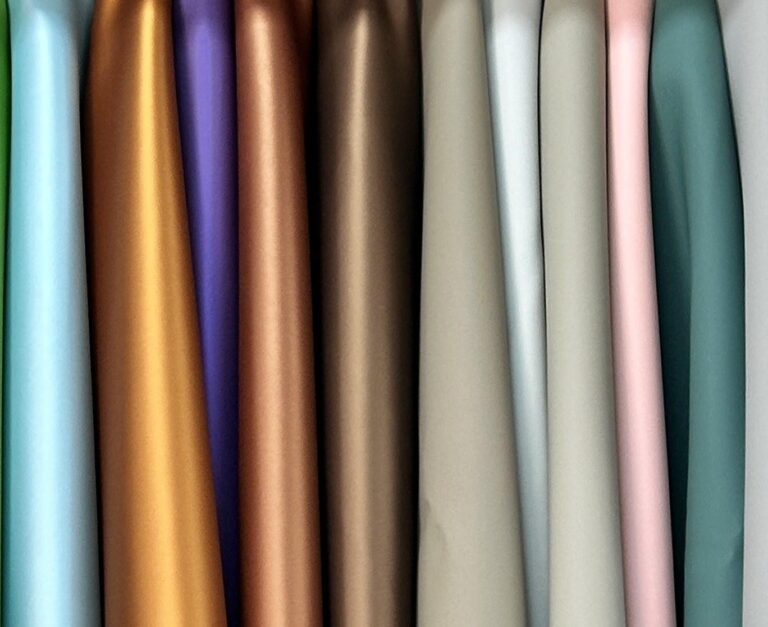
Five leather alternative fabric types shown side by side in a production swatch rack
Here’s the problem: buyers often choose based on initial price or sustainability claims, then discover the material can’t survive the application environment. A fabric labeled “eco-friendly” may still contain PU binders that hydrolyze and crack. A “premium” PU leather at 0.8mm thickness still degrades at 80°C — well below the temperature a car interior reaches in summer parking.
Durability Testing: Why PU and PVC Leather Alternatives Crack
In our abrasion testing lab, we run ISO 12947-2 Martindale cycles on every leather alternative fabric we produce and benchmark against. The numbers tell a stark story. PU leather typically fails between 50,000 and 100,000 cycles. PVC degrades even faster at 20,000–50,000. Plant-based options rarely exceed 40,000. Meanwhile, our silicone leather alternative fabric withstands 200,000+ cycles without surface breakdown.

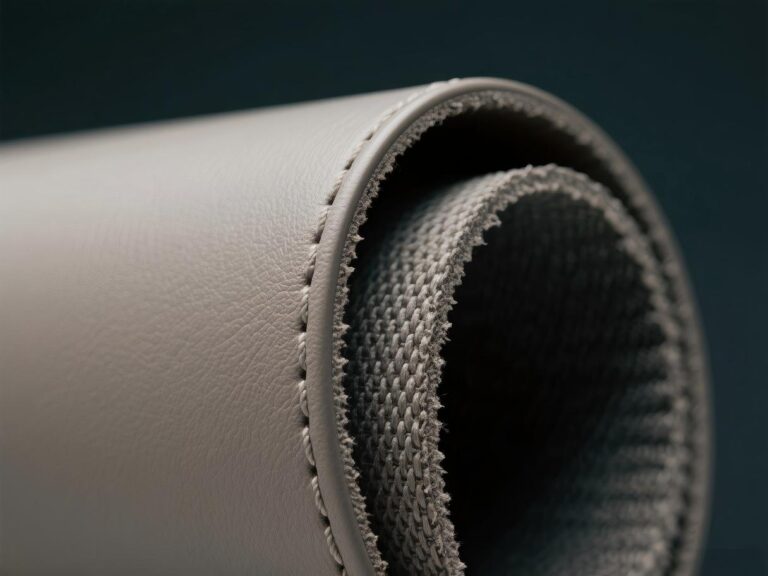
Martindale abrasion testing reveals the real durability gap between leather alternative fabric types
The root cause is molecular. PU and PVC are carbon-based polymers with ester or plasticizer bonds that hydrolyze when exposed to moisture, heat, and UV. In a side-by-side comparison, PU leather exposed to 200 hours of UV (ASTM G154) begins surface cracking — the coating loses elasticity and fractures along stress lines. Silicone’s Si-O backbone is inherently UV-stable and hydrolysis-resistant, which is why it shows zero degradation after 1,000+ hours of the same test.
We’ve seen this failure pattern firsthand in marine applications. A client replaced PVC boat seating after just two seasons — the salt spray and UV had turned the surface brittle and discolored. The same client switched to silicone leather and reported no visible degradation after four full seasons of saltwater exposure.
Silicone Leather: The Alternative That Outlasts the Rest
Silicone leather isn’t just “another alternative” — it’s structurally different from every other leather alternative fabric on the market. The silicone polymer (polydimethylsiloxane) has a Si-O bond energy of approximately 452 kJ/mol, compared to the C-C bond in PU at roughly 347 kJ/mol. That 30% higher bond energy translates directly to thermal stability up to 250°C, UV stability beyond 1,000 hours, and hydrolysis resistance that PU physically cannot match.

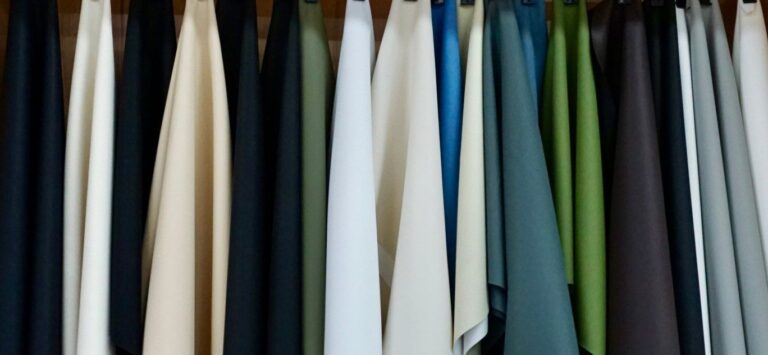
Silicone leather alternative fabric maintains texture and color after years of real-world use
Beyond durability, silicone leather is the only major alternative that is PVC-free, phthalate-free, DMF-free, and produces near-zero VOC emissions during manufacturing. It passes ISO 10993-5 biocompatibility testing for medical skin-contact applications and holds FDA 21 CFR 177.2600 food-contact compliance. No PU or PVC alternative can claim either certification.
Cost Reality: TCO of Leather Alternative Fabrics Over 10 Years
The upfront price of PU leather ($3–8/meter) looks attractive against silicone leather ($8–15/meter). But procurement teams that calculate total cost of ownership tell a different story. Over a 10-year period, PU requires 2–3 replacements (material + labor + downtime), pushing the effective cost to $9–24/meter. PVC fares worse at $12–18/meter when factoring its 2–3 year replacement cycle. Silicone leather, at $8–15/meter with no replacement needed over the same decade, delivers the lowest 10-year TCO of any leather alternative fabric.
Key takeaway: A material that costs 50% less upfront but lasts 60% less time is not a cost saving. It’s a deferred cost with interest.
For B2B buyers in automotive, furniture, and marine sectors, the silicone vs PU vs PVC comparison becomes clear once you look past the first-year invoice. Warranty claims, replacement labor, and brand damage from premature product failure erase any initial savings from cheaper alternatives.
Watch how silicone leather outperforms PU and PVC in side-by-side material testing
Which Leather Alternative Fabric Fits Your Project?
| If Your Project Requires… | Best Leather Alternative Fabric |
|---|---|
| 10+ year lifespan, minimal replacement | Silicone leather |
| Lowest upfront cost, short product cycle | PU leather |
| Waterproof, budget-constrained | PVC leather (plan for replacement) |
| Medical, food-contact, or infant safety | Silicone leather (ISO 10993 + FDA certified) |
| UV-exposed outdoor or marine | Silicone leather (1,000+ hrs UV-stable) |
Is silicone leather a good leather alternative fabric for outdoor applications?
Yes. Silicone leather survives 1,000+ hours of ASTM G154 UV exposure without fading or cracking, resists salt spray for 1,000+ hours (ISO 9227), and operates from -40°C to 250°C. No other leather alternative fabric matches this combination of UV, salt, and thermal stability, making it the preferred choice for marine, outdoor furniture, and automotive interior applications.
How does the cost of silicone leather compare to PU leather over 10 years?
Silicone leather costs roughly 1.5–2× more per meter upfront than PU leather. But over a 10-year period, PU requires 2–3 full replacements (material + labor + downtime), bringing effective cost to $9–24/meter. Silicone leather at $8–15/meter with zero replacement delivers lower total cost of ownership — a fact most procurement teams miss when they compare only first-year invoices.
The leather alternative fabric market is growing fast, but not all growth is good growth. Choosing a material that fails in 3–5 years means paying for the same coverage twice. Silicone leather’s 10+ year lifespan, 200K+ Martindale cycles, and near-zero VOC manufacturing make it the only alternative that truly closes the gap with genuine leather — on performance, not just on paper.
About TOPSUN
TOPSUN manufactures silicone-coated leather alternative fabrics for automotive interiors, furniture upholstery, marine decking, and medical device covers across a 60,000+ m² production base.
200K+ Martindale abrasion cycles verified · UV-stable 1,000+ hours · Near-zero VOC solvent-free dry coating · ISO 10993 biocompatibility + FDA 21 CFR food-contact certified