Seen “PF leather” on a furniture spec sheet or a tannery quote lately? Which finish are you actually paying for? Why do two suppliers quote the same two letters at very different prices? The short answer: PF is trade shorthand, not a standard, and it covers at least three different products. The longer answer takes six minutes and saves one mis-order per program.
What PF Actually Stands For on a Quote
No ISO or ASTM document defines PF leather. The letters live in two trades with overlapping vocabulary. In tannery language, PF usually means pigmented finish: an opaque pigment-and-binder coating applied over corrected grain hide. The coating masks scars and insect bites, and it is the most protected surface a genuine hide can carry.
In Italian furniture spec codes, PF means something narrower. Tonin Casa’s own finish list spells it out: PF is “Grain Leather (slightly retouched)”, sitting beside P for leather, PN for nubuck, and SN for faux nabuk. Same letters, lighter touch, genuine hide either way. A third usage appears in coated-fabric contexts, where PF reads as printed finish: a texture embossed or printed onto PU, PVC, or silicone rolls rather than onto hide.

Finish work is where PF earns its price: pigment, binder, and topcoat decide what the letters mean on your dock.
The Finish Spectrum Behind the Letters
On genuine hide, PF-style pigmented finishes sit at the protective end of a three-step spectrum. Aniline leather carries no opaque coating at all. Only the top 5 percent of raw hides qualify, and cutting yield runs 65 to 75 percent, which is why aniline costs most and stains fastest. Pigmented leather seals the surface with an opaque polymer-and-pigment finish, capped at 0.15 mm under international leather standards. The measurable payoff: Grade 4 to 5 on the ISO Blue Wool lightfastness scale, 1,000-plus Taber abrasion cycles, and the best stain resistance of the three. Semi-aniline splits the difference with a micro-coating under 0.02 mm.

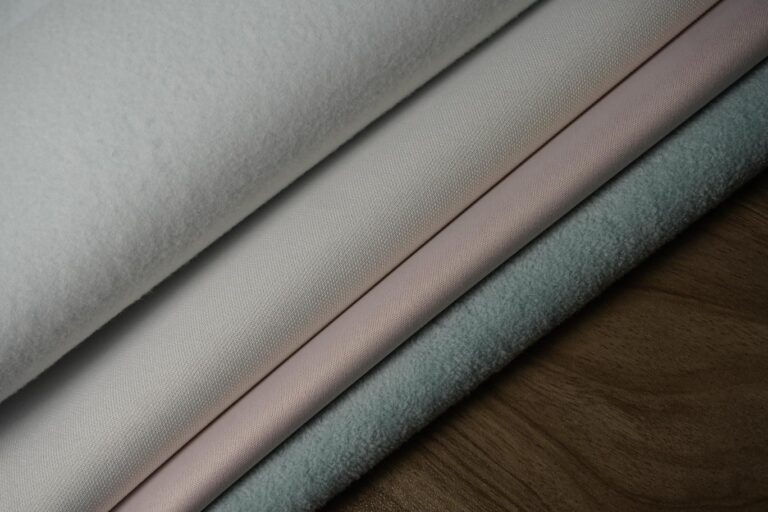
Swatch cards let buyers compare finish tiers side by side; pigment load is visible before any lab test is run.
| Finish tier | Natural look | Durability | Stain resistance |
|---|---|---|---|
| Aniline | Highest | Lowest | Poor |
| Semi-aniline | High | Medium | Good |
| Pigmented (PF, hide sense) | Lowest | Highest | Excellent |
When the Printed Alternative Beats Genuine PF
The pigment layer that protects a PF hide is also its ceiling. It cannot survive hospital-grade disinfectants for a decade, and it ages as hide ages. High-traffic contract programs increasingly spec the third meaning instead: a printed or embossed finish on synthetic roll goods. The printing process delivers the same uniform, corrected-grain look that pigmentation buys on hide. The substrate underneath then decides everything else. Our silicone vs. PU comparison covers the polymer layer in detail. The short version: silicone-coated rolls carry more than 100 embossed textures, wipe-clean surfaces, and hydrolysis resistance measured in decades, not years.
Where does genuine PF still win? Low-traffic residential programs that value hand feel and patina. Where does the printed roll win? Everywhere upholstery meets disinfectant, salt air, or 200,000-cycle abrasion specs, the standard our contract-grade rolls meet. For sofa programs weighing the two, the furniture application notes list the test lines that separate them.

Printed-finish samples: the same visual uniformity as pigmented hide, on a substrate you choose.
A Two-Minute Decision Tree for the Next Quote
- See PF on a quote. First question, every time: hide or roll good? The answers route to entirely different supply chains.
- If hide: ask which finish tier, pigmented, semi-aniline, or aniline, and get the Taber and lightfastness numbers in writing.
- If roll good: ask which polymer carries the print, PU, PVC, or silicone, then ask for the Martindale and hydrolysis figures.
- If the supplier cannot answer tier or polymer in one email, the code on the quote is not the material you will receive. Our notes on faux and genuine differences show what a full answer looks like.
PF is not a spec. It is a question your supplier should answer in one line: family, tier, and finish method. Programs that collect those three answers in writing do not argue at the dock.
Request Finish-Matched Samples
References
1. https://www.arredamentopari.com/en/charm-chair-… — Tonin Casa finish codes: PF listed as “Grain Leather (slightly retouched)” alongside P, PN, SN, and S codes
2. https://nordicdesignblog.com/leather-types-for-… — Pigmented leather: Grade 4–5 ISO Blue Wool lightfastness, 1,000+ Taber cycles; aniline requires top 5% of hides, 65–75% cutting yield; coatings capped at 0.15 mm