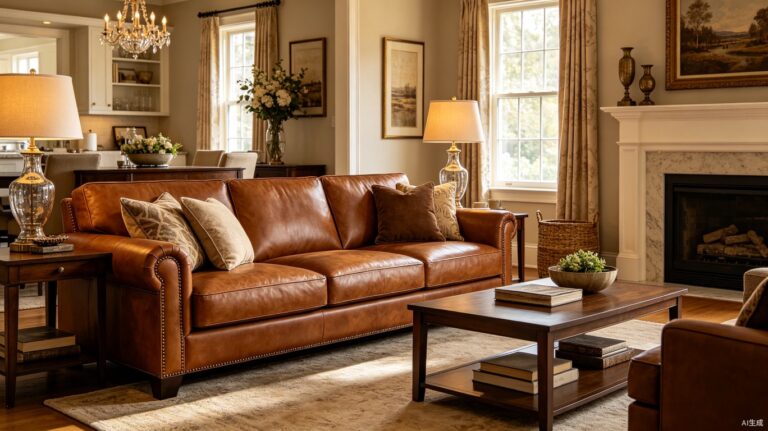
A couple sits on a display model in a showroom and asks the question every sofa seller dreads: will this PU leather peel. The honest answer depends on choices the customer never sees, made months earlier in a spec sheet. PU leather for sofa programs can serve a household for five quiet years or start flaking at the seams inside three. The difference is rarely the topcoat they touch. It is the backing, the humidity, and the window behind the couch.
This article walks the full arc. It covers what PU actually delivers on a sofa year by year, why most failures start under the surface, and the spec lines that separate a five-year roll from a two-year one. It ends with a checklist you can pin to the next RFQ.
What PU Leather Actually Delivers on a Sofa
Under normal indoor conditions, standard PU upholstery lasts about 3-5 years. PVC variants run slightly shorter at 2-5. Those numbers assume a shaded living room and gentle use, which few real households provide. Direct sunlight through a window can halve the figure, cutting three years of service to roughly 18 months. A hotel lobby with all-day lighting sees standard PU fail between 18 and 30 months. Premium grades with thicker, cross-linked coatings stretch back to 3-5 years even there.
The timeline repeats across rental programs, family rooms, and sunrooms. Year one looks flawless. Year two shows seat shine. Year three brings the first hairline cracks along the cushion edge. Setting that expectation honestly with buyers protects the relationship far better than promising leather at a PU price, and our furniture and sofa applications notes collect the zone-by-zone versions of it.
Why Most Sofa PU Fails From the Inside Out
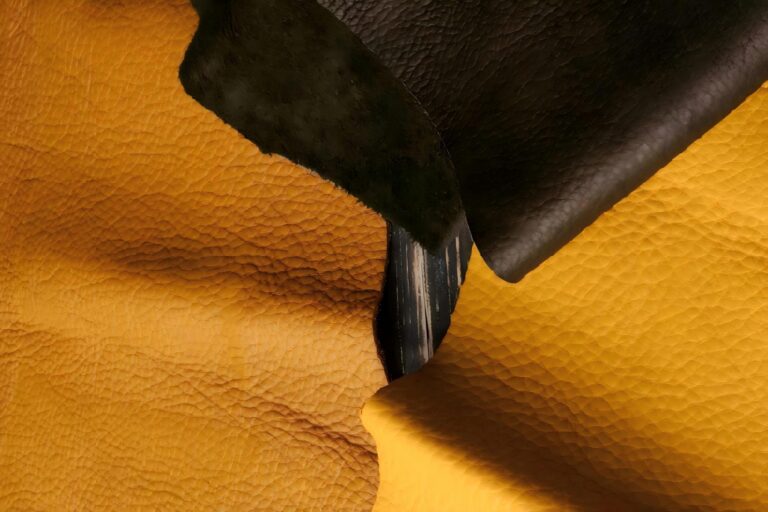
Industry teardowns put a surprising number on it: around 80 percent of PU leather peeling starts in the base fabric, not the topcoat. The material is a composite. A polyurethane film gets laminated onto a textile backing, and buyers spend all their attention on the film they can touch. Many budget rolls ride on a 150 gsm non-woven backing that tears long before the coating does. When the base disintegrates, the surface lifts with it, and no conditioner reverses that.
Hydrolysis is the second inside-out failure. Standard polyester-urethane starts breaking down irreversibly above roughly 70 percent relative humidity, losing tensile strength year after year while it sits in that zone. A sofa in a coastal apartment or a humid summer climate lives there for months at a time. The coating looks intact until it suddenly is not.

The base fabric decides more of a sofa PU’s life than the film on top of it.
Ask Our Team About Base Fabric Specs
The Four Accelerators: Sunlight, Humidity, Pets, and Cleaning
Four household forces speed the clock. Sunlight is the strongest: UV exposure can cut PU lifespan in half, which is why sofas opposite large windows age faster than their spec sheet admits. Humidity works from within, feeding hydrolysis above the 70 percent threshold. Pets add claw snags that seed cracks in the film. And aggressive cleaning, especially alcohol-based wipes, strips conditioner from the surface and stiffens it. A household with all four should not buy entry-grade PU at any price.

Modern living rooms combine all four accelerators: light, humidity, claws, and wipes.
Spec Lines That Slow the Clock
The countermeasures live in four spec lines. First, backing: specify a woven or knitted base at 200 gsm or more, never an unnamed non-woven. Second, topcoat: cross-linked hydrolysis-resistant PU at around 0.8 mm passed five-year accelerated aging with no peel in chamber tests, while thinner films failed visibly. Third, abrasion: ask for Wyzenbeek results above 10,000 double rubs on seat areas. Fourth, a written hydrolysis claim tied to a test method, not a brochure adjective.
Cross-linked heavy grades cost roughly 1.5 times standard PU up front. Over seven years they run close to 1.0 times the initial invoice, because the replacement cycle disappears. For a furniture brand, that math is the difference between a warranty line and a margin line.

A 0.8 mm cross-linked film flexes through years a 0.4 mm film cannot survive.
Pin These Five Lines to Your Next Sofa RFQ
PU leather for sofa programs works when the spec protects the household reality, not just the showroom moment. Before the next order:
- Set the expectation: 3-5 years indoors, roughly 18 months in strong window sun
- Pin backing type and weight, 200 gsm woven or knitted minimum
- Require a 0.8 mm cross-linked topcoat on seat zones
- Collect Wyzenbeek and hydrolysis numbers on the exact composite you will buy
- Step high-load zones up to silicone, which carries no hydrolysis clock at all
Where a program outgrows PU entirely, our eco-friendly silicone leather page shows the upgrade path. The chemistry holds a 10-15 year service life in the same humid, sunlit rooms that cut conventional PU in half.
How long does PU leather last on a sofa?
Standard grades deliver 3-5 years in a shaded living room. Strong window sun can cut that to around 18 months, and humid coastal air shortens it further through hydrolysis. Heavier cross-linked builds hold the full range.
Can peeling PU leather be repaired?
Not credibly. Peeling means the base fabric under the film has failed or the coating bond has let go. Fillers and paints hide it for a season, then it spreads. Panel replacement is the only durable fix.
About TOPSUN
TOPSUN supplies silicone-based leather to sofa makers whose programs outgrow PU, from residential lines to contract seating.
Hydrolysis-proof, solvent-free chemistry with a 10-15 year service life, Martindale up to 200,000+ cycles, and SGS test reports with every order.
References
1. https://neveitaliafurniture.com/pu-leather-sofa… — Around 80% of PU leather peeling starts in the base fabric; budget rolls ride on 150 gsm non-woven backings that tear first
2. https://neveitaliafurniture.com/leather-sofa-du… — UV light halves PU lifespan from 3 years to 18 months; standard PU fails in 18-30 months under hotel lighting
3. https://sunsgoods.com/de/wie-lange-halt-kunstle… — Typical service life: PU leather 3-5 years, PVC leather 2-5 years under normal use