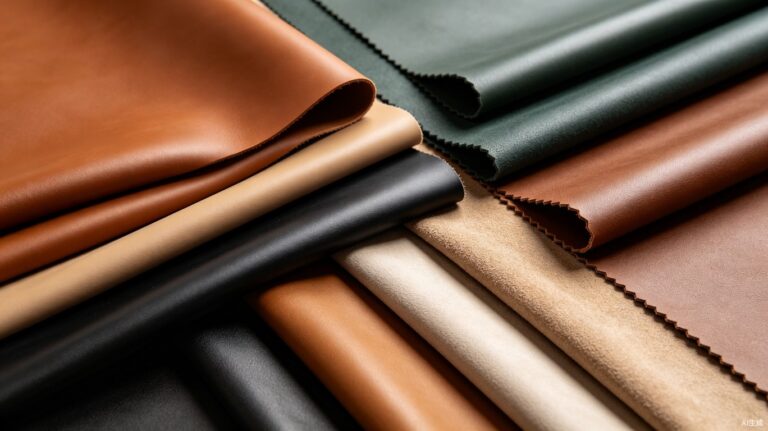
What does a buyer actually get when a spec sheet says natural vegan leather? Is the material grown, mined, or extruded? And if it comes from a cactus or a mushroom, why does the durability still depend on plastic? Those three questions cut through most of the marketing in this category, because vegan is a simple claim while natural is a sliding scale. This article maps the scale, audits the binders behind the plant-based names, and ends with a verdict table by program type.
The short version: vegan only guarantees no animal inputs. Natural can mean anything from a pure mycelium sheet to a cactus composite held together by polyurethane. Knowing which is which takes one data point most listings omit, and this article shows where to find it.
| Route | Source | Typical Binder | Service Life |
|---|---|---|---|
| Standard vegan PU | Textile plus polymer coating | PU, fossil-based | 3-5 years |
| Cactus leather | Nopal cactus pulp | Polyurethane | Mid range |
| Mushroom leather | Mycelium on farm waste | Often PU for durability | Grade dependent |
| Pure mycelium | Air-grown fungal mat | None | Approaches hide |
| Silicone leather | Sand-derived mineral polymer | None | 10-15 years |
Vegan Is Binary, Natural Is a Spectrum
The vegan half of the label is strict: no animal skin, no animal by-products, anywhere in the material. The natural half is where listings get creative. Cactus leather is nopal pulp blended with polyurethane, so the plant share of the finished sheet is real but partial. Mushroom leather grows a mycelium mat on agricultural waste, then usually adds a polymer binder to reach the durability buyers expect. Only a handful of pure mycelium materials ship without synthetic content, and they cost and behave closer to premium hide.
None of this makes the plant routes fake. It makes them composites, and composites should be quoted by composition. A material that is 30 percent cactus and 70 percent PU is a different purchase from one that inverts the ratio, even if both display the same leaf on the label.
The Binder Problem: Plant Does Not Mean Plastic-Free
The binder decides three things buyers care about. First, durability: pure plant or fungal sheets without polymer reinforcement age quickly in abrasion and flex, which is exactly why binders get added. Second, end of life: a polyurethane-bound composite is not backyard compostable, whatever the substrate was, so biodegradability claims need a boundary line. Third, chemistry exposure: standard PU binders can carry the same solvent and plasticizer questions as any PU upholstery grade. The honest suppliers publish the bio-content percentage and the binder chemistry side by side. The rest publish a farm photograph.

Every composite starts at a materials wall. The label should match what is on it.
Ask for a Composition Breakdown
The Mineral Route: Silicone as Vegan Leather
Silicone takes a different path to the same vegan claim. The polymer is derived from sand, processed into silicone, coated onto fabric, and contains no animal inputs and no plasticizers. It is not plant-based, and it is not biodegradable, so the natural story is mineral rather than botanical. What it buys is service life: 10-15 years against hydrolysis, UV, and hospital-grade disinfection, in the same rooms that age plant composites early. For programs where the vegan claim must survive years of hard use, that trade is often the deciding one. Our eco-friendly silicone leather page documents the chemistry and the certifications behind it.

Mineral chemistry on a coating line: vegan by origin, durable by structure.

Swatch rows tell the spectrum: same vegan word, very different compositions behind it.
Certification Questions That Cut Through Greenwashing
Four requests sort a natural vegan leather claim in one email. Ask for the bio-content percentage of the finished sheet, not of the feedstock. Ask which polymer carries the surface and whether it is plasticizer-free. Ask for the vegan certification, such as PETA-Approved Vegan, on the finished composite. And ask for abrasion and flex numbers on the exact build, because a plant story does not bend on a seat edge. Suppliers with real documentation answer inside a week. Suppliers with a story answer with another story.
For child-facing products the bar rises again, since skin contact and mouth contact bring regulatory limits into play. Our baby and kids applications notes list the certifications that category demands.
Which Vegan Route Fits Your Program
The verdict table, by what the program actually needs:
| If the program needs | Choose |
|---|---|
| A botanical story with a low price | Cactus or standard vegan PU, with the binder share disclosed |
| Maximum natural content at premium cost | Pure mycelium, certified plastic-free |
| A vegan claim that survives a decade of use | Silicone-based vegan leather |
| Regulated skin-contact products | The route with the fullest certification file, verified per composite |
Natural vegan leather is not one material and never will be. It is a family of trade-offs between origin, binder, and lifespan. Quote the trade-offs in numbers and the label stops being a leap of faith.
Request Vegan-Route Sample Sets
References
1. https://keptlist.com/best-plant-based-leather-b… — Mushroom mycelium mats typically require a polyurethane binder to achieve commercial durability
2. https://www.beltley.com/blogs/blog/cactus-mushr… — Cactus leather is nopal cactus pulp combined with polyurethane, a vegan composite rather than leather
3. https://www.fashionindex.com/blog/plant-based-l… — Pure AirMycelium sheets ship without polyurethane or heavy metals and grow in 7-9 days