When a buyer emails us asking for natural faux leather, we ask one clarifying question before quoting. Do you mean the color, or the material? Nine times out of ten, the answer is the color: that warm, beige-tan, undyed-look shade that reads calm in showrooms and catalogs. The distinction matters more than most sourcing teams expect. Your spec sheet, test plan, and unit price all change depending on which “natural” you actually need.
The broader market is moving in this direction. Straits Research values the global synthetic leather market at $46.74 billion in 2025, projected to reach $89.91 billion by 2034. Light, natural-tone shades are a visible share of that growth in furniture and hospitality. But here’s the catch: pale shades are the least forgiving surfaces in the entire category. They show yellowing, stains, and batch variation long before dark colors do. This article walks through what “natural” means on a spec sheet, why light shades fail first, and the four tests to demand before you place an order.
What “Natural” Actually Means on a Faux Leather Spec Sheet
In leather terminology, “natural” was borrowed from vegetable-tanned hides that keep their original cream-to-brown tone. Faux leather suppliers adopted the word for the same color family: sand, oatmeal, mushroom, camel, and similar undyed-look shades. Walk any furniture fair and you’ll see the shade everywhere, from bar stools to lounge seating.
What it does not mean is a plant-based material. A natural faux leather fabric can be built on polyurethane, PVC, microfiber, or silicone, and the color comes from pigments in the coating. If your product marketing claims “natural materials,” that is a separate certification conversation from a colorway name. Treating the two as interchangeable is one of the most common spec errors we see from first-time buyers.
Practically, treat “natural” as a color specification with tolerances, not a vibe. Before approving a sample run, pin down three things:
- A Pantone or RAL reference, so both sides measure against the same target
- A numeric Delta E ceiling per batch, verified with a spectrophotometer
- A gloss level (matte, semi-matte, or sheen), since the same pigment reads differently at each gloss
If a supplier cannot hold a Delta E tolerance, your “natural” shade will drift across production batches. On a 400-seat restaurant fit-out, that drift is visible from across the room.

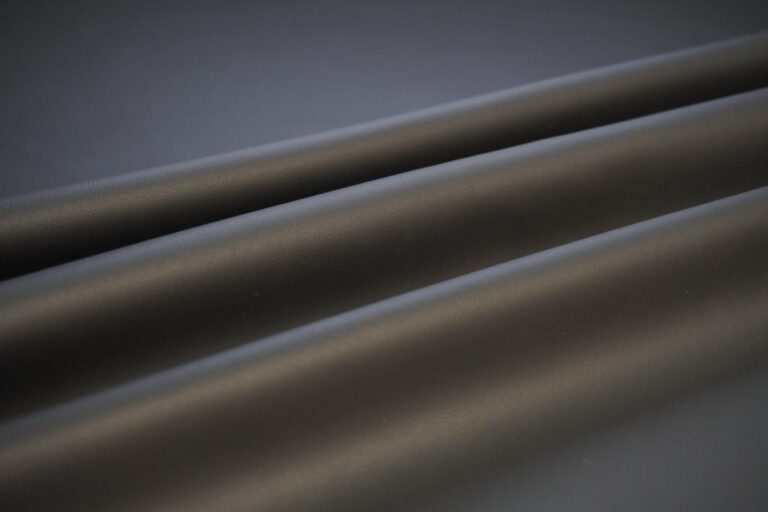
Warm-tone swatches: “natural” is a color family spanning sand, camel, and oatmeal shades.
Why Light Shades Yellow: UV Exposure Is the Real Test
Light-colored faux leather fails in two predictable ways. First, yellowing. Conventional PU coatings contain additives that oxidize under UV light, and the discoloration shows fastest on cream and beige shades. Second, stain shadows. A dark sofa hides a coffee splash; a natural-tone one records it. Both failures are testable before you buy, which is exactly why you should test.
Ask every candidate supplier for UV weathering data in hours, not adjectives. In our own lab, silicone-based natural shades hold color past 1,500 hours of UV exposure with no visible fading, and our color fastness testing runs at Grade 4-5. Conventional PU typically cannot match those numbers, which is why it yellows in sunny showrooms and window-adjacent seating. We’ve seen this pattern repeatedly: the same chair model looks fine in the north-facing units and washed out near the glass.

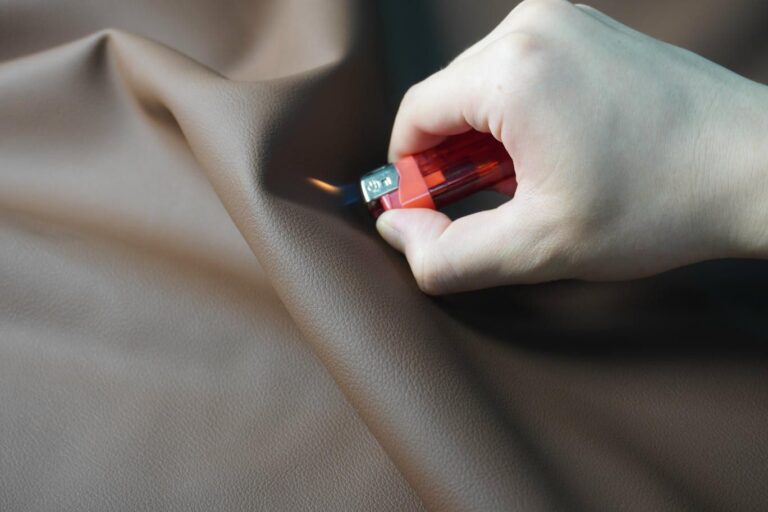
Color fastness testing: demand Grade 4 or better for light upholstery shades.
Natural Faux Leather vs Genuine Leather for Warm Interiors
Designers often choose natural tones because genuine vegetable-tanned leather made the shade famous. The comparison is worth doing honestly, because the two materials age in opposite directions. Genuine leather develops a patina and darkens with use. Faux leather stays the shade you approved, which is either an advantage or a dealbreaker depending on your brand story.
For most commercial projects, consistency wins. Hides vary from animal to animal, so two sofas from the same tannery rarely match perfectly. Coated rolls are uniform across the width and from roll to roll, within an agreed Delta E window. Among coated options, silicone-based material resists hydrolysis and lasts 10-15 years in service, versus roughly 3-5 years for conventional PU. That lifespan gap is why we steer hospitality clients toward silicone for light shades, since replacement cycles dominate long-term cost.
| Attribute | Natural Faux Leather (Silicone-Based) | Genuine Leather |
|---|---|---|
| Color consistency | Uniform per batch, Delta E controlled | Varies hide to hide |
| Aging behavior | Holds approved shade, 10-15 yr lifespan | Patinas and darkens with use |
| Maintenance | Alcohol-safe wipe cleaning | Needs conditioning products |
| Cost stability | Stable, hide-market independent | Tracks hide prices and grades |
If your brand story depends on patina, specify genuine and budget for it. If it depends on a repeatable shade across hundreds of units, natural-tone faux leather is the pragmatic choice, and an eco-friendly silicone leather option adds a sustainability angle without the yellowing risk.
The 4-Test Spec Checklist Before You Order
Whatever base material you choose, put these four requirements in writing. Vague specs produce vague samples.
- UV weathering report. Ask for hours and test method. Anything below 500 hours tells you little about a sunny lobby.
- Color fastness grade. Grade 4 minimum for light upholstery; Grade 5 is better for high-touch seating.
- Delta E batch tolerance. Agree a numeric ceiling and make third-party verification welcome. SGS, BV, and TÜV inspections are standard practice at serious factories.
- Hydrolysis aging data. An 85°C / 85% RH chamber test predicts how the coating survives humid, window-side service over years.
One more practical note from our factory floor: review physical swatches under the lighting of the actual space. A beige that flatters 3000K restaurant lighting can look gray under 6500K retail lighting. Every order we ship includes SGS test reports, and we would rather run a second swatch round than argue about shade after installation. The same discipline applies across our furniture and sofa applications, where light shades carry the highest return rate when specified carelessly.

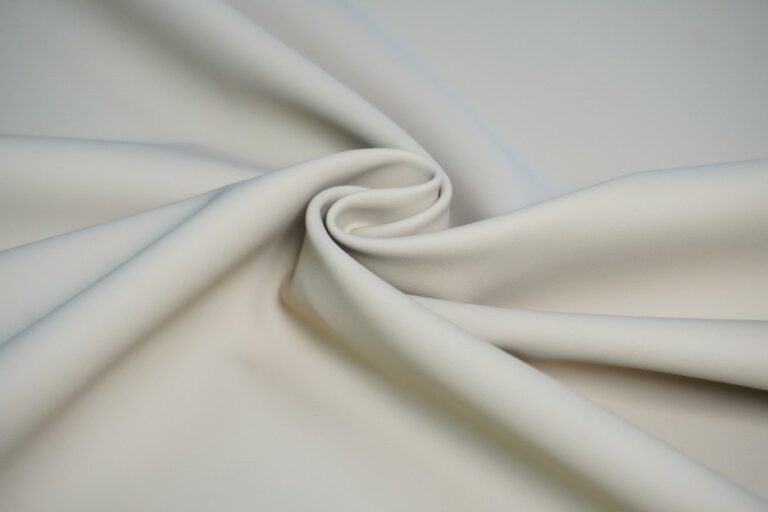
Approve swatches under your project’s real lighting before committing to a production run.
Talk to Our Color-Matching Team
Is natural faux leather made from plants?
Usually no. In supplier catalogs, “natural” describes the beige-tan colorway. The backing can be PU, PVC, microfiber, or silicone. If you need a plant-based claim for marketing, ask specifically for bio-based content documentation rather than relying on the color name.
Does natural-tone faux leather show stains more than black?
Yes, visually, but wipe-clean performance evens the score. A Level 5 stain-resistant surface with alcohol-safe disinfection tolerates the coffee and denim-dye exposure that ruins light PU. Spec the surface performance, not just the shade.
Build a Natural-Tone Palette That Lasts
Natural faux leather is a colorway decision with material consequences. Before you sign a purchase order, take four steps:
- Confirm the shade as a Pantone/RAL reference with a Delta E tolerance
- Collect UV, color fastness, and hydrolysis data in hours and grades, not adjectives
- Match the base material to the service environment, favoring silicone for sunlit or high-humidity spaces
- Approve physical swatches under your project’s actual lighting
Do that, and the warm shade your client fell for on the sample table is the same shade you hand over at handover. If you want a second opinion on a spec, our engineers review buyer test plans free of charge, and the silicone leather introduction page is a good primer before the call.
About TOPSUN
TOPSUN develops natural-tone silicone leather collections for furniture, hospitality, and automotive brands that specify warm, undyed-look palettes in custom runs.
Pantone/RAL color matching with spectrophotometer Delta E control, 100+ embossed textures, UV stability verified beyond 1,500 hours, and REACH-compliant formulation with SGS reports on every order.
References
1. https://straitsresearch.com/press-release/globa… — Synthetic leather market valued at $46.74B in 2025, projected to reach $89.91B by 2034 at 7.54% CAGR (2026)