Ask a product developer what separates the pu leather types on a supplier’s line and the honest answer is one word: process. Catalog names multiply, but every roll of PU leather on the market comes off one of two routes. Dry transfer coating builds a firm, compact film on release paper. Wet coagulation builds a soft, microporous structure in a water bath. Everything else is a variation stacked on those two routes.
This article sorts the types the way a coating plant does. It walks through what each process actually builds, which hand feel and cost each one produces, and how thickness tiers map onto real products from briefcases to seat decks. The comparison table below is the cheat sheet. The sections after it explain how to verify a type before you commit a program to it.
| Attribute | Dry-Process PU (Transfer Coating) | Wet-Process PU (Coagulation) |
|---|---|---|
| How the film forms | Resin spread on release paper, dried, laminated to fabric with adhesive | DMF-dissolved resin coagulates in a water bath, leaving micropores |
| Surface structure | Compact, closed film | Porous, interconnected |
| Hand feel | Firm, structured, sharp grain | Soft, supple, close to hide |
| Breathability | Low | Moderate to high |
| Typical products | Structured bags, satchels, budget furniture panels | Slouchy totes, garment goods, premium seating |
| Watch-out | Adhesive bond is the delamination point | DMF solvent recovery and compliance paperwork |
Why PU Leather Types Are Process Decisions, Not Label Choices
Type names are downstream labels. Bicast, lambskin-feel, expanded, laminated: each one describes a route plus a base fabric plus a thickness, not a separate material family. When a quote arrives with an unfamiliar name, two questions sort it in under a minute. Was the film formed on release paper or in a water bath. And what fabric carries it, at what thickness. Those answers predict hand feel, flex life, and price band better than the label does.
Dry-Process PU Leather: The Structured Family
Dry processing is transfer coating. PU resin is spread onto textured release paper, the solvent evaporates in a drying oven, and the finished film is laminated onto a base fabric with adhesive. Because the film forms before it ever touches the fabric, the surface is compact and precise. Grain definition is sharp, color is uniform, and the hand is firm. That is why structured bags, briefcases, and boxy satchels specify dry-process PU almost by default.
The family has three common variants. Standard PU coated fabric pairs a knitted or woven polyester base with a single compact film and covers most entry price points. Semi-PU hybrids put a PVC base layer under a thin PU cap to cut cost further. Foamed builds add a middle layer that delivers thickness without weight.
The shared weak point is the adhesive line between film and fabric. That is where dry-process types delaminate first, usually along folds and welt seams. Buyers weighing full versus semi construction can see the same trade-off one tier up in our full vs semi silicone leather comparison.

Release film carries the grain in dry-process coating: every structured type starts here.
Send Us Your Type Spec for Review
Wet-Process PU Leather: The Soft, Breathable Family
Wet processing works in reverse. PU resin dissolved in DMF is coated onto a substrate, then the whole sheet is immersed in a water bath. The DMF exchanges out and the resin coagulates into a microporous, interconnected structure. Those pores are the whole point. They give the material drape and breathability that compact dry films cannot match, moving the hand noticeably closer to genuine leather. That is why slouchy totes, garment goods, and premium furniture specify wet-process grades.
Two types dominate this family. Lambskin-feel PU is the soft-face version on a woven or knitted base, common in fashion goods. Microfiber-based PU bonds the coagulated layer to a non-woven microfiber core, and it sits behind most automotive-grade and high-wear specifications. The trade is chemistry: DMF handling and solvent recovery drive both compliance documentation and part of the price. Teams that want the soft hand without the solvent file often step up to solvent-free silicone chemistry, covered in our silicone leather introduction.

Resin and solvent mixing is where wet-process types get their porosity, and their paperwork.
Thickness Tiers: Reading the Build From 0.5 to 1.4 mm
Within either route, thickness is built in layers, and the spec sheet shows it. An adhesion base coat typically runs 0.2-0.4 mm, a middle coat adds 0.3-0.6 mm of body and flex reserve, and a thin top finish carries color and grain. Total build sorts into three practical tiers. Bags and garment goods sit around 0.5-0.8 mm. Furniture panels run 0.8-1.2 mm. Automotive and contract seating push 1.0-1.4 mm for abrasion and seam strength, a zoning logic our automotive interiors applications page applies panel by panel.
Thicker is not automatically better. The balance principle applies. If the top film is thick but the base coat is starved, delamination arrives early. Read the layer breakdown, not just the total, and ask for peel strength on the exact composite.
Matching PU Leather Types to the Product
The selector below compresses the process and thickness logic into one table. It assumes the two routes behave as described and that budgets are finite. Where a zone outgrows PU entirely, the row says so plainly.
| Product | Recommended Type and Build | Why It Works |
|---|---|---|
| Structured briefcase, boxy satchel | Dry-process PU, 0.6-0.8 mm | Compact film holds shape and sharp grain |
| Slouchy tote, soft fashion goods | Wet-process lambskin-feel, 0.6-0.9 mm | Drape and breathability sell the hand |
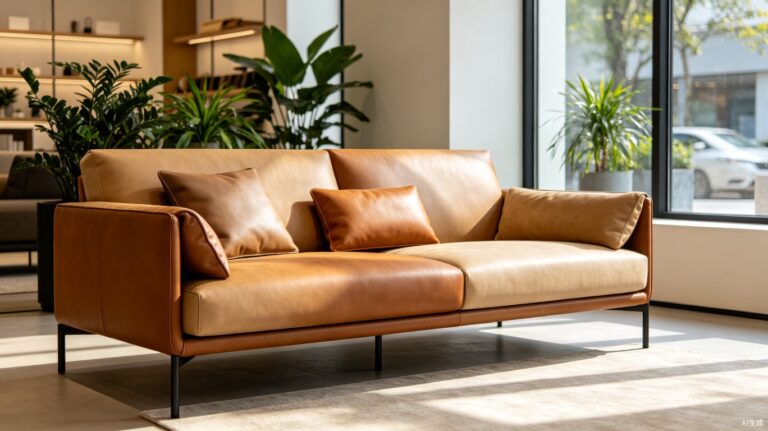
| Sofa body panels | Wet-process PU or semi-PU, 0.8-1.2 mm | Thickness absorbs daily abrasion at defensible cost |
| Seat decks, automotive trim | Microfiber-based PU at 1.0-1.4 mm, or silicone | Flex and hydrolysis cycles exceed plain PU |

Structured small goods reward the compact film of dry-process construction.

Soft bags need the drape that only a coagulated, porous structure delivers.
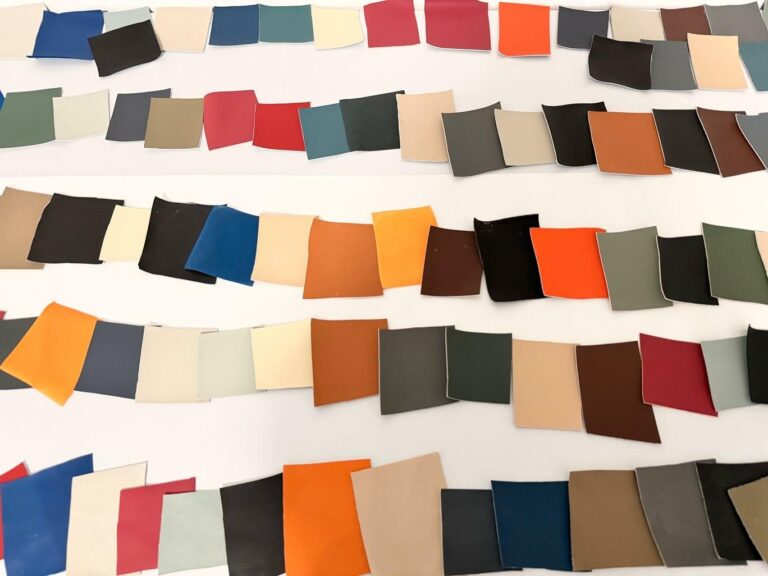
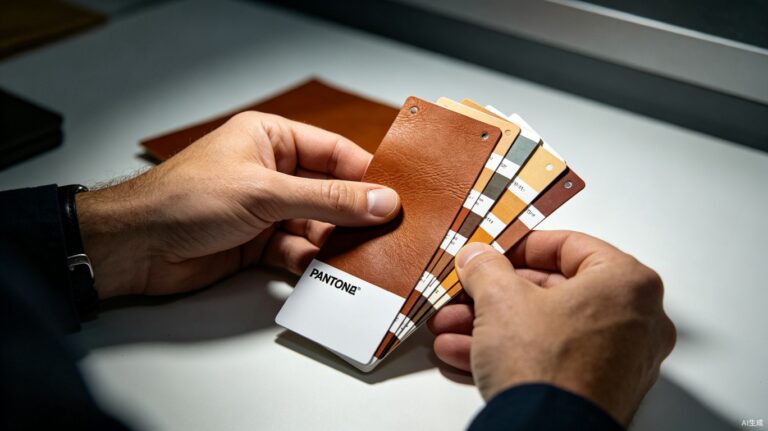
Whatever the row, verify with the composite, not the swatch card. Request the exact build at the exact thickness and run your own flex and peel tests before approving a run.
The Bottom Line on PU Leather Types
Two process routes create every PU leather type you will be quoted, and thickness tiers decide where each one belongs. Sort any name into route, base fabric, and build, then test the composite. Do that consistently and the type label stops being a gamble and starts being a specification.
Request Process-Matched Sample Sets
References
1. https://chinahandbagfactory.com/pu-leather/ — Wet coagulation (DMF phase separation) versus dry transfer coating process comparison for PU leather types
2. https://www.synberry.com/what-is-the-difference… — Dry-process PU gives a firmer hand for structured bags; wet-process PU offers microporous softness and breathability
3. https://szoneierleather.com/custom-leather-fabr… — Layer thickness benchmarks: base coat 0.2-0.4 mm for adhesion, middle coat 0.3-0.6 mm for body and flex