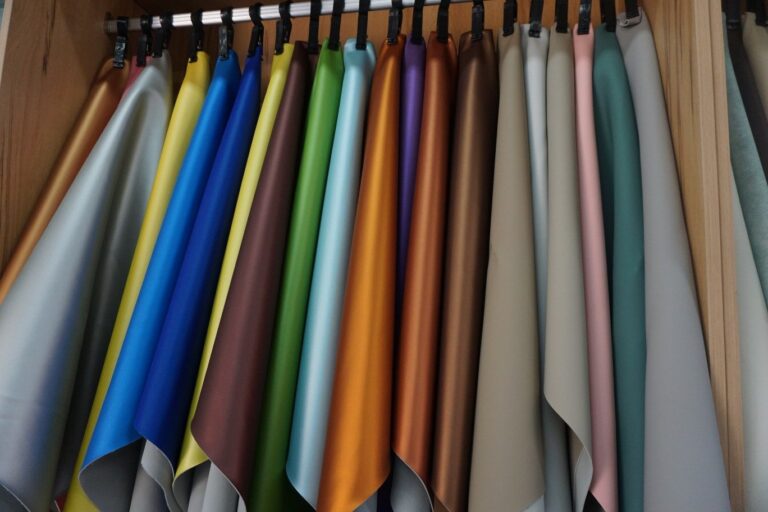
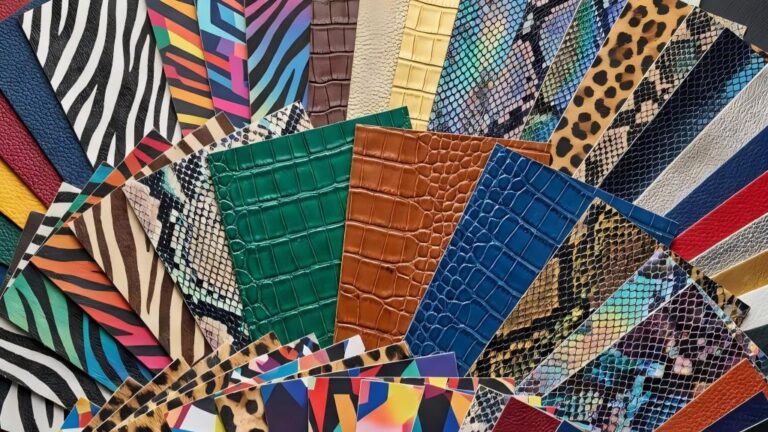
Two quotes land on a sourcing desk the same morning. One offers faux leather upholstery in cream. The other offers synthetic leather upholstery in the same cream, the same grain, and a slightly higher price. Both samples turn out to be the identical polyurethane-coated fabric from the same coating district. The only real difference between the two quotes is the vocabulary on the page.
That morning scene is the whole story of faux synthetic leather. The two words describe one material family, and suppliers stack them because each word does different selling work. Faux is an appearance promise. Synthetic is a material disclosure. Read them as a pair and a listing gives up its secrets quickly. This article shows the mechanics through two buyer cases, a three-layer reading method, and the vocabulary traps that quietly cost money.
Why Suppliers Stack Both Words on One Label
Faux leather is the umbrella term for any material that imitates hide without using animal skin. Synthetic leather is one of its standard aliases, alongside artificial leather, leatherette, pleather, and vegan leather. Industry references list them as interchangeable names for the same family, while cautioning that none of the words is a chemical definition. A listing that says faux synthetic leather is therefore not naming a special grade. It is casting two nets for two search audiences at once.
There is nothing dishonest about the double label. The risk runs the other way: buyers treat the stack of words as information and stop asking for construction. The words carry zero tier information. A vinyl seat pad and a silicone aircraft cover can both ship under the same two-word banner.

One label, many constructions. The production floor holds the difference the words do not.
Case One: The Furniture Startup That Paid for a Word
A young furniture label sourced cream upholstery through two agents. The synthetic leather quote ran eighteen percent higher, and the founder assumed the premium bought a better material. Both samples went to a lab anyway. The report matched them on polymer, thickness, and backing within tolerance. The eighteen percent had bought a sentence, not a specification.
The lesson is not that suppliers cheat. It is that vocabulary has no price discipline. Word-based quotes drift because nobody can audit a word. Construction-based quotes converge because a lab can. Brands that ask for polymer, backing, and weight in the first email tend to see the word premium evaporate on its own.

Samples flatten vocabulary. Two cards, one polymer, one honest price.
Case Two: The Industrial Buyer Who Asked for Chemistry
A machine-guard manufacturer sent a one-line request for synthetic leather. The supplier replied with a question instead of a quote: which polymer, and which backing? The buyer named the real requirements, wipe-down caustic cleaning, no animal product, and a low surface cost. The answer came back as vinyl on a woven base, and it was the correct answer. The stacked label had hidden the decision; the chemistry question exposed it in one email round.
This is the productive use of the term. Faux synthetic leather works fine as a category keyword. It works badly as a purchase order. The transition from one to the other happens the moment someone asks which polymer sits on which fabric. See how industries map to constructions on our applications overview.

One email about structure replaces three rounds about adjectives.
The Three-Layer Read: Base Fabric, Polymer, Claim
Every listing in this family decomposes into three layers. Read them in order and any label becomes legible.
- Layer one, the base fabric. Woven, knitted, or non-woven. It decides stretch, seam strength, and drape before the coating enters the story.
- Layer two, the polymer. PVC, PU, microfiber composite, or silicone. It decides aging, cleaning tolerance, and service life. Coating construction is visible in cross-section on any silicone leather introduction page.
- Layer three, the claim. Faux, vegan, eco, premium. All marketing language. None of it changes the first two layers, and none of it survives a lab report.

The polymer layer is made here, in the coating line, not in the copy deck.
The Vocabulary Traps That Cost Money
Three traps recur in this family. Trap one: vegan does not mean durable or green. A PVC sheet is vegan and still carries plasticizer chemistry with a short flex life. Trap two: artificial and synthetic read as upgrades but behave as synonyms for faux. Trap three: bonded leather borrows the word leather while being ground scraps in adhesive, the weakest construction wearing the strongest name. Each trap closes the same way, by asking for layer one and layer two in writing.
Which Word Deserves Your Trust?
Work the tree and the vocabulary settles itself:
- Listing states polymer and backing? Trust it enough to sample, and verify on arrival.
- Listing stacks marketing words only? Ask the one-question email: which polymer on which fabric, and what weight?
- Supplier answers with construction data? You have found a manufacturer, not a trader.
- Supplier answers with more adjectives? Price the risk of the unknown, or walk.
Faux synthetic leather is one family wearing two useful names. Faux tells customers what it looks like. Synthetic tells them what it is not. Neither word tells you how it ages, so let the three-layer read do that job, and spend your budget on construction instead of vocabulary.
Decode a Listing With Our Team
Request Construction-Matched Sample Sets
Are faux leather and synthetic leather the same thing?
Yes. They are two common names for one family of leather-look coated fabrics. The differences that matter live in the polymer and backing layers, not in the word choice.
Is faux synthetic leather always plastic?
Almost always. PVC and PU dominate the family, with silicone as the newer high-end chemistry. Bonded leather blurs the line by mixing hide scraps with adhesive, which is why it fails faster than any coated sheet.
About TOPSUN
TOPSUN manufactures silicone-based leather and answers the construction question on every quote: polymer, backing, and weight, stated in writing before price.
Over 100 textures, custom color matching, and SGS documentation from a 500-meter minimum order.
References
1. https://lerega.com/blog/types-of-faux-leather-v… — Faux leather, synthetic leather, artificial leather, and leatherette are common names for the same family and are not chemical definitions
2. https://taiteleather.com/pu-leather-vs-faux-lea… — Faux leather is the broad category; PU and PVC leather are types inside it, defined by surface polymer on a fabric base
3. https://ennisfabrics.com/products/challenger — A vinyl upholstery spec sheet leads with content and test data, not marketing names