Last month I sat with a hotel client in our sample room. She ran a hand across two swatches that looked nearly identical. One was full-grain hide. The other was a heavily corrected split with a convincing printed grain. Both catalogs called them the best leather for furniture. Her budget could not stretch full-grain across 60 guest rooms, so the real question was never which swatch felt nicer. It was which material would still look professional after three years of housekeeping carts, sunscreen, and spilled coffee.
That question has an answer, and it rarely lives on the price tag. Below is the same process I walk any specifier through. First, the grade ladder that explains what you are actually buying. Then, six checks that separate keepers from regret. Last, a bench-level comparison of how each grade fails.
The Best Leather for Furniture Starts With the Grade Ladder
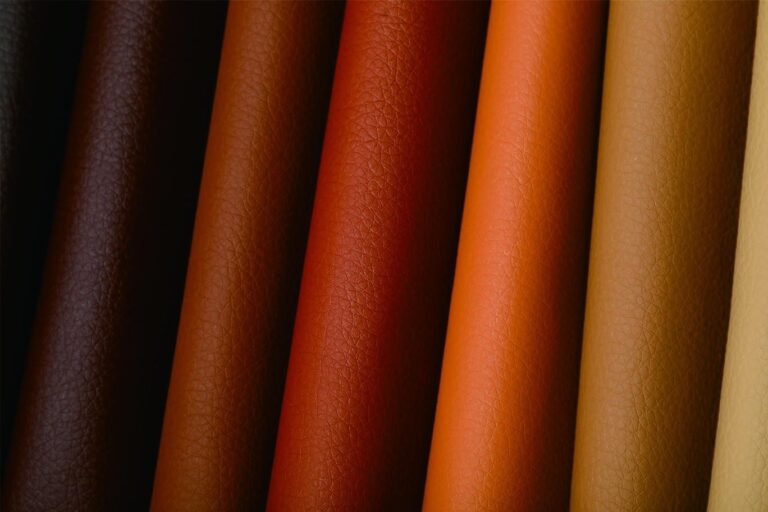
Every hide-based leather sits somewhere on a four-step ladder. Each step down trades fiber strength for surface perfection. Full-grain keeps the entire top layer untouched. Top-grain is lightly sanded for a cleaner, more uniform face. “Genuine leather” is the trap. It usually means a lower split, heavily sanded, printed with artificial grain, and sealed under a thick coating. One furniture journal puts it bluntly. Treat the phrase as a minimum claim, not a quality claim.
The same layer logic applies to synthetic furniture leather. There, coating coverage plays the role that hide layers play in natural leather. If you are weighing silicone options, our guide to full vs semi silicone leather shows how coverage depth changes durability.

Grade lives in the layer, not the label: top-layer fiber density is what lasts.
6 Checks Before You Commit to a Furniture Leather
Run these six checks on any candidate, hide or synthetic. Each one is verifiable in writing before you pay a deposit.
- Name the layer. Ask exactly which layer or coating system you are buying. Full-grain and top-grain describe layers; “genuine” describes marketing.
- Demand tensile data. Published comparisons put full-grain at 25-35 N/mm² against 18-28 for top-grain. If a supplier cannot produce a number, that is the answer.
- Get the content percentage in writing. Bonded leather typically contains just 10-20% actual leather fiber held together with polyurethane binder.
- Ask how it fails. Bonded surfaces start peeling around year two and cannot be repaired, conditioned, or restored. Everything wears eventually; only some failures are recoverable.
- Match the material to the room. Sunlight, humidity, pets, and daily disinfection each shorten some lifespans. Family rooms and pediatric spaces also raise the VOC bar; our eco-friendly silicone leather overview covers solvent-free options.
- Test before you commit. In our own lab, the scratch tester ends debates faster than any sample book. Run your top two candidates through the same bench and let the data pick.

The scratch tester: two candidates, one bench, no marketing in the room.
How the Grades Compare on the Bench
Here is the comparison in one view. The hide-grade rows come from published testing; the silicone row reflects our own chamber and bench records.
| Material / Grade | Key Data | Failure Mode | Realistic Outlook |
|---|---|---|---|
| Full-grain hide | Tensile 25-35 N/mm² | Scratches that become patina | Lasts for decades with care |
| Top-grain hide | Tensile 18-28 N/mm² | Wear on the surface finish | High durability with care |
| “Genuine” corrected split | Heavy artificial coating | Coating cracks under daily use | Moderate; stiffer hand |
| Bonded | 10-20% leather content | Peels by year two, unrepairable | Avoid for keeper pieces |
| Silicone-coated vegan | 14 weeks at 85°C/85% RH, no degradation | Surface abrasion only | 10-15 year service window |

The right grade depends on the room: a family sofa and a lobby sofa fail differently.
Room duty cycles vary more than most buyers expect. Our furniture and sofa applications page breaks down how each material behaves across residential, hospitality, and contract settings.
See how silicone leather holds up on a commercial sofa in our introduction video.
The Best Leather for Furniture Is the One That Fits the Room
The best leather for furniture is not the priciest label on the showroom floor. It is the one whose layer, data, and failure mode match the room it lives in. Run the six checks, trust the bench over the brochure, and the decision makes itself.
Request Furniture-Grade Leather Samples
References
- 1. https://www.giorgibros.com/top-grain-vs-full-gr… — Full-grain tensile strength 25-35 N/mm² versus 18-28 N/mm² for top-grain
- 2. https://propersofa.co.uk/guides/leather-sofa-bu… — Bonded leather contains 10-20% actual leather content; peels by year two and cannot be repaired
- 3. https://loftloom.com/ideas/leather-grades-expla… — “Genuine leather” is a lower split with heavy finish; a minimum claim, not a quality claim