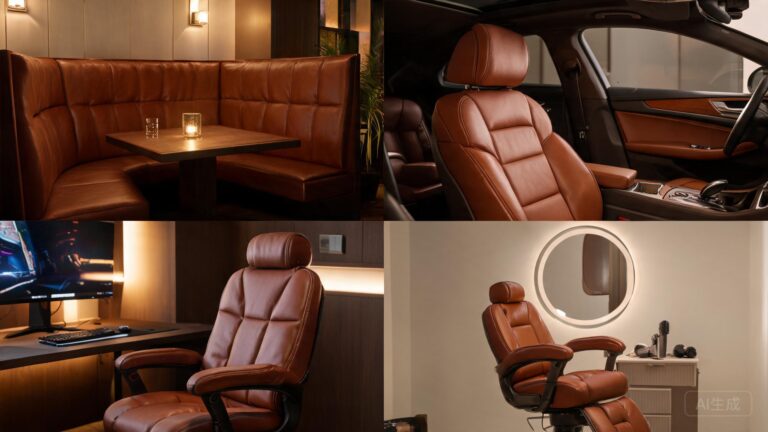
A hotel procurement manager once told us her lobby sofas lasted eighteen months. The fabric looked premium on day one, then dulled, pilled, and split at the seams. Her story captures the real challenge behind the uses of fabrics: the same material never suits every room. Each application has its own way of destroying fabric, from hospital disinfectant to ocean salt. This guide walks through six major applications and shows what each one truly demands from a material.
Everyday Uses of Fabrics at Home: Comfort Meets Abuse
Home upholstery looks like the gentlest application. In practice it is a grind of spills, pet claws, sunlight through windows, and weekend deep cleans. Sofas, cushions, curtains, and bedding all draw on fabric differently. Yet the failure pattern is constant: abrasion at the seat, fading near the glass, staining wherever food travels.
For families with children or pets, performance fabric has become the default answer. The furniture sofa application page shows how coated materials handle this load, but the principle is simple. A family sofa needs a wipeable surface, color that survives the sun, and a hand feel that still reads as comfort rather than tarpaulin. Silicone-coated fabric earns its place here because it delivers all three without chemical softeners that wash out over time.

The family sofa: the friendliest looking fabric application and the most abused.
Healthcare: Where a Healthcare Upholstery Fabric Faces Its Toughest Test
No environment is harder on fabric than healthcare. Specification guides for clinical settings recommend a Martindale minimum of 100,000 rubs for patient seating. On top of that, cleaning teams apply sodium hypochlorite at 1,000 ppm or higher in high-risk areas. A fabric that survives a hotel lobby can fail within months on a hospital ward.
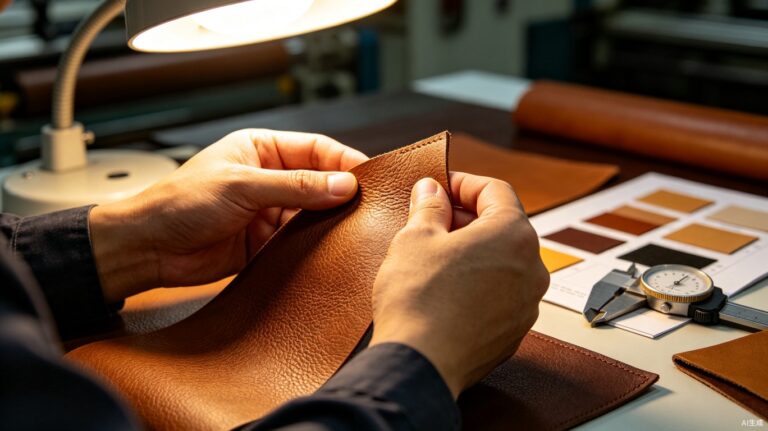
Hospital procurement standards now include a 1,000-cycle bleach cleanability test, and traditional PVC covers often crack under exactly that regime. Silicone-coated fabric passes where the others fail, because it is non-porous, does not support microbial growth, and tolerates both hypochlorite and alcohol-based disinfectants. Our own swatch tests against clinical-grade wipes confirmed the surface shows no discoloration after repeated contact. The medical healthcare application section details the certifications behind these claims.
Automotive Fabric Applications: Friction by Design
Every car trip works the seat cover like a test machine. Entry, exit, buckle contact, and clothing friction add up to thousands of small abrasion events per seat per week. Add dashboard-level heat in summer, freezing starts in winter, and fogging rules for interior air. Automotive fabric applications become a materials engineering problem rather than a styling choice.
This is where flex endurance matters most. Silicone-coated fabric handles a -40°C to 200°C temperature window and stays flexible through years of cycling. That is why EV interior programs keep adding it to shortlists. The automotive interiors application page covers the flame retardance and low-fogging standards involved.
Marine Upholstery Fabric: Salt, Sun, and Storms
Salt air corrodes, UV bleaches, and moisture finds every seam. Marine grade fabric therefore lives or dies on three numbers: UV hours survived, salt spray hours survived, and hydrolysis resistance. Conventional marine vinyl relies on UV stabilizers that deplete season by season.
Our marine specification is tested to ASTM B117 salt spray for 1,000+ hours and stays color-stable through 1,500+ hours of UV exposure. The waterproof droplet test you can watch below is the visible tip of that program. For boat and patio seating, the marine outdoor application page lists the full weathering data.

Water beading on silicone-coated fabric: the first visible pass of a marine-grade weathering program.
Comprehensive sofa features demo: stain release, waterproofing, and everyday wipe-down cleaning.
Send Us Your Application Requirements
Can one fabric really serve all these uses?
Rarely, and that is the point of specifying carefully. A fabric tuned for soft drape will not survive a hospital cleaning regime. A marine-grade cover feels too technical for a living room. The material question is never “which fabric is best” but “which fabric is best here”.
What is the fastest way to compare candidates?
Ask each supplier for three documents. The first is an abrasion report tied to ISO 12947. The second covers cleaning compatibility with the exact disinfectants tested, plus weathering data with real hour counts. Suppliers who produce these quickly usually have the testing culture to match.
Uses of Fabrics Compared: Matching the Job to the Material
Each of the uses of fabrics above fails in its own way, so the decision follows the dominant threat:
- If your risk is spills and claws → prioritize stain release and a 100,000+ rub count.
- If your risk is disinfectant → demand bleach-cycle test data and non-porous chemistry.
- If your risk is friction and heat → check flex cycling results and temperature range.
- If your risk is salt and sun → compare salt spray hours and UV hours side by side.
Silicone-coated fabric appears in every branch of that list, which is why specifiers keep it on the shortlist across all six applications. Bring us your hardest scenario and we will match the swatch to it.

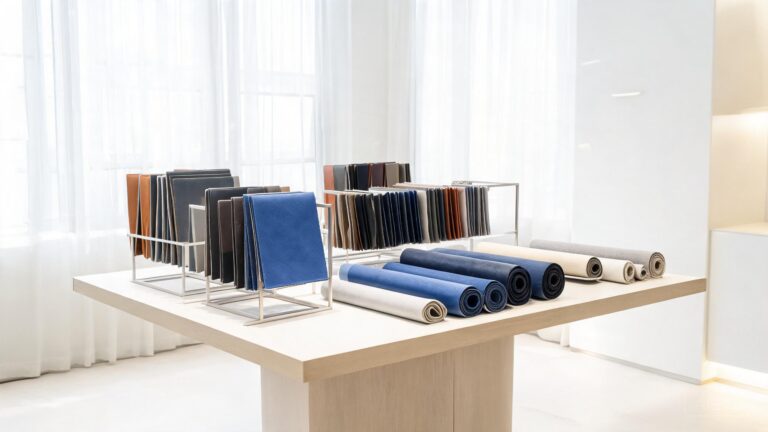
The decision ends at the swatch rack: matching color, texture, and performance to each application.
Request Application-Matched Fabric Samples
About TOPSUN
TOPSUN develops silicone-coated fabrics for the exact applications described above, from family sofas and clinic seating to yacht cabins and EV interiors.
Application-matched sampling in 7-15 days, 100+ textures across five product lines, and Pantone or RAL color matching from a 500 m minimum order.
References
- https://www.kothea.com/tag/silicone-leather/ — healthcare fabric spec: 100,000 Martindale minimum for patient seating, hypochlorite 1,000 ppm cleaning regimes
- https://buildmatinsight.com/fire-resistance/pro… — 1,000-cycle bleach cleanability in hospital procurement; PU-coated fabrics vulnerable to hydrolysis
- https://www.athm.org/textiles/ — textile end uses from home furnishings to medical textiles such as sutures and wound dressings