Which fabric carries your brand? Most product teams answer with a mood board. The honest answer is heavier: every material you ship is a promise customers press their hands against. Fabrics and their uses are not a styling question. They are the contract between what marketing says and what customers feel, and that contract is signed in spec sheets. I manage product lines for a silicone leather factory, and this guide maps the major usage zones, the numbers each zone demands, and how to keep every touchpoint consistent.
Fabrics and Their Uses: Why the Matrix Beats the Mood Board
Start with what the data says about touchpoints. 88 percent of consumers report they only buy brands they trust. And 55 percent of first impressions are based on visual information. A sofa seat, a clinic chair, and a phone-case liner are all visual and tactile brand statements. When one of them fails, the damage does not stay local. In one AdWeek survey, 79 percent of consumers said inconsistent branding makes them doubt a company’s credibility.
That is why I treat fabrics and their uses as a matrix, not a list. Each use case has its own abuse profile, its own regulators, and its own way of embarrassing a brand. A hotel lobby chair and a baby changing mat may share a color code, yet they answer to completely different test regimes. The matrix below is how our team sorts it before a single sample is cut.

Every seat in the room is a brand statement with a spec sheet behind it.
The Usage Matrix: Matching Fabrics and Their Uses by Application Zone
Four columns keep the conversation honest: what the fabric must survive, the spec line that decides it, and the number a supplier should put in writing. If a candidate cannot fill the last column, the matrix flags it before procurement does.
| Application Zone | The Fabric’s Job | The Deciding Spec Line | Verified Number to Demand |
|---|---|---|---|
| Residential sofas | Survive family life for a decade | Abrasion cycles, stain class | 30,000+ double rubs; Level 5 stain |
| Hospitality and cinema | Constant use, constant cleaning | Contract abrasion, flame class | 200,000+ cycles; EN 13773 Class 4 |
| Healthcare seating | Withstand disinfection daily | Biocompatibility, alcohol safety | ISO 10993; alcohol-safe cleaning |
| Auto and marine cabins | Endure sun, salt, and flexing | UV hours, salt spray, cold crack | 1,500+ h UV; 1,000+ h ASTM B117 |
| Bags, cases, and 3C gear | Hold color and texture in hand | Fastness, thin-gauge bending | Grade 4-5 fastness; 360° bending |
Residential and Hospitality: Comfort Is a Measurable Promise
Home seating lives on a budget of years. Industry testing guides put quality household upholstery at 30,000 double rubs or more. That figure maps to roughly a decade of family use. Stain behavior matters just as much, because the first spill that soaks in sets the customer’s opinion of the whole product. A Level 5 stain rating with water-based cleanup turns an accident into a non-event.
Hospitality raises the stakes by an order of magnitude. Contract-grade buyers look for six-figure abrasion counts, and published guides treat 100,000 double rubs as the entry bar for high-traffic seating. The contract segment is where budgets get real: the global contract-grade upholstery fabric market reached USD 4.85 billion in 2025 and is projected to hit USD 6.89 billion by 2032. Brands that ship residential-grade fabric into a lobby learn the difference through warranty claims. Our furniture and sofa applications page shows how one material platform serves both tiers with different thicknesses.

Hospitality seating multiplies one fabric decision across thousands of covers.
Offices compress the same logic into shorter cycles. Co-working lounges churn through coffee spills and laptop bags all week, and tenant turnover resets expectations every lease. Materials guides place co-working seating in the same 100,000 double rub bracket as hospitality, with cleanability weighted just as heavily. The practical translation is simple: specify the contract tier whenever strangers share the seat, even if the address is residential.
Workplace, Healthcare, and Transit: Specifying for Abuse
Healthcare is the least forgiving zone. Seating is disinfected daily, often with aggressive agents, so the coating must tolerate alcohol wipes without whitening or cracking. Biocompatibility testing to ISO 10993 documents skin-contact safety, which is why medical buyers ask for it by name. Hospital-grade programs also run hydrolysis aging, because a chair that delaminates in year two is a procurement failure, not bad luck. Our 85°C and 85 percent relative humidity protocol holds for 14 weeks with no delamination. The requirements are laid out on our medical and healthcare applications page.
Transit and automotive interiors add regulation on top of abuse. Flame classes are non-negotiable: EN 13773 Class 4 for public buildings, FMVSS 302 for vehicles. UV exposure in glass-flooded cabins demands published weathering hours, and coastal operators add salt spray on top. Automotive programs typically write 1,500+ UV hours and 1,000+ hour ASTM B117 results directly into the spec. See how those lines come together on our automotive interiors page.

Public venues stack abrasion, flame, and cleanability into one spec.
The Numbers Behind Fabrics and Their Uses
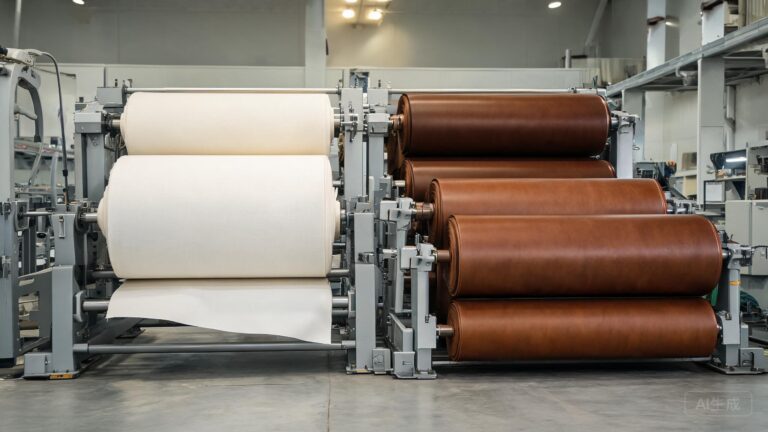
Every row in the matrix traces back to a lab number, so a brand audit should collect them, not assume them. Abrasion: our High Performance line is certified at 200,000+ Martindale cycles under ISO 12947 for contract seating. Hydrolysis: 14 weeks in an 85°C chamber with zero delamination, against PU coatings that typically fail within 3 to 5 service years. Weathering: 1,500+ UV hours without fading and 1,000+ hours of salt spray for marine grades.
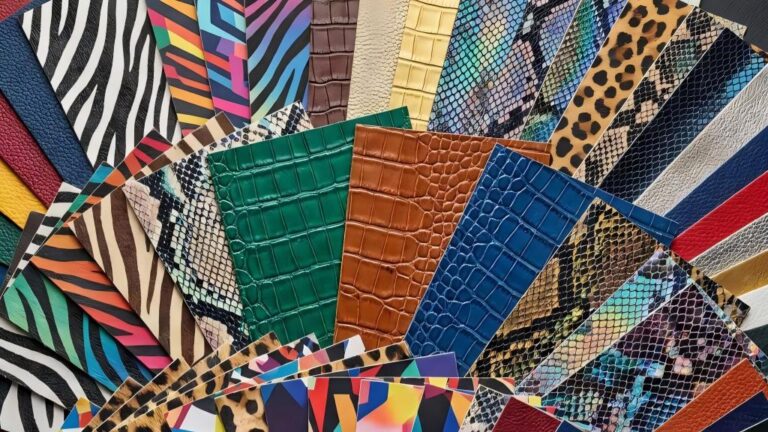
One platform, 100+ textures: variety without losing spec discipline.
Market context makes the discipline pay. Contract demand keeps growing at 5.14 percent a year, and hospitality alone took 36.9 percent of 2025 contract upholstery volume. A brand that can document one material platform across all five matrix zones buys a second benefit: fewer suppliers, fewer certifications to police, and a shorter path from brief to production. Growth concentrates exactly where specifications are strictest, which rewards brands that already document their materials.
Brand Consistency Is a Materials Decision
Visual identity research puts hard numbers on what designers sense. Consistent visual identity makes consumers 80 percent more likely to recall a brand, and color consistency alone influences 95 percent of color-related purchase decisions. Yet color drift between product lines quietly breaks that consistency. Two sofas that should match, one from year one and one from a later batch, read as different products when the swatch book lies.
The fix is procedural, not heroic. Demand spectrophotometer Delta E control per batch, grade 4-5 color fastness to light, and a named texture standard retained by the factory. Our line holds 100+ textures with Pantone and RAL matching, which lets a brand run sofas, aircraft cabinetry, and microfiber bag materials from one color governance system. Consistency survives only when it is written into test reports.

A retained swatch standard is the only color memory a supply chain has.
Action Checklist: Audit Your Fabric Choices by Touchpoint
Run this five-step audit across your product line this quarter. It takes one meeting and prevents most of the material disputes I have watched brands settle the expensive way.
1. List every touchpoint: seating, bags, panels, mats. If customers touch it, it is on the matrix.
2. Assign the abuse profile: rubs, UV, disinfectant, flexing, flame class. Borrow the numbers above.
3. Demand certificates, not swatch poetry: ISO 12947, ISO 10993, EN 13773, FMVSS 302, ASTM B117, whichever rows apply.
4. Lock color governance: Delta E limits per batch, fastness grade 4-5, retained texture standards.
5. Re-audit yearly: formulas change quietly. A one-page re-test keeps the whole matrix honest.
About TOPSUN: We manufacture full-silicone coated fabrics for furniture, hospitality, healthcare, automotive, marine, and consumer product brands in more than 30 countries, with monthly capacity of 500,000 meters and SGS documentation on every order.
Map Your Product Line With Our Brand Material Team
Request Application-Matched Samples with Test Reports
Frequently Asked Questions
How do I choose one fabric for a multi-use product line? You usually should not. Match the fabric to the most abused use case in the line, then verify the milder zones still benefit: softer thicknesses, more texture options, lower cost per meter. One certified platform with multiple gauges beats three unrelated suppliers on both consistency and paperwork.
What test reports should a brand request from its fabric supplier? Ask for abrasion (ISO 12947 Martindale), flame class relevant to your market (EN 13773 or FMVSS 302), biocompatibility for skin contact (ISO 10993), weathering hours for UV and salt spray where applicable, and batch color records with Delta E values. Every figure should appear on letterhead with the lot number, not only in marketing decks. Document all of it in one page so procurement and design sign the same paper.
References
- https://pmarketresearch.com/chemi/contract-grad… — Contract-grade upholstery fabric market at USD 4.85 billion in 2025, projected to USD 6.89 billion by 2032 at 5.14% CAGR; hospitality holds 36.9% of end use.
- https://capitaloneshopping.com/research/brandin… — 88% of consumers only buy brands they trust; 55% of first impressions come from visual information; 33% of firms link consistency to 20%+ revenue growth.
- https://worldmetrics.org/brand-consistency-stat… — Consistent visual identity raises brand recall likelihood by 80%; color consistency influences 95% of color-related purchase decisions.