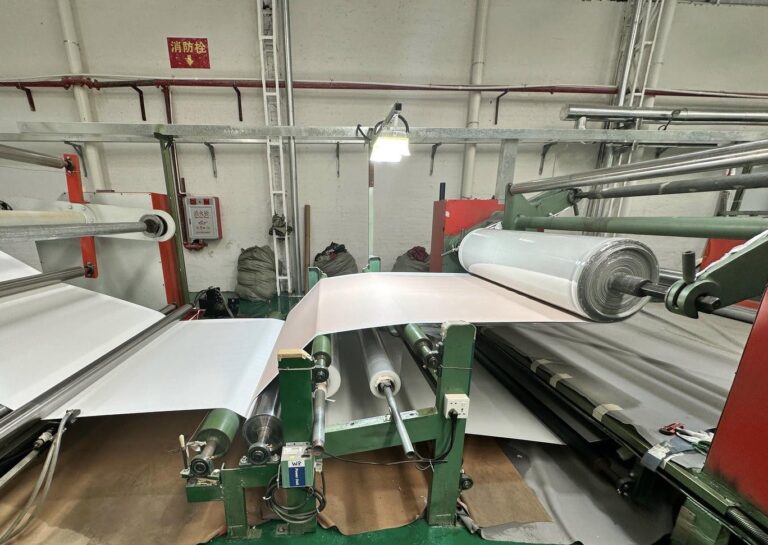
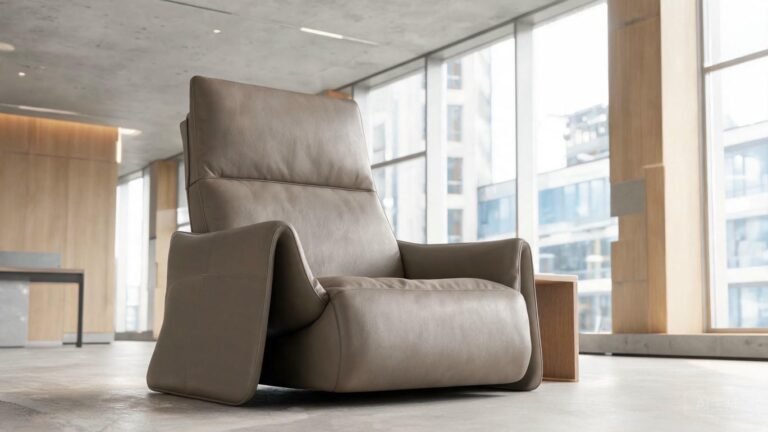
What actually happens when a seat back flexes fifty times a day? The silicone elastic cover stretches over the frame, compresses into the seam, and snaps back. Multiply that by ten years of service and you reach roughly 180,000 flex cycles. Most cover materials give up long before that number.
This is where silicone elastic behavior earns its place in a specification. Silicone elastomer stretches 200 to 800 percent and rebounds without permanent deformation, a combination few upholstery materials match. Below is the data behind that claim, the test standards that verify it, and what it means for your next sourcing decision.
| Property | Silicone Elastomer | Conventional PU/PVC | Spec Impact |
|---|---|---|---|
| Elongation at break | 200-800%, soft grades up to 1,100% | Lower, stiffens with age | Wraps curves without whitening |
| Recovery | Rebounds without permanent set | Takes a set over time | No bagging at seat edges |
| Tensile strength | 4-12 MPa typical; 15+ N/mm in our leather | Varies widely by formulation | Seams hold under load |
| Low-temp flexibility | Flexible at -40°C | Stiffens and cracks | Marine, aviation, cold chain |
What “Silicone Elastic” Means at the Molecular Level
Elasticity is not an accident of formulation. It comes from the silicon-oxygen backbone that separates silicone from every carbon-chain rubber. The Si-O bond carries roughly 121 kcal/mol of energy, well above the carbon-carbon bonds in PU and PVC. That stronger backbone resists heat, UV, and ozone while the crosslink network does the stretching.
Industry references put typical elongation at break for silicone rubber between 200% and 800%, with softer grades reaching 1,100%. Elongation and hardness move in opposite directions: a softer durometer stretches further, a firmer grade resists tearing. When we spec silicone elastic performance for upholstery, we target the middle of that range, where stretch and tear strength balance out.
Why does this matter for a coating rather than a molded part? Because a coated fabric inherits the elastomer’s stretch while the fabric backing carries the load. The composite bends like a textile and recovers like a rubber. That division of labor is what lets a 1.2mm cover survive a seat frame it was never shaped for.

A plain-grain silicone surface: the coating stretches, the grain holds its geometry.
Elongation at Work: Wrapping, Sewing, and Overmolding
On the production floor, elongation shows up as installation behavior. A cover that wraps a tight radius needs enough stretch to pull the corners without whitening. Upholsterers judge this within seconds of handling a sample, long before any lab report arrives.
Sewing adds a second demand. The needle punches holes through the coating, and the material around each hole must stretch and recover without tearing. In our experience, full-silicone construction tolerates seam stress far better than plasticizer-heavy PVC, which stiffens around every stitch line and starts the crack path there.
Overmolding is the third proving ground. Bonding silicone directly onto rigid parts, from electronics shells to tool grips, relies on the elastomer flexing with the substrate instead of separating from it. The same elongation numbers that protect a seat seam also protect a bonded edge on a device that gets dropped daily.

Overmolded silicone flexes with the substrate: elongation doing structural work, not cosmetic work.
How Elasticity Is Measured Before You Buy
Elastic claims mean nothing without a test method attached. For coated fabrics, three families of tests dominate purchase agreements.
- ASTM D4964: tension and elongation of elastic fabrics on a constant-rate-of-extension machine, used for commercial acceptance testing
- ASTM D3107: fabric stretch, growth, and recovery after specified tension, the standard fabric stretch recovery test for woven stretch materials
- Flexing endurance: repeated fold cycles at set angles, which we run in-house on every production batch
The tensile frame gives you elongation at break in a single pull. The flexing rig tells you what happens after the hundred-thousandth fold. Both numbers belong on your spec sheet, because a material can pass one and fail the other.
Where do these tests sit in the buying sequence? Agree on methods before sampling. Demand the raw curves during sampling, not just pass-fail stamps. Then re-run the same protocol on the first production article, because a lab sample and a full-width roll are different animals.

Tensile testing in our lab: one pull measures strength, elongation, and where the two diverge.
Flex Fatigue: The Number That Predicts Seat Lifespan
A single stretch to 400% proves little about a car seat. Real service is low-amplitude flexing repeated hundreds of thousands of times. That is why the silicone leather flexing test matters more to interior buyers than any elongation figure.
Test parameters belong in the purchase agreement. Fold angle, cycle speed, and pass criteria vary between labs, so identical materials can report different numbers. We lock the protocol before sampling, then both sides read from the same script when the results come back.
Our flexing endurance rig folds samples through a fixed angle at room temperature until the surface shows cracking. Full-silicone construction clears the cycle counts that matter for seating programs. One massage-chair client ran our material through a dedicated flex program after two years of field complaints with their previous PU cover; the silicone version outlasted the test protocol, and the complaint stream stopped. For the thinnest skins, our Ultra Thin collection adds 360-degree bending without delamination.
Watch the flexing endurance test run: fold, recover, repeat, until the material proves itself.

The bending endurance rig: where stretch numbers become service-life predictions.
Cold, Compression, and the Failures PU Cannot Avoid
Elasticity has a temperature axis. Silicone stays supple at -40°C, which is why the same elastomer family seals aircraft doors and spacesuit joints. Carbon-chain materials go the other way: plasticizers migrate, the matrix stiffens, and the first hard cold snap finds every fold line. In our marine and aviation projects, low-temperature flexibility is usually the second spec checked after fire rating.
Compression set is the quieter failure mode. Squash any cushion edge for a month and you learn which material remembers. Silicone rebounds; PVC foam-backed covers often keep the dent. The hydrolysis-resistant silicone leather page covers how the same Si-O chemistry resists moisture-driven breakdown that destroys PU adhesives in humid climates.
Cold-chain equipment shows the difference within one winter. Covers that look fine in a heated warehouse split along the fold lines of a delivery van in January. We ask buyers for the lowest shipping temperature the product will actually meet, then verify flexibility at that exact point instead of a generic laboratory standard.
An easy internal check exists too. Press a thumb into the cover for thirty seconds, then release. Recovery is visible instantly. It is not a replacement for lab data, but it tells you whether a supplier’s material behaves like their brochure.

Performance under repeated stress separates elastomers that rebound from covers that remember.
Writing Elasticity Into Your Spec Sheet
Elasticity only protects you if the numbers are contractual. Ask the supplier to state each value together with the test method that produced it. A number without a method is a marketing sentence, not a specification.
- Elongation at break, reported with the named test method
- A flexing cycle minimum matched to the application, not a generic figure
- Recovery or growth limits after repeated extension
- The real temperature range the product will see, from cold-chain vans to parked cars in summer
The same logic applies to stretch-driven categories beyond seating. Sports gear, yoga mats, and wearable accessories lean on silicone elastic recovery daily, which is why fashion and sports applications were among the earliest adopters of full-silicone construction. For seat programs, the automotive interiors page maps each test to its OEM requirement.
About TOPSUN
TOPSUN engineers silicone elastic performance into every collection, from 0.23mm ultra-thin skins for 3C accessories to 3.0mm rigid-substrate panels.
In-house tensile, flexing, and low-temperature testing supports every shipment, with SGS reports and a -40°C to 250°C service window across the range.
Elasticity Is a Service-Life Spec, Not a Feel
Silicone elastic behavior is what turns a soft surface into a ten-year cover: 200 to 800 percent elongation handles installation stress, recovery defeats bagging, and flex endurance keeps seams intact past the hundred-thousandth fold. Specify those numbers, demand the test reports, and the material will still look like the day it was installed when the furniture reaches its second decade. That is the quiet promise inside the elastomer: it moves, so your product does not have to.
Request Silicone Elastic Samples
Does high elasticity mean the surface feels sticky or rubbery?
No. Elongation is a bulk property of the elastomer; surface feel comes from the finish and coating formulation. Our matte and lychee finishes read as dry leather to the touch while the base layer handles the stretch underneath.
Can I request elasticity data before sampling?
Yes. We supply tensile and flexing test reports with sample shipments, so the numbers arrive with the material rather than after the purchase order. If your team uses a house protocol, send it and we will run to that script.
References
1. https://jlcpcb.com/blog/complete-introduction-t… — silicone rubber tensile 4-12 MPa, elongation up to 1,100%, Si-O backbone bond energy
2. https://rysilicone.com/silicone-mechanical-prop… — typical elongation 200-800%, elongation-hardness inverse relationship
3. https://www.astm.org/d4964-96r16.html — ASTM D4964 tension and elongation test method for elastic fabrics