An RFQ that says fabric material arrives with no fiber named, no construction named, and no finish named. Four quotes come back, and the prices sit far apart. The word on all four is identical.
The gap is not supplier margin. It is four separate decisions hiding inside one phrase. This piece walks each layer and shows what it contributes to performance. It ends where fabric material is heading next.
Fabric Material Is Four Decisions, Not One Product
Fabric material is a manufactured sheet made by interlacing, knitting, or bonding fibers. The supply chain behind it runs in layers: fiber choice, yarn and construction, finish or coating, and the testing that verifies all three. Change any layer and the same phrase describes a different product. That is why one RFQ word returns four prices.
Buyers who name the layers get quotes that can be compared line by line. Buyers who do not get a spread, then spend weeks finding out which layer each supplier quietly optimized or quietly dropped.
The Fiber Layer: Natural, Regenerated, Synthetic
All fabric starts as fiber, and the industry sorts fiber into three families. Natural fibers come straight from plants and animals: cotton, linen, silk, wool. Regenerated fibers take natural wood cellulose and process it chemically into viscose, modal, and lyocell. Synthetic fibers are engineered from petroleum-derived polymers: polyester, nylon, acrylic, spandex.
The fiber sets the ceiling on several properties at once: strength, moisture behavior, heat tolerance, and cost. No finish can fully rescue a fiber chosen for the wrong duty. Coated programs usually land on polyester for exactly this reason. It tolerates heat on the coating line and holds dimension over years of service.
The Construction Layer: Weave, Knit, or Bond
Spun fiber becomes yarn, and yarn becomes fabric through construction. Weaving interlaces warp and weft on a loom. In a plain weave, each weft yarn passes alternately over and under the warp. That rhythm builds a balanced, stable cloth. Twill shifts the pattern so the weft crosses one or more warp yarns first, trading some drape for durability. Knitting loops yarn for stretch, and bonding skips yarn entirely to make nonwoven webs.
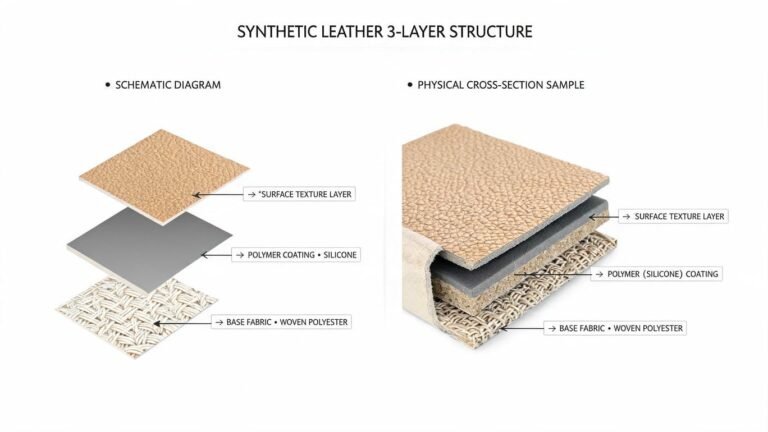
Construction decides how the fabric carries load and how it behaves under heat. A coating line runs fabric through tension, temperature, and rollers. Woven polyester holds its width and grain through that trip, which is why it is the default base for coated material.

Coating chemistry starts at the drums. The fiber layer beneath it was decided much earlier in the chain.
The Finish Layer: Where Coated Fabric Material Earns Its Price
Finishing is the last step in any fabric process, and it is the layer buyers feel most directly. Dyeing sets the color. Coating adds a functional face: water repellency, abrasion resistance, flame performance, or easy cleaning. The finish sits between the user and the fiber, so its quality decides how the material ages.
Coating chemistry splits the market. Plasticized PU and PVC carry softeners that migrate out over time, which is how coated surfaces crack from the inside. Silicone coatings carry no plasticizer at all. Full-silicone and semi-silicone builds differ in how much of the face is silicone. The difference shows up in lifespan data, and our full versus semi comparison covers that choice in detail.

Rollers applying the functional face. Finish quality decides how the fabric material ages in service.
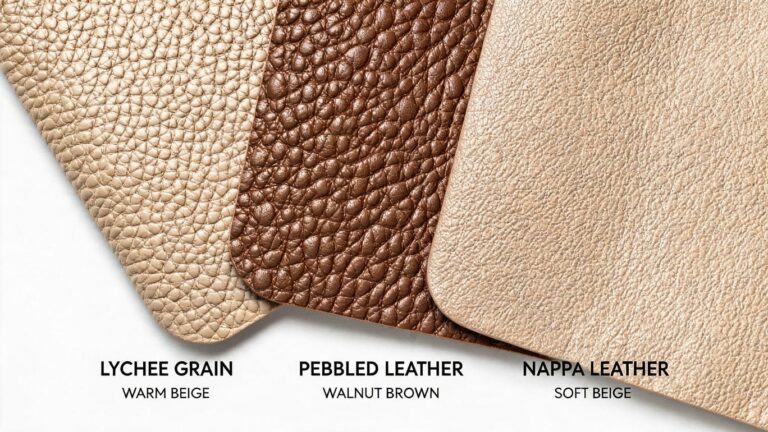
Material properties on camera: what the coated face adds to the fabric beneath it.
Talk to Our Material Engineers
How Each Layer Gets Verified
Every layer has a test. Fiber content is confirmed on the certificate. Construction shows in GSM and width, checked against the purchase order. The coated face answers to physical testing. Tensile runs at 15 N/mm minimum on ISO 3376. Flex passes 100,000 cycles on ISO 5402. Abrasion runs on Martindale.
For buyers, the practical version is shorter: name the fiber, the construction, the finish, and the test report that travels with the sample. Our microfiber leather line ships with that full stack attached.

Upholstery in service. The end user never sees the layers, only what they deliver together.
Where Fabric Material Goes Next
Three shifts are reshaping the phrase. Regenerated fibers like lyocell are moving from niches into mainstream programs. Bio-based synthetics are replacing part of the petroleum stream. And low-emission chemistry is turning from a selling point into an entry requirement.
The four-layer frame survives all three shifts. Fiber, construction, finish, and verification will still decide what arrives. Our silicone leather intro maps how a coated face changes the last two layers, for teams ready to specify them.
Specify the layers, and the quotes line up. Leave them out, and the word keeps doing what it does best: hiding four decisions behind one price.
About TOPSUN
TOPSUN coats woven polyester base fabric with silicone on in-house lines, producing silicone leather from 0.8 to 2.0 mm for furniture, automotive, marine, and medical programs. Test reports for tensile, flex, and abrasion travel with every sample card. Custom runs start from 500 meters.
Request Fabric Material Samples
Frequently Asked Questions
What is the difference between fabric and material?
Material is the broader trade word; fabric is the manufactured sheet made from fibers. In purchase orders, the phrase fabric material usually means the fabric itself, not the fiber or the finished good. Naming the layer you mean removes most quoting confusion.
Which layer should a buyer specify first?
Start with the fiber, because it caps strength, heat tolerance, and cost before anything else is chosen. Construction and finish then follow the duty cycle. Verification comes last in the conversation but should be attached to the sample, not promised after it.