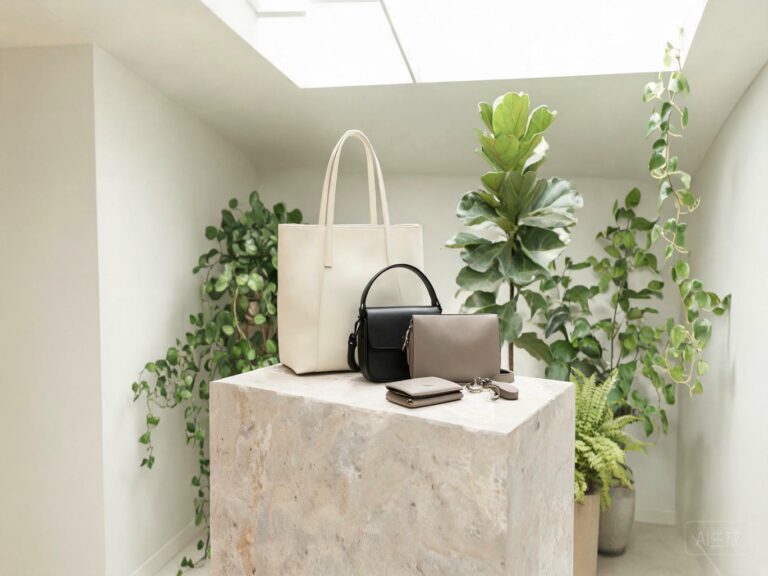
Five swatches sit on the table in a brand’s materials library, and every card reads vegan leather. One peels at the corner like old adhesive tape. One gives off a faint solvent smell the moment you open the bag. One is a pineapple-leaf weave behind a suspiciously plastic sheen. The fifth feels neutral — matte, slightly rubbery, odorless. A senior materials designer looking at this lineup isn’t asking which one is prettiest; she’s asking what any of them actually is.
That is the honest answer to WTF is vegan leather: it is a claim about what a material excludes — animal inputs. It says nothing about what the material is made of, how it ages, or when it will fail. Four unrelated material families sell under that one word.
Below is what each family is, how each one dies, and the three questions that separate a five-year material from a two-season regret.
WTF Is Vegan Leather, Exactly? A Claim About Exclusion, Not Composition
The term went mainstream around 2015, when suppliers quietly rebranded “pleather” — cheap plastic-coated fabric with a poor durability reputation — into a word that sounded ethical and modern. The construction rarely changed with the name: most vegan leather sold today is still a polyurethane (PU) or PVC film bonded to a fabric backing. A consumer survey cited by industry analysts found that 74% of shoppers had no idea vegan leather was plastic.
The label isn’t lying — there genuinely is no animal content — but it isn’t a material description either, and treating it as one is how mismatched expectations get specified into products.
Vegan defines a certification scope: zero animal-derived ingredients anywhere in the build — no hide, no collagen binders, no tallow-based processing aids. It is not a polymer category. That scope matters for sourcing, because silicone-coated material qualifies as vegan too: zero animal inputs, no chrome tanning, and none of the plasticizer chemistry that gives the other families their short lives. It is simply the fourth family — the one most specifiers have never been shown.
Type 1 — PU and PVC: What Most Vegan Leather Is Made Of
Ask what vegan leather is made of and the truthful answer for the majority of the market is: plastic film plus fabric. PU construction coats a polyester or cotton substrate with a polyurethane layer, solvent-bonded and embossed with a grain. Its characteristic failure is hydrolysis — the urethane bonds react with ambient moisture, the film loses adhesion, and the surface delaminates or peels within a few years of normal indoor use.
PVC takes a different path to the same disappointment: it needs plasticizers to stay flexible, and those additives evaporate over time. The material hardens and cracks within 12 to 24 months — faster in a sun-exposed car interior or beside a window wall.
We see the gap between these chemistries directly in accelerated aging. In our hydrolysis oven at 85°C and 85% relative humidity, standard PU control samples show cracking around weeks 3–4. Our silicone-coated coupons complete the full 14-week protocol without hydrolysis failure. That is not a marketing claim. It is the same test run on both materials. It is also why the composition column on a spec sheet predicts service life better than any word on the sample card.

A stable coated surface under macro photography: intact grain, no micro-crazing — what composition decides before use ever begins.
Type 2 and Type 3 — Plant-Based and Bio-Fabricated Vegan Leather: Read the Spec, Not the Story
Then come the plant-based entries: Piñatex from pineapple leaf fiber, Desserto from cactus, apple leather from juice-industry waste, and bio-fabricated sheets like Mylo grown from mycelium. These are genuinely interesting technologies and they deserve a fair hearing — but “plant-based” describes the fiber content, not the whole build.
Most commercial plant leathers still rely on a PU binder to hold the fiber mat together and a PU topcoat to give it abrasion resistance. Testing reported across the category puts the polymer fraction at 30–65% of the material by weight. A mycelium sheet finished in PU is, functionally, a PU material with an organic filler.
None of this makes plant composites a bad choice — it makes them a spec-sheet choice. Before you shortlist one, ask two questions: what percentage of the material by weight is synthetic polymer, and what is the topcoat chemistry? If a supplier can’t or won’t answer, the marketing story is doing the work the data should do.
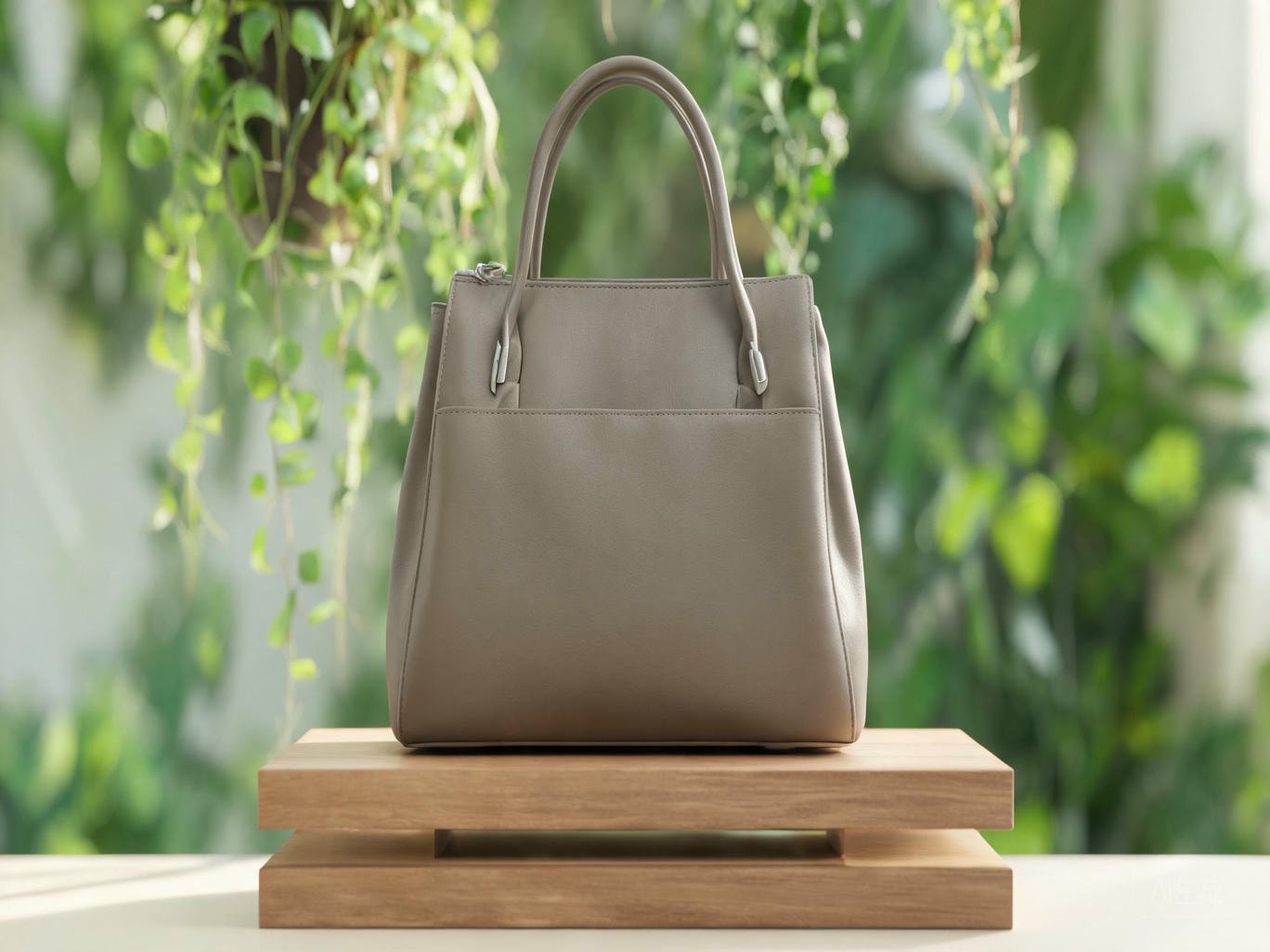
Bio-fabricated and plant-composite families: innovative fibers, but the binder and topcoat decide the aging curve.
Type 4 — Silicone Vegan Leather: What Changes When Plastic Leaves the Formula
The fourth family removes the carbon-chain polymer entirely. Silicone leather is built on polydimethylsiloxane (PDMS), an elastomer whose backbone is a chain of silicon and oxygen atoms rather than carbon. The bond-energy difference sounds academic and isn’t: Si–O bonds sit near 452 kJ/mol while the carbon-chain bonds in PU sit near 360 kJ/mol, and UV plus heat attack the weaker bonds first.
That is why silicone-coated material holds 1,500+ hours in QUV accelerated weathering (ASTM G154) while PU films chalk and craze. It is also why it doesn’t hydrolyze at all: there are no urethane or ester groups for water to cleave.
The production chemistry changes too. Silicone coating is solvent-free — no DMF or MEK carriers, with VOC results non-detectable (ISO 16000-6) — and it uses no plasticizers, which removes the migration-and-embrittlement pathway that kills PVC. The material stays flexible from −40°C to 250°C and carries a documented 10–15 year service life across automotive, marine and furniture programs. In plain terms: the three failure modes that end the other families early — solvent residue, plasticizer loss, hydrolysis — simply have no pathway in this chemistry.
The solvent-free coating line, explained: why the fourth vegan leather family starts with what’s left out of the recipe.
The Four Types of Vegan Leather, Side by Side
Put the families in one frame and the sourcing logic becomes obvious. The question is never “is it vegan?” — all four are. The question is which aging curve your product can live with. PU and PVC share a family but not a failure mode, so they get separate rows:
| Material Family | What It Actually Is | Typical Service Life | The Watch-Out |
|---|---|---|---|
| PU-coated | PU film on fabric, solvent-bonded | 2–5 years | Hydrolysis and delamination |
| PVC-coated | PVC film with plasticizers on fabric | 2–3 years | Plasticizer migration → brittleness |
| Plant-composite | Plant fiber + 30–65% PU binder/topcoat | 3–6 years (binder-limited) | Polymer fraction rarely disclosed |
| Bio-fabricated | Mycelium or cell-culture sheet, often PU-finished | 3–6 years (topcoat-limited) | Scaling and cost still maturing |
| Silicone-coated | Solvent-free PDMS on fabric, no plasticizers | 10–15 years | Higher upfront unit cost |

Same word on the label, different chemistries behind it — the swatch wall is where specifiers sort families, not names.
What to Verify Before You Trust Any Vegan Leather Label
Three questions will sort any vegan leather quote in under a day:
- Composition: polymer type and percentage by weight — film chemistry and substrate named, not “premium synthetic.”
- Aging data: hydrolysis protocol (85°C/85%RH, 14 weeks) and QUV hours (ASTM G154, 1,500+) with third-party report numbers, not an in-house photo.
- Certification scope: what the vegan certificate covers — coating only, or coating, substrate, binders and processing aids together.
If you want the baseline for the fourth family, this introduction to silicone leather covers the chemistry end to end.
One nuance worth verifying before you quote: full-silicone and semi-silicone builds age differently, and the difference shows up in exactly the tests above.
Request the Four-Family Comparison Sheet
Frequently Asked Questions
Is vegan leather just plastic?
For the majority of the market, yes — PU and PVC films on fabric are plastics by composition. Plant-based versions blend natural fiber with a 30–65% polymer binder. Silicone is the outlier: a synthetic elastomer with an inorganic silicon–oxygen backbone, produced solvent-free and without plasticizers, which is why its aging behavior doesn’t follow the plastic curve.
How long does vegan leather last?
It depends on the family: PU and PVC typically deliver 2–5 years before cracking or peeling, plant composites run 3–6 years limited by their binder, and documented silicone-coated programs reach 10–15 years. Accelerated-aging reports predict that difference long before a showroom swatch will.
Is silicone leather vegan?
Yes. Silicone contains no animal-derived inputs, involves no tanning or chrome chemistry, and the substrate fabric is synthetic — so the full build qualifies under animal-free scope. Always confirm the certificate covers every layer, not just the coating. For products where skin contact is constant, from strollers to nursery furniture, our baby and kids material program documents that scope alongside cytotoxicity testing.
About TOPSUN
TOPSUN is a silicone leather manufacturer supplying the fourth family of vegan leather to automotive, furniture, baby-products, medical and fashion brands in more than 30 countries, from three manufacturing bases with 60,000+ m² of production space and a monthly capacity of 500,000 meters — MOQ from 500 meters, lead times of 7–15 days. Materials ship with REACH SVHC screening, skin-contact cytotoxicity (ISO 10993-5) and food-contact (FDA 21 CFR 175.300) documentation on request.
The word “vegan” answers exactly one question — is there animal content. It leaves the questions that decide your product’s fate unanswered: what polymer, what aging curve, what failure mode. PU and PVC, plant composites, bio-fabricated sheets and silicone are different materials wearing the same label, and they will not behave the same in year three.
Ask for the composition column, the aging data and the certificate scope, and the label stops being a mystery. The material that keeps its promises is usually the one whose chemistry has nothing left to hide — which is precisely why we build on silicone.
Get Silicone Vegan Leather Swatches
References
1. https://veganbrief.com/guides/how-vegan-leather-… — Guide to how vegan leather is made: PU/PVC film-on-fabric construction and the industry’s pleather rebranding
2. https://anuent.com/blogs/tips/vegan-leather-vs-… — Vegan leather vs real leather comparison, incl. consumer awareness survey and PVC plasticizer aging data