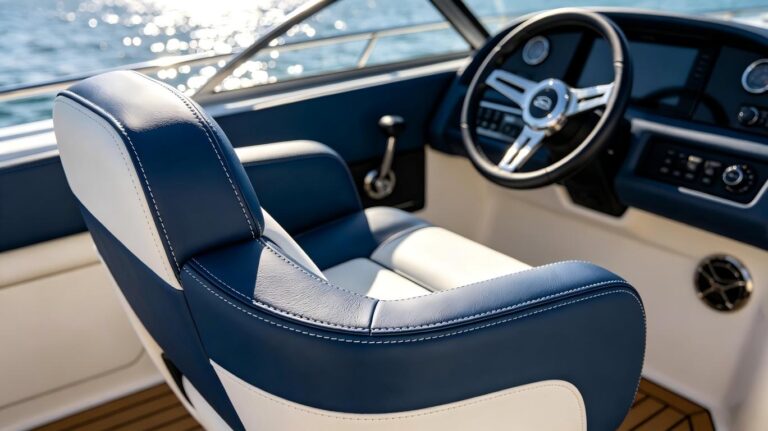
Noon in a July parking lot: the dashboard reads 80°C, the windshield magnifies everything. The leather-wrapped wheel in the next car wears a fabric cover its owner sewed on out of desperation. Inside the showroom across the street, a fleet buyer is reading two material files.
The first — genuine hide — carries a maintenance clause. Condition quarterly, apply a UV-blocking finish, keep it out of direct sun where possible. The second file holds a single test line: QUV accelerated weathering, 1,500 hours, no degradation, ΔE ≤ 0.9 past 1,000 hours.
That gap is the entire story of UV protection for leather: one material family needs protection applied to it forever. Another carries protection inside its chemistry. Here is what the sun actually does to each, and how to specify the difference.
What UV Actually Does to Leather — Two Materials, Two Failure Modes
Start with genuine hide, because the mechanism is biological. UV light breaks down the natural oils and pigment that keep leather supple. Which is why the sun-facing section of a seat fades and dries before the rest. Heat accelerates the moisture loss, stiffening the collagen until it cracks at the fold lines. Parked-car interiors concentrate all of it: temperature, irradiance and dwell time peak together.
PU leather fails on a molecular level instead. Its carbon-chain polymer absorbs UV photons, the chains undergo scission. The visible result is yellowing — ΔE 4–8 by 500 hours in QUV testing — followed by surface chalking. PVC adds plasticizer migration to the same photolysis pathway and powders through around 500–800 hours.
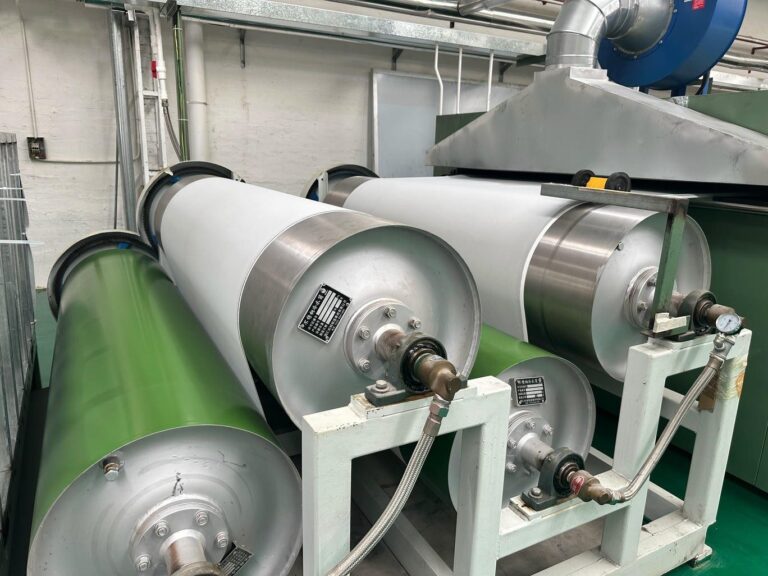
The coating line is where this is decided. Pigment dispersion and film integrity at the application-relevant stage determine how much of the polymer’s weakness reaches daylight. A material that absorbs the radiation it is exposed to will keep paying for it in color, no matter how good the batch looks on delivery.

Coating chemistry sets the UV clock: what the film is made of decides when the yellowing starts.
The Shield Approach: Why Topical UV Protection Never Ends
The aftercare market exists precisely because these materials cannot defend themselves. Conditioners with UV blockers, sealants and ceramic coatings all promise an invisible shield — and they work, for a while. The catch is written into the products’ own guidance. Reapplication intervals depend on wear, heat, sunlight and humidity, so a protected interior is a subscription, not a purchase.
For an OEM or fleet buyer that translates into a maintenance manual clause, a warranty carve-out, and a customer whose seat fades anyway in year three if the detailing schedule slips.
When we compare candidate materials against PU for a sun-exposed program, the decision usually comes down to whether the UV defense lives in the care plan or in the polymer. The silicone versus PU comparison is where that trade becomes a line item.

Glass roofs and panoramic cabins raise the dose: interiors now face more UV, not less.
Built-In UV Protection: A Backbone the Sun Cannot Break
Silicone leather takes the third option: remove the absorbing group. Its silicon–oxygen backbone simply does not absorb the UV wavelengths that shred carbon-chain polymers. So the photo-oxidation cascade never starts — there is nothing to shield because nothing is reacting.
The test data reads accordingly: 1,500+ hours under QUV (ASTM G154) and xenon-arc protocols with no cracking, color shift held to ΔE ≤ 0.9 past 1,000 hours where PU already reads 4–8 at 500, and light fastness at Class 4.5 under ISO 105-B06. Service temperature spans −40°C to 250°C, which covers the dashboard-oven scenario the July parking lot opened with.
The aging resistance is one system. UV stability, hydrolysis immunity and thermal headroom are the same polymer property expressed three ways. The hydrolysis-resistance data shows the 85°C/85%RH side of it.
Automotive interior programs: where built-in UV stability meets daily-cabin abuse.
Specifying UV Protection Into the Material, Not the Maintenance Manual
The procurement action is straightforward: move the weathering line from the care document into the spec sheet. Demand QUV or xenon-arc hours with ΔE values and a report number. Set the pass threshold at 1,500+ hours, and let the maintenance clause shrink to cleaning only.
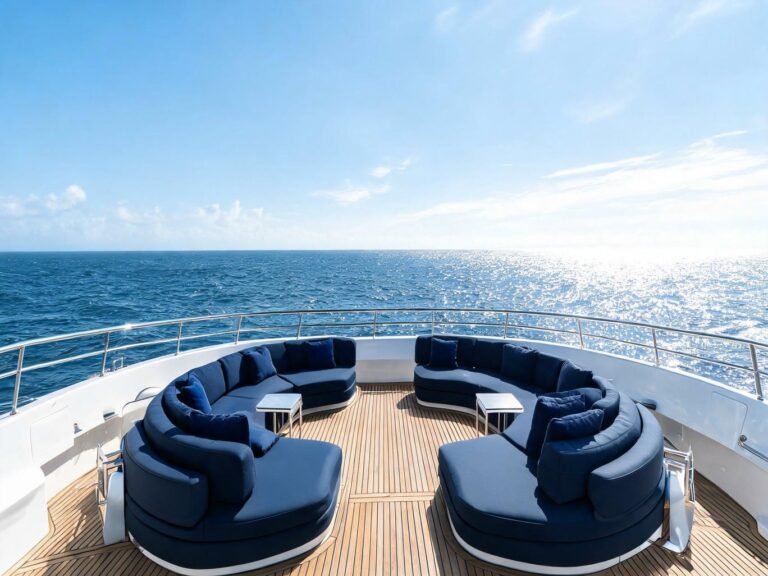
Programs that live outdoors — marine and outdoor seating among them — raise the stakes further, because salt, spray and sun compound each other.
Color consistency across a production run matters here too. A material that refuses to yellow is only half the win if batch-to-batch shade drifts. Which is why roll-level color control belongs on the audit list beside the weathering report.

UV stability holds the color; batch control holds the match. Both belong in the spec.
Request the 1,500-Hour Weathering Report
Frequently Asked Questions
Does UV damage genuine leather?
Yes — UV breaks down the oils and pigment in hide, which is why exposed sections fade, dry and crack first. Topical finishes slow the process, but they wear and need reapplication. Protection remains a maintenance obligation for the life of the product.
How long does silicone leather last in direct sun?
Field programs across Southeast Asia, the Middle East and the Caribbean have passed five-plus years outdoors with tensile retention within 10% and no hydrolysis failures — consistent with 1,500+ hours of accelerated QUV weathering and a 10–15 year service rating.
About TOPSUN
TOPSUN supplies silicone leather engineered for high-irradiance environments — automotive interiors, marine decking and outdoor furniture — from three production bases totaling 60,000+ m², with monthly capacity above 500,000 meters, MOQ from 500 meters and 7–15 day lead times. Weathering, light-fastness (ISO 105-B06 Class 4.5) and ΔE color reports ship with every program file.
UV protection for leather is either a chemistry decision or a choreography of coatings, conditioners and caveats. After 1,500 hours under the lamps, only one of them is still on schedule.
Get UV-Stable Material Samples
References
1. https://www.leatherherorestorer.com/blog/how-to-prot… — Leather Hero on sun, heat and UV damage: hide oils and pigment break down, top coats as barriers, ongoing reapplication guidance
2. https://cartuneandtire.com/best-ceramic-coating-for-l… — Ceramic coatings for leather: UV protection as the core selling point with wear-dependent reapplication intervals