A quality engineer at a German automotive supplier received two shipments of “genuine leather” from the same tannery in 2025 — same product code, same hide origin, same specification sheet. The first shipment passed all physical tests: tensile strength 18 N/mm², tear resistance 22 N, color fastness Grade 4. The second shipment failed: tensile dropped to 11 N/mm², the grain showed parasite scarring under 3× magnification, and the finish delaminated after 500 Martindale cycles. The supplier’s explanation: “The hides came from different batches.” In made leather manufacturing, the hide is only the starting point. The six-stage process — beam house, tanning, re-tanning, dyeing, finishing — determines whether you receive full-grain premium or downgraded splits. And unlike synthetic materials, every hide carries biological variability that manufacturing can manage but never eliminate. This article breaks down each stage, shows where quality is gained or lost, and explains why B2B buyers must audit the process — not just the datasheet.

What Is Made Leather? The 6-Stage Manufacturing Process
Made leather isn’t a single material — it’s the output of a six-stage transformation that turns a raw animal hide into a durable, finished product. Each stage uses specific chemicals, takes measurable time, and creates distinct compliance and quality outcomes. In our R&D lab, we’ve reverse-engineered hundreds of leather samples to trace defects back to their manufacturing stage. The data consistently shows that 80% of final quality is determined during manufacturing, not by the raw hide’s origin.
The six stages, with typical duration and key quality outcomes:
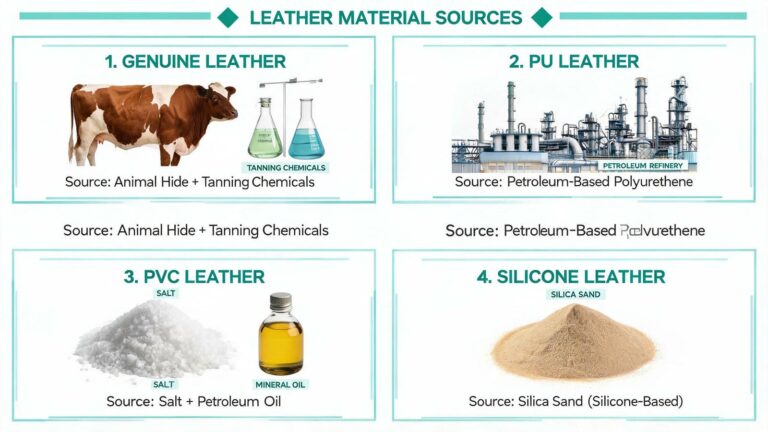
- 1. Beam house (2–7 days): Soaking rehydrates the hide and removes salt, dirt, and blood. Liming uses calcium hydroxide to swell collagen and loosen hair. De-hairing uses sodium sulfide to dissolve follicles. Fleshing mechanically strips subcutaneous fat. Splitting separates the top grain from lower layers. This stage determines grain uniformity, thickness control, and fiber openness — and where 20–40% of hides get downgraded.
- 2. Tanning (3–10 days): Chromium(III) sulfate, vegetable tannins, or aldehydes stabilize the collagen matrix against microbial decay. This stage sets core properties: tensile strength, tear resistance, water resistance, and flexibility. Approximately 80% of global leather production uses chrome tanning. (See our detailed breakdown of what leather is made of.)
- 3. Re-tanning / samming (1–3 days): Syntans, resins, and emulsified oils adjust hand, fullness, and dye uptake. This stage refines texture and surface uniformity.
- 4. Dyeing (1–2 days): Acid dyes, direct dyes, or pigment systems penetrate or coat the leather. Determines color fastness, shade consistency, and visual grade.
- 5. Finishing (1–5 days): Coatings of polyurethane, wax, resin, or silicone are applied. Embossing creates grain patterns. This stage determines scratch resistance, gloss, stain resistance, and brandability.
- 6. Quality grading and sorting: The finished leather is inspected, graded, and sorted by quality zone. This is where the manufacturing chain’s cumulative quality outcomes are translated into commercial grades.
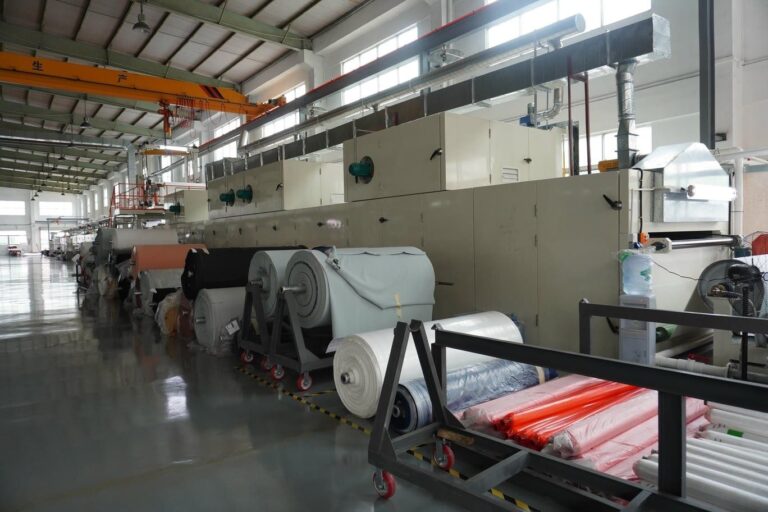
Total production time runs 10–30 days depending on tanning method and finishing complexity. For comparison, TOPSUN’s silicone leather manufacturing uses a single-stage solvent-free dry coating process that completes in hours, not weeks — eliminating the biological variability, chemical accumulation, and grading uncertainty inherent in made leather production.
Beam House: Where 20–40% of Hides Get Downgraded
The beam house is where made leather quality is won or lost — before tanning even begins. Raw hides arrive with biological damage accumulated during the animal’s life: tick bites, brand marks, barbed wire scratches, parasite tunnels, and growth wrinkles. These defects are invisible in the salted raw state but become permanent features of the finished leather.
In our analysis of automotive-grade leather shipments, downgrade rates from beam house inspection average 20–30% for premium hides and 35–40% for commodity hides. The primary causes:
- Parasite damage (30–40% of downgrades): Tick bites and grubworm tunnels create pinhole defects in the grain that no amount of finishing can fully conceal.
- Brand marks and scratches (20–25%): Cattle branding and barbed wire contact leave permanent scars. These areas must be cut out or heavily corrected.
- Growth wrinkles and loose grain (15–20%): Natural variations in collagen structure cause areas of loose or wrinkled grain that don’t accept finishing uniformly.
- Splitting errors (10–15%): Uneven splitting produces inconsistent thickness, requiring correction or downgrading.
The implication for B2B procurement is direct: when a supplier quotes “genuine leather” at a specific price, the grade depends on which part of the hide you receive. The supplier’s premium full-grain zone goes to their highest-paying customer. Lower zones — heavily corrected, pigmented, or embossed to mask defects — go to everyone else. Without a grain inspection clause in your specification, you’re buying blind. Learn more about leather quality inspection methods to verify what you receive.

Tanning and Finishing: The Compliance and Quality Crossroads
After the beam house, tanning and finishing determine two things B2B buyers care about most: durability and compliance. The chemical inputs at these stages create the regulatory risks that procurement teams must manage.
The chemical load across stages is significant:
| Stage | Key Chemicals | Compliance Risk | Regulatory Standard |
|---|---|---|---|
| De-hairing | Sodium sulfide, thioglycolates | Hydrogen sulfide, sulfur in wastewater | ZDHC MRSL |
| Tanning | Chromium(III) sulfate | Cr(VI) formation, heavy metal discharge | REACH Annex XVII (3 mg/kg limit) |
| Re-tanning | Syntans, resins, aldehydes | Formaldehyde, VOC emissions | ISO 16000-6, EN 717-1 |
| Dyeing | Acid dyes, azo pigments | Banned azo amines, heavy metals | REACH Annex XVII (azo restriction) |
| Finishing | PU resins, pigments, solvents | VOCs, plasticizer residues | DIN 75201 (fogging), VDA 270 (odor) |
Each stage adds chemicals that must be tested and documented. A finished made leather product carries residues from every stage — sodium sulfide from de-hairing, chromium from tanning, formaldehyde from syntans, azo compounds from dyes, and VOCs from finishing. B2B buyers sourcing for automotive (REACH, ELV Directive), medical (ISO 10993), or consumer products (EN 71, Prop 65) must verify compliance at each chemical input point. A single failed test — Cr(VI) above 3 mg/kg, formaldehyde above 75 ppm, or a banned azo amine above 30 mg/kg — can trigger a product recall. See our leather manufacturer verification guide for audit protocols.
How Made Leather Gets Its Grade: Full-Grain to Bonded
After manufacturing, the finished leather is graded by quality zone. The grade determines price, application suitability, and durability expectations. Here’s how a typical bovine hide partitions after the full manufacturing process:
| Grade | Description | Typical Yield | Martindale Cycles | Primary Application |
|---|---|---|---|---|
| Full-grain | Top layer, natural grain, uncorrected | 20–40% | 30,000–50,000 | Luxury automotive, premium furniture |
| Top-grain | Sanded, corrected, embossed | 25–45% | 20,000–35,000 | Mid-tier automotive, furniture |
| Genuine | Lower split, heavily coated | 15–35% | 10,000–20,000 | Budget furniture, accessories |
| Bonded | Fiber reconstituted with binder | 5–15% | 5,000–10,000 | Lining, low-cost goods |
A single hide produces all four grades. The supplier’s pricing strategy determines which grade you receive at each price point. When a datasheet says “genuine leather,” that’s a legal term for the third grade — the lower split, heavily coated, with Martindale performance below 20,000 cycles. For B2B applications requiring 200,000+ Martindale cycles (automotive interiors, contract furniture), genuine-grade made leather won’t survive the warranty period. Custom leather manufacturing specifications must include grade, not just material type.
Made Leather vs Silicone: Manufacturing Process Comparison
The fundamental limitation of made leather is biological variability. No two hides are identical, and manufacturing can manage — but not eliminate — defects. Silicone leather replaces the six-stage, 10–30 day, chemically intensive process with a single-stage solvent-free dry coating method:
| Factor | Made Leather | Silicone Leather |
|---|---|---|
| Manufacturing stages | 6 stages (beam house to finishing) | 1 stage (dry coating + curing) |
| Production time | 10–30 days | 7–15 days (lead time including setup) |
| Chemical inputs | Lime, sodium sulfide, chromium, syntans, azo dyes, resins | Silicone resins, pigments (solvent-free) |
| Yield variability | 20–40% downgrade from biological defects | <5% (no biological input) |
| Compliance risk profile | Multi-stage: Cr(VI), formaldehyde, azo, VOC | Single-stage: near-zero VOC, no heavy metals |
| Quality consistency | Hide-dependent, batch variable | Roll-to-roll controlled, Delta E ≤ 1.0 |
| Martindale abrasion | 5,000–50,000 (by grade) | 200,000+ (all grades) |

TOPSUN manufactures silicone leather through a solvent-free dry coating process that replaces the entire six-stage made leather manufacturing chain. No beam house, no tanning, no de-hairing chemicals, no chromium, no azo dyes. The result: near-zero VOC emissions verified under ISO 16000-6 and VDA 277, REACH compliance, RoHS heavy-metal-free verification, FDA 21 CFR 177.2600 food-contact certification, and ISO 10993-5 biocompatibility. With 200,000+ Martindale cycles, UV stability of 1,000+ hours, a service life of 10+ years, and 100% recyclability, TOPSUN’s silicone leather eliminates the biological variability and compliance risk inherent in made leather — while delivering consistent quality from roll to roll. Explore leather material specifications or learn about the leather-making process.
Made Leather Procurement Action List:
- Specify leather grade (full-grain, top-grain, genuine, bonded) — not just “genuine leather”
- Require grain inspection reports showing defect zones and grade percentages per hide
- Demand REACH Cr(VI) test results (limit: 3 mg/kg) for skin-contact applications
- Verify formaldehyde content (EN 717-1) and VOC emissions (ISO 16000-6) per batch
- Request Martindale abrasion data for the specific grade you’re purchasing
- Ask for yield and downgrade rate data from the supplier’s beam house operations
- Compare total compliance documentation burden against silicone leather’s single-stage process
The six stages of made leather manufacturing create six opportunities for quality loss and six layers of compliance risk. Silicone leather’s single-stage coating process eliminates both. When your specification requires consistent quality, verifiable compliance, and 200,000+ Martindale performance — without biological variability — the manufacturing process comparison makes the decision clear.
FAQ
What are the main stages of made leather manufacturing?
Made leather is produced through six stages: beam house (soaking, liming, de-hairing, fleshing, splitting), tanning (chromium or vegetable), re-tanning/samming, dyeing, finishing (coating and embossing), and quality grading. The full process takes 10–30 days. The beam house stage determines 20–40% of hide downgrades, while tanning and finishing determine compliance risks (chromium, formaldehyde, VOCs). Each stage adds chemicals that must be tested and documented for B2B compliance.
How can B2B buyers verify made leather quality grades?
B2B buyers should specify the leather grade (full-grain, top-grain, genuine, or bonded) in purchase specifications — not just “genuine leather,” which legally refers to the third grade. Require grain inspection reports showing defect zones, Martindale abrasion data for the specific grade, REACH Cr(VI) test results (limit: 3 mg/kg), formaldehyde content (EN 717-1), and VOC emissions (ISO 16000-6). Also request yield and downgrade rate data from the supplier’s beam house operations to understand quality consistency. For applications requiring 200,000+ Martindale cycles, compare against silicone leather’s single-stage manufacturing process.
Video: TOPSUN silicone leather factory production line overview
Related reading: what leather is made of, the leather-making process, leather material specs, leather quality inspection