A sourcing director at a Scandinavian furniture brand asked us a question that stopped the room: “I know our vegan leather is made from plants. But what exactly is the binder made from? And where does that come from?” The answer — petroleum-derived polyurethane, sourced from a refinery in Saudi Arabia — contradicted every sustainability claim on their product page. Vegan leather made from “cactus” sounded clean. The supply chain reality was 70% petroleum. This is the core problem with the question “vegan leather made from”: the marketing label tells you the hero ingredient, not the full bill of materials. Trace every vegan leather type to its actual source — the refinery, the mine, the farm, or the forest — and the sustainability equation changes dramatically.
This analysis traces four vegan leather types back to their raw material sources, mapping the supply chain geography, environmental footprint, and sourcing risk profile for each.
Source 1: PU Leather — From Oil Refinery to Upholstery
Polyurethane vegan leather traces its origins to crude oil. The supply chain runs through four stages:
- Stage 1 — Extraction: Crude oil extracted from oil fields (Middle East, North America, Russia). This is the ultimate raw material for both the polyol and the isocyanate components.
- Stage 2 — Refining and cracking: Naphtha is cracked into benzene (for MDI production) and propylene/ethylene (for polyol production). Feedstock sourcing is concentrated in 12 major refineries globally.
- Stage 3 — Chemical synthesis: Benzene → nitrobenzene → aniline → MDI. Propylene → propylene oxide → polyether polyol. These chemical plants are located in China, South Korea, Germany, and the US. DMF solvent is synthesized from dimethylamine and carbon monoxide.
- Stage 4 — Coating and lamination: PU resin + DMF solvent applied to polyester fabric base. Polyester fabric itself is also petroleum-derived (PET pellets → fiber extrusion → weaving). The final coating facility is typically in Dongguan, Wenzhou, or Yancheng, China.
Environmental footprint: PU leather’s raw materials are 100% petroleum-derived. The carbon footprint of PU leather production ranges from 7-12 kg CO₂e per square meter (varies with solvent recovery efficiency). DMF emissions in solvent-based processes add air pollution costs that are increasingly being regulated out of existence.

Petroleum-derived polyester base fabric entering the coating line — the first step in PU leather manufacturing.
Source 2: PVC Leather — From Salt and Oil to Plasticized Sheet
PVC leather has a dual-origin supply chain — salt and petroleum:
- Vinyl chloride monomer (VCM): Produced by chlorinating ethylene (from petroleum cracking) to form ethylene dichloride, then cracking EDC to VCM + HCl. The chlorine comes from salt (NaCl) via electrolysis.
- Polymerization: VCM is polymerized to PVC resin via suspension or emulsion polymerization. Major PVC resin producers: Shin-Etsu, Formosa Plastics, Westlake Chemical (US/Taiwan).
- Plasticizer sourcing: Phthalate esters (DEHP, DINP, DIDP) — synthesized from phthalic anhydride (from ortho-xylene, petroleum-derived) and alcohols. Sourced from chemical plants in China, Germany, and the US.
- Compounding and coating: PVC paste resin + plasticizer + stabilizers + filler applied to polyester fabric. Manufacturing concentrated in Wenzhou and Yancheng, China.
Sourcing risk: PVC leather’s supply chain has the highest regulatory exposure of any vegan leather type. Phthalate plasticizers face restrictions in the EU (REACH), US (CPSIA), and increasingly in Asia. Lead stabilizers, while phased out in most markets, still appear in cost-driven production. For brands specifying PVC leather, the sourcing risk isn’t just environmental — it’s the potential for regulatory non-compliance in destination markets.

Raw fabric inventory — polyester base fabric waiting for polymer coating. All four vegan leather types use this petroleum-derived substrate.
Source 3: Silicone Leather — From Sand to Upholstery
Silicone leather’s supply chain is the shortest and most transparent of all vegan leather types. Its primary raw material — silica (SiO₂) — is the second most abundant element in the Earth’s crust.
- Stage 1 — Silica extraction: Silica sand (quartz) is mined in China, Australia, US, and Brazil. No geopolitical risk — silica is available globally in unlimited quantities.
- Stage 2 — Silicon metal production: Silica sand + carbon (coal/coke) smelted at 1,900°C in electric arc furnaces to produce metallurgical-grade silicon. Major producers: China (66% of global silicon metal), Brazil, Norway.
- Stage 3 — Silicone resin synthesis: Silicon metal + methyl chloride → dimethyldichlorosilane → hydrolysis → polysiloxane (silicone polymer). This process is used by Dow, Wacker, Momentive, Shin-Etsu, and Chinese silicone producers.
- Stage 4 — Dry coating: Silicone elastomer applied directly to knitted polyester base fabric via heated rollers. No solvents, no additives, no plasticizers. Cured at 150-200°C. TOPSUN’s manufacturing facility in Dongguan handles this stage.
Environmental footprint: Silicone leather’s carbon footprint is 4-7 kg CO₂e per square meter — 40-45% lower than PU leather — primarily because the solvent-free process eliminates the emission recovery infrastructure and chemical synthesis steps required for DMF-based PU production. The raw material (silica) requires no petrochemical refining, and the polymer contains no plasticizers that could migrate into the environment.

Silicone coating workshop — silica-derived polymer applied to polyester base without solvents or chemical additives.
Source 4: Bio-Based Leather — From Farm to Fabric (With a Detour Through Petroleum)
Bio-based vegan leather is marketed as “made from plants.” The supply chain reality is more complex — and every plant-based leather we’ve analyzed still contains petroleum-derived binder chemistry.
| Bio-Leather | Plant Source | Plant Content | Binder Source |
|---|---|---|---|
| Desserto (cactus) | Nopal cactus, Zacatecas, Mexico | ~30-40% | Petroleum-derived PU |
| Piñatex (pineapple) | Pineapple leaf fiber, Philippines | ~50-60% | PLA coating + petroleum resin |
| Mycelium | Mushroom root, lab-grown | ~80-90% | Post-processing coatings |
| Apple leather | Apple waste, Italy/China | ~20-30% | Petroleum-derived PU |
The “made from plants” narrative is partially true — the plant fiber provides texture, appearance, and a marketing story. But the structural integrity, water resistance, and durability come from the petroleum-derived binder. When a supplier says “vegan leather made from cactus,” the more precise statement is “vegan leather made from cactus fiber reinforced with petroleum-derived polyurethane.”

Plant-based leather in fashion — the cactus content provides the narrative; the PU binder provides the performance and the sourcing risk.
Zero-VOC manufacturing process — silicone leather production traces from silica sand to finished roll without solvent intermediaries.

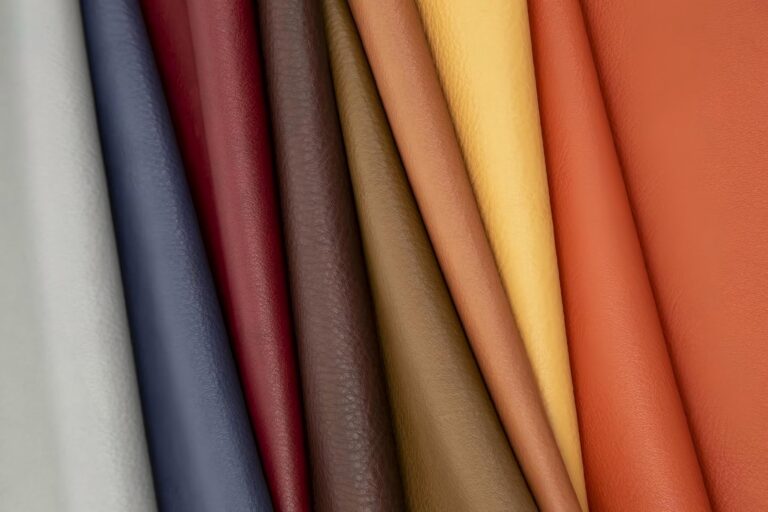
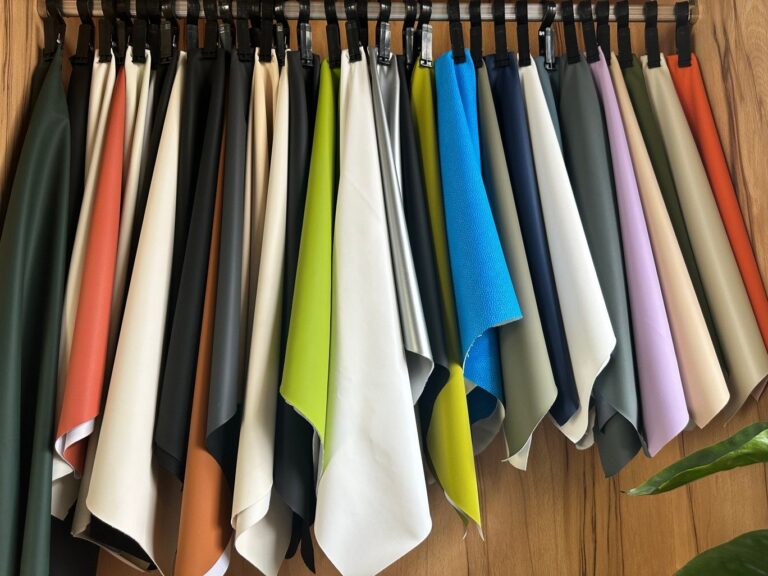
Material swatches — visually identical surfaces can be made from petroleum, silica, or plant fiber. Only the source chain tells them apart.
Supply Chain Risk Comparison
| Risk Factor | PU Leather | PVC Leather | Silicone Leather | Bio-Based |
|---|---|---|---|---|
| Raw material geopolitical risk | High (oil-dependent) | High (oil + chlorine) | Low (silica = abundant) | Medium (agricultural + oil) |
| Regulatory exposure | High (DMF restrictions) | Critical (phthalates, PFAS) | Low (inherently compliant) | Medium (PU binder risk) |
| Supply chain transparency | 4 stages, often opaque | 4 stages, opaque | 4 stages, fully traceable | 3-5 stages, complex |
| Carbon footprint (kg CO₂e/m²) | 7-12 | 8-14 | 4-7 | 6-10 (varies) |
| Supplier concentration risk | China-dominated | China-dominated | China + Korea + Germany | Fragmented, small-scale |
About TOPSUN
TOPSUN manufactures silicone vegan leather from a fully traceable supply chain: silica sand → metallurgical silicon → polysiloxane resin → solvent-free dry coating → finished leather. No petroleum-derived solvents, no phthalate plasticizers, no DMF, no hidden petroleum binder. Our 60,000+ m² production capacity across Dongguan, Yichang, and Xiangyang processes 500,000+ meters monthly, with every batch traceable from raw silica source to finished roll. We provide full material declarations, carbon footprint calculations, and REACH compliance documentation for B2B buyers who need to trace their vegan leather to its actual source — not its marketing label.
Source Tracing Questions for Your Supplier
- Can you provide a full bill of materials including binder chemistry, not just the hero ingredient?
- What percentage of the formulation is plant-derived vs petroleum-derived?
- Where is your primary raw material extracted or produced (country, region)?
- Can you trace the supply chain back to the original feedstock (oil field, silica mine, farm)?
- What solvents are used in manufacturing, and what is your emission recovery rate?
- Do you provide carbon footprint data per square meter (kg CO₂e)?
- What is your REACH SVHC compliance status, and can you provide the full declaration?
Vegan leather made from “plants” can still be 70% petroleum. Vegan leather made from “silicone” is 100% silica-derived polymer with zero petroleum content in the coating. The difference matters — for compliance, for carbon footprint, for supply chain resilience, and for the credibility of the sustainability claim your brand puts on its product page.
Want a vegan leather supplier who traces every meter to its silica source? Request full material declarations, carbon footprint data, and free A4 swatch samples from TOPSUN. Contact info@topsunsiliconeleather.com or WhatsApp +44 744 461 7933.