You’re sitting across from a supplier in Guangdong who just quoted you leather PVC fabric at $5.20 per square meter. The spec sheet looks clean: 0.7mm thickness, 30+ colors, embossed grain patterns, 20,000 Martindale cycles. Your finance team is thrilled — the price is 60% below PU leather and 75% below genuine leather. You’re ready to sign for 10,000 meters. But as a procurement manager who has sourced upholstery materials for automotive, furniture, and marine projects across three continents, I’ve learned to read past the unit price. The $5.20/m² number is the opening line of a much more expensive story — one that includes phthalate compliance failures, reupholstery costs at year three, and regulatory recalls that erase every cent of savings. Here’s what leather PVC fabric actually costs over a 10-year product lifecycle.

What Is Leather PVC Fabric? Composition and Manufacturing
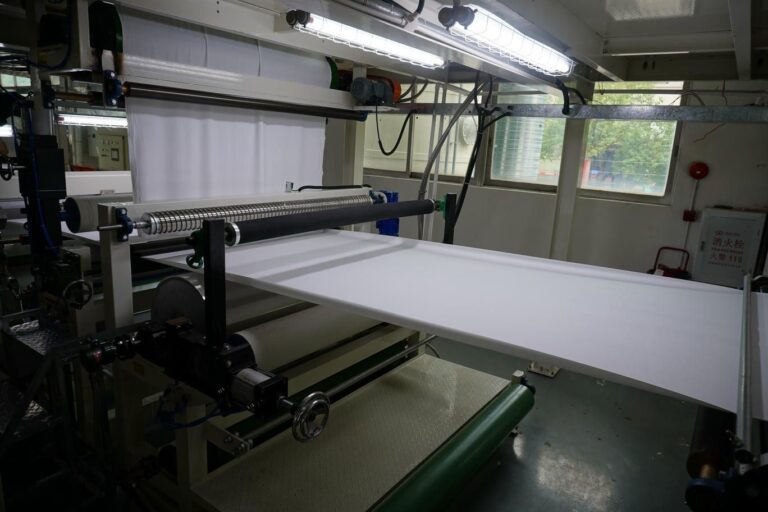
Leather PVC fabric is a synthetic upholstery material made from polyvinyl chloride — a thermoplastic polymer — combined with plasticizers, stabilizers, pigments, and a fabric backing. The manufacturing process coats a textile base (typically polyester or cotton blend) with a PVC compound layer, then embosses the surface to mimic leather grain. The result is a waterproof, stain-resistant material that looks like leather at a fraction of the cost.
The critical variable in leather PVC fabric is the plasticizer content. PVC in its raw form is rigid and brittle — it requires 20–40% plasticizers by weight to achieve the flexibility needed for upholstery. These plasticizers are typically phthalates: DEHP, DBP, BBP, and DIBP. And this is where the $5/m² price tag starts accumulating hidden costs.
Key composition facts every procurement team should verify before ordering leather PVC fabric:
- Plasticizer type: Request the specific plasticizer formulation. DEHP, DBP, BBP, and DIBP are restricted under EU REACH Entry 51 at 0.1% by weight in consumer articles [$TRAE_REF](https://neveitaliafurniture.com/reach-phthalate-rules-foam-pvc-furniture-eu/).
- Phthalate-free claims: Many suppliers offer “non-phthalate PVC” using alternatives like DINCH or DOTP. Verify with third-party test reports — not supplier declarations. Studies show 85% of PVC leather products contain phthalates above recommended safety levels [$TRAE_REF](https://topsunsiliconeleather.com/news/faux-leather-types/).
- Lead content: REACH Annex XVII Entry 63 bans lead above 0.1% in PVC articles. Imported PVC products must include third-party certificates of traceability [$TRAE_REF](https://topsunsiliconeleather.com/news/pvc-leather-industry-alternatives/).
- Stabilizer system: PVC requires heat stabilizers during processing. Lead-based stabilizers (still used in some markets) carry regulatory and health risks. Tin-based or calcium-zinc stabilizers are the compliant alternatives.
Leather PVC Fabric: The Hidden Cost of Phthalates and Compliance
In 2025, I sourced PVC leather for a 2,000-seat cinema project in Southeast Asia. The supplier quoted $4.80/m² with full REACH compliance documentation. When we tested the shipment at SGS, the report showed DEHP at 1,200 mg/kg — above the 1,000 mg/kg REACH limit for consumer articles. The entire 8,000-meter shipment was rejected. The re-order with a compliant supplier cost $6.50/m². The delay cost three weeks of construction downtime. This is the hidden cost of leather PVC fabric that doesn’t appear on any supplier’s quote sheet.
Here’s the regulatory landscape that makes leather PVC fabric sourcing a compliance minefield:
| Regulation | Jurisdiction | Restricted Substances | Limit | Impact on PVC |
|---|---|---|---|---|
| REACH Entry 51 | EU | DEHP, DBP, BBP, DIBP | 0.1% by weight | Direct restriction on primary PVC plasticizers |
| REACH Entry 63 | EU | Lead | 0.1% in PVC articles | Bans lead-based stabilizers |
| REACH Annex XVII (2023) | EU | DEHP, BBP, DBP, DIBP in automotive | Ban in vehicle interiors from Jan 2026 | Eliminates PVC from EU automotive interiors |
| California Prop 65 | USA (CA) | DEHP, BBP, lead | Warning labels required | Litigation risk for non-labeled products |
| GB/T standard (revised) | China | Phthalates, heavy metals, VOCs | New restricted substance limits | Tightens domestic PVC production standards |

The regulatory trajectory is unidirectional: every major market is tightening restrictions on PVC chemistry. From January 2026, the EU bans four phthalates in all new automotive interior components — seats, dashboards, door trims [$TRAE_REF](https://carinterior.alibaba.com/tips/2026-regulations-phthalates). For B2B buyers sourcing leather PVC fabric for products with a 5+ year lifecycle, the question isn’t whether PVC will be compliant at purchase — it’s whether it will remain compliant throughout the product’s service life. For more on synthetic leather alternatives, see our synthetic leather PVC guide.
PVC vs PU vs Silicone: A 10-Year TCO Comparison
When procurement teams compare materials on unit price alone, they miss 70% of the cost. Here’s the 10-year total cost of ownership that I calculate for every upholstery sourcing decision:
| Cost Factor | Leather PVC Fabric | PU Leather | Silicone Leather |
|---|---|---|---|
| Unit price per m² | $5–10 | $10–18 | $20–30 |
| Service life | 2–3 years | 3–5 years | 10+ years |
| Replacements in 10 years | 3–4 | 2–3 | 0 |
| Material cost (10 yr) | $20–40 | $30–54 | $20–30 |
| Reupholstery labor (per cycle) | $8–12/m² | $8–12/m² | $0 |
| Total labor (10 yr) | $24–48 | $16–36 | $0 |
| 10-Year TCO per m² | $44–88 | $46–90 | $20–30 |
| Compliance risk | High (phthalate restrictions) | Moderate (solvent residues) | None (near-zero VOC, no restricted substances) |
The numbers tell a counterintuitive story. The cheapest material at purchase — leather PVC fabric at $5/m² — becomes the most expensive material over 10 years at $44–88/m² total cost. Silicone leather, despite a 4× higher unit price, delivers the lowest 10-year TCO because it eliminates replacement costs, labor, and compliance risk. For applications with shorter lifecycles (2–3 year disposable products), PVC’s low unit price still wins. For anything with a 5+ year expected life, the math reverses [$TRAE_REF](https://topsunsiliconeleather.com/news/silicone-vs-pu-vs-pvc/).

Why PVC Leather Fabric Fails in 3-5 Years
The 2–3 year service life of leather PVC fabric isn’t a quality issue — it’s a chemistry issue. The same plasticizers that make PVC flexible are the ones that destroy it over time. Here are the three failure mechanisms I’ve observed across every PVC leather project I’ve sourced:
Plasticizer migration: Phthalates and alternative plasticizers are not chemically bonded to the PVC polymer — they’re mixed in. Over time, they migrate to the surface and evaporate. The fabric becomes rigid, then brittle, then cracks under any flexing load. In automotive interiors exposed to heat, this happens in 18 months. In air-conditioned office furniture, it takes 3 years. But it always happens.
UV degradation: PVC absorbs UV radiation in the 290–400 nm range, causing polymer chain scission. The surface chalks, loses color, and develops micro-cracks. Without UV stabilizers (which themselves deplete over time), PVC leather shows visible degradation at 200–400 hours of ASTM G154 UV exposure. Compare this to silicone leather at 5,000+ hours.
Thermal instability: PVC begins to decompose at 60°C — a temperature easily reached inside a car parked in sunlight or near kitchen appliances. Decomposition releases HCl gas, which accelerates further degradation. The material yellows, embrittles, and eventually crumbles. Silicone leather withstands 250°C without change. For applications involving polyurethane alternatives, see our polyurethane fabric leather guide.
Decision Guide: When PVC Is Acceptable and When to Switch
I don’t categorically reject PVC. It has legitimate applications where its low cost and water resistance outweigh its durability limitations. The key is matching the material to the product lifecycle. Here’s the decision framework I use:
- Use PVC when: Product lifecycle is ≤3 years. Indoor-only application. No UV exposure. No skin contact. No regulatory requirement for phthalate compliance (e.g., non-EU markets, non-consumer industrial covers). Cost is the primary decision factor. Volume is high enough that unit price savings are material.
- Switch to PU when: Product lifecycle is 3–5 years. Indoor application with moderate wear. REACH compliance required but budget doesn’t allow silicone. Need better tactile feel than PVC. Applications like mid-range furniture and fashion accessories.
- Switch to silicone leather when: Product lifecycle is 5+ years. Application involves UV exposure, moisture, heat, or chemical cleaning. Regulatory compliance for EU/US markets required. Applications include automotive interiors, marine, healthcare, hospitality, outdoor furniture, and any product where warranty claims or reupholstery costs would exceed the material price difference.
The procurement decision isn’t “PVC vs silicone” — it’s “what does this product need to survive for its intended lifespan?” If the answer is “3 years indoors with no regulatory exposure,” PVC is the right choice. If the answer involves any of the risk factors above, the $5/m² PVC price tag is a down payment on a much larger bill. For understanding alternative material names and classifications, see our faux leather naming guide.
Video Topic Direction: TOPSUN Silicone Leather Cost-Effective Solution — Side-by-side demonstration of PVC, PU, and silicone leather after accelerated aging, showing plasticizer migration, surface cracking, and color degradation alongside silicone leather’s unchanged surface.
FAQ
Is leather PVC fabric safe for upholstery?
Leather PVC fabric is safe for short-lifecycle indoor applications when phthalate-free formulations are used. However, 85% of PVC leather products contain phthalates above recommended safety levels. For EU-bound products, REACH restricts DEHP, DBP, BBP, and DIBP at 0.1% by weight. From January 2026, these phthalates are banned in all new EU automotive interior components. Always request third-party SGS or Intertek test reports verifying phthalate content before purchase [$TRAE_REF](https://www.kothea.com/2026/04/06/faux-leather-types-compared-pvc-pu-silicone/).
How much does leather PVC fabric cost compared to silicone leather?
Leather PVC fabric costs $5–10 per square meter. Silicone leather costs $20–30 per square meter — 2–4× more upfront. However, over a 10-year lifecycle, PVC’s total cost of ownership reaches $44–88/m² (including 3–4 replacements and labor), while silicone leather’s TCO is $20–30/m² with zero replacements. For products with 5+ year lifespans, silicone leather is the lower-cost option.
Get the Full Cost Analysis
Request a detailed TCO comparison for your application — including compliance documentation, durability data, and free A4 swatch samples shipped worldwide via DHL/FedEx.
Email: info@topsunsiliconeleather.com
WhatsApp: +44 744 461 7933