When a supplier quotes you $3 per square meter for vegan leather polyurethane, does that number tell you what you’re actually paying? For most procurement teams, the FOB unit price is the entire cost conversation. But 85% of PU leather failures trace back to hydrolysis — not abrasion — and the replacement cycle that follows can multiply your real cost by 2.7× over seven years. The question isn’t whether PU leather is cheap. It is. The question is whether cheap upfront translates to cheap over the product’s actual lifecycle.
Download Cost Comparison Sheet
| Cost Factor | PU Leather | Silicone Leather |
|---|---|---|
| Unit price ($/sqm) | $3–10 | $20–30 |
| Service life | 3–5 years | 10+ years |
| 7-yr replacements | 2–3 cycles | 0 |
| 7-yr TCO multiplier | 2.7× initial | 1.0× initial |
| Per-seat replacement cost | $300+ (labor, freight, downtime) | N/A |

Tensile testing reveals PU loses 35% of tensile strength within 12 months at 70%+ RH.
Why PU Leather Fails: Hydrolysis, Not Wear
The global PU leather market reached $4.96 billion in 2025 with 11 billion sqm of output — but volume doesn’t equal value. In our testing, standard PU samples show visible cracking after just 10,000 flex cycles. The real killer is hydrolysis: above 70% relative humidity, polyester-urethane chains break down auto-catalytically, losing 35% of tensile strength within 12 months. By the time visible peeling appears, 90% of polymer bonds are already destroyed.
This is why silicone vs PU isn’t a preference — it’s a chemistry fact. The topcoat delaminates irreversibly, and no maintenance protocol can reverse the damage.
The common PU vegan leather problems all follow this same pattern — making the unit price an unreliable cost indicator.
Hidden Costs Beyond the Invoice
A 100-room hotel replacing PU lobby sofas three times over 10 years spends $60,000 total — including $15,000 in initial purchase, $30,000 in two replacement cycles, and $15,000 in disposal and labor. Room downtime adds another $6,000 per cycle. One client who switched from PU to silicone leather for wallet production reported a 40% drop in return rates within six months. The ASTM D6869 hydrolysis resistance certificate is the one document that separates durable PU from disposable PU — yet 80% of suppliers on B2B platforms cannot produce it.

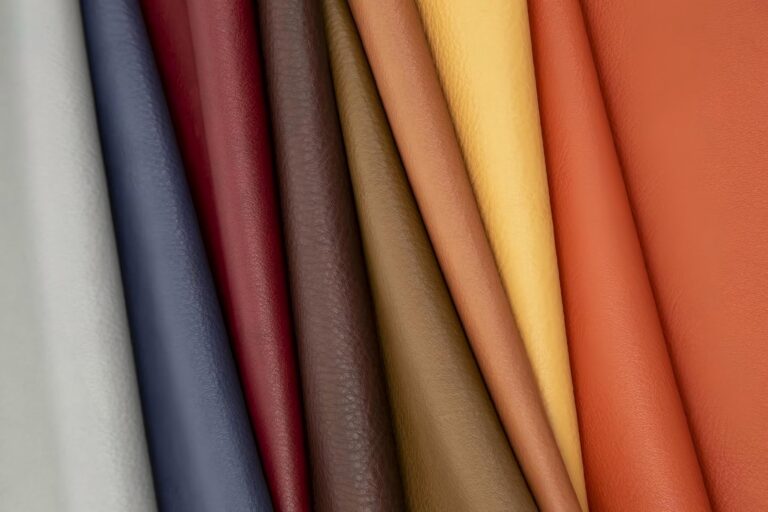
Finished rolls look identical at delivery — the difference appears 3 years later.
See the real cost difference between PU and silicone leather over a 10-year period.

Automotive PU seats crack within 3-5 years — warranty claims follow.
Which Material Fits Your Project?
| If Your Project Needs… | Specify |
|---|---|
| Product lifecycle ≤ 3 years, dry climate | PU (with ASTM D6869 cert) |
| 5+ year lifecycle, any humidity | Silicone leather |
| Food-contact or medical-grade | Silicone only |
| Lowest 7-year TCO | Silicone leather |
About TOPSUN
TOPSUN supplies both PU and silicone vegan leather for automotive, furniture, and consumer electronics applications, with full ASTM D6869 hydrolysis testing on every batch and transparent per-unit and lifecycle cost breakdowns.
Monthly capacity 500,000+ m across three facilities, ASTM D6869 certified, REACH compliant, free A4 swatches with TCO comparison sheets shipped worldwide.