The global vegan leather market was valued at $32.8 billion in 2026 and is projected to reach $86.66 billion by 2035, growing at an 11.40% CAGR. But that single number obscures the market’s most important story: the growth is unevenly distributed across regions, material chemistries, and end-use segments. PU leather is growing 6% annually in volume but losing margin to regulatory costs. Silicone leather is growing 14% annually in the segments that matter most — automotive, medical, and marine. Plant-based leather is growing 11.6% but from a base of $1.75 billion, while the total synthetic leather market (PU + PVC) is projected at only 5.94% CAGR. For B2B sourcing teams, the aggregate market number is irrelevant. What matters is which segment your products serve and which chemistry is winning in that segment.
This market analysis breaks the vegan leather market data into regional, chemistry, and segment dimensions — with growth forecasts that show where B2B procurement should position supply agreements before demand outpaces capacity.
Total Market Size and Growth Trajectory
Three research firms provide the baseline market sizing for the vegan leather market:
| Source | 2026 Value | 2035 Projection | CAGR |
|---|---|---|---|
| Morgan Reed Insights | $32.8B | $86.66B | 11.40% |
| Vantage Market Research | $24.3B (from 2025 baseline) | $48.3B | 7.80% |
| Verified Market Reports | $25.1B | $55.2B | 10.70% |
The variance reflects different methodology: Morgan Reed includes the broader vegan leather category (PU, PVC, silicone, and bio-based). Vantage focuses on materials marketed explicitly as “vegan.” The consensus range is 7.8-11.4% CAGR, with the higher growth rates driven by premium segments (silicone, bio-based) and the lower rates by mature PU/PVC volume.
Market Breakdown by Chemistry
| Chemistry | 2026 Share | CAGR | 2035 Share (projected) | Trend |
|---|---|---|---|---|
| PU (polyurethane) | ~55% | 5.9% | ~38% | Declining share (regulatory) |
| PVC | ~25% | 2.1% | ~12% | Structural decline |
| Silicone | ~8% | 14.0% | ~22% | Fastest-growing performance chemistry |
| Bio-based | ~12% | 11.6% | ~28% | Premium fashion growth |
The chemistry shift is the market’s most significant structural change. PU and PVC together held 80% of the vegan leather market in 2026 but are projected to hold only 50% by 2035. Silicone leather’s share nearly triples from 8% to 22%, driven by automotive interior mandates and medical material requirements. Bio-based leather grows from 12% to 28%, primarily in luxury fashion.

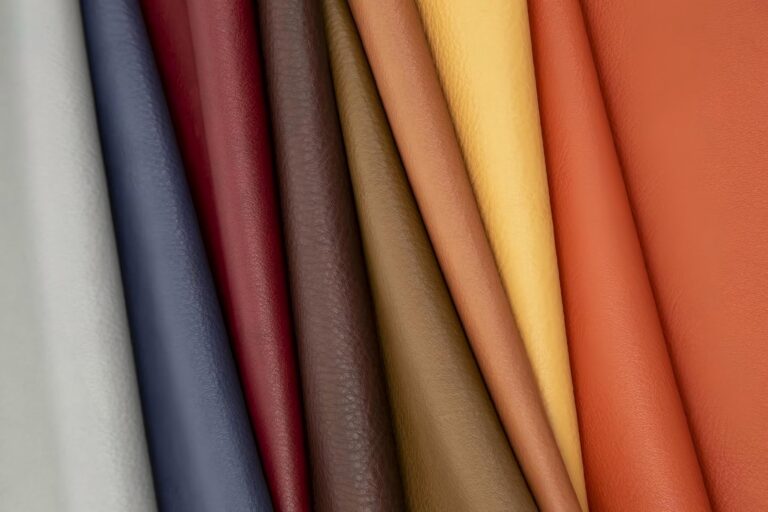
Color range display — the diversity of the vegan leather market mirrors the diversity of its chemistries, each serving different segments.
Regional Market Analysis
The vegan leather market’s growth is geographically uneven. Here’s the regional breakdown:
- Asia-Pacific (45% of market): Largest consumer and producer. China accounts for 65% of global production. Growth driven by domestic automotive, footwear, and furniture demand. CAGR: 12.8% — highest regional growth, fueled by EV interior demand and tightening environmental regulations that favor silicone over PU.
- Europe (28% of market): Second-largest market, led by Germany, Italy, and the UK. Regulatory pressure (REACH, microplastics) drives PU-to-silicone migration. Luxury fashion brands drive bio-based leather adoption. CAGR: 10.2%.
- North America (18% of market): Third-largest market, led by the US. California’s PFAS ban and automotive EV demand are primary growth drivers. CAGR: 9.5%.
- Latin America, Middle East, Africa (9% of market): Emerging markets with growth in automotive (Mexico) and hospitality (UAE). CAGR: 8.3%.
Segment Growth: Where the Market Actually Expands
The aggregate 11.4% CAGR varies dramatically by application segment. Here’s where growth concentrates:
| Segment | 2026 Size | CAGR | Dominant Chemistry |
|---|---|---|---|
| Fashion & accessories | $7.1B | 12.8% | Bio-based, PU |
| Furniture | $8.2B | 8.5% | PU, PVC (price-driven) |
| Automotive/EV | $4.8B | 14.2% | Silicone, high-perf PU |
| Footwear | $5.6B | 9.2% | PU |
| Medical/healthcare | $1.9B | 16.5% | Silicone |
| Marine/outdoor | $1.2B | 15.8% | Silicone |

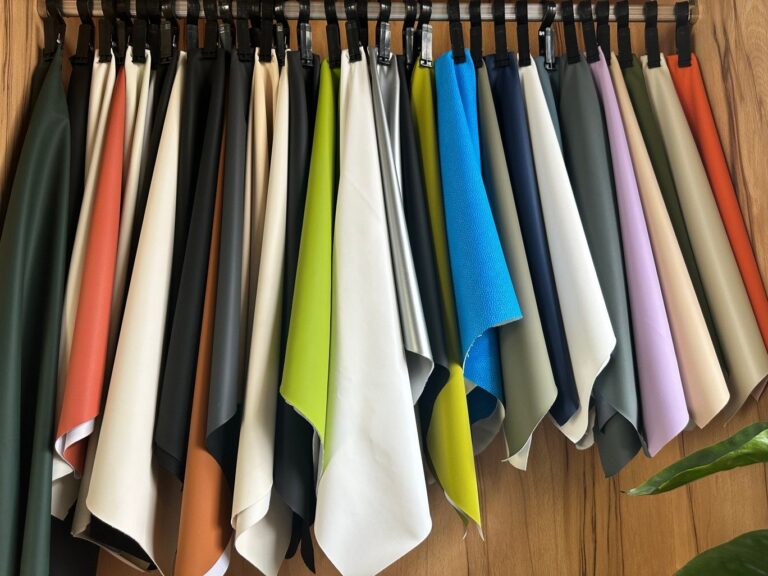
Product range across market segments — each color and texture represents a different application category with its own growth trajectory.
Where Silicone Leather Captures Market Share
Silicone leather’s 14.0% CAGR is concentrated in three high-value segments where performance requirements override price sensitivity:
- Automotive interiors (14.2% CAGR): EV manufacturers — Tesla, BMW, Polestar, Lucid — are shifting from PU to silicone for seat upholstery, dashboards, and door panels. The EV interior’s higher temperature tolerance requirement (heated seats + large glass areas) and VOC-free mandates (VDA 277) make silicone the default upgrade from PU. Market size: $670M silicone within the $4.8B automotive segment in 2026, projected to reach $2.1B by 2035.
- Medical/healthcare (16.5% CAGR): ISO 10993-5 biocompatibility certification is becoming mandatory for skin-contact medical surfaces. Only silicone leather passes this requirement. Market size: $420M silicone within the $1.9B medical segment in 2026, projected to reach $1.8B by 2035 — capturing 95%+ of the medical leather segment.
- Marine/outdoor (15.8% CAGR): Saltwater resistance, UV stability, and hydrolysis immunity make silicone the only material that survives 10+ years in marine environments. Market size: $380M silicone within the $1.2B marine segment in 2026, projected to reach $1.5B by 2035.
Combined, these three segments represent $4.7 billion in silicone leather demand by 2035 — up from $1.47 billion in 2026. This is the vegan leather market’s fastest-growing sub-segment and the one where TOPSUN’s capacity expansion is concentrated.

Production floor — 500,000+ meters monthly output meets the vegan leather market’s fastest-growing segment demand.
Next-generation silicone leather — positioned at the intersection of the vegan leather market’s three fastest-growing segments.

Automotive segment — the vegan leather market’s second-fastest-growing category, with silicone capturing premium share.

Furniture segment — the largest vegan leather market by value, but growing slower as PU dominates on price.
About TOPSUN
TOPSUN is positioned at the intersection of the vegan leather market’s three highest-growth segments — automotive (14.2%), medical (16.5%), and marine (15.8%). Our 60,000+ m² production capacity across Dongguan, Yichang, and Xiangyang processes 500,000+ meters monthly, serving 100+ brand partners in 30+ countries. As silicone leather’s market share grows from 8% to a projected 22% by 2035, our capacity expansion roadmap aligns with the demand curve — ensuring supply availability for B2B partners who lock in supply agreements before the growth segment steepens.
Market Procurement Strategy
Based on the vegan leather market data above, B2B procurement teams should consider:
- If your products target automotive, medical, or marine segments → secure silicone leather supply agreements now. Demand will outpace capacity as these segments grow at 14-16% CAGR.
- If your products serve the EU market → plan PU-to-silicone migration within 2-3 years. REACH and microplastics regulations will make PU sourcing increasingly difficult.
- If your products target the US/California market → verify PFAS-free certifications immediately. AB 1200 compliance is not optional.
- If you’re sourcing from China → evaluate supplier capacity for silicone leather. PU capacity is abundant but declining in margin; silicone capacity is growing but concentrated among fewer manufacturers.
- Calculate the cost of inaction: if you delay silicone migration, you face higher material costs as demand surges, longer lead times as capacity tightens, and potential compliance penalties as regulations phase in.
The vegan leather market will reach $87 billion by 2035. The brands that capture the growth aren’t the ones that wait — they’re the ones that secure supply in the chemistry and segments growing fastest, before the demand curve makes supply the bottleneck.
Positioning your sourcing for the vegan leather market’s growth segments? Request capacity allocation, supply agreements, and free A4 swatch samples from TOPSUN. Contact info@topsunsiliconeleather.com or WhatsApp +44 744 461 7933.