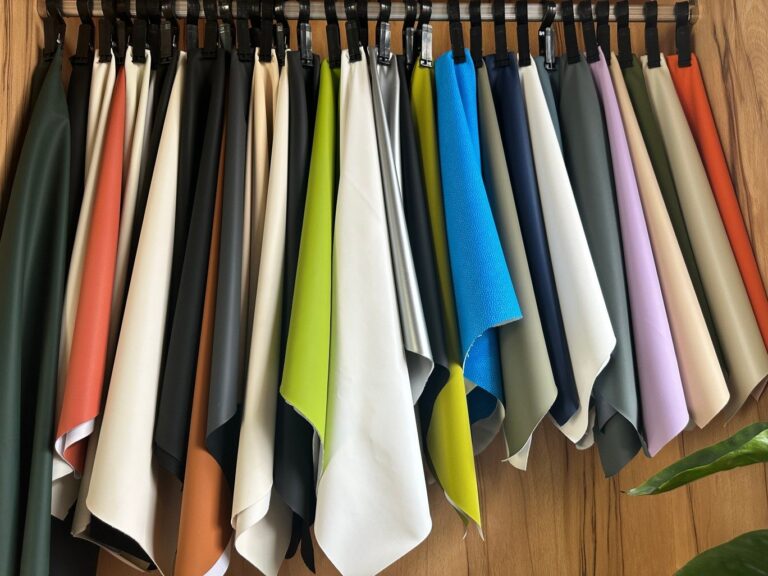
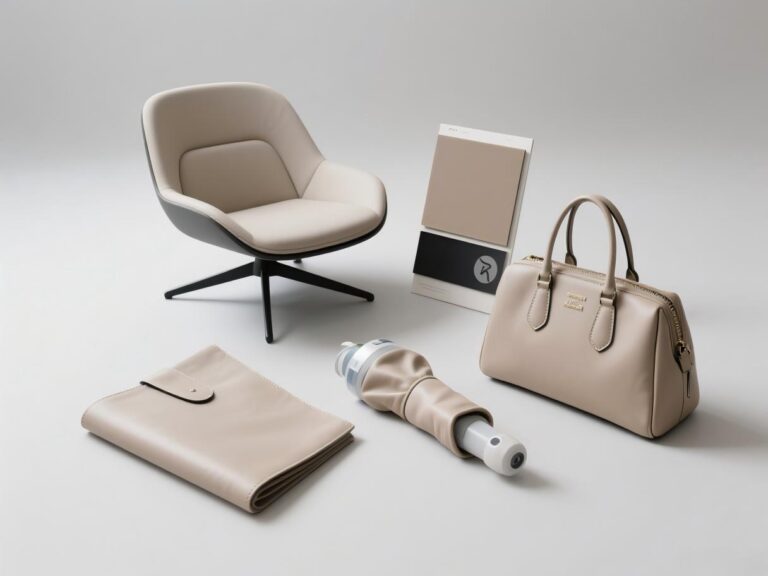
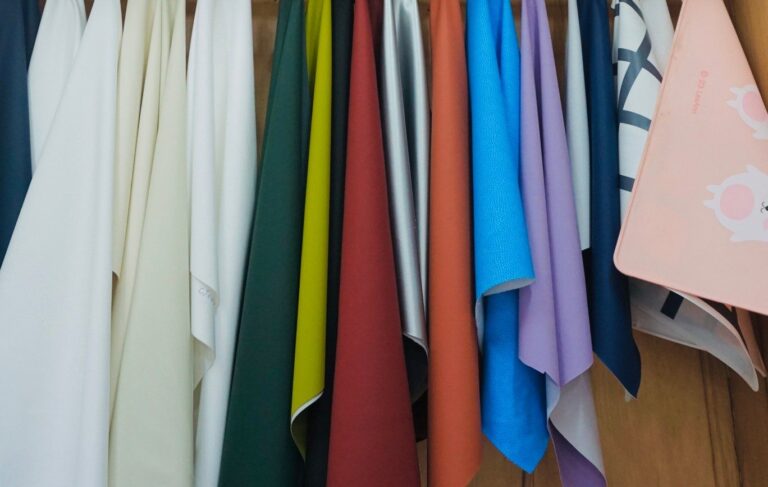
A hospitality group specifies vinyl faux leather rated at 350,000 Martindale cycles for 800 guestroom headboards. The abrasion spec looks bulletproof. Eighteen months later, the material starts cracking along the tufting channels — not from friction, but from plasticizer loss accelerated by hotel HVAC temperature cycling. This is the vinyl faux leather trap: Martindale tells you how the material survives rubbing, but says nothing about how it survives time, temperature, and chemistry. For contract furniture buyers, the real failure metric isn’t abrasion cycles — it’s plasticizer stability, cold-crack resistance, and the 3-year cliff where flexibility collapses. Standard PVC vinyl cold-cracks at -15°C, while marine-grade TPO vinyl survives to -45°C, and silicone leather remains flexible to -40°C without any plasticizers to lose.
Request Free Commercial-Grade Comparison Samples
What Is Vinyl Faux Leather? Beyond the Marketing Label
“Vinyl faux leather” is a marketing label that covers at least three materially different products. Standard PVC vinyl coats a fabric backing with polyvinyl chloride resin mixed with phthalate plasticizers — the cheapest, most common variant, with a typical lifespan of 2–3 years before visible hardening. Marine-grade TPO (thermoplastic polyolefin) vinyl replaces the PVC matrix entirely, eliminating chlorine and phthalates, and extends cold-crack performance to -45°C. Polyurethane-based faux leather sits in between — phthalate-free but still subject to hydrolysis in humid environments.
The problem for B2B procurement is that all three get sold as “vinyl faux leather” or simply “faux leather” on quotes. Without specifying the polymer type, tensile strength minimum, and cold-crack temperature, a buyer ordering contract furniture has no way to distinguish between material that lasts 18 months and material that lasts 10 years. A tensile strength of at least 25 MPa is recommended for upholstery and automotive use, with Martindale abrasion exceeding 500 cycles for commercial viability. For a deeper comparison of faux leather types, see our vinyl synthetic leather guide.
The Martindale Trap: High Abrasion Scores, Low Real-World Survival
Martindale abrasion testing measures surface wear under controlled circular rubbing. Commercial-grade vinyl can achieve extraordinary Martindale scores — 350,000 cycles or higher — because the PVC surface layer is mechanically hard. But Martindale doesn’t test the mechanisms that actually kill vinyl in commercial use:
| Failure Mode | What Martindale Shows | What Actually Happens in Service |
|---|---|---|
| Plasticizer migration | Not tested | Material hardens and shrinks in 18–36 months |
| Cold-crack failure | Not tested | Standard PVC cracks at -15°C; surface splits at seams |
| UV embrittlement | Not tested | Surface yellows and stiffens under window exposure |
| Seam flex fatigue | Not tested | Stitched joints crack at stress concentration points |
| Chemical cleaning damage | Not tested | Disinfectants accelerate plasticizer extraction |
Contract-grade vinyl can pass BS5852 Crib 5 flame retardancy and exceed 800,000 Martindale cycles. But the buyer who specifies only Martindale and flame retardancy is testing the wrong failure modes — and the replacement order at month 24 proves it.
Cold Crack and Plasticizer Loss: The Two Failure Modes Nobody Tests
Cold-crack temperature is the point where the material transitions from flexible to brittle. Standard PVC vinyl cold-cracks at -15°C per ASTM D2137 — a threshold that’s easily reached in warehouse storage, shipping containers, or any facility where HVAC cycles overnight. Marine-grade TPO vinyl survives to -45°C. Silicone leather, which contains no plasticizers and relies on an inherently flexible polymer backbone, maintains flexibility to -40°C without any migration risk.
Plasticizer loss is the slower, more insidious failure. Phthalate plasticizers are physically mixed into PVC — not chemically bonded. Over 18–36 months of thermal cycling, UV exposure, and mechanical flexing, they migrate to the surface and evaporate. The material progressively hardens, loses elongation, and develops surface microcracks along stress lines. This is why vinyl faux leather that looks perfect at the 12-month inspection can fail catastrophically by month 24. For more on this mechanism, see our analysis of vinyl fabric vs leather in furniture.
Vinyl vs Silicone Leather in Commercial Upholstery
| Performance Factor | Standard PVC Vinyl | Marine TPO Vinyl | Silicone Leather |
|---|---|---|---|
| Cold-crack temp | -15°C | -45°C | -40°C (no plasticizers) |
| Service life (commercial) | 2–3 years | 4–6 years | 10+ years |
| Plasticizer migration | Yes (phthalates) | No (TPO matrix) | No (no plasticizers) |
| UV resistance | Cracks in 1–2 years | Moderate | 1,000+ hours no fading |
| Cleaning chemical compat. | Accelerates migration | Moderate | Bleach-safe |
| VOC emission | Contains plasticizers | Low | Zero |
| Flame retardancy | Flammable, toxic smoke | Self-extinguishing | EN 13773 Class 4 |
The data shows why EU OEMs have phased out PVC entirely — standard PVC vinyl is limited to budget EVs in markets without strict indoor air regulations, with a typical Martindale range of only 12,000–18,000 cycles and a service life of 3–5 years in automotive interiors. For a complete comparison across all three material types, see our silicone vs PU vs PVC guide.
Hospitality Buyer’s Checklist: 7 Specs Beyond Martindale
If you’re sourcing vinyl faux leather for contract furniture, hospitality, healthcare, or any commercial application, specify these seven parameters — Martindale alone will not protect your warranty:
- Cold-crack temperature — Require ASTM D2137 data. Standard PVC at -15°C is inadequate for any product that ships, stores, or operates in unconditioned spaces.
- Plasticizer type and content — Demand the specific plasticizer identity (DEHP, DINP, DOTP, DINCH, or none). “Phthalate-free” is insufficient — require the chemical name and CAS number.
- UV resistance hours — Specify ASTM G154 or ISO 105-B06 testing. Minimum 1,000 hours with no visible cracking or yellowing for any application near windows.
- Flex resistance cycles — Require ISO 5402 data. Minimum 50,000 cycles for seating; 100,000+ for high-use environments.
- Cleaning chemical compatibility — Request test data with the specific disinfectants used in your application. Hospital-grade quaternary ammonium compounds accelerate plasticizer migration.
- VOC emission testing — Require ISO 16000-6 or VDA 277 data. This is mandatory for any indoor commercial application in the EU.
- Flame retardancy certification — Specify the actual standard: BS5852 Crib 5, EN 13773 Class 4, FMVSS 302, or FAR 25.853 depending on application.
TOPSUN’s silicone leather passes all seven: cold-crack at -40°C, zero plasticizers, 1,000+ hour UV resistance, 50,000–100,000 flex cycles, bleach-safe cleaning compatibility, zero VOC emissions, and EN 13773 Class 4 flame retardancy — all inherent to the silicone polymer, not achieved through chemical additives that deplete over time.
About TOPSUN: TOPSUN manufactures PVC-free silicone leather for commercial upholstery, hospitality furniture, and contract seating. With 60,000+ m² production capacity across three facilities and 500,000+ meters monthly output, TOPSUN serves 100+ B2B brands worldwide. All materials are REACH-compliant, RoHS-certified, and verified by SGS and Intertek. Free A4 swatch samples ship globally via DHL/FedEx.
Action Checklist Before You Sign
| Step | Action | Why It Matters |
|---|---|---|
| 1 | Identify polymer type (PVC, TPO, PU, silicone) | Determines all downstream failure modes |
| 2 | Request cold-crack test data (ASTM D2137) | Prevents shipping and storage failures |
| 3 | Require plasticizer identity + CAS number | Verifies REACH/CPSIA compliance |
| 4 | Test with your actual cleaning chemicals | Prevents accelerated degradation in service |
| 5 | Calculate 5-year TCO including replacement | Reveals true cost vs unit price |
Request Commercial-Grade Sample Pack