A leather goods brand in Barcelona sold an $89 leather wallet for two quarters before the returns hit. By month eight, 31% of units came back — edges peeling, fold lines cracking, surfaces flaking. The label said “genuine leather.” The material was bonded leather: 10-17% leather fibers glued together with polyurethane and pressed into a sheet. When the PU coating wore through, the wallet came apart. The brand lost $47,000 in returns and replaced the entire line. The problem wasn’t bad craftsmanship. It was the material grade — and the label that disguised it.
TOPSUN manufactures silicone leather for B2B brands producing wallets, cardholders, and small leather goods. With 200,000+ Martindale abrasion cycles, 50,000-100,000 flex cycles, and a non-porous wipe-clean surface, our material eliminates the peeling, cracking, and degradation cycles that bonded and PU leathers fail under daily pocket use.
Request Free Wallet Material Samples
The “Genuine Leather” Label Means Almost Nothing
The Federal Trade Commission requires that products labeled “genuine leather” be made of real animal hide — but that includes the lowest grades. Bonded leather, which is leather scraps ground up and reconstituted with polyurethane binders, can legally carry a “genuine leather” label in many markets if the leather fiber content exceeds a threshold as low as 10%. A full breakdown of genuine leather grading shows that the label tells you nothing about durability, fiber structure, or how the wallet will perform under daily friction.
For wallet manufacturers, this creates a sourcing trap. Suppliers offer “genuine leather” wallet stock at $3-8 per square foot. The price looks competitive against full-grain hide at $12-25 per square foot. But the bonded material has no structural integrity — it’s held together by adhesive. When the adhesive breaks down from pocket friction, body heat, and moisture, the surface delaminates. The FTC Leather Guides note that bonded leather must be disclosed as such, but enforcement is inconsistent across international supply chains.

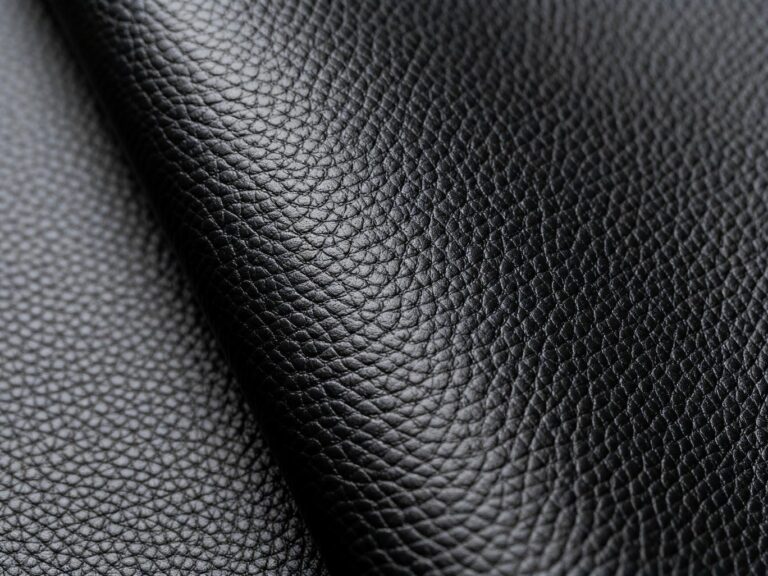
Genuine leather texture under macro view — visible grain structure indicates full-grain hide, not bonded reconstituted fiber
The wallet material comparison guide on our site breaks down the four material categories most brands source: full-grain, top-grain, bonded, and synthetic. Each has a different failure pattern, and only one — silicone leather — was engineered to solve the pocket-wear problem from the molecular level up.
What Actually Fails in a Leather Wallet
Wallets fail differently from furniture or automotive interiors. A wallet lives in a pocket — pressed against a thigh at 35°C body heat, flexed every time the owner sits, exposed to sweat oils, friction from denim, and occasional rain. These conditions accelerate material breakdown in ways lab tests only partially simulate. Here’s what fails and why:
Bonded leather peels at edges where the PU coating wears thinnest. The leather fiber interior has no tensile strength — it’s pulp. Once the coating breaks, the material crumbles. Typical lifespan: 6-10 months of daily use.
PU synthetic leather cracks along fold lines. Every bifold wallet has a center crease that flexes 20-30 times daily. PU’s polyurethane film is rigid at the molecular level — each flex creates micro-stress concentrations. After 8-14 months, the cracks connect and the surface splits. The B2B leather goods quality guide documents this as the most common failure mode for synthetic wallets under $30 retail.
Full-grain leather stretches and darkens. It doesn’t crack or peel — the collagen fiber structure handles flex indefinitely. But it absorbs body oils, darkens unevenly, and stretches at card slots until cards slip out. A genuine full-grain wallet lasts 15-25 years but looks worn by year two. Some buyers want that patina; B2B brands targeting younger demographics don’t.

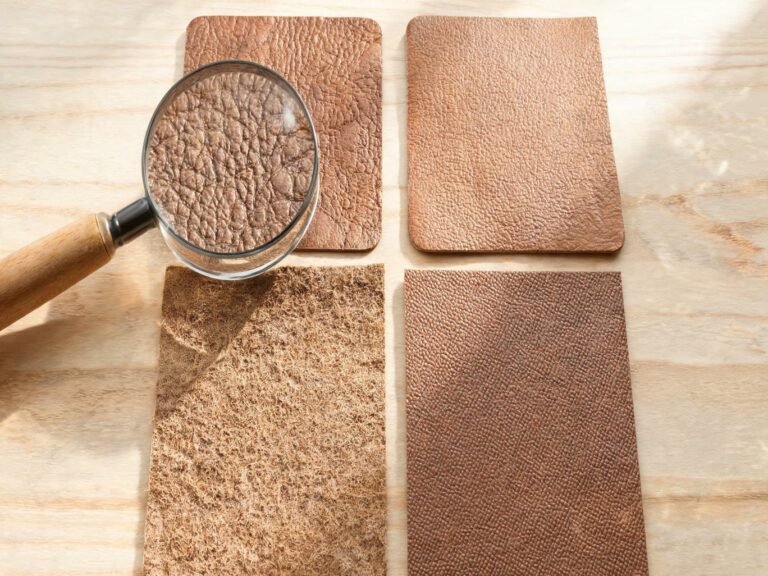
Scratch resistance test — wallet surfaces must survive daily pocket friction against keys, coins, and phone screens without surface failure
Material Comparison: What the Numbers Say
| Property | Bonded Leather | Full-Grain Hide | PU Synthetic | Silicone Leather |
|---|---|---|---|---|
| Leather fiber content | 10-17% | 100% | 0% | 0% (silicone on fabric base) |
| Flex cycles (ISO 5402) | ~5,000 | 50,000+ | 15,000-25,000 | 50,000-100,000+ |
| Martindale abrasion | ~10,000 | 25,000-40,000 | 25,000-50,000 | 200,000+ |
| Fold-line failure mode | Peeling + crumbling | Stretch + darkening | Cracking | No failure observed |
| Water resistance | Poor — absorbs | Poor — absorbs | Moderate — surface water | Non-porous — repels |
| Real-world lifespan (daily pocket use) | 6-10 months | 15-25 years | 8-14 months | 10+ years |
| FOB cost per sqft (B2B, 1000+ units) | $1.50-3.00 | $12.00-25.00 | $0.80-2.50 | $3.50-6.00 |
| VOC / chemical off-gassing | Contains PU solvents | Chrome-tanning residues | DMF, plasticizers | Zero VOC, solvent-free |
The cost-per-year metric reveals the real value gap. A bonded leather wallet at $2/sqft lasting 8 months costs $3/year per square foot. A silicone leather wallet at $5/sqft lasting 10+ years costs $0.50/year. The handbag and small leather goods material guide applies the same total-cost-of-ownership framework to cardholders, clutches, and card wallets.
The Fold-Line Test: Why PU Wallets Crack
The fold line is where wallets die. A bifold wallet flexes at its center crease every time the owner opens it — 20 to 30 times per day, 7,000 to 10,000 times per year. ISO 5402 flex resistance testing simulates this by repeatedly bending a material sample over a 90-degree mandrel. Here’s what the data shows across materials:
PU leather fails at 15,000-25,000 cycles. In real time, that’s 18-36 months — except that pocket conditions (heat, moisture, friction) accelerate the failure. Most PU wallets show visible fold-line cracking by month 8-12. Bonded leather fails even faster because the adhesive layer, not the leather fiber, bears the flex stress. The adhesive fatigues and the bond breaks.
Silicone leather’s Si-O-Si backbone is inherently flexible — the siloxane bonds rotate freely at room temperature, distributing stress across the molecular chain rather than concentrating it at a single point. That’s why TOPSUN silicone leather passes 50,000-100,000+ flex cycles with zero cracking. The manufacturer proof documentation includes ISO 5402 test certificates for every production batch.

Physical testing laboratory — every production batch undergoes flex, abrasion, tensile, and color fastness verification before shipment
How TOPSUN Silicone Leather Solves the Wallet Failure Cycle
TOPSUN’s silicone leather is engineered for applications where daily flex, friction, and moisture exposure are constant — which describes a wallet perfectly. The material is a silicone elastomer coated onto a fabric substrate using a solvent-free dry coating process. No tanning, no polyurethane binders, no plasticizers. The result is a wallet material that:
- Resists flex cracking — 50,000-100,000+ ISO 5402 cycles vs. PU’s 15,000-25,000
- Survives pocket abrasion — 200,000+ Martindale cycles against keys, coins, phones
- Repels sweat and rain — non-porous surface, AATCC 127 water resistance certified
- Stays color-true — ISO 105-B06 Grade 4-5 light fastness, no darkening from body oils
- Passes skin-contact safety — ISO 10993-5 biocompatibility certified, zero plasticizers, zero phthalates
- Available in 0.23-0.8mm — the Ultra Thin Collection is engineered specifically for wallets, cardholders, and small leather goods
For brands producing premium wallets, the Designer Collection offers custom Pantone matching with Delta E ≤ 1.0 color accuracy, metallic and pearlescent finishes, and 100+ embossed textures — including crocodile, pebbled, and smooth grain patterns that replicate the look of exotic leathers without the supply chain or ethical complications.
Frequently Asked Questions
What is the best leather for a wallet that won’t crack or peel?
Full-grain leather won’t crack or peel, but it absorbs oils and stretches over time. Silicone leather offers the same premium look and feel without the absorption, stretching, or degradation — it passes 50,000-100,000+ flex cycles with zero cracking and maintains its surface for 10+ years of daily pocket use. It’s the only material that combines genuine-hide aesthetics with synthetic-level durability.
Why do leather wallets peel at the edges?
Edge peeling occurs almost exclusively in bonded leather wallets. Bonded leather is made from leather scraps ground into fiber, mixed with polyurethane adhesive, and pressed into sheets. The PU coating on the surface wears through at edges where friction is highest — once the coating breaks, the fiber interior has no structural integrity and crumbles. This is a material-grade problem, not a craftsmanship problem. Switching to full-grain hide or silicone leather eliminates edge peeling entirely.
The wallet market’s return rate doesn’t have to be 31%. When you specify material by performance data — flex cycles, abrasion resistance, water resistance — instead of a label that can mean anything from 10% leather fiber to full-grain hide, the failure cycle stops. TOPSUN provides free A4 swatch samples, ISO test certificates, and Pantone-matched color samples via DHL worldwide. Request your wallet material kit today.