Leather with print and decorative surface effects is everywhere once you start noticing it. The floral pattern on a handbag, the logo debossed into a wallet, the metallic sheen on a shoe upper, the geometric pattern on a restaurant booth — these are all different ways of decorating a leather surface, and each one creates a completely different look and feel.
As a designer, choosing the right decoration method is about more than just aesthetics — it affects cost, lead time, minimum order quantities, durability, and even the tactile quality of the finished product. A design that looks stunning with foil stamping might look cheap with a screen print. A pattern perfect for digital printing might be impossible to achieve with embossing. In this guide, I break down the seven most common leather decoration methods, how they work, what they cost, and where they work best — so you can make the right call for your next project.
Explore Custom Leather Decoration

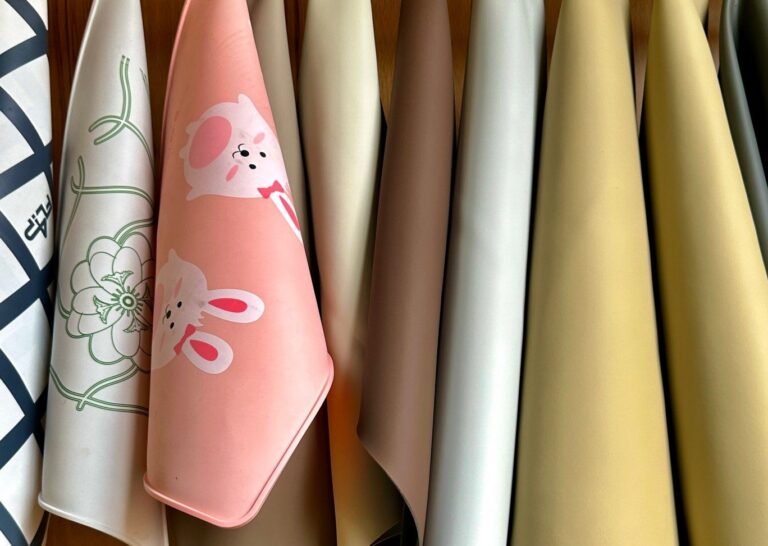
Digital printing brings full-color, photorealistic prints to leather — but it is just one of many decoration methods available
1. Digital UV Printing
Digital UV printing is the most versatile leather decoration method available today. It uses inkjet technology to jet UV-curable inks directly onto the leather surface, curing instantly with ultraviolet light. The result is a full-color, high-resolution print with virtually no limits on what you can print — photographs, illustrations, gradients, fine text, complex patterns, you name it.
The biggest advantage of digital printing is the design freedom. There are no screens, no plates, no tooling costs — you can print a completely different design on every single piece if you want to. This makes it ideal for customization, personalization, and small production runs. The print quality is photo-realistic with sharp detail and vibrant colors.
The main limitation is durability. The ink sits on the surface of the material, so it can wear off with heavy abrasion or flexing. The print quality also depends heavily on the base material — smooth materials produce sharper prints than textured ones. For high-wear applications, you need to verify that the ink adhesion and flex resistance meet your requirements.
- Best for: Fashion, accessories, custom products, limited editions, photographic imagery
- MOQ: Low — can do single pieces
- Durability: Medium — depends on ink and base material
- Cost: Medium-high per piece, no setup cost
2. Screen Printing
Screen printing is a traditional method where ink is pushed through a fine mesh screen (stencil) onto the leather surface. Each color requires a separate screen, so designs with multiple colors require multiple passes. Screen printing produces a thick, opaque ink layer with vibrant, saturated colors that have a slightly raised texture.
The advantage of screen printing is its durability — because the ink layer is thick and penetrates the surface slightly, it holds up better to abrasion than digital printing. It is also very cost-effective for medium to large production runs, since the per-unit cost drops significantly once you have the screens made. Screen printing works well on both genuine and synthetic leathers.
The downside is that it is not practical for full-color or photographic imagery — it works best with solid colors, simple graphics, and text. Each additional color adds cost and complexity, and fine details and tiny text can be difficult to reproduce cleanly. Setup time and cost are higher than digital printing, making it less suitable for small runs or frequent design changes.
- Best for: Logos, text, simple graphics, medium-to-large production runs
- MOQ: Medium — typically 50–100 pieces minimum
- Durability: Good — thick ink layer resists abrasion
- Cost: Low per unit at volume, higher setup cost

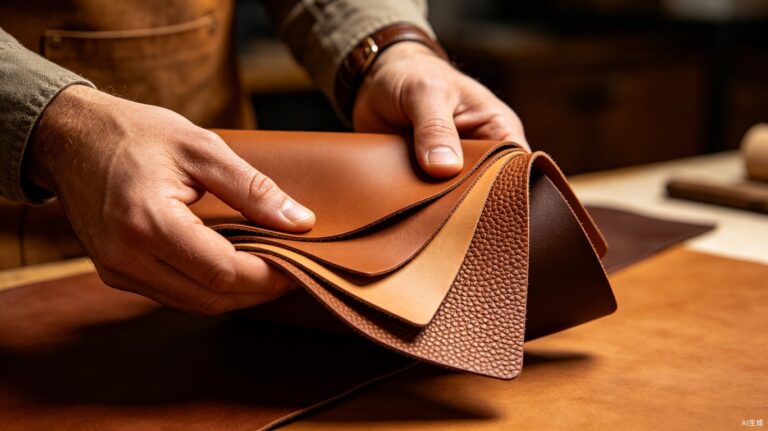
Printed leather samples in a range of colors and patterns — each decoration method creates a different look and feel
3. Embossing and Debossing
Embossing creates a raised pattern on the leather surface, while debossing creates a depressed (indented) pattern. Both use a metal plate with the design engraved on it — the plate is heated and pressed into the leather, permanently deforming the surface to create a three-dimensional texture. Embossed and debossed patterns have a tactile, premium feel that no print can match.
The biggest advantage of embossing is that it is completely permanent. The pattern is part of the material itself — it cannot wear off, fade, or peel. It adds a subtle, sophisticated texture that reads as high quality. Grain embossing is how most synthetic leathers get their leather-like texture in the first place, but custom embossing can create logos, patterns, and decorative effects.
The limitations are significant, though. Embossing works best with simple, bold designs — fine details and small text do not reproduce well because the metal plate has limitations in how finely it can be engraved. The tooling cost for custom embossing plates is relatively high, and the process is slower than printing. Also, embossed patterns on synthetic leather are limited by how much the material can deform without damaging the surface coating.
- Best for: Premium branding, texture patterns, leather grain, classic designs
- MOQ: High — tooling cost requires volume to justify
- Durability: Excellent — permanent, cannot wear off
- Cost: High tooling, moderate per-unit at volume
4. Foil Stamping
Foil stamping uses heat and pressure to transfer a thin metallic or pigmented foil film onto the leather surface. A metal die (similar to embossing) is heated and pressed onto the foil, which adheres to the leather in the shape of the die. The result is a shiny, metallic design — gold, silver, bronze, copper, and various metallic colors — that has a luxurious, premium appearance.
Foil stamping is synonymous with luxury branding. Think of the gold logo on a designer wallet or the silver lettering on a premium notebook — that is foil stamping. It creates a visual impact that no printed metallic ink can match, because you are working with actual metal film rather than ink that simulates metal. It also has a subtle raised texture from the foil layer.
The downsides are similar to embossing — high tooling cost, design limitations (simple shapes work best), and the foil can scratch or wear off with heavy abrasion. Foil stamping also requires precise temperature and pressure control, which means quality can vary between suppliers. And because it is a metallic surface, it does not work well with curved or flexible applications where the foil might crack.
- Best for: Luxury branding, premium accessories, decorative accents
- MOQ: Medium-high — tooling required
- Durability: Medium — foil can scratch or wear off
- Cost: High tooling, premium per-unit cost
| Method | Color | Detail Level | Durability | Best MOQ |
|---|---|---|---|---|
| Digital Print | Full color / photo | Very high | Medium | 1–500 pcs |
| Screen Print | Solid colors | Medium | Good | 100–5,000 pcs |
| Emboss/Deboss | No color (texture) | Low-medium | Excellent | 500+ pcs |
| Foil Stamp | Metallic / pigment | Low-medium | Medium | 300+ pcs |
5. Laser Engraving and Etching
Laser decoration uses a focused laser beam to either etch away the top layer of the leather surface (creating a darker, recessed pattern) or engrave a deeper design. The laser vaporizes the material surface with precise control, creating highly detailed patterns without any tooling or contact with the material.
The advantage of laser decoration is the incredible precision and detail it can achieve — far finer than embossing or screen printing. There is no tooling cost, so you can change designs freely and run small quantities economically. The laser creates a permanent mark that cannot wear off because it is physically changing the material surface. And because it is a non-contact process, there is no risk of distortion or damage from pressure.
The main limitation is that laser only works in one “color” — the color of the material after it is burned or vaporized. On genuine leather, this is usually a darker brown or tan. On synthetic leathers, the result depends on the material composition — some synthetics melt or discolor in undesirable ways when lasered. Laser also creates a slight texture change (the etched area is recessed and has a different feel), and the process can produce fumes that need proper ventilation.
- Best for: Fine details, personalization, intricate patterns, small runs
- MOQ: Very low — single pieces feasible
- Durability: Excellent — permanent, part of the material
- Cost: Medium per piece, no setup cost

Personalization and custom decoration are driving growth in leather goods — from laser-engraved initials to full-color digital prints
6. Heat Transfer / DTF Printing
Direct-to-film (DTF) printing is a two-step process where the design is first printed onto a special heat-transfer film using a digital printer, and then transferred onto the leather surface using heat and pressure. The film acts as a carrier, and the adhesive on the film bonds the printed design to the material when heated.
DTF is popular for small-scale customization and personalization because it is relatively inexpensive to set up and can produce full-color designs with good detail. The equipment cost is lower than direct UV printing, and it works with a wide range of materials — not just leather but also fabric, wood, metal, and plastic.
The downside is that the transferred design sits on top of the surface as a distinct film layer, which can feel stiff or rubbery and does not integrate with the material the way direct printing does. DTF transfers have limited durability — they can peel, crack, or fade with washing, flexing, and UV exposure. They are better suited for accessories and decorative items than for high-wear applications like furniture or footwear.
- Best for: Small custom orders, promotional items, accessories, DIY
- MOQ: Very low — single pieces
- Durability: Low-medium — can peel with wear
- Cost: Low per piece, minimal setup
7. In-Mold / Co-Formed Patterns
In-mold decoration is the most integrated method — the pattern or texture is created during the material manufacturing process itself, rather than being applied afterward. For synthetic leathers, this means the pattern is built into the surface coating formulation or created during the calendaring/embossing step as part of the standard production line. This includes things like grain patterns, color effects, metallic flecks, and texture variations that are part of the material, not on top of it.
The advantage is durability — the decoration is part of the material itself, so it cannot wear off, peel, or fade. It also has the most natural feel because there is no additional coating or ink layer on the surface. And when done at scale during production, it is very cost-effective — the per-unit cost premium is minimal compared to post-production decoration methods.
The limitation is design flexibility. You cannot do full-color photographic imagery or complex multi-color patterns this way — it works best for textures, grain effects, single-color patterns, and material-integrated effects like pearlescence or metallic fleck. And because it requires modifying the production process, MOQs are high and lead times are longer. This is a method for large-volume, established products, not for custom or fast-changing designs.
- Best for: High-volume products, standard textures, permanent effects
- MOQ: Very high — typically full production runs
- Durability: Best — integral to the material
- Cost: Low per unit at volume, high development cost

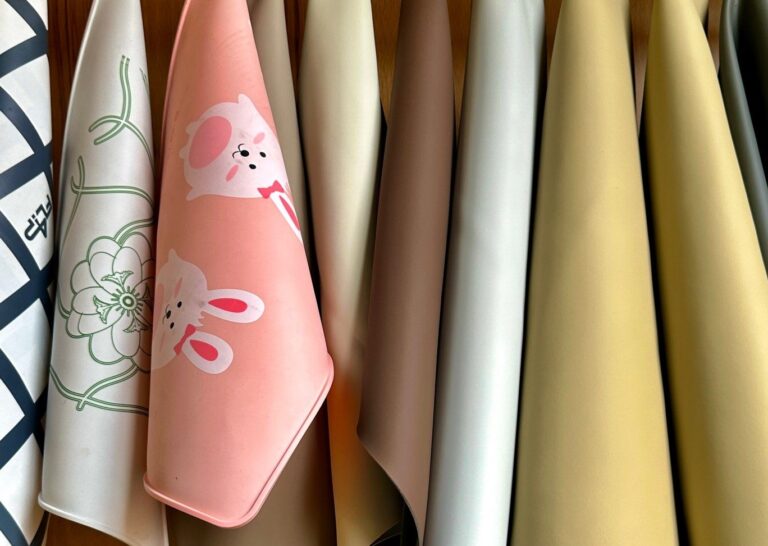
Custom floral print on silicone leather — the right decoration method depends on your design, volume, and durability requirements
How to Choose the Right Method for Your Project
With so many options, how do you decide which leather decoration method is right for your project? Here is the decision framework I use with my design clients.
Start with your design. What kind of look are you going for? If you need full-color photographic imagery, digital printing is your only real option. If you want a classic, premium texture, embossing is the way to go. If you want metallic shine, nothing beats foil. Let the design intent lead you to the right method — do not force a decoration technique onto a design it was not meant for.
Consider your volume. Some methods are economical at low volume but expensive at scale (digital printing, laser). Others have high setup costs but low per-unit costs at volume (screen printing, embossing, in-mold). Be honest with yourself about how many pieces you actually need, and choose a method that fits your real order size — not your aspirational one.
Be realistic about durability. Where will the product be used? A bag that goes in and out of a handbag every day needs more durable decoration than a decorative picture frame that sits on a shelf. A furniture application with constant rubbing and abrasion needs something more durable than a fashion accessory. Match the decoration method to the wear level of the product.
Test before you commit. Always get physical samples before approving a decoration method for production. A digital mockup or a photo cannot tell you how it will actually feel, how durable it will be, or how the colors will look on the specific material you are using. Order a sample, test it, and make sure it meets your expectations — both visually and functionally.
Start Your Custom Decoration Project
Frequently Asked Questions
Can you combine multiple decoration methods on the same piece?
Yes, and combining methods can create some really stunning effects. A common combination is embossing plus foil stamping — the pattern is first embossed (raised) and then foil is stamped on top of the raised area, creating a metallic 3D effect. Another popular combo is digital printing plus laser engraving — printing a full-color design and then laser-etching fine details or text on top. The key is to make sure the methods are compatible — for example, you cannot laser-etch through a digital print without damaging the print layer, so the order of operations matters. Always discuss multi-method designs with your supplier upfront to make sure they can execute the sequence correctly.
Which decoration method is most durable?
For maximum durability, in-mold/co-formed patterns are the best because the decoration is part of the material itself — it literally cannot wear off. Embossing and debossing are next, since the texture is physically pressed into the material and will not fade or peel. Laser engraving is also very durable because it permanently alters the material surface. Among the printing methods, screen printing generally has the best durability because the thick ink layer bonds well to the surface. Digital printing and DTF transfers are the least durable because the ink or film sits on top of the surface and can wear away with abrasion and flexing — though the actual durability depends heavily on the ink quality and the base material.
Decoration Is Design — Choose Wisely
The decoration method you choose for your leather product is not just a production detail — it is a design decision that affects how the product looks, feels, wears, and costs. The same design executed with digital printing versus embossing versus foil stamping will produce three completely different products with different price points, different lifespans, and different brand perceptions.
Take the time to understand your options. Consider the design intent, the production volume, the durability requirements, and the budget. And always — always — get physical samples before you commit to production. The right decoration method can elevate a good design into a great product; the wrong one can make even the best concept feel cheap or disappointing.
See Fashion Leather Decoration Ideas
About TOPSUN
TOPSUN offers multiple leather decoration options on silicone leather — from custom embossing and digital printing to in-mold texture patterns — with design support to help you choose the right method for your project.
Digital UV printing • Custom embossing • In-mold texture patterns • 100+ stock textures • Design consultation available • 7–20 day lead times • MOQ from 100m