“Synthetic leather vegan” is technically a redundancy — all synthetic leather is vegan by definition, because synthetic materials contain no animal products. But within this broad category sit four fundamentally different material chemistries — PVC, PU, microfiber, and silicone — with performance characteristics that range from “replace in 2 years” to “replace in 10+ years.” The label “synthetic leather vegan” tells you what the material isn’t (not animal-derived). It tells you nothing about what the material is, how long it lasts, or whether it will pass your application’s specifications.
This article provides the material classification framework that B2B buyers need: the four types of synthetic vegan leather, their performance benchmarks, cost ranges, and the application mapping that tells you which material belongs in which product. Stop specifying “vegan leather” on purchase orders — start specifying the material chemistry that matches your performance requirements.
Request Synthetic Leather Samples

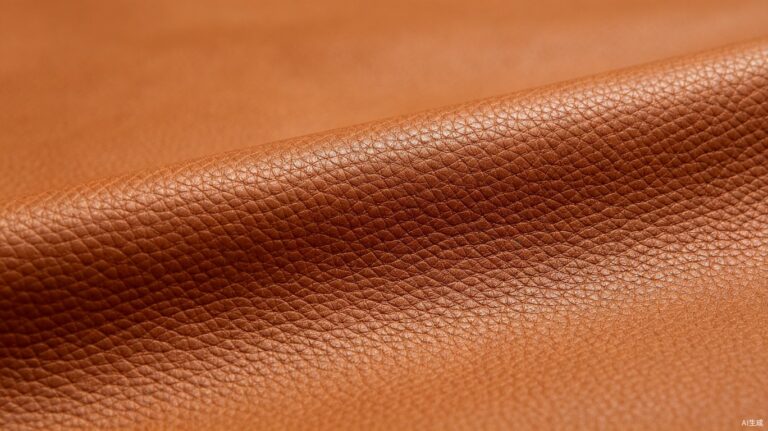
The synthetic leather spectrum — four material chemistries sharing one marketing label
The Four Types of Synthetic Vegan Leather: A Material Chemistry Breakdown
The global pleather market — valued at $17.2 billion in 2025 and projected to reach $28.5 billion by 2034 — is dominated by petroleum-based synthetic leathers. But “pleather” is as specific as “metal” — the material chemistry underneath determines everything. Here are the four types that B2B buyers encounter:
| Type | Chemistry | Market Share | Key Failure Mode | Typical Lifespan |
|---|---|---|---|---|
| PVC leather | Polyvinyl chloride + plasticizers | ~40% | Plasticizer migration → stiffening, cracking | 2–3 years |
| PU leather | Polyurethane coating on fabric | ~45% | Hydrolysis → ester bond cleavage, peeling | 3–5 years |
| Microfiber leather | Ultra-fine fiber + PU matrix | ~12% | Still PU-based → eventual hydrolysis | 5–8 years |
| Silicone leather | Silicone polymer on fabric | ~3% | None inherent (Si-O backbone) | 10+ years |
The failure modes are chemical, not quality-control issues. PVC’s plasticizers migrate out of the polymer matrix over time — the material literally loses the chemicals that make it flexible. PU’s ester bonds react with water molecules in the air — a process that cannot be stopped, only slowed. Microfiber leather wraps ultra-fine fibers in a PU matrix, so it inherits PU’s hydrolysis clock despite superior abrasion resistance. Silicone leather’s Si-O backbone is thermally and chemically stable — there’s no bond in the polymer chain for ambient water or UV to attack. For a deeper comparison, see our silicone vs PU vs PVC technical comparison and our guide on what faux leather actually is.
The classification that matters: “Vegan” is an origin claim (no animal products). “Synthetic” is a chemistry claim (human-made polymer). Neither tells you how the material will perform. Specify the polymer type — PVC, PU, microfiber (PU-based), or silicone — because that determines lifespan, compliance, and suitability for your application.
Performance Benchmark: The 4 Tests That Separate Materials
Comparing synthetic leather types requires objective test data, not marketing language. Here are four performance dimensions where the material chemistry produces dramatically different results:
• Abrasion resistance (ISO 12947-2 / Martindale): PVC: 15,000–30,000 cycles. PU: 10,000–30,000 cycles. Microfiber: 50,000–80,000 cycles. Silicone: 200,000+ cycles. The gap between microfiber and silicone is 2.5–4× — meaning silicone leather lasts 2.5–4× longer under identical friction conditions.
• Hydrolysis resistance: PVC: poor (plasticizer loss in humid conditions). PU: poor (ester bond cleavage, visible in 3–5 years). Microfiber: moderate (PU matrix still hydrolyzes). Silicone: excellent (no ester bonds, no hydrolysis mechanism). This is why PU leather fails fastest in tropical and marine environments — the humidity directly attacks the polymer chain.
• UV resistance (SAE J2412 / ASTM G154): PVC: 200–400 hours to visible degradation. PU: 400–600 hours. Microfiber: 500–700 hours. Silicone: 1,000+ hours with ΔE ≤ 1.5. Silicone’s Si-O bond energy (452 kJ/mol) exceeds the energy of UV photons that penetrate glass, meaning the polymer itself doesn’t degrade under solar exposure.
• Temperature range: PVC: -10°C to 60°C (stiffens and cracks in cold, softens in heat). PU: -20°C to 80°C. Microfiber: -20°C to 80°C (PU matrix limits). Silicone: -40°C to 250°C (no phase change across the entire consumer-use temperature spectrum). For more performance data, see our technical data sheet.

Martindale abrasion tester — where 200,000 cycles separates silicone from PU and PVC
Application Mapping: Which Synthetic Vegan Leather Goes Where
Different applications demand different material chemistries. Here’s the application-to-material mapping that B2B buyers should use when specifying synthetic vegan leather:
• Budget consumer goods (fast fashion, promotional items): PVC leather is acceptable where lifespan isn’t a priority and cost is the primary driver. Applications: disposable fashion accessories, promotional covers. Not recommended for any product with a warranty period exceeding 2 years.
• Mid-market furniture and accessories: PU leather offers the best cost-to-performance ratio for products with 3–5 year expected lifespans. Applications: mid-tier furniture, handbags, shoe uppers. Acceptable in temperate climates; risky in tropical or marine environments due to hydrolysis. See our analysis of PU leather hidden problems.
• Premium accessories and performance goods: Microfiber leather delivers genuine-leather-like feel and abrasion resistance. Applications: premium handbags, gloves, performance footwear. Still PU-based, so eventual hydrolysis is inevitable — but the extended timeframe (5–8 years) makes it viable for products with defined replacement cycles.
• Durable, long-life, specification-driven applications: Silicone leather is the specification for automotive interiors, marine upholstery, healthcare surfaces, and any application requiring 10+ year lifespan with no hydrolysis, UV degradation, or chemical compliance risk. Applications: automotive OEM, furniture, medical, marine, 3C. See our vegan and faux leather applications guide for more.

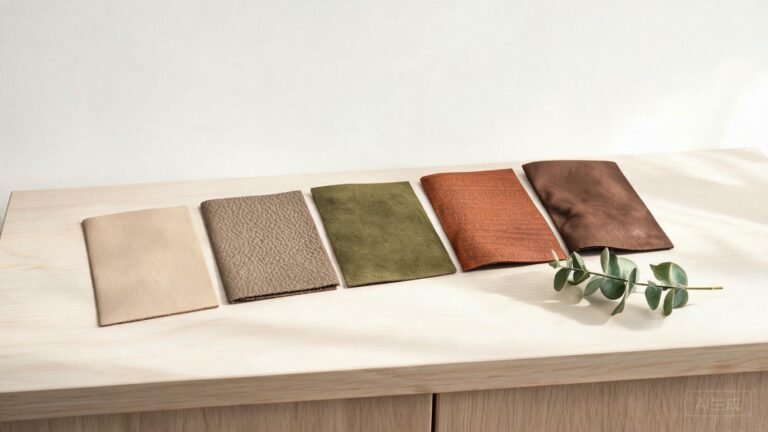
Material swatch wall — identical appearance on day one, divergent performance by year three
The Cost-Performance Matrix: Where Each Material Sits
| Material | Cost/m | Lifespan | Cost/Year of Service | Best Application |
|---|---|---|---|---|
| PVC | $1.5–3 | 2–3 years | $0.5–1.5/yr | Disposable/promotional |
| PU | $3–6 | 3–5 years | $0.6–2/yr | Mid-market consumer goods |
| Microfiber | $5–12 | 5–8 years | $0.6–2.4/yr | Premium accessories |
| Silicone | $8–15 | 10+ years | $0.8–1.5/yr | Durable specification-driven |
The cost-per-year-of-service metric reveals a surprising truth: silicone leather, despite the highest upfront cost, delivers the lowest or near-lowest cost per year of actual service. When you calculate TCO across a 10-year horizon including replacement labor, disposal, and warranty exposure, silicone leather’s cost-per-year can be lower than PU’s — because PU requires 2–3 replacement cycles in the same period. For applications where the product is expected to last, specifying silicone isn’t a premium choice — it’s an economic one. See our cost-lifespan comparison for the detailed math.
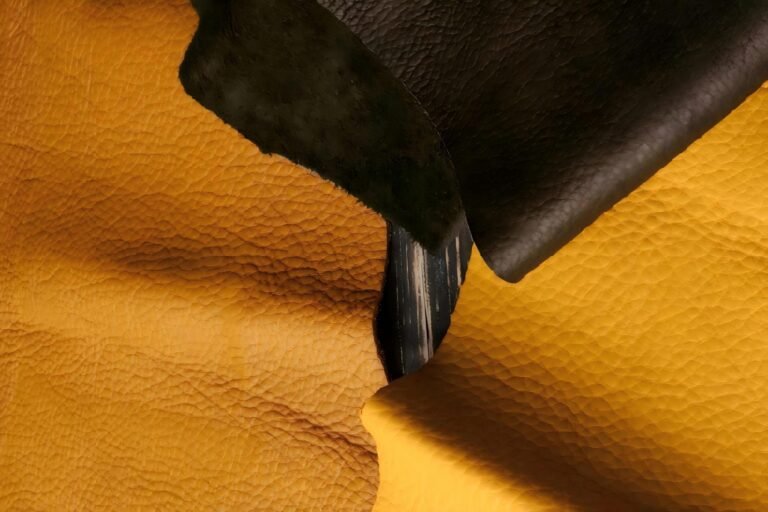
Material comparison — how the four synthetic leather types perform under identical test conditions
FAQ: Synthetic Leather Vegan
Is all synthetic leather vegan?
Yes — by definition, all synthetic leather is vegan because it contains no animal-derived materials. PVC, PU, microfiber, and silicone leather are all vegan. However, “vegan” only means “animal-free” — it says nothing about sustainability, durability, or chemical safety. A PVC leather is vegan but contains phthalates and releases dioxins during production. A silicone leather is both vegan and genuinely sustainable. The “vegan” label is a necessary but insufficient specification for B2B sourcing.
What’s the difference between synthetic leather and vegan leather?
“Synthetic leather” refers to human-made polymer-based materials (PVC, PU, silicone). “Vegan leather” is a broader category that includes synthetic leather AND plant-based materials (apple, cactus, mushroom leather). All synthetic leather is vegan, but not all vegan leather is synthetic — plant-based leathers are vegan but use biological materials, not synthetic polymers. For B2B sourcing, “synthetic leather vegan” specifically means petroleum or silica-derived polymer materials, not plant-based alternatives.
Specify by Chemistry, Not by Label
The B2B sourcing lesson from this classification is straightforward: “synthetic leather vegan” is a starting point, not a specification. The polymer chemistry — PVC, PU, microfiber, or silicone — determines the material’s lifespan, failure mode, compliance profile, and cost-per-year of service. When your purchase order says “vegan leather,” the supplier can deliver PVC at $1.5/m or silicone at $12/m — both technically comply with the label. Specify the polymer type, the test standards (Martindale cycles, SAE J2412 ΔE, hydrolysis resistance), and the application requirements. That’s how you convert a marketing label into a procurement specification. For more on material classification, see our guides on synthetic vs genuine leather, leather and vinyl, and vinyl synthetic leather.
Get Material Comparison Samples
About TOPSUN
TOPSUN manufactures silicone leather — the highest-performance tier in the synthetic vegan leather classification — delivering 200,000+ Martindale abrasion cycles, 10+ year service life, inherent UV and hydrolysis resistance, zero VOC production, and full recyclability for B2B buyers who need to specify by material chemistry and performance, not by marketing label.
200,000+ Martindale · 10+ year lifespan · -40°C to 250°C · Zero VOC · Vegan · 100% recyclable · ISO 10993 · REACH · FDA · 500,000+ m monthly capacity