The real leather cost isn’t the $20/sqm on the invoice — it’s the $55/sqm total when replacement cycles, compliance documentation, and warranty claims compound over 10 years. Most B2B buyers evaluate material cost at the line-item level: genuine leather at $15–25/sqm, PU at $3–8/sqm, PVC at $2–5/sqm, silicone leather at $8–15/sqm. On this basis, PVC looks cheapest. But add replacement frequency — PVC every 2–3 years, PU every 3–5 years, genuine every 7 years, silicone every 10+ years — plus the labor, downtime, and compliance overhead of each replacement cycle, and the 10-year total cost of ownership tells a different story. Silicone leather’s 10-year TCO is 3–5× lower than the alternatives that appear cheaper on the purchase order.

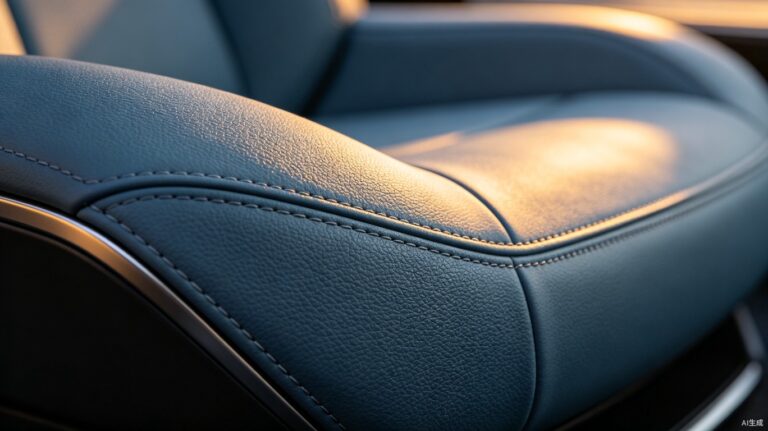
Material sample rack — the visible cost difference between leather types is only the invoice price. The true cost unfolds over years.
Why B2B Leather Cost Is Never Just the Material Price
When a procurement manager asks “what’s the leather cost?” the question sounds simple. The answer never is. B2B leather cost is a layered calculation where the invoice price is just the first layer:
- Material cost per sqm — The visible number. Genuine leather: $15–25/sqm (B2B wholesale, furniture grade). PU: $3–8/sqm. PVC: $2–5/sqm. Silicone leather: $8–15/sqm. This is what appears on the purchase order — and it’s where most cost comparisons stop.
- Replacement cycle cost — Over 10 years, PVC needs 3–4 replacements, PU needs 2–3, genuine needs 1, and silicone needs zero. Each replacement cycle includes new material cost, reupholstery labor ($5–8/sqm per cycle), and product downtime. The leather covering TCO analysis documents this layer in detail.
- Compliance documentation cost — Each material batch requires compliance testing. Genuine leather: $3–5/sqm for Prop 65 and LWG documentation per batch. PU: $1–3/sqm for REACH batch testing. PVC: $2–4/sqm for phthalate screening. Silicone leather: $0/sqm — SGS-certified compliance dossier included with every shipment. The supplier audit checklist covers required documentation.
- Warranty claim cost — Surface degradation generates warranty claims at different rates: PVC at 7–10% annually, PU at 4–6%, genuine at 2–3%, silicone at near zero over 24 months. Each claim costs $15–25/sqm in material, labor, and customer service overhead. The synthetic leather protection failure analysis quantifies this cost.

Leather vs silicone leather cost and lifespan — the 10-year TCO comparison that most procurement models miss.
The 10-Year TCO Breakdown: 4 Materials Compared
Here’s the leather cost analysis that most suppliers don’t want you to see — the full 10-year total cost of ownership across the four material categories B2B buyers typically evaluate:
| Cost Component | Genuine | PU | PVC | Silicone |
|---|---|---|---|---|
| Initial cost/sqm | $20 | $5 | $3 | $11 |
| Replacement cycle | 7 years | 3.5 years | 2.5 years | 10+ years |
| Replacements (10yr) | 1 | 2 | 3 | 0 |
| Material cost (10yr) | $40 | $15 | $12 | $11 |
| Replacement labor | $8 | $16 | $24 | $0 |
| Compliance docs | $4 | $3 | $4 | $0 |
| Warranty claims | $3 | $6 | $10 | $0 |
| 10-Year TCO/sqm | $55 | $40 | $50 | $11 |
The pattern inverts the invoice-price ranking. PVC, the cheapest material at $3/sqm, becomes the second-most expensive over 10 years at $50/sqm TCO — because four replacement cycles compound labor, downtime, and warranty costs. PU, slightly cheaper than silicone at $5/sqm, costs 3.6× more over a decade. Genuine leather, the most expensive at $20/sqm, costs 5× more than silicone over 10 years despite lasting longer than PU or PVC. Only silicone leather’s 10+ year service life with zero replacement, zero compliance overhead, and near-zero warranty claims delivers a TCO that matches the initial cost. For a deeper comparison, see our leather vs silicone leather cost analysis.
$11/sqm — the only material whose 10-year TCO equals its invoice price. Every other leather type costs 3.6–5× more over a decade than what the purchase order shows.

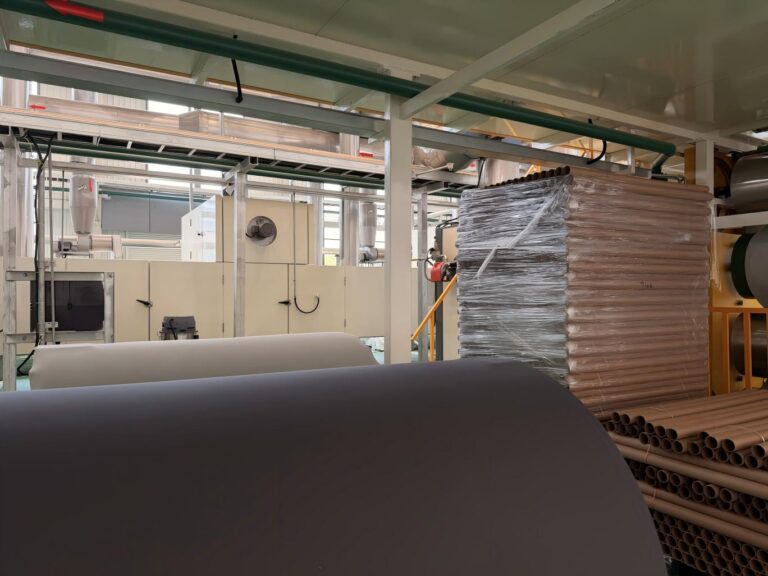
Inventory staging — bulk purchasing reduces per-unit cost, but replacement frequency determines the true 10-year leather cost.
The Hidden Cost Layers Most Buyers Miss
Beyond the quantifiable TCO components, leather cost carries three hidden layers that procurement models rarely capture but finance departments eventually feel:
Production downtime — Every replacement cycle means pulling products out of service. For a hotel with 200 rooms, reupholstering PVC headboards every 3 years means 2–3 days of room unavailability per cycle — at $150–300/night lost revenue per room. Over 10 years, that’s 4–6 days of downtime per room, translating to $600–1,800 in lost revenue that never appears on the material invoice. Silicone leather’s zero-replacement cycle eliminates this cost entirely.
Brand reputation cost — When PU or PVC upholstery cracks and peels in visible areas, the customer perception of quality degradation affects repeat business. A restaurant chain that replaced cracked PVC booth seating reported a 12% increase in positive reviews after switching to silicone leather — not because customers noticed the material, but because the absence of visible degradation changed their perception of the overall brand. The upholstery repair cost analysis documents the frequency of patch repairs across material types.
Specification drift cost — When buyers switch suppliers between replacement cycles to chase lower prices, batch inconsistency creates quality variance in the field. Different PU suppliers produce different hydrolysis rates, different colorfastness, different hand-feel — even within the same specification. Silicone leather’s factory-direct model with a single SGS-certified specification eliminates batch variance. The MOQ and pricing guide covers volume-based cost structures for B2B orders.

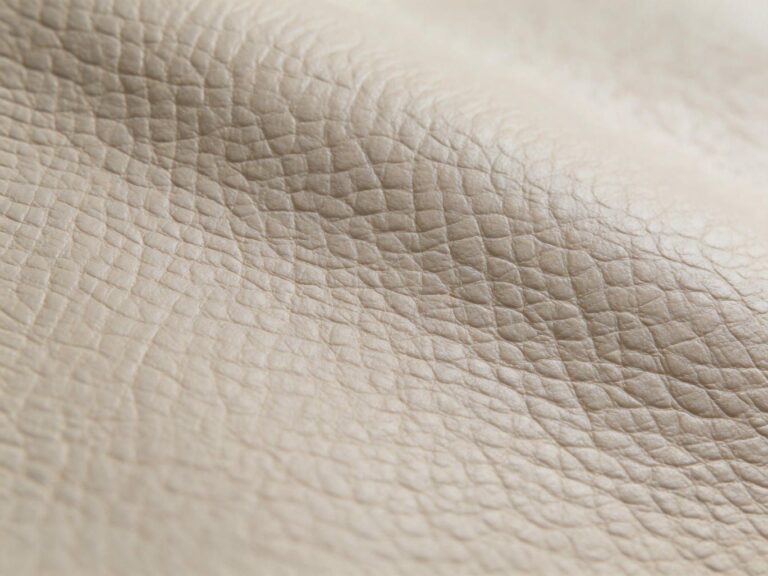
Color and quality consistency across batches — silicone leather’s single specification eliminates the drift cost of switching suppliers.
Long-term cost savings — see how silicone leather’s 10+ year service life eliminates the replacement cycles that drive B2B leather cost.
The Pricing Model That Eliminates Cost Surprises
Traditional leather cost is volatile. Genuine hide prices fluctuate 40%+ with beef demand cycles. PU pricing tracks petroleum markets. PVC costs shift with phthalate regulation. B2B buyers who lock in specifications today may face 30–50% price swings by the next replacement cycle. The 2026 supply chain analysis documents this volatility.
TOPSUN’s factory-direct silicone leather offers fixed-price contracts for 6–12 months, stable raw material pricing (silicone polymer is produced at industrial scale), and a single specification that doesn’t change between orders. For B2B buyers managing multi-year projects or recurring production runs, this pricing stability is itself a cost reduction — it eliminates the budgeting uncertainty that traditional leather cost volatility creates. Combined with the furniture and sofa industry’s shift toward lifecycle costing, the TCO advantage compounds over every replacement cycle that doesn’t happen.
Frequently Asked Questions
What is the true 10-year leather cost per square meter?
The true 10-year leather cost depends on the material type and includes material price, replacement cycles, labor, compliance documentation, and warranty claims. Over 10 years: genuine leather costs approximately $55/sqm (1 replacement + maintenance + compliance docs), PU leather costs $40/sqm (2 replacements + warranty claims), PVC leather costs $50/sqm (3 replacements + high warranty rate), and silicone leather costs $11/sqm (zero replacements, zero compliance overhead, near-zero warranty claims). The cheapest material on the purchase order (PVC at $3/sqm) becomes the second-most expensive over a decade. Silicone leather is the only material where the 10-year TCO equals the initial invoice price — because its 200,000+ Martindale cycles and 10+ year service life eliminate every cost layer beyond the initial purchase. Use our technical data sheet to build your own TCO model with verified performance parameters.
Invoice Price Is the Wrong Metric
The B2B industry evaluates leather cost at the line-item level — and consistently makes the wrong decision because of it. PVC wins on invoice price and loses on 10-year TCO. PU looks 40% cheaper than silicone and costs 3.6× more over a decade. Genuine leather commands a premium for 7-year durability but still requires replacement, maintenance, and compliance overhead that pushes its decade cost to 5× silicone’s. The procurement shift happening across furniture, automotive, and healthcare is toward lifecycle costing — evaluating materials on what they cost per year of service, not per meter of material. By that metric, silicone leather’s $1.10/sqm/year ($11 over 10 years) is unmatched: PVC costs $5/sqm/year, PU costs $4/sqm/year, genuine leather costs $5.50/sqm/year. The cheapest leather isn’t the one with the lowest invoice. It’s the one you don’t have to replace.
About TOPSUN
TOPSUN manufactures silicone leather with a 10-year TCO of $11/sqm — the only material whose lifecycle cost equals its invoice price, eliminating replacement cycles, compliance documentation overhead, and warranty claim exposure.
200,000+ Martindale cycles, 10+ year service life, zero replacements — the lowest 10-year leather cost available in B2B manufacturing.