A square leather couch in a hotel lobby gets touched, sat on, spilled on, and cleaned roughly 12,000 times a year. Most upholstery materials specified for that environment are rated for 20,000–40,000 Martindale abrasion cycles — meaning the surface starts showing visible wear within 18 months. When the warranty runs out at month 12, the replacement budget opens. For furniture specifiers working on hospitality, senior living, or high-traffic residential projects, the gap between “warranty period” and “actual service life” is where budget overruns live.
Why Square Leather Couch Specs Fail in Commercial Use
The commercial failure of a square leather couch follows a predictable pattern. The specifier selects a material based on swatch appearance and a data sheet that lists “abrasion resistant” without specifying the test standard or cycle count. Six months into service, the high-contact zones — armrests, seat edges, backrest corners — show gloss loss. By month 12, micro-cracks appear in the coating. By month 18, the coating delaminates from the substrate in visible flakes.
This failure pattern is not random. It is a direct consequence of specifying materials by appearance rather than by performance data. A furniture sofa application in a commercial environment demands a specific, quantified performance envelope — and most material spec sheets simply don’t provide it. The Furniture Today industry report notes that durability and cleanability have overtaken price as the top two purchasing criteria for contract furniture buyers, a shift from just five years ago.

Scratch resistance testing reveals what the swatch doesn’t — the coating’s ability to survive daily contact without visible degradation.
The 4 Performance Metrics That Define a Survivable Couch
When we specify a square leather couch for commercial environments, four metrics determine whether the piece lasts 2 years or 10. Every spec sheet should state these numbers explicitly — and if it doesn’t, that absence is the answer to your durability question.
1. Martindale Abrasion Cycles (ISO 12947-2). This is the single most important number on the spec sheet. It measures how many abrasion cycles the surface survives before visible wear appears. Commercial furniture requires ≥ 100,000 cycles. Heavy-traffic environments — lobbies, waiting rooms, airport seating — require ≥ 200,000. Most PU materials on the market rate 20,000–40,000. That gap is the difference between replacing couches every 2 years and every 10 years.
2. Cleaning Chemical Tolerance. Housekeeping staff don’t use distilled water. They use alcohol wipes, quaternary ammonium sprays, and occasionally bleach solutions. PU and PVC coatings degrade under repeated exposure to these chemicals — the surface becomes tacky, then brittle, then cracked. A material that can’t tolerate bleach without surface degradation will fail within 12–18 months in any healthcare or hospitality environment.
3. UV Color Fastness (ISO 105-B06). Couches near windows or under skylights face UV exposure that breaks down polymer coatings. PU leather typically shows color shift and surface cracking within 1,000 hours of accelerated UV exposure. The material you specify should maintain Grade 4–5 color fastness after 1,000+ hours — anything less means the couch will look faded and aged long before it structurally fails.
4. Hydrolysis Resistance. In humid environments — coastal properties, tropical climates, spa facilities — water vapor penetrates the coating-substrate interface and breaks the adhesive bond. This is the failure mode that causes delamination, and it’s the one most spec sheets don’t mention at all. If the supplier cannot discuss hydrolysis data, the material will delaminate in any environment with > 60% average humidity. Reviewing a sofa material checklist before specification prevents this gap.

Softness and fold behavior determine user comfort — but only after the material passes the abrasion, UV, and hydrolysis thresholds.
Material Breakdown: What 200K Martindale Cycles Actually Means
In our testing lab, silicone-coated leather consistently exceeds 200,000 Martindale cycles — the ISO 12947-2 threshold for heavy-duty commercial use. To put that in context: a hotel lobby couch that receives 12,000 seated interactions per year would need roughly 17 years to reach 200,000 contact cycles. The material outlasts the furniture frame.
| Metric | Standard PU | Premium PU | Silicone Leather |
|---|---|---|---|
| Martindale cycles | 20K–40K | 50K–80K | 200K+ |
| UV stability (hours) | 300–500 | 500–800 | 1,000+ |
| Cleaning tolerance | Water only | Mild detergent | Bleach-safe |
| Hydrolysis resistance | Poor | Moderate | Excellent |
| Service life (commercial) | 2–3 years | 4–5 years | 10+ years |
The cost differential between standard PU and silicone leather is typically 15–25% per meter. But the replacement cycle tells the real story: a PU couch replaced every 3 years costs more over a 10-year period than a silicone couch that lasts the full decade — before factoring in the labor, logistics, and guest disruption of each replacement event. Understanding silicone versus PU differences in this context turns the specification decision from a price comparison into a lifecycle investment calculation.
Designer’s note: Don’t let the swatch sell the material. The swatch shows appearance on day 1. The spec sheet — with Martindale cycles, UV hours, and hydrolysis rating — shows appearance on day 1,825. If the supplier can’t provide the numbers, the swatch is a promise they can’t keep.
Sourcing Specs: What to Put on Your Purchase Order
The difference between a specification that survives and one that fails often comes down to what’s written on the purchase order. Here is what a commercial-grade square leather couch material specification should include — in writing, not in conversation:
- Material type and coating chemistry: Specify “silicone-coated” not “leather-like” or “premium synthetic.” The chemistry determines performance.
- Thickness and tolerance: 1.0–1.4mm for standard seating; 1.4–2.0mm for high-traffic or reinforced frames. Tolerance ±0.1mm across the roll.
- Martindale abrasion ≥ 100,000 cycles for residential; ≥ 200,000 for commercial. State the test standard: ISO 12947-2.
- UV color fastness Grade 4–5 after 1,000+ hours per ISO 105-B06. Anything below Grade 4 means visible fading in sunlit environments.
- Cleaning chemical tolerance: Specify “bleach-safe” and “alcohol disinfectant compatible” if the environment requires it. Get this in writing from the supplier.
- Hydrolysis resistance rating: Required for any environment above 60% average humidity. If the supplier cannot provide this data, specify an alternative material.
- Flame retardancy: EN 13773 Class 4 for European markets, FMVSS 302 for automotive-adjacent applications. Review cleaning and maintenance protocols to verify chemical compatibility with your housekeeping standards.

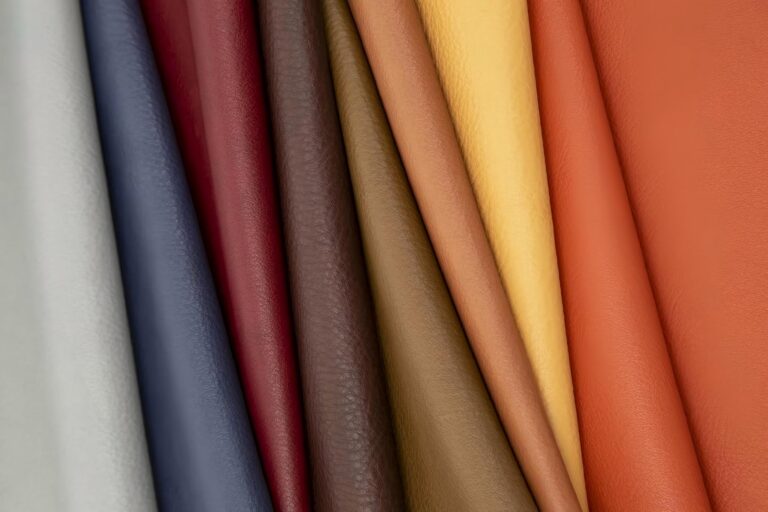
Warm-tone swatches with lychee grain — the color and texture that sell the couch on day 1. But the spec sheet is what keeps it looking this way on day 1,825.

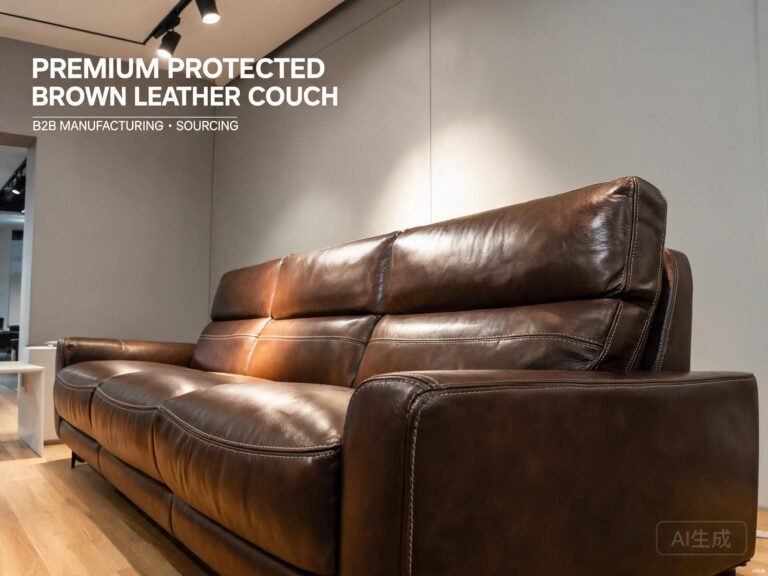
A finished sofa in commercial use — the environment where spec sheet numbers become visible reality within 18 months.
Frequently Asked Questions
What thickness should I specify for a commercial square leather couch?
For standard commercial seating, 1.0–1.4mm provides the right balance of flexibility and structural integrity. For high-traffic environments — hotel lobbies, airport lounges, senior living facilities — specify 1.4–2.0mm. Thicker material resists punctures and abrasion better but is harder to sew into tight curves. Work with your furniture manufacturer to match thickness to the couch’s frame design and usage profile. If you’re sourcing leather couch fabric, request thickness tolerance data — ±0.1mm is production-grade; anything wider will cause sewing line inconsistencies.
Specifying for the Full Lifecycle
A square leather couch specified with the right performance data — Martindale cycles, UV hours, cleaning tolerance, hydrolysis rating — is a 10-year asset. A couch specified by swatch alone is a 2-year liability. The difference is not in the leather. It is in the specification.
The procurement teams and designers who consistently deliver couches that outlast their warranties share one habit: they write the performance numbers on the purchase order and require the supplier to sign against them. That single act shifts the risk of premature failure from the buyer to the supplier — where it belongs. According to market research on leather and faux leather sofas, hospitality and commercial demand is growing — and so is the cost of getting the specification wrong.
About TOPSUN
TOPSUN produces silicone-coated leather for furniture manufacturers specifying square leather couch upholstery that must survive commercial environments — hospitality, senior living, and high-traffic residential applications.
200,000+ Martindale cycles verified by SGS | Bleach-safe cleaning tolerance | EN 13773 Class 4 flame retardancy | Custom color matching Delta E ≤ 1.0 | Free A4 swatches shipped worldwide