A full-grain cowhide costs $5 to $15 per square foot — and that is just the starting line. When we run total cost of ownership models for B2B clients, the real expense of expensive leather shows up in places nobody quotes: re-tanning for compliance, replacement after UV degradation, and labor to patch hydrolysis damage. The number on your invoice rarely matches the number on your ledger. Here are the five hidden costs that inflate your per-year material spend — and how silicone leather eliminates most of them.
What Makes Expensive Leather Worth Its Price?
Leather pricing varies by up to 50 times across the market. A wallet can run $10 or $500; a sofa, $600 or $10,000. The spread comes from five cost drivers that suppliers rarely break down individually:
- Hide quality — Full-grain cowhides command $5–15/sq ft because the grain layer is intact. Top-grain runs $3–8/sq ft after sanding. Exotic skins like crocodile or ostrich reach $50–200/sq ft driven by scarcity and CITES compliance.
- Tanning method — Chrome tanning processes a hide in 1–3 days at low cost, which is why roughly 80–85% of global production uses it. Vegetable tanning takes 30–60 days and costs significantly more.
- Finishing and embossing — Surface treatments, protective coatings, and custom grain patterns add 20–40% to the base hide price.
- Origin and brand premium — Italian and French tanneries command 2–3x pricing over equivalent South American or Asian hides, often without proportional quality difference.
- Scarcity of exotic skins — Exotic leather accounts for nearly 15% of global luxury goods revenue and grows about 8% annually, according to industry data from Leather Working Group market tracking.
Understanding why is leather so expensive — factors behind cost — helps buyers separate legitimate price drivers from inflated ones. But the sticker price is only chapter one of the story.

Martindale abrasion tester — the machine that reveals whether your premium hide will survive 50,000 cycles or 200,000.
5 Hidden Costs Behind the Sticker Price
When procurement teams ask us to compare cheap vs expensive leather — what you are really paying for — these are the costs that never appear on a quote sheet:
- Replacement cycles — Genuine leather lasts 5–8 years in commercial use. Over a 10-year horizon, you replace it once or twice. Silicone leather runs 10+ years, cutting replacement labor and material cost by 50–100%.
- Compliance audits — Chromium VI testing, REACH substance verification, and LWG traceability audits cost $3,000–8,000 per supplier per year. Silicone leather is inherently chromium-free and solvent-free, reducing audit scope substantially.
- Warranty claims and patch repairs — Hydrolysis damage, UV fading, and cracking generate warranty claims that eat margins. We have seen furniture manufacturers spend 8–12% of revenue on leather patch and replacement work.
- Maintenance labor — Genuine leather needs conditioning every 6–12 months. In hospitality and healthcare settings, that labor adds $2–4/sq ft annually. Silicone leather requires only water and mild soap.
- End-of-life disposal — Bonded leather and chrome-tanned hides are not recyclable. Disposal fees and EPR compliance costs are rising, especially in EU markets. Silicone leather is 100% recyclable.
Across a 5-year horizon, these hidden costs add 35–45% to the effective price of genuine leather — turning a $10/sq ft hide into a $14.50/sq ft real cost.

Swatch rack comparison — the same color and texture, but vastly different cost-per-year profiles over a decade.
Full-Grain vs Silicone Leather: 5-Year TCO Breakdown
For buyers weighing full grain vs top grain leather — which is better for your application — the real question is not which grade to pick, but which material chemistry gives you the lowest cost per usable year. Here is a side-by-side breakdown based on data we have collected from client projects:
| Cost Category | Genuine Leather (5-yr) | Silicone Leather (5-yr) | Difference |
|---|---|---|---|
| Material unit cost | $10/sq ft | $8–12/sq ft | Comparable |
| Replacement cycles | 1 replacement | 0 replacements | +100% genuine |
| Compliance testing | $5K–8K/yr | $1K–2K/yr | +300% genuine |
| Maintenance labor | $2–4/sq ft/yr | $0.50/sq ft/yr | +400% genuine |
| Disposal/recycling | Non-recyclable | 100% recyclable | EPR cost avoided |
In our Martindale testing, silicone leather consistently reaches 200,000+ abrasion cycles against genuine leather’s typical 50,000–100,000. That means the same furniture panel or automotive seat cover serves twice as long before replacement — which is where the real TCO gap opens up.

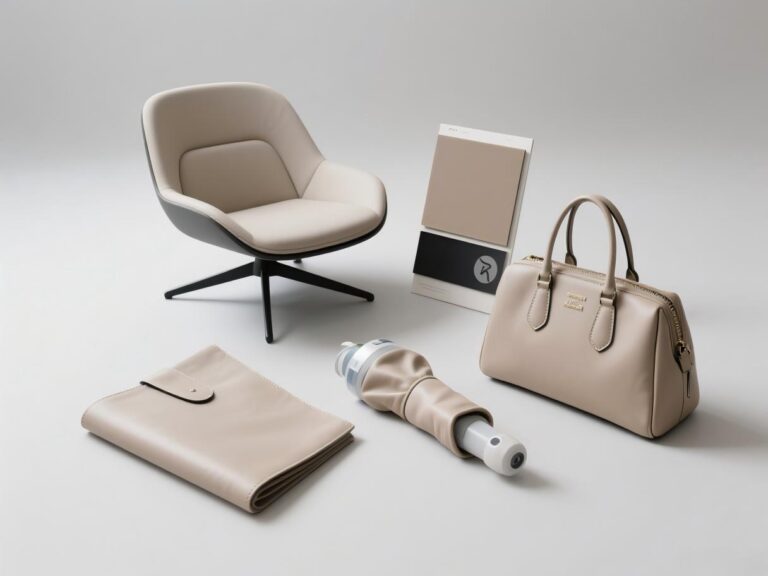
Color palette display — premium look and feel options that do not require a premium leather price tag.
When Expensive Leather Pays Off — and When It Doesn’t
Not every project needs the most expensive leather. The question of whether expensive leather goods are worth it — brand premium vs quality — depends on three factors:
- Worth it: Heritage fashion products where the natural grain, patina, and provenance of full-grain leather directly drive consumer willingness to pay. In these cases, no substitute will satisfy the buyer.
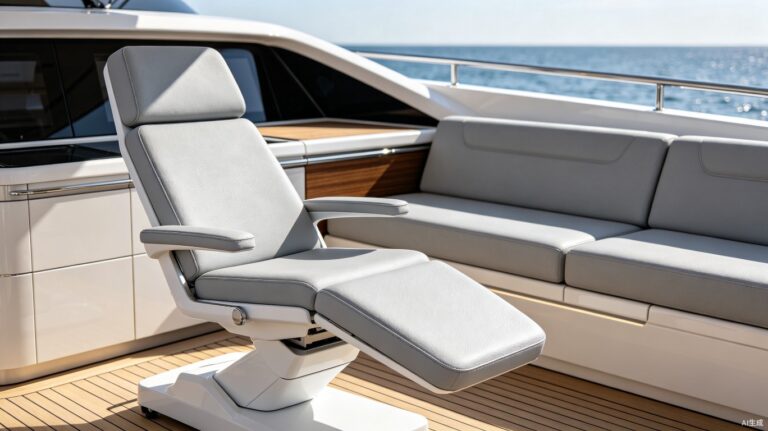
- Not worth it: High-traffic commercial upholstery, automotive interiors, medical equipment, and marine applications where durability, cleanability, and compliance matter more than patina. Here, silicone leather delivers equivalent or superior performance at a lower lifecycle cost.
- Worth evaluating: Mid-market furniture and accessories where the look of leather matters but the substrate does not. Modern embossing on silicone leather can replicate most grain patterns at a fraction of the TCO.
For a broader view of where silicone leather fits across industrial applications, the decision ultimately comes down to cost-per-year, not cost-per-yard.
Frequently Asked Questions
Is full-grain leather always the most expensive option?
No. Full-grain cowhide typically runs $5–15/sq ft, but exotic skins like crocodile, ostrich, and stingray far exceed that range at $50–200/sq ft. Among synthetic options, high-end silicone leather can cost more than mid-grade genuine leather upfront — but its 10+ year service life makes the per-year cost lower in most B2B applications.
How does silicone leather compare to expensive genuine leather in abrasion testing?
In our SGS-verified Martindale testing, silicone leather exceeds 200,000 abrasion cycles. Genuine full-grain leather typically tests at 50,000–100,000 cycles before visible surface breakdown. The gap widens under UV exposure and hydrolysis conditions, where genuine leather degrades faster. ISO 12947-2 is the reference standard for both materials.
The Real Price Tag Is Never Just the Hide
Expensive leather carries costs that do not show up on a purchase order. Replacement cycles, compliance audits, maintenance labor, and disposal fees compound year over year — and they hit hardest in commercial applications where the material works hardest. By the time a B2B buyer accounts for all five hidden costs, genuine leather’s effective price is 35–45% higher than its sticker. Silicone leather eliminates most of that overhead. The suppliers who will not talk about lifecycle cost are the ones profiting from your replacements.
About TOPSUN
TOPSUN produces silicone leather engineered for B2B buyers who need premium-grade durability without the hidden lifecycle costs of traditional hide materials.
200K+ Martindale abrasion cycles verified by SGS · -40°C to 250°C thermal stability · Zero-VOC solvent-free coating process · ISO 10993 biocompatibility certified · 100% recyclable