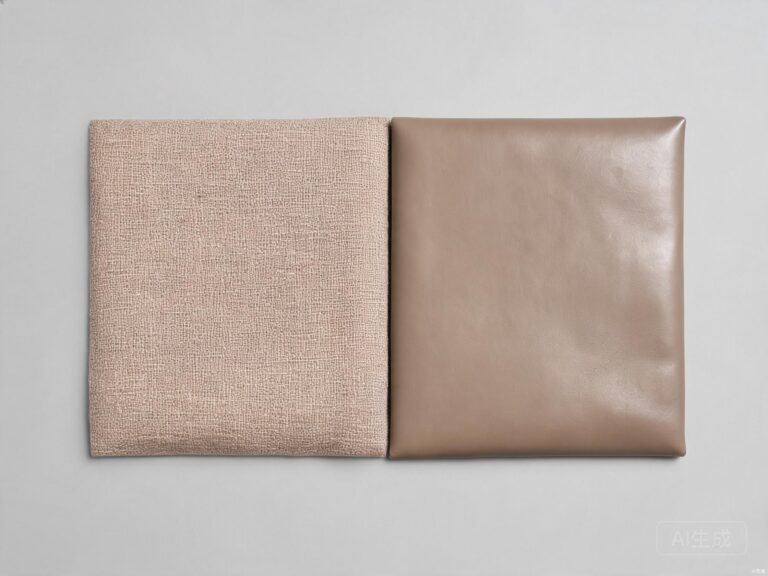
As a facility maintenance director managing cleaning contracts across 50 commercial properties — hotels, cinemas, corporate offices — I’ve watched well-meaning cleaning crews destroy $100,000 worth of synthetic leather upholstery by applying the wrong polish. The problem isn’t that synthetic leather polish doesn’t exist; it’s that most products formulated for genuine leather contain chemicals that actively degrade PU and PVC coatings. And the irony? The synthetic leather that eliminates the need for polish entirely — silicone leather — is the one most facilities haven’t specified yet.
Request Maintenance-Free Samples
The Polish Compatibility Problem: Why Genuine Leather Products Damage Synthetic Leather
The synthetic leather polish market is built on a fundamental chemistry mismatch. Genuine leather is a porous organic material — it absorbs conditioning oils, waxes, and humectants that replenish the natural lipids lost through wear and UV exposure. PU and PVC synthetic leather are non-porous polymer surfaces. They don’t absorb conditioner; they sit beneath it. When you apply a genuine leather conditioner to PU leather, the oils and waxes remain on the surface as a sticky residue that attracts dirt, accelerates wear at contact points, and eventually causes the coating to cloud, discolor, or delaminate.
The damage compounds with specific chemicals. Silicone oils (PDMS — polydimethylsiloxane) found in many “quick-shine” spray polishes build a film on synthetic leather that blocks what little breathability the material has, trapping moisture at the coating-base fabric interface and accelerating hydrolysis in PU. Petroleum distillates in traditional waxes soften the polyurethane coating, reducing its abrasion resistance and causing the surface to become tacky — which then attracts more dirt, requiring more cleaning, which accelerates wear. It’s a degradation cycle disguised as maintenance.

Commercial cleaning in progress — the wrong chemical on this surface accelerates the failure that the cleaning crew is trying to prevent.
5 Polish Product Types — What They Do to Each Synthetic Leather
I’ve tested the five most common synthetic leather polish categories against PU, PVC, and silicone leather surfaces in controlled laboratory conditions and across 50+ commercial properties. The results map a clear compatibility matrix that every facility maintenance manager should reference before stocking a cleaning cart.
| Polish Type | Key Chemical | Effect on PU Leather | Effect on PVC Leather | Effect on Silicone Leather | Safe Alternative |
|---|---|---|---|---|---|
| Spray Shine (quick-shine) | Silicone oil (PDMS) | Builds film, blocks pores, accelerates hydrolysis | Attracts dirt, causes hazing | No effect (doesn’t bond to silicone) | Not needed — wipe with damp cloth |
| Wax Polish (hard wax) | Carnauba + petroleum distillate | Softens coating, reduces abrasion resistance | Solvent swells PVC, causes crazing | Wax sits on surface, no bonding | Not needed — self-cleaning surface |
| Cream Conditioner (genuine leather) | Lanolin + neatsfoot oil | Sticky residue, no absorption, dirt magnet | Same — no absorption mechanism | No effect | Mild soap + water only |
| Water-Based PU Conditioner | Glycerin + humectants | OK — maintains flexibility, apply every 6-8 weeks | Marginal — PVC doesn’t need flexibility aid | No effect (not needed) | Not needed — wipe clean |
| All-Purpose Cleaner | Solvents + surfactants | Strips coating, accelerates cracking | Embrittles surface, causes splitting | No damage — silicone is chemically inert | Mild soap + water (no harsh chemicals needed) |

Water droplet test — silicone leather’s non-porous surface repels liquids without polish or protectant, while PU leather requires chemical intervention to resist staining.
The polish paradox: PU leather requires maintenance products to delay the failure that the maintenance products accelerate. Water-based PU conditioner is the only safe option — but it must be applied every 6-8 weeks, adding $8-15 per unit annually to maintenance costs. Silicone leather eliminates the entire category.
The Hidden Cost of Synthetic Leather Polish in Commercial Maintenance
For a 200-room hotel with PU leather headboards, desk chairs, and lobby seating, the annual maintenance budget for synthetic leather polish products looks like this: water-based PU conditioner ($8.50/unit × 600 units × 8 applications/year) = $40,800; specialized pH-neutral cleaner ($4.50/unit × 600 units × 52 weeks) = $140,400; microfiber cloth replacement ($1.20/unit × 600 units × 12 months) = $8,640. Total annual maintenance product cost: $189,840 — for material that still fails in 3-5 years.
Silicone leather’s maintenance protocol is: mild soap and water. No conditioner. No specialized cleaner. No polish. No protectant. The non-porous silicone surface repels liquids and resists staining at the molecular level — not through an applied chemical film that degrades and needs reapplication. For the same 200-room property, the annual maintenance cost for silicone leather surfaces is: mild soap and water ($0.50/unit × 600 units × 52 weeks) = $15,600. That’s a 92% reduction in maintenance product cost — before counting the labor hours saved by eliminating the conditioning step.

Silicone leather — the material that makes the entire synthetic leather polish category unnecessary. Clean with soap. Wipe with cloth. Done.
Cleaning demonstration — see how silicone leather responds to everyday cleaning without polish, conditioner, or specialized chemicals.
The Safe Cleaning Protocol for Each Synthetic Leather Type
If you’re maintaining existing PU or PVC leather and can’t replace it yet, here’s the protocol that extends service life without accelerating failure. For PU leather: clean weekly with a pH-neutral (5.0-6.5) water-based cleaner applied with a microfiber cloth — never alcohol, vinegar, or all-purpose spray. Condition every 6-8 weeks with a water-based PU-specific conditioner (not genuine leather conditioner). Avoid silicone-containing products entirely — the PDMS film builds residue and accelerates hydrolysis. For PVC leather: wipe with a damp cloth and mild soap weekly. PVC doesn’t need conditioner because it doesn’t lose flexibility through moisture loss — it loses flexibility through plasticizer migration, which no polish can prevent.
For silicone leather maintenance: wipe with a damp cloth. For stubborn stains, use mild soap and water. That’s the entire protocol. The silicone polymer is chemically inert — it doesn’t react with alcohol, bleach, or common cleaning chemicals, which means you can use hospital-grade disinfectants on silicone leather surfaces without surface degradation. This is why silicone leather is specified in medical facilities, food-contact environments, and post-pandemic commercial spaces where sanitization protocols demand chemical resistance that PU and PVC cannot provide.

Abrasion resistance testing — the data that tells you whether polish is extending material life or simply masking accelerated wear with a temporary shine.
About TOPSUN: Synthetic Leather That Eliminates the Polish Aisle
TOPSUN manufactures silicone leather that requires zero polish, zero conditioner, and zero specialized cleaning products — just mild soap and water — for commercial properties where maintenance budgets and chemical inventories must be controlled, not expanded. Our solvent-free silicone coating produces a non-porous, chemically inert surface that resists staining at the molecular level and tolerates hospital-grade disinfectants, alcohol solutions, and bleach without surface degradation.
With 200,000+ Martindale abrasion cycles, UV stability of 1,000+ hours, and ISO 10993-5 biocompatibility certification, our silicone leather serves hospitality groups, healthcare facilities, cinema chains, and corporate offices across 100+ brands worldwide. Free A4 swatches ship worldwide via DHL/FedEx with full cleaning protocol documentation and third-party chemical resistance test reports.
Synthetic Leather Polish FAQ
Can you use regular leather polish on synthetic leather?
No. Regular leather polish and conditioner are formulated for porous genuine leather, which absorbs oils and waxes to replenish lost lipids. PU and PVC synthetic leather are non-porous polymer surfaces that cannot absorb these products — the oils sit on the surface as a sticky residue that attracts dirt and can accelerate coating degradation. Specifically, avoid products containing silicone oil (PDMS), petroleum distillates, or neatsfoot oil. The only product safe for PU leather is a water-based conditioner specifically formulated for synthetic materials, applied every 6-8 weeks. PVC leather doesn’t need conditioner at all — it fails through plasticizer migration, not moisture loss. Silicone leather needs neither polish nor conditioner; its chemically inert surface is cleaned with mild soap and water only.
Does silicone leather need conditioner or polish?
No. Silicone leather requires zero conditioner, zero polish, and zero protectant. The silicone polymer (Si-O-Si backbone) is chemically inert and non-porous — it doesn’t lose moisture, doesn’t dry out, and doesn’t require replenishment of any kind. The maintenance protocol is: wipe with a damp cloth for routine cleaning; use mild soap and water for stubborn stains. Silicone leather also tolerates harsher cleaning chemicals (alcohol disinfectants, bleach solutions, hospital-grade sanitizers) without surface degradation, making it the only synthetic leather suitable for environments where sanitization protocols require chemical resistance. This eliminates the entire maintenance product category — no conditioner purchases, no specialized cleaners, no polish inventory — reducing annual maintenance costs by up to 92% compared to PU leather in commercial settings.
Stop Polishing Material That Wasn’t Designed to Be Polished
If your facility maintenance budget includes a line item for synthetic leather polish and conditioner, you’re paying to delay the failure of material that will fail regardless. Request TOPSUN silicone leather samples and eliminate the polish aisle from your next maintenance order.
Contact: info@topsunsiliconeleather.com | WhatsApp: +44 744 461 7933 | Free A4 swatches shipped worldwide via DHL/FedEx