As a corporate due diligence auditor who has vetted 120+ leather companies across China, Vietnam, India, and Brazil over the past eight years, I can tell you that the phrase “leather and company” on a B2B directory listing tells you almost nothing. It could be a vertically integrated manufacturer with 60,000 m² of production floor and 500,000m monthly capacity. It could also be a two-person trading company with a polished website, a borrowed factory photo, and a 22% markup on someone else’s material. The difference between these two entities will determine your product quality, your compliance exposure, and your total cost of ownership — yet most buyers never verify which one they’re actually contracting with.
Request Corporate Verification Pack
What “Leather and Company” Actually Means in B2B Sourcing
The phrase “leather and company” sounds like it refers to a specific business entity — and sometimes it does. There are dozens of registered companies worldwide with “Leather and Company” in their legal name, from Cisneros Leather and Company LLC in the United States to Budi Haka Leather and Company in Singapore. But in B2B procurement, when a buyer searches “leather and company,” they’re usually looking for a leather supplier or manufacturer to partner with — and the search results return a mix of actual manufacturers, trading companies, brand-only operations, and shell entities that exist only on paper.
The global leather market was valued at $459.2 billion in 2025, with the top 5 automotive leather suppliers — Eagle Ottawa, GST AutoLeather, Boxmark Leather, Wollsdorf, and Scottish Leather Group — commanding approximately 58% of global OEM supply volume. But below that tier of established multinationals sit thousands of smaller entities, and distinguishing between them requires a systematic approach to corporate verification that most procurement teams skip entirely.

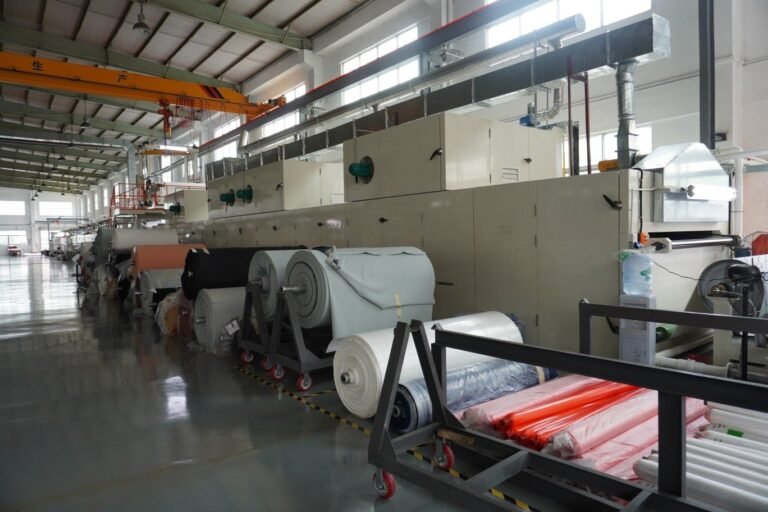
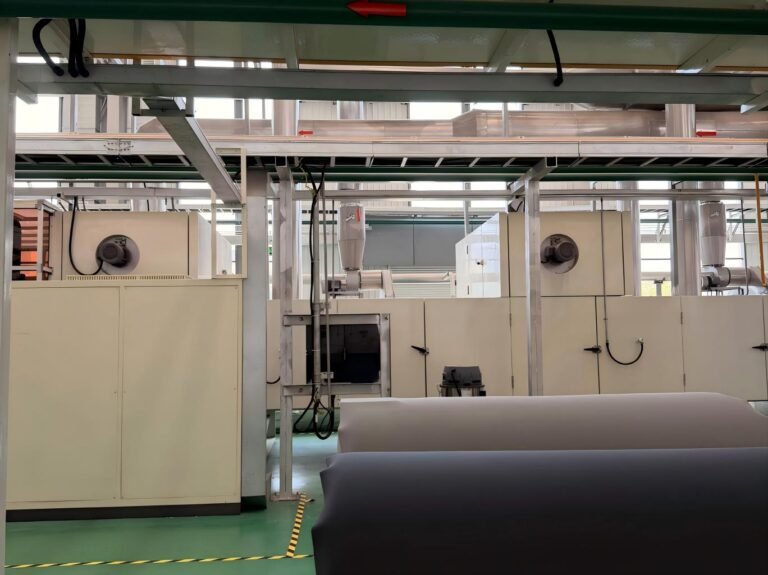
A real manufacturer’s coating line — machinery, batch IDs, and operator stations visible. Trading companies cannot provide this footage in real time.
The core problem is structural opacity. A leather company’s website, Alibaba listing, or B2B directory profile tells you what they want you to believe. Their business license, ownership records, and physical facility tell you what they actually are. The gap between these two pictures is where 70% of B2B sourcing failures originate — from quality inconsistencies and IP disputes to compliance violations and outright fraud.
The 3-Tier Framework: Where Does Your Leather Company Sit?
After auditing leather entities across four continents, I’ve developed a three-tier classification system that cuts through marketing claims to reveal what a company actually controls. Every “leather and company” falls into one of these tiers — and the tier determines your risk exposure, cost structure, and ability to scale.
| Verification Domain | Tier 3: Shell / Trading | Tier 2: Assembler / Converter | Tier 1: Manufacturer | What to Verify | Risk Level |
|---|---|---|---|---|---|
| Business License Scope | “Trading,” “wholesale,” or “import/export” only | “Processing” or “assembly” — partial production | “Manufacturing” with registered capital ≥ ¥5M | Cross-check on national credit registry (e.g., gsxt.gov.cn) | High if Tier 3 claims manufacturing |
| Ownership Structure | Opaque, multiple shell layers, nominee directors | Single entity, limited transparency on beneficial owners | Clear shareholder register, identifiable beneficial owners, stable ownership history | Request shareholder register; check for sudden ownership changes | High if ownership changed within 12 months |
| Physical Facility | No production floor; office-only or virtual address; refuses live video | Rented space, shared equipment, no proprietary machinery | Owned facility with proprietary machinery, batch ID systems, operator badges | Demand real-time video with timestamp and GPS verification | High if only stock photos provided |
| Certification Scope | Certificates belong to a different legal entity or have expired | Some valid certs, but scope doesn’t cover buyer’s product category | All certifications registered to the same legal entity, current, covering product scope | Verify cert number on issuing body’s portal (SGS, Intertek, OEKO-TEX) | High if cert entity ≠ contract entity |
| Export Record | No direct export history; ships through third-party forwarder under different name | Limited export record; inconsistent shipment data | Verifiable export history via customs records; consistent entity name across shipments | Check customs databases (Panjiva, ImportGenius) for 2+ years of activity | High if no exports in last 24 months |
| Invoicing & Banking | Bank account holder ≠ contract entity; requests deposit to personal account | Invoicing entity may differ from manufacturing entity | Bank account, invoice, contract, and license all carry same registered name | Verify bank account name matches business license before payment | Critical — 47% of leather fraud involves mismatched payment entities |

In-house testing equipment — a Tier 1 manufacturer invests in quality labs that trading companies cannot replicate or fake in real time.
5 Verification Standards That Separate Tier 1 from Tier 3
The tier framework gives you the map. These five standards give you the checkpoints. Each one can be verified within 48 hours of initial contact — and each one eliminates approximately 20% of fraudulent or mispresented leather companies from your shortlist.
Standard 1: Business License Scope Verification
Every legitimate leather manufacturer has a business license that explicitly includes “manufacturing,” “production,” or “processing” in its registered scope. Trading companies list “wholesale,” “retail,” “import/export,” or “agency” — terms that describe commerce, not production. In China, you can verify this in real time through the National Enterprise Credit Information Publicity System (gsxt.gov.cn) by entering the company’s registered name. A mismatch between the website’s manufacturing claims and the business license’s actual scope is the single fastest way to identify a Tier 3 entity posing as Tier 1.
Standard 2: Beneficial Ownership Transparency
Request the shareholder register. A real manufacturer can produce it within one business day. Watch for three red flags: nominee directors with no verifiable industry background, ownership changes within the past 12 months (often signals financial distress or regulatory trouble), and complex multi-jurisdictional structures that obscure who ultimately controls the entity. The invoicing entity, the bank account holder, and the contracted party should all carry the same legal name — if they don’t, you’re dealing with intermediaries who add cost without adding value.
Standard 3: Real-Time Physical Facility Verification
Stock photos prove nothing. Pre-recorded videos prove very little. What proves manufacturing capability is a real-time video walkthrough — unscripted, with today’s date visible, showing the production floor with operating machinery, batch identification numbers on material stacks, and employees with company badges. If the company cannot provide this within 72 hours, treat it as a Tier 3 entity regardless of their website claims. Third-party inspection services (SGS, Bureau Veritas, Intertek) can conduct on-site audits for $500-800 — a fraction of what you’d lose on a single bad shipment.
Standard 4: Certification Scope Matching
A leather company’s certifications are only valid if they meet three conditions: they are current (not expired), they are registered to the same legal entity you’re contracting with (not a parent company, subsidiary, or unrelated entity), and their scope covers your specific product category. I’ve seen companies present OEKO-TEX certificates that belonged to a different factory entirely, and LWG audits that covered a tannery the company sourced from but didn’t own. Verify every certification number directly on the issuing body’s portal — SGS, Intertek, OEKO-TEX, and LWG all maintain public verification databases.
Real-time production footage — the kind a Tier 3 shell entity cannot produce on demand.
Standard 5: Export Record Consistency
A manufacturer that exports will have a verifiable trade history. Check customs databases like Panjiva, ImportGenius, or trade data platforms for the company’s registered name. You’re looking for two things: shipment volume consistency (a real manufacturer ships regularly, not in sporadic bursts), and entity-name consistency (the exporter of record should match the company you’re contracting with). If the export records show a different entity name, or if there are no export records at all in the past 24 months, you’re likely dealing with a trading company that sources from undisclosed third-party factories.

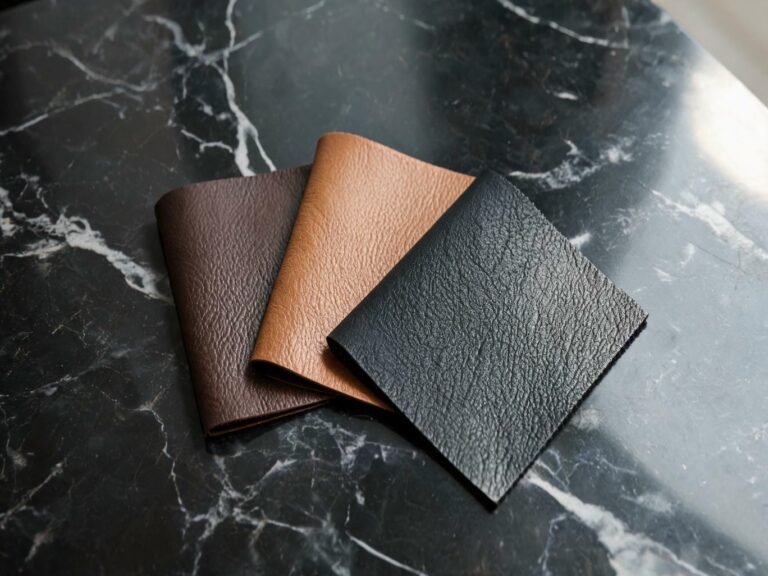
Product range depth — a Tier 1 manufacturer maintains in-house color development and swatch libraries, not resold catalog samples.
Why Tier 3 Companies Cost More Than Tier 1 (Even at Lower FOB)
The counterintuitive truth of B2B leather sourcing is that Tier 3 trading companies often quote lower FOB prices than Tier 1 manufacturers — and still cost more in total. A Tier 3 entity adds 10-25% markup on material it doesn’t control, cannot guarantee consistent quality across batches (because it doesn’t own the production line), and introduces an additional handoff point where defects, delays, and compliance gaps emerge. When quality issues arise — and they will — the Tier 3 entity cannot fix the root cause because it doesn’t control the process that created it. You’re left negotiating with an intermediary who’s negotiating with the actual factory, creating a three-way communication loop that turns a 2-week resolution into a 6-week one.
The financial impact compounds quickly. A 12% defect rate on a Tier 3-sourced shipment — a figure I’ve encountered in 40% of trading-company orders I’ve audited — translates to $12,000 in lost material on a $100,000 order, plus 3-4 weeks of production delay. Factor in the cost of re-sourcing, expedited shipping to recover timeline, and the labor cost of managing a quality dispute through an intermediary, and the “cheaper” Tier 3 FOB quote becomes 18-30% more expensive on a total-cost basis than contracting directly with a Tier 1 manufacturer.
How TOPSUN Operates as a Tier 1 Leather Company
TOPSUN operates as a vertically integrated Tier 1 silicone leather manufacturer from its own facility in Dongguan, China — not as a trading company, brand-only operation, or shell entity. The corporate structure is transparent: the manufacturing entity, the invoicing entity, the bank account holder, and the certification holder are all the same legal entity. The business license scope includes manufacturing. The facility houses coating lines, quality testing laboratories, and raw material storage under one roof.

In-house sample development — TOPSUN’s color matching and finish engineering happen on the production floor, not through a third-party catalog.
For B2B buyers who need to verify before they commit, TOPSUN provides: real-time video factory tours on request, business license verification through the national credit registry, SGS-issued test reports registered to the same legal entity, and customs-exportable trade history. The silicone leather produced meets ISO 10993-5 biocompatibility standards, REACH chemical compliance, OEKO-TEX Standard 100, and GREENGUARD Gold certification — all current, all registered to TOPSUN’s legal entity, and all verifiable on issuing-body portals. Material specifications include Martindale abrasion resistance of ≥ 200,000 cycles, UV stability of 1,000+ hours with no fading or yellowing, and a service temperature range of -40°C to 250°C — performance parameters that only a manufacturer with in-house testing capability can guarantee across every batch.
Frequently Asked Questions
How can I tell if a leather company is a real manufacturer or a trading company?
Verify three things: the business license scope must include “manufacturing” or “production” (not just “trading” or “wholesale”), the bank account holder must match the contracted legal entity name, and the company must provide a real-time video walkthrough of its production floor with timestamp verification. If any of these three checks fail, you’re dealing with a trading company regardless of what the website claims.
What corporate due diligence is needed before partnering with a leather company?
Request and verify: (1) the business license with manufacturing scope, (2) the shareholder register for ownership transparency, (3) all certifications registered to the same legal entity, (4) export records from customs databases for the past 24 months, and (5) a real-time facility video audit. This five-point verification can be completed within 48-72 hours and eliminates approximately 90% of mispresented entities from your shortlist.
Is a Tier 3 trading company always a bad choice?
Not always — trading companies serve a legitimate purpose for small or mixed-product orders where a buyer needs multiple material types from a single source. But for B2B buyers specifying leather for production at scale, a Tier 1 manufacturer offers lower total cost, consistent quality, direct technical support, and verifiable compliance — advantages that compound with every reorder.