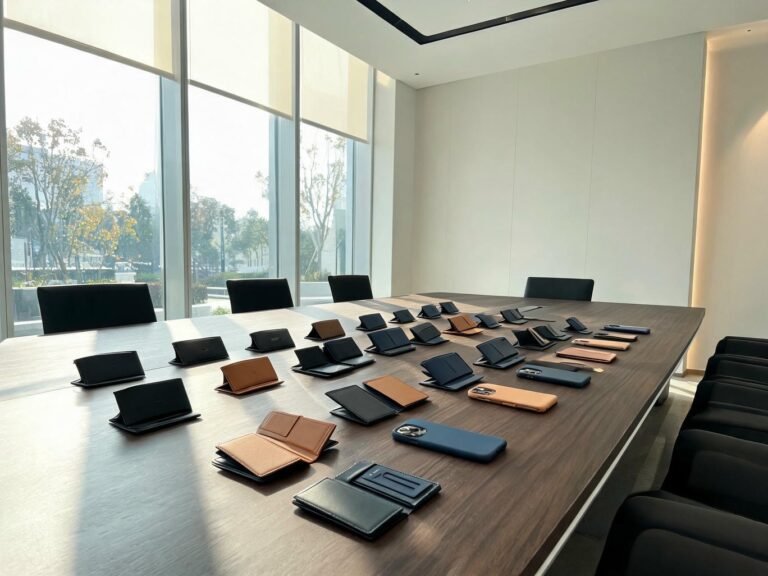
Launching a private label leather goods brand is one of the most accessible ways to enter the accessories market — and one of the easiest to get wrong. The barriers to entry are low: find a factory, pick some designs, add your logo, start selling. But the gap between “putting a logo on a wallet” and “building a profitable leather goods brand” is enormous.
The brands that succeed do the work upfront: they define their positioning, they vet their suppliers properly, they invest in good samples, they build quality control into the process, and they understand the difference between white label, private label, and OEM — and when each makes sense. The brands that fail usually skip those steps, order 1,000 units from the first Alibaba supplier they find, and end up with product they can’t sell at a price that doesn’t make money.
This guide covers everything you need to know to launch and grow a private label leather goods brand the right way: the different manufacturing models and which one is right for you, how to find and vet suppliers, the sampling process and why it’s the most important step, MOQ strategy for startups, quality control systems that actually work, and the seven most common mistakes that sink new leather goods brands — and how to avoid them.
Explore OEM / ODM Capabilities
White Label vs Private Label vs OEM vs ODM: What’s the Difference?
The first thing to understand is that “private label” means different things to different people. In the leather goods industry, there are four distinct manufacturing models, each with different levels of customization, cost, and MOQ. Picking the right model for your stage and goals is the most important decision you’ll make.
| Model | What It Means | Customization | Typical MOQ | Best For |
|---|---|---|---|---|
| White Label | Factory’s existing product, your logo added. Identical product sold to multiple brands. | Low — logo, packaging | 100–500 pcs | Testing the market, very early stage |
| Private Label (ODM) | Factory’s base design, you customize materials, colors, hardware, branding. | Medium — configurable | 300–1,000 pcs | Growing brands, curated product lines |
| OEM (Custom) | Your design, your specifications, factory produces it exclusively for you. | High — fully custom | 500–3,000+ pcs | Established brands, unique products |
| Bespoke / Made-to-Order | One-off or small-batch fully custom pieces, often handcrafted. | Maximum — one-of-a-kind | 1–50 pcs | Luxury, ultra-premium positioning |
Most new brands start somewhere between white label and ODM private label — and that’s smart. The key is to know where you are on the spectrum and plan your progression. A common trajectory is: start with white label to validate the market and test demand, move to ODM private label once you have consistent sales and want to differentiate, then graduate to full OEM once you have the volume and product-market fit to justify custom tooling and development costs.
Brand builder tip: Don’t start with OEM. It’s tempting to want a “totally unique” product, but custom development is expensive and time-consuming, and most first-time brands don’t know what they actually want until they see and sell the product. Start with ODM private label — customize the materials, colors, and hardware enough to differentiate, but use proven base designs that the factory already makes well. You’ll get to market faster, spend less money, and learn what your customers actually want before you invest in custom tooling.
How to Find and Vet Leather Goods Manufacturers
Your manufacturer is the single most important partner in your leather goods business. A good manufacturer makes you look good, delivers on time, and helps you grow. A bad manufacturer costs you money, damages your reputation, and can kill your brand. Here’s how to find the right one:
Where to find manufacturers:
- B2B platforms (Alibaba, Global Sources, Made-in-China) — the widest selection, but quality varies enormously. Look for verified suppliers with 5+ years of experience and 95%+ on-time delivery rate.
- Trade shows (Lineapelle in Milan, APLF in Hong Kong, Canton Fair in Guangzhou) — the best way to meet manufacturers face to face, see samples, and build relationships. If you’re serious about the business, attend at least one major trade show.
- Industry referrals — ask other brand owners, designers, or suppliers who they work with. A warm introduction is worth 10 cold Alibaba messages.
- Sourcing agents — if you don’t have the time or expertise to vet factories directly, a good sourcing agent can handle supplier identification, negotiation, and quality control for a 5–10% commission.
How to vet manufacturers (the 7-check framework):

Manufacturing facility — vetting a factory means verifying production capacity, quality systems, and compliance, not just looking at sample photos
- Experience and specialization. How long have they been making leather goods? Do they specialize in your product category (wallets, bags, belts, etc.)? A factory that makes great handbags might be terrible at small leather goods. Look for 5+ years of experience in your specific product type.
- Certifications. What quality and ethical certifications do they have? Look for ISO 9001 (quality management), BSCI or SMETA (ethical audit), and REACH compliance (chemical safety). Certifications don’t guarantee quality, but the absence of certifications is a red flag.
- Client references. Ask for 2–3 client references — preferably brands similar to yours in size and market. Email or call those references and ask specific questions: Did they deliver on time? Was the quality consistent? How did they handle problems? Would you work with them again?
- Sample quality. Order samples from 3–5 different factories and compare them side by side. Pay attention to stitching consistency, edge finishing, hardware quality, leather quality, and overall craftsmanship. The sample quality is the best indicator of production quality — if the sample is sloppy, the production will be worse.
- Communication. How fast do they respond? Do they answer your questions directly, or deflect and evade? Do they speak your language well enough to understand complex requirements? Good communication prevents 80% of production problems.
- Production capacity and MOQ. Can they handle your current volume and scale with you as you grow? What’s their minimum order quantity — and is it flexible for first orders? A factory that’s too small will cause delays when you grow. A factory that’s too large might not prioritize your small orders.
- Factory audit (for large orders). If you’re placing a six-figure order, do a factory audit — either in person or through a third-party inspection company. Check the working conditions, the quality control process, the material storage, and the actual production floor. Photos on a website can be faked; a physical audit can’t.
The Sampling Process: Don’t Skip This Step
Sampling is the most important part of the private label process — and the step most new brands rush through. Ordering mass production based on digital mockups or phone conversations is the #1 cause of private label failures. You need physical samples, and you need multiple rounds of samples before you approve production.
A proper sampling process has three stages:
Stage 1: Structure / prototype sample. The first sample confirms the product form, dimensions, and functionality — not the final materials or branding. This is the stage to fix structural issues: Is the size right? Do the compartments fit what they’re supposed to fit? Does the closure work properly? Is the weight distribution right? Catching structural problems at this stage saves weeks of time and thousands of dollars compared to catching them in mass production.

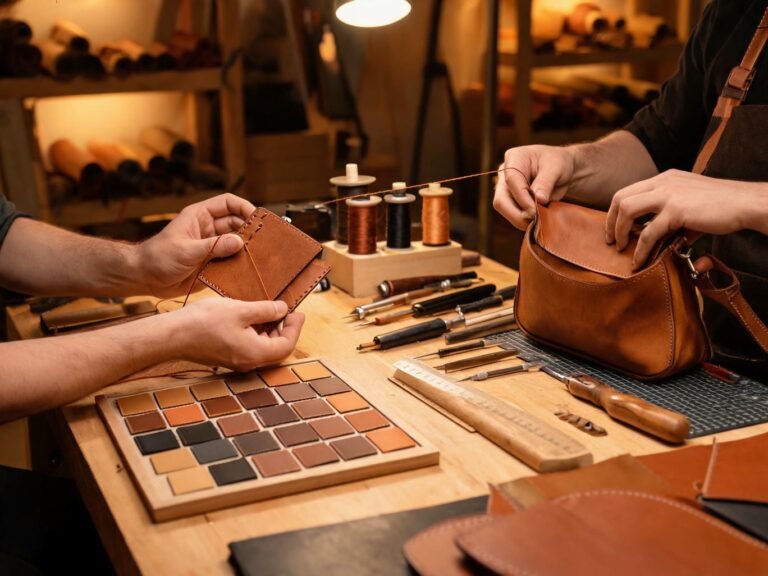
Product development samples — always go through multiple sample rounds to refine design, materials, and construction before approving mass production
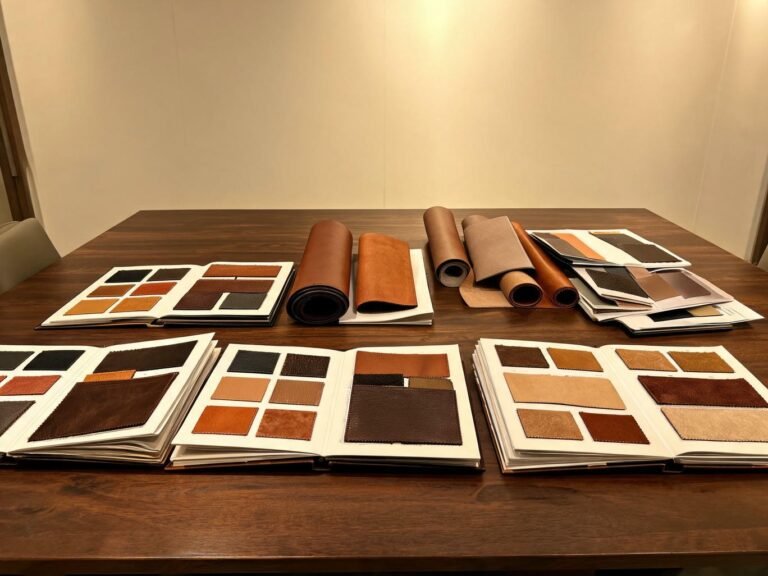
Stage 2: Material and finish sample. Once the structure is approved, the second sample uses the actual leather, lining, hardware, stitching, and finish you want for production. This is the stage to evaluate material quality, color matching, hardware plating, edge finishing, and overall aesthetics. Compare the leather to your approved swatch. Check that hardware color matches your spec. Evaluate the stitching — is it even? Consistent? No loose threads?
Stage 3: Final / pre-production sample. The final sample is the “golden sample” — the exact product that mass production should replicate, including your logo/brand mark and packaging. Once you approve this sample, it becomes the quality standard that production is measured against. Sign and date the golden sample, keep one for yourself, and leave one with the factory. This is your reference for resolving any quality disputes later.
Expect 1–2 rounds of revisions per stage, and budget 2–6 weeks total for sampling depending on product complexity. Yes, it adds time and cost upfront. But it’s still cheaper and faster than producing 2,000 units of a product that has problems and trying to fix them after the fact.
MOQ Strategy for Startups: How Much to Order (and How to Negotiate)
MOQ (minimum order quantity) is the biggest barrier for new leather goods brands. Factories want to produce in volume to justify setup costs. New brands want to order small to test the market. The tension is real — but there are ways to manage it.
Understand why MOQs exist. Factories have MOQs because switching between products involves setup time — cutting die changes, pattern adjustments, material sourcing, worker training. Small orders don’t cover the setup cost, so factories lose money on them. Understanding this helps you negotiate: the more you can reduce the factory’s setup work, the lower the MOQ you can negotiate.
5 ways to get lower MOQs:
- Use the factory’s existing materials. The biggest driver of MOQ is custom materials. If you use leather and hardware the factory already stocks, MOQ drops dramatically. Custom materials = higher MOQ. Stock materials = lower MOQ.
- Order multiple styles in the same material. If you want 100 wallets and 100 belts in the same black leather, the factory can cut them from the same hide batch — effectively a 200-unit MOQ for the material, split across two products.
- Start with white label or ODM. Custom designs (OEM) have the highest MOQs. Using the factory’s existing designs (ODM or white label) has much lower MOQs because the tooling and patterns already exist.
- Build a relationship first. Factories are much more flexible with MOQs for brands they know and trust. Place a small first order, pay on time, be easy to work with, and they’ll be more willing to accommodate lower quantities as you grow.
- Pay a setup fee. If you really want a custom product at a low MOQ, offer to pay a separate tooling/setup fee. This compensates the factory for the setup cost and makes small orders viable for them.
How much should your first order be? There’s no one-size-fits-all answer, but a good rule of thumb for a new brand is: order enough to cover 3–6 months of expected sales, plus a safety stock of 20–30%. Too much and you tie up capital in inventory. Too little and you sell out fast, miss sales, and damage your brand reputation with backorders. If you’re pre-launch and have no sales data, start small (100–300 units per SKU), validate demand, then reorder in larger quantities.
OEM/ODM custom development — see how private label products go from concept to production-ready samples
Quality Control: Don’t Trust — Verify
Even with a great factory and great samples, quality can slip in mass production. Workers get rushed. Materials vary. Cutting and stitching inconsistencies creep in. That’s why you need a quality control process — not just “the factory does QC.” Here’s what good QC looks like for leather goods:
- Golden sample reference. Every production run should have an approved golden sample that production units are compared against. If a unit doesn’t match the golden sample, it fails QC.
- In-line QC during production. Quality is checked at each production stage — cutting, stitching, edge finishing, hardware installation, final assembly. Catching defects early is much cheaper than catching them at the end.
- Final random inspection. After production is complete but before shipping, do a random inspection using the AQL (Acceptable Quality Limit) standard. AQL 2.5 is standard for leather goods — it means no more than 2.5% defective units are acceptable. You can do this inspection yourself, have your sourcing agent do it, or hire a third-party inspection company (SGS, Intertek, BV).
- Defect categories. Define what counts as a critical defect, major defect, and minor defect before production starts. Critical (safety issue, completely non-functional) = zero tolerance. Major (visible, affects function or value) = AQL 2.5. Minor (cosmetic, doesn’t affect function) = AQL 4.0.
- Clear communication of issues. When QC finds problems, document them with photos, share them with the factory immediately, and agree on corrective actions and timeline before shipment. Never pay the final balance until you’re satisfied with the QC result.

Quality control inspection — systematic QC with clear standards prevents defects from reaching your customers
7 Mistakes That Sink New Private Label Leather Goods Brands
Before we wrap up, here are the seven most common mistakes new leather goods brands make — and how to avoid them:
Mistake 1: Starting with the product instead of the brand. Most new brands pick a wallet design they like and try to sell it. Successful brands start with the customer: who they are, what they value, what price point they shop at, what makes them buy. The product follows from the brand positioning, not the other way around.
Mistake 2: Choosing the cheapest supplier. The cheapest quote almost always costs more in the long run — through quality problems, delays, reworks, and damaged customer relationships. Price matters, but it shouldn’t be the deciding factor. A slightly more expensive supplier that delivers consistent quality on time is worth every penny.
Mistake 3: Skipping proper sampling. We can’t say this enough. Never approve mass production based on drawings, photos, or verbal descriptions. You need a physical sample in your hands that you can test, evaluate, and approve. The sampling fee is the cheapest insurance you’ll ever buy.
Mistake 4: Ordering too much (or too little) inventory. Order too much and you’re stuck with unsold inventory tying up cash. Order too little and you sell out, miss revenue, and frustrate customers. Start conservatively, validate demand, and scale up as you get sales data. It’s better to sell out in 2 months and reorder than to have 2 years of inventory sitting in a warehouse.
Mistake 5: Not having a quality control process. “The factory does QC” is not a QC process. Factories cut corners when they’re behind schedule or when costs go up. You need your own QC — either in person, through a third party, or at minimum a clear AQL standard with pre-shipment inspection photos.
Mistake 6: Neglecting intellectual property. If you’re doing OEM custom designs, make sure you own the design and tooling. Put it in the contract. If you’re using the factory’s ODM designs, understand that other brands can (and will) use the same base design — your differentiation comes from materials, branding, and marketing, not from the product shape.
Mistake 7: Not planning for sustainability and compliance. Regulations are tightening — REACH in the EU, Prop 65 in California, and various country-specific chemical safety rules. If you’re selling into regulated markets, your products need to comply. Ask for compliance certificates up front, not after you receive a customs seizure notice. And increasingly, consumers are choosing brands with sustainable and ethical supply chains — it’s not just a compliance issue, it’s a marketing issue.
Build Your Brand the Right Way
Private label leather goods is a great business — if you do it right. The market is big, the margins are good, and customers love leather products. But it’s not a “set it and forget it” business. Success requires choosing the right manufacturing model, vetting suppliers thoroughly, investing in proper sampling, managing MOQs strategically, and building quality control into every step of the process.
And here’s one more piece of advice: start with the material. The material is 80% of the product’s quality, feel, and perceived value. Whether you choose full-grain Italian leather, top-grain cowhide, PU vegan leather, or high-performance silicone leather, your material choice defines your product and your brand. Pick a material that matches your positioning, your price point, and your customer’s values — and then build everything else around it.
The brands that last are the ones that get the fundamentals right from the beginning. They don’t cut corners on supplier vetting. They don’t skip sampling to save time. They don’t assume quality — they verify it. And they treat their manufacturers as partners, not just vendors. Do those things, and you’ll be well on your way to building a leather goods brand that lasts.
Discuss Your Private Label Project
About TOPSUN
TOPSUN provides high-performance silicone leather materials and OEM/ODM support for private label leather goods brands — delivering consistent quality, sustainable credentials, and premium performance for fashion accessories, consumer electronics cases, and lifestyle products.
100+ standard colors, custom Pantone matching, Delta E ≤ 1.0 batch consistency, zero VOC, REACH compliant, 500m MOQ for custom colors, dedicated technical support for product development, vegan positioning for premium brands.