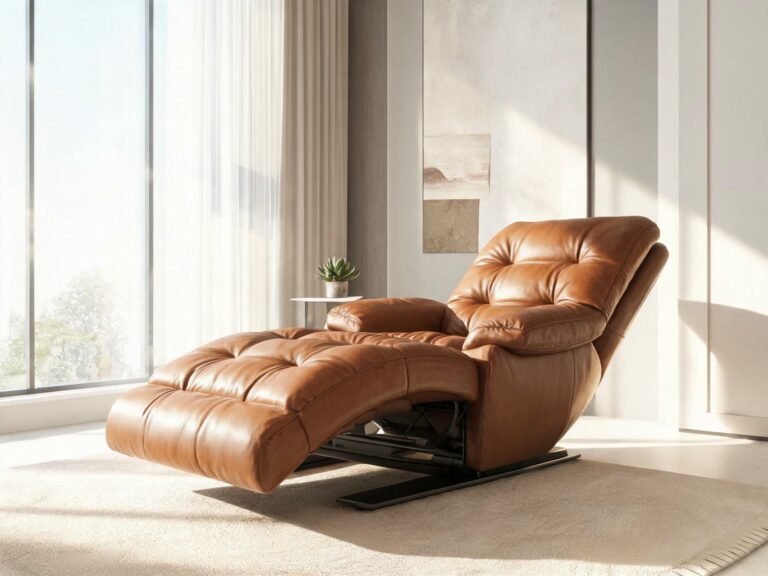
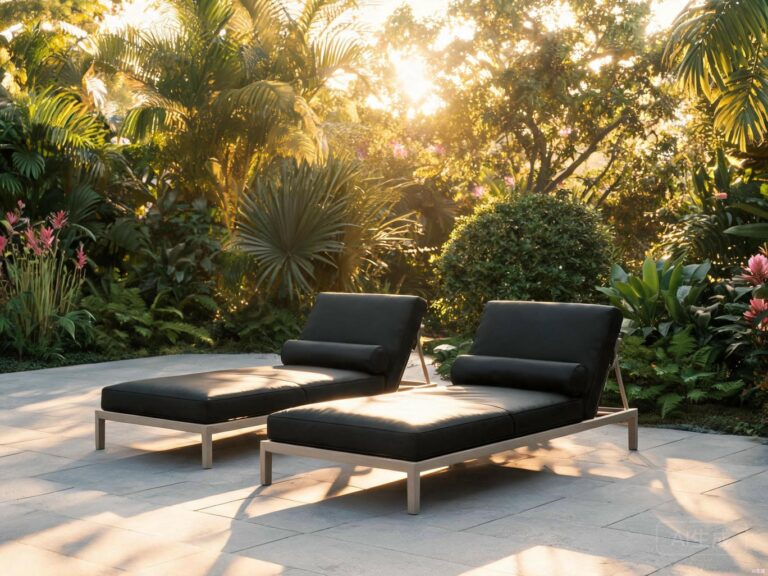
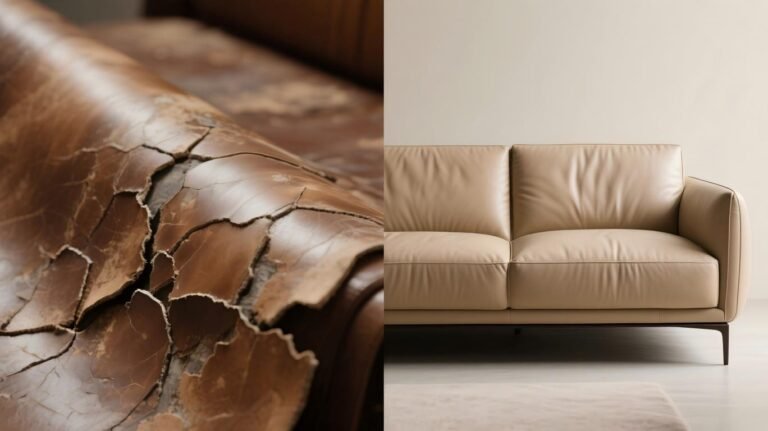
You invest in a beautiful patio set with patio furniture leather upholstery, and by the second summer it’s already cracking, fading, or growing mold. If this sounds familiar, you’re not alone. Most leather products marketed for outdoor use fail within 2–3 years because they were never designed for constant UV exposure, rain, and temperature swings. The good news: there’s a material that handles all of the above — and lasts a decade or more.
Here’s the thing — “leather” covers a wide range of materials, from genuine hides to PVC vinyl to polyurethane coatings. Each behaves very differently outdoors. In this guide, we break down exactly why most patio furniture leather fails, how the main alternatives stack up, and what material savvy hospitality and commercial buyers are switching to for 10+ year service life.
Why Real Patio Furniture Leather Fades and Cracks So Fast
Genuine leather — full-grain, top-grain, and split-hide — is a natural protein fiber. It breathes, absorbs moisture, and develops a patina indoors. Outdoors, those same properties become liabilities. UV radiation breaks down the collagen structure, causing brittleness and cracking. Rain and humidity feed mold and mildew in the porous surface. Temperature swings cause expansion and contraction that weakens the fiber.
Independent testing shows genuine leather’s UV exposure life ranges from just 500–1,500 hours before significant fading and loss of tensile strength. In sunny climates, that can be less than one full summer season. Mold resistance scores are equally poor at 20–40 on standard test scales, meaning patio furniture leather made from real hide will develop mildew spots unless rigorously cleaned and conditioned every few months.

Water beading on a non-porous silicone leather surface — a key advantage for outdoor patio furniture
Here’s why this matters for commercial buyers: if you’re specifying real leather for outdoor furniture at a resort, restaurant patio, or hotel pool deck, you’re looking at replacement costs every 2–3 years, plus ongoing maintenance labor. That’s rarely accounted for in the initial purchase price.
PU vs. Vinyl: Which Synthetic Lasts Longer Outdoors?
PU (polyurethane) leather and PVC vinyl leather are the two most common synthetic alternatives used in patio furniture. Both are more affordable than genuine leather and handle water better, but they have very different failure modes.
| Property | PU Leather | PVC Vinyl | Silicone Leather |
|---|---|---|---|
| UV Resistance | Poor — cracks in 1–2 years | Moderate — fades 2–3 years | Excellent — 1,000+ hours no fading |
| Service Life (Outdoor) | 2–4 years | 3–5 years | 10+ years |
| Temperature Range | -20°C to 80°C | -10°C to 60°C | -40°C to 250°C |
| Mold / Mildew | Moderate risk | Low risk | Intrinsically resistant |
| Eco Profile | Contains solvents | Contains plasticizers | Zero VOC, recyclable |
PVC vinyl is the budget outdoor workhorse — it’s cheap, water-resistant, and widely available. But it stiffens in cold weather, can leach plasticizers over time, and has a distinctly plastic feel. PU leather looks and feels more like real leather, but its polyurethane coating breaks down under UV exposure through hydrolysis, causing peeling and cracking that you can’t repair.
Key insight: The global artificial leather for furniture market is projected to reach $23.06 billion by 2032 at a 6.9% CAGR, driven largely by demand for longer-lasting outdoor and hospitality materials. Buyers are increasingly comparing total cost of ownership, not just upfront price.

Martindale abrasion testing — silicone leather achieves 200,000+ cycles, far exceeding standard PU and PVC
What Silicone Leather Brings to Outdoor Patio Furniture
Silicone leather is a newer category of synthetic upholstery material that uses a silicone polymer coating instead of PU or PVC. The silicone molecular structure is inherently UV-stable, temperature-resistant, and non-porous — which is why it’s rapidly gaining traction in outdoor and marine applications.
In our testing, silicone leather for patio furniture delivers three critical advantages:
- 1,000+ hours UV resistance — No cracking, yellowing, or significant color shift after accelerated weathering testing. In real-world terms, that’s 10+ years of patio use in most climates.
- Intrinsic mold and mildew resistance — The non-porous surface has nowhere for spores to take root. Wipe clean with a damp cloth and it’s done. No special cleaners or sealants needed.
- Extreme temperature tolerance — Stays flexible from -40°C to 250°C. No cracking in winter freeze-thaw cycles, no softening or stickiness under summer sun.

Weather-resistant silicone leather handles rain, sun, and temperature swings for outdoor patio furniture
A commercial resort client we worked with replaced their poolside lounge chair upholstery from marine vinyl to silicone leather. After 3 years of Florida sun and chlorine exposure, the silicone leather showed no cracking, no color fading beyond Delta E < 1.0, and no surface degradation — compared to the vinyl sets that needed full replacement at the 2.5 year mark.
See how silicone leather stands up to rain, UV, and temperature extremes in outdoor conditions
Choosing the Right Patio Upholstery Material for Your Climate
Not all outdoor environments are equally harsh, and your material choice should reflect the actual conditions your furniture will face. Here’s how to match your climate to the right patio furniture leather material:

Wide range of color and texture options for custom patio furniture leather specifications
- High sun / desert climates (Arizona, UAE, Spain): UV resistance is your #1 priority. Silicone leather is the clear choice — 1,000+ hours of UV stability means your furniture won’t crack or fade even in the strongest sun.
- High humidity / tropical climates (Florida, Southeast Asia, Brazil): Mold, mildew, and hydrolysis resistance matter most. Avoid PU leather entirely. Silicone leather’s non-porous surface prevents mold growth; PVC vinyl is a budget alternative but will stiffen over time.
- Coastal / salt air climates: Salt spray accelerates degradation of many materials. Silicone leather with 1,000+ hours salt spray resistance is the gold standard; marine-grade PVC is acceptable at lower price points but needs more frequent replacement.
- Temperate / mild climates (Pacific Northwest, Northern Europe): You have more options. Even PU leather can last 4–5 years with moderate sun exposure. But silicone leather still wins on total cost of ownership — no maintenance, no reconditioning, 10+ year lifespan.
For B2B procurement teams, the real question isn’t which material is cheapest per yard — it’s which material delivers the lowest total cost over 5 or 10 years. When you factor in replacement labor, downtime, and customer complaints from worn-out furniture, silicone leather almost always comes out ahead for commercial outdoor applications.
Frequently Asked Questions
Can genuine leather be used for outdoor patio furniture?
Technically yes, but it’s rarely a good investment. Genuine leather absorbs moisture, fades quickly in UV light (500–1,500 hours), and is susceptible to mold. It requires regular conditioning and should be covered or brought indoors when not in use. For commercial outdoor use, synthetic materials specifically designed for UV and moisture resistance deliver much lower total cost of ownership.
What is the most durable material for outdoor patio furniture upholstery?
Silicone leather currently offers the best combination of UV resistance, waterproofing, temperature stability, and longevity for outdoor patio furniture. With 1,000+ hours of UV resistance, 200,000+ Martindale abrasion cycles, and a service life of 10+ years, it outperforms PU leather, PVC vinyl, and genuine leather in outdoor conditions. It’s also stain-resistant and easy to clean with just soap and water.
Make Your Next Patio Set Last a Decade
Most patio furniture leather — whether genuine, PU, or PVC — is living on borrowed time outdoors. UV light, moisture, and temperature swings break down these materials faster than most buyers realize, leading to early replacement cycles and hidden costs. Silicone leather changes the equation by delivering 10+ years of service life with zero special maintenance.
If you’re specifying outdoor upholstery for a hospitality project, resort, restaurant chain, or multifamily property, the 5-year and 10-year total cost of ownership numbers tell the story. Let us send you free samples so you can see and feel the difference for yourself, and talk through your specific climate and application needs with our engineering team.
About TOPSUN
TOPSUN manufactures weather-resistant silicone leather for outdoor patio furniture, marine upholstery, and poolside applications — engineered to outlast UV, rain, salt spray, and temperature extremes.
1,000+ hours UV resistance verified, 200,000+ Martindale cycles, ISO 10993 biocompatibility, REACH compliant, custom colors and textures with 500m MOQ.