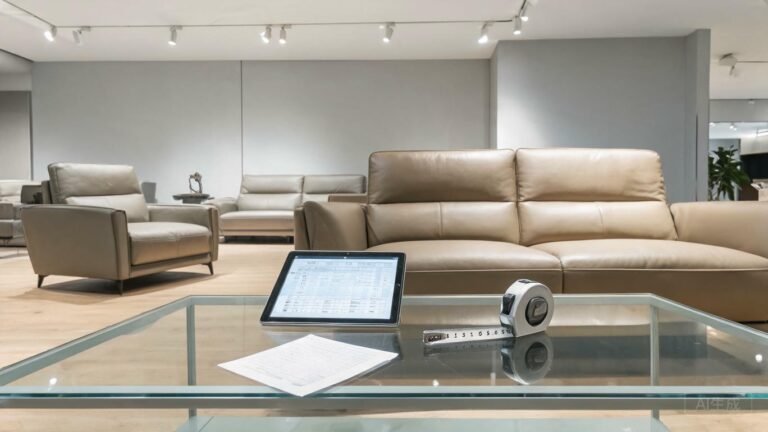
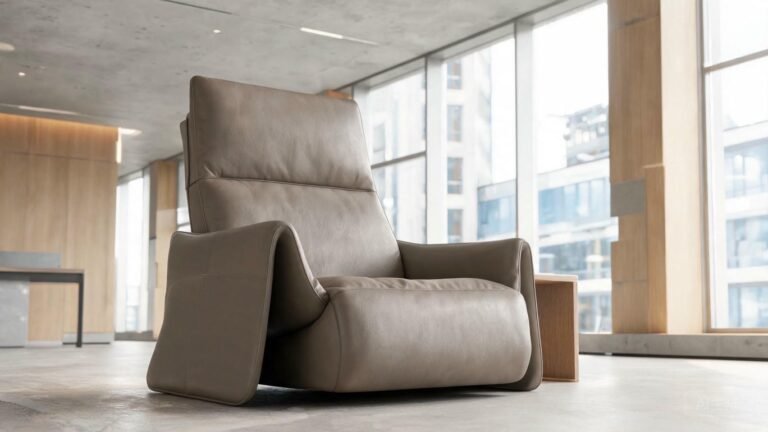
You’re shopping for a sofa. One says “100% genuine leather” and costs $1,500. Another says “full-grain leather” and costs $3,500. You figure the genuine leather one is a great deal — real leather at half the price. Two years later, the seat cushions are peeling, the armrests are flaking, and you’re wondering how “genuine leather” fell apart so fast.
Here’s the truth about genuine leather that most furniture retailers won’t tell you: “genuine leather” is not a grade — it’s a legal technicality. It means the product contains some real leather somewhere. That’s it. It doesn’t mean high quality. It doesn’t mean it will last. And in many cases, “genuine leather” furniture is 80% plastic with a thin layer of low-grade leather on top, or even just leather dust mixed with polyurethane binder.
This article breaks down the leather grading system, explains what “genuine leather” actually means (and doesn’t mean), compares the six main leather quality levels, and gives you a framework for evaluating whether that “leather” furniture, bag, or car interior is actually what you think it is.
See Material Comparison Samples
The Leather Grading System: From Best to Worst
To understand the “genuine leather” problem, you first need to understand how leather is graded. A single cowhide produces multiple layers of leather, and the layer determines the quality, durability, and price. Here’s the hierarchy, from best to worst:
| Grade | What It Is | Durability | Typical Uses |
|---|---|---|---|
| Full-Grain Leather | The topmost layer of the hide, complete with natural grain and pores. No sanding or correction. | 20–50+ years — develops patina | Luxury furniture, premium bags, high-end footwear |
| Top-Grain Leather | Same layer as full-grain, but the surface is sanded/corrected to remove imperfections, then a finish is applied. | 10–20 years | Mid-to-high-end furniture, auto interiors, quality bags |
| Genuine Leather (Split-Hide) | The lower layer (split) of the hide — the fibrous part left after the top grain is sliced off. Coated with PU to look like grain. | 3–7 years — coating peels | Budget furniture, belts, wallets, mass-market goods |
| Suede / Nubuck | Split leather with the fibrous side sanded to create a soft, napped texture. | 3–10 years — stains easily | Jackets, gloves, shoes, decorative items |
| Bonded Leather | Leather dust and fibers (10–20%) mixed with PU binder (80–90%), bonded to a fabric or paper backing. | 1–3 years — guaranteed to peel | Cheap furniture, book bindings, low-end accessories |
| PU / PVC Faux Leather | Plastic coating on fabric backing. Contains zero animal leather. | 2–5 years — cracks/peels | Budget furniture, auto base trims, fashion accessories |
Now here’s the trick: every single grade from full-grain down to split-hide can legally be called “genuine leather.” The term doesn’t tell you which grade you’re getting — it just tells you you’re not getting bonded leather or pure synthetic. In practice, though, if a product is made from full-grain or top-grain leather, the manufacturer will usually say so explicitly. Those are premium selling points. If the label only says “genuine leather” without specifying the grade, it’s almost certainly split-hide — the lowest tier of actual leather.

Leather texture comparison — different leather grades have distinctly different surface patterns and quality levels
Let’s be honest: “Genuine leather” is the leather industry’s equivalent of “made with real fruit juice.” Technically, it’s true — there is some real leather in there. But it creates the impression of a quality product that it rarely delivers. If you’re paying a premium for “genuine leather” furniture, you’re probably overpaying for what is essentially a low-grade hide with a plastic coating.
Why Most “Genuine Leather” Furniture Peels in 2–3 Years
The peeling problem with “genuine leather” furniture comes down to how split-hide leather is made. The split layer of the hide is fibrous and porous — it doesn’t have a natural grain surface. To make it look like leather, manufacturers apply a heavy polyurethane coating and emboss a grain pattern into it.
That PU coating is what you see and feel. The actual leather split is underneath, providing structural support but not much else. And here’s the problem: the PU coating and the leather split are two different materials with different thermal expansion rates and flex properties. Every time you sit on the sofa, the surface flexes. Every time the temperature changes, the two layers expand and contract at different rates. Over thousands of cycles, the bond between the PU coating and the leather split weakens.
The peeling always starts in the same places:
- Seat cushions — the highest flex area, plus body heat and sweat accelerate coating breakdown
- Armrests — constant contact with skin oils and frequent pressure
- Seat bolsters — shear force from sitting down and standing up
- Headrests — hair oils, skin contact, and UV from windows

Peeling leather sofa — the PU coating delaminating from the leather substrate is the #1 failure mode of “genuine leather” furniture
Once peeling starts, there’s no way to stop it. You can’t re-glue the coating. You can’t touch it up with dye (the dye would just flake off with the coating). Your only options are to live with it, reupholster, or buy new furniture. And that’s how a “$1,500 genuine leather sofa” ends up costing you $3,000+ in replacements over 10 years.
How to Tell What Grade of Leather You’re Actually Getting
Don’t trust the label. Here are five practical ways to assess leather quality when you’re evaluating furniture, accessories, or sourcing materials for a B2B project:
1. Check the grain pattern. Real full-grain and top-grain leather has an irregular, natural grain pattern — no two sections look exactly the same. If the grain pattern is perfectly uniform or repeats in a noticeable pattern, that’s an embossed PU coating on split-hide or bonded leather. This is the fastest visual test.
2. Look at the edges. If you can see a cut edge of the material, look at the cross-section. Full-grain and top-grain leather will show a consistent fibrous structure from top to bottom. Split-hide with a PU coating will show a distinct top layer (the coating) that’s different from the fibrous leather below. Bonded leather will look like compressed fibers with a plastic film on top.

Leather surface closeup — natural grain has irregular pores and texture; embossed PU coatings have uniform, repeating patterns
3. Smell it. Full-grain and top-grain leather has a rich, earthy, natural smell. Split-hide and bonded leather smell more like chemicals or plastic — because of the PU coating. Faux leather (PU/PVC) has a distinctly plastic or vinyl smell. This test works better in person than online, obviously.
4. Ask specific questions. Don’t ask “is this real leather?” — the answer will be yes for anything above bonded leather. Ask “what grade of leather is this? Full-grain, top-grain, or split-hide?” If the salesperson can’t answer or deflects, that’s a red flag. For B2B sourcing, always get a written material specification with the leather grade, thickness, and tanning method.
5. Check the warranty. Full-grain leather furniture often comes with a 10+ year warranty on the leather itself. Top-grain usually has a 5–10 year warranty. “Genuine leather” (split-hide) typically has a 1–3 year warranty, and bonded leather sometimes has no warranty at all, or a very short one. The warranty length tells you more about the actual quality than the label does.
Material comparison — see how silicone leather stacks up against genuine leather, PU, and PVC on durability and value
The Real Value Proposition: What to Buy Instead
If you want leather furniture that lasts, you have basically three options — and “genuine leather” (split-hide) is not one of them. Here’s where the value actually is:

Premium leather sample — quality materials flex and fold without cracking, and maintain their appearance for years
Option 1: Top-grain leather (if you want real leather). If you want the real thing, skip “genuine leather” and go straight to top-grain. It’s more expensive upfront — usually 2–3x the price of split-hide — but it lasts 2–3x longer. Top-grain leather furniture can easily last 10–20 years with proper care. It develops patina rather than peeling. The surface is corrected (sanded and re-finished), so it’s more uniform and easier to clean than full-grain, while still being genuine high-quality leather.
Option 2: Silicone leather (if you want durability without the maintenance). Silicone leather isn’t real leather — but it outlasts most genuine leather grades in commercial applications, and it requires zero maintenance (no conditioning, no special cleaners, no worry about spills). With 200,000+ Martindale abrasion cycles, 1,000+ hours UV resistance, and a 10+ year service life, it’s comparable to top-grain leather on durability while being more stain-resistant, more color-consistent, and vegan. For high-traffic commercial spaces — restaurants, hotels, offices, healthcare — it’s often the better total-cost-of-ownership choice, even compared to genuine top-grain leather.
Option 3: High-quality PU leather (if budget is tight). If you can’t afford top-grain leather or silicone leather, a good automotive-grade PU leather will actually outlast “genuine leather” (split-hide) in many cases. PU leather doesn’t have the coating-on-leather delamination problem that split-hide does — it’s a consistent material throughout the coating layer. Budget PU will still peel in 2–3 years, but mid-grade PU can last 5–7 years, which is better than the 3–5 years you get from most split-hide “genuine leather.” And PU is usually cheaper.
Frequently Asked Questions
Is bonded leather considered genuine leather?
Technically no — most regulatory standards (including the US FTC Leather Guides) require that a product be made from actual hide to be called leather. Bonded leather, which is only 10–20% leather fibers mixed with 80–90% PU binder, should be labeled as “bonded leather” with the leather content disclosed. However, enforcement is inconsistent, and some manufacturers use terms like “leather match” or “leather blend” to blur the line. If you’re unsure whether a product is bonded or genuine hide, ask for the leather content percentage and the construction method. Anything below 50% leather content is essentially a synthetic product with leather dust in it.
Does genuine leather furniture need conditioning?
It depends on the grade. Full-grain and top-grain leather benefit from conditioning every 3–6 months to replenish natural oils and prevent drying and cracking. However, “genuine leather” (split-hide with PU coating) shouldn’t be conditioned with leather conditioner — the conditioner can actually break down the PU coating and accelerate peeling. Split-hide furniture just needs occasional cleaning with a damp cloth and mild soap. The confusion about conditioning is another problem with the “genuine leather” label — people treat all “genuine leather” the same way, but different grades require completely different care.
See Through the “Genuine Leather” Marketing
“Genuine leather” sounds like a guarantee of quality. In reality, it’s more like a warning label — a sign that the manufacturer is using the lowest grade of actual leather and relying on the positive connotations of the word “genuine” to make it sound better than it is.
The good news is that you have better options. If you want real leather that lasts, spend the extra money for top-grain or full-grain — you’ll get 2–3x the lifespan. If you want durability and low maintenance without the leather price tag or leather upkeep, silicone leather delivers 10+ years of service with zero conditioning. And if budget is your primary concern, good PU leather will often outperform “genuine leather” at a lower cost.
The key is to look past the label and evaluate what you’re actually getting. What grade? What construction? What warranty? What’s the expected service life? Answer those questions, and you’ll never be fooled by “genuine leather” marketing again.
About TOPSUN
TOPSUN produces high-performance silicone leather as a durable alternative to genuine leather and PU for furniture, automotive, and commercial applications — delivering 10+ year service life with zero maintenance required.
200,000+ Martindale abrasion cycles, stain-resistant surface, consistent color matching (Delta E ≤ 1.0), zero VOC, no conditioning needed, 500m MOQ with custom colors and textures available.