I’ve inspected 200+ synthetic leather sheet shipments in my career. The quality returns that cross my desk share one thing: the original PO specified thickness, width, and color — and nothing else. No coating adhesion spec. No batch tolerance. No flex resistance requirement. When the shipment arrives with edge waviness, coating blisters, or a 0.3mm thickness variance across the roll, there’s no contractual basis for rejection.
A synthetic leather sheet is not a commodity — it’s an engineered composite material with 8+ independent performance variables. Getting the thickness right is the easy part. The quality returns come from the specs you didn’t write. I’ve built this checklist from 15 years of inspection reports, and every line on it exists because a shipment failed it.
If you’re sourcing synthetic leather sheet material for production, the technical data sheet is your starting point — but it’s not your PO spec. Here’s what to add.
The 8 Specification Lines Most POs Skip on Synthetic Leather Sheet Orders
Standard synthetic leather sheet specifications list thickness (0.6–2.0mm), width (137–150cm), and roll length (30–50m). These three lines cover what the material is. They don’t cover what it does. The following 8 spec lines are the ones I’ve seen omitted from 90% of purchase orders — and each one has caused a quality return.

Coating roller detail — the precision of this equipment determines coating adhesion and surface uniformity across the entire synthetic leather sheet.
1. Thickness tolerance (not just nominal thickness). A PO that says “1.2mm” without a tolerance means the supplier can ship 1.0–1.4mm and be contractually compliant. Specify “1.2mm ±0.05mm” with multi-point measurement (center, both edges, every 5m along the roll). TOPSUN controls to ±0.03mm across the full roll width.
2. Coating adhesion strength. The bond between the surface coating and the base fabric determines whether your synthetic leather sheet delaminates in use. Specify minimum peel strength (ISO 11640 or ASTM D751) — I require ≥15 N/5cm for upholstery applications.
3. Batch color consistency (Delta E). “Black” is not a spec — it’s an aspiration. Specify Delta E tolerance between rolls in the same batch: ≤1.0 for automotive, ≤2.0 for furniture. Without this, you’ll get visible color mismatch when two rolls meet on a sofa or car seat.
Why Thickness Tolerance Matters More Than Thickness on Synthetic Leather Sheets
Thickness variation within a single synthetic leather sheet roll causes production problems that cost more than the material itself. If one end of the roll is 1.4mm and the other is 1.0mm, your die-cutting machine produces inconsistent parts, your stitching tolerance shifts, and the finished product has visible thickness steps at seam joints.
The industry standard for synthetic leather sheet thickness is measured at multiple points: center, left edge (10cm from edge), right edge (10cm from edge), at 5m intervals along the length. The tolerance band across all measurement points should not exceed ±0.08mm for commercial-grade material. TOPSUN’s silicone leather sheets hold ±0.03mm — tighter than most PU leather manufacturers because the silicone coating process is more thermally stable than solvent-based PU coating.

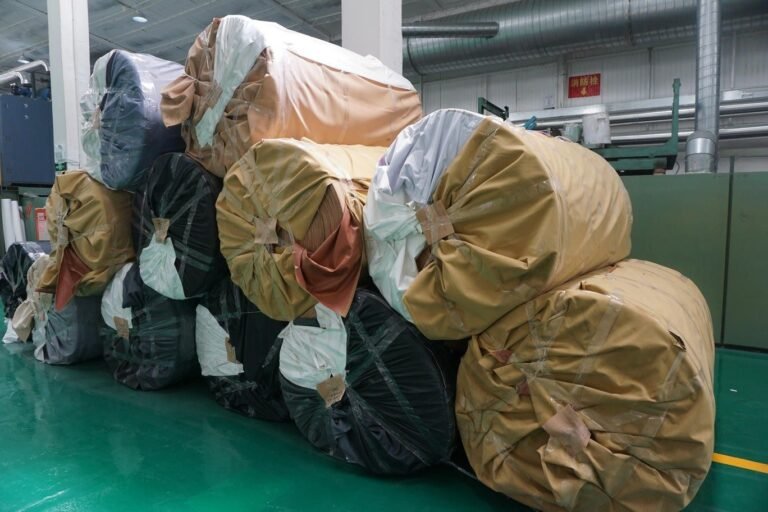
Batch-to-batch consistency across rolls — color, thickness, and surface texture must match within specified tolerances.
Thickness also affects weight calculation. A synthetic leather sheet at 1.2mm nominal thickness typically weighs 350–450 g/m². If the actual thickness runs 1.4mm, you’re paying for 15% more material by weight than you priced — and your freight cost increases proportionally. Specify thickness and weight tolerance together to prevent this.
Coating Adhesion: The Hidden Failure Point in Synthetic Leather Sheets
Coating adhesion is the spec line that causes the most expensive quality returns — because it doesn’t show up in the incoming inspection. A synthetic leather sheet can pass every visual check at delivery and still delaminate 6 months later when exposed to humidity, UV, or flex stress.

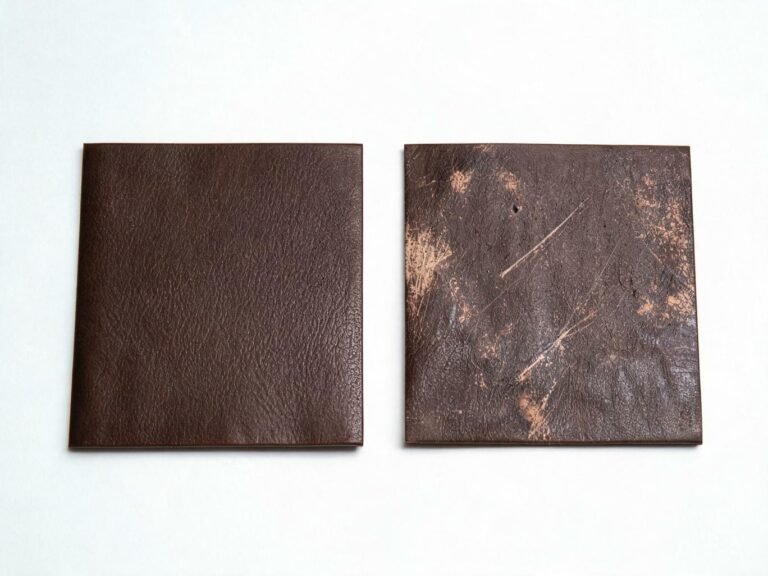
Cross-section comparison — the coating-to-substrate bond is where synthetic leather sheets fail. Silicone forms a chemical bond, not a mechanical one.
PU and PVC synthetic leather sheets use solvent-based coating processes where the liquid coating is applied to the base fabric and then cured. The adhesion depends on mechanical keying — the coating physically grips the fabric surface. When the plasticizer migrates, the coating loses flexibility, the mechanical bond fails, and the coating lifts.
Silicone leather uses a different mechanism. The liquid silicone polymer penetrates the fabric structure and cross-links in situ, creating a chemical bond at the molecular level. There’s no separate “coating layer” to peel — the silicone and fabric become one material. This is why silicone leather vs PU comparison testing shows zero delamination even after 100,000+ flex cycles.
The Full Spec Sheet: What to Include on Every Synthetic Leather Sheet PO
Here’s the complete specification table I require on every synthetic leather sheet purchase order. Print this, add it to your PO template, and stop accepting shipments that fail inspection without contractual recourse.
| Spec Line | What Most POs Say | What Should Be There | Test Standard | TOPSUN Spec |
|---|---|---|---|---|
| Thickness | “1.2mm” | 1.2mm ±0.05mm, multi-point | ISO 2286-3 | ±0.03mm |
| Width | “137cm” | 137cm +2/-0cm | ISO 2286-2 | 1350–1800mm |
| Coating Adhesion | Not specified | ≥15 N/5cm peel | ISO 11640 / ASTM D751 | Chemical bond — no peel |
| Color Consistency | “Black” | Delta E ≤1.0 (automotive) | ISO 105-J03 | Delta E ≤1.0 |
| Abrasion | Not specified | ≥50,000 cycles (commercial) | ISO 12947-2 (Martindale) | ≥200,000 cycles |
| Flex Resistance | Not specified | ≥25,000 cycles | ASTM D2097 (Bally) | 50,000–100,000 cycles |
| Surface Defects | Not specified | No holes, blisters, cracks, stains per 5m² | Visual ISO 3750 | Zero critical defects/roll |
| Batch Tolerance | Not specified | Same batch: thickness ±0.05mm, Delta E ≤1.5 | Per batch QA report | Full batch QA report with every shipment |
Specifications listed for commercial upholstery grade. Automotive and medical grades require additional spec lines for UV resistance, flame retardancy, and biocompatibility.
How TOPSUN Silicone Leather Sheets Eliminate Coating Defects
Silicone leather sheets from TOPSUN eliminate three of the eight failure modes above entirely: coating adhesion (chemical bond, no separate layer), surface defects (no solvent evaporation = no blisters), and batch color consistency (silicone pigment is thermally stable, doesn’t migrate). The remaining five specs are controlled through multi-point thickness measurement, spectrophotometer color verification, and Martindale/flex testing on every production batch.

Color palette swatches — each batch is verified against the master standard with spectrophotometer measurement before release.
The key difference is the coating process. PU and PVC synthetic leather sheets use solvent-based coating — the solvent evaporates during curing, which can cause surface blisters, thickness variation, and residual VOCs. TOPSUN uses a solvent-free silicone coating process where the polymer cross-links without evaporation, producing a more uniform surface and zero VOC emissions.
TOPSUN’s factory quality control process — multi-point thickness measurement, spectrophotometer color verification, and surface defect inspection on every synthetic leather sheet batch.
Every TOPSUN synthetic leather sheet shipment includes a batch QA report documenting thickness measurements, color Delta E values, Martindale test results, and surface defect count. You can request the full classic collection product sheets or contact the team for application-specific spec sheets.
About TOPSUN
TOPSUN manufactures synthetic leather sheets and rolls for B2B buyers who need full specification control from 0.23–2.0mm thickness, 1350–1800mm width, and 200,000+ Martindale cycles across automotive, furniture, and fashion applications.
Every shipment includes a batch QA report with multi-point thickness data, spectrophotometer color verification, Martindale abrasion results, and surface defect inspection log. Solvent-free silicone coating — zero VOC, zero blister risk, zero coating delamination. Free A4 swatches shipped worldwide.
Synthetic Leather Sheet: Frequently Asked Questions
What thickness should I specify for a synthetic leather sheet order?
For upholstery applications (furniture, automotive seating), specify 1.0–1.3mm nominal thickness with a tolerance of ±0.05mm. For small leather goods and card holders, 0.4–0.8mm is standard. For rigid substrate applications (wall panels, dashboard trim), 1.5–2.0mm provides structural rigidity. Always specify the tolerance, not just the nominal — without it, a supplier can ship material 15% thicker or thinner than expected and still be contractually compliant.
How do I check batch color consistency in synthetic leather sheets?
Specify Delta E tolerance in your PO: ≤1.0 for automotive (where adjacent panels are visible simultaneously), ≤2.0 for furniture. At incoming inspection, use a spectrophotometer to measure color at 5 points across each roll and compare to the master standard. If you don’t have a spectrophotometer, request the supplier’s QA report with Delta E values per roll — and physically compare cut swatches from each roll under D65 daylight lighting. Reject any roll where the color difference is visible to the naked eye (typically Delta E >3.0).
Stop accepting synthetic leather sheets without specs.