The global wireless earbuds market shipped over 300 million units in 2025, creating a parallel market for premium earbud case leather covers that B2B accessory manufacturers are racing to supply. Unlike furniture or automotive leather, earbud case leather operates at a completely different scale: the entire material surface area is smaller than a credit card, the thickness must be 0.4–0.8mm, and every edge, corner, and cutout must be die-cut with sub-millimeter precision. A material that works perfectly on a sofa can fail completely on an AirPods case — because at micro scale, different properties matter. This guide covers the six specifications that determine whether your earbud case leather delivers premium feel or cheap wrapping.
Spec 1: Thickness — The Ultra-Thin Window
An earbud case is a small, rigid shell — typically 60–70mm in length and 25–30mm in height. The leather cover must wrap this shell without adding bulk, which means the material thickness must fall in a narrow window: 0.4–0.8mm. Thicker than 0.8mm and the cover becomes too stiff to conform around tight corners and the hinge area. Thinner than 0.4mm and the material lacks structural integrity — it wrinkles, tears at the die-cut edges, and does not provide the premium tactile feel that consumers expect.
Standard PU leather for furniture is 0.8–2.0mm — too thick for earbud cases. Microfiber leather can be produced at 0.4–0.6mm but becomes structurally weak at that gauge. Silicone leather’s Ultra Thin Collection spans 0.23–0.8mm, making it one of the few materials that can be specified at the exact thickness earbud cases require without sacrificing structural integrity. For our thin-gauge capabilities, see the Ultra Thin Collection.

Thin-gauge coating line — producing leather at 0.23–0.8mm requires precision-controlled coating weight and base fabric selection.
Spec 2: Grip Quality — The Drop Test Variable
Earbud cases are small, smooth, and carried in pockets and bags where they are constantly pulled out and set down. The surface material must provide sufficient friction coefficient to prevent the case from slipping from the user’s fingers. This is not an abstract concern — it is a drop test variable that affects warranty return rates.
| Material | Thickness | Grip Quality | Scratch Resistance | Die-Cut Edge |
|---|---|---|---|---|
| Silicone leather | 0.4–0.8mm | Excellent | High | Clean, no fraying |
| PU leather | 0.6–1.0mm | Moderate | Low–Moderate | May fray |
| Microfiber leather | 0.4–0.6mm | Moderate | Moderate | Clean |
| TPU film | 0.2–0.3mm | Moderate | Low (self-healing) | Very clean |
| Hard plastic | 1.0–2.0mm | Poor (slippery) | High (visible) | Molded |
Silicone leather provides excellent grip because its surface has a naturally higher friction coefficient than PU or hard plastic. The silicone polymer’s molecular structure creates a slight “tack” that is not sticky but provides a secure feel in the hand. For more on 3C electronics material comparison, see our earbuds case cover material guide.
Silicone leather is the only material that delivers all five properties simultaneously at earbud-case scale: thin enough to conform (0.4–0.8mm), grippy enough to prevent drops, scratch-resistant enough for pocket carry, clean die-cut edges, and premium tactile feel. PU compromises on grip and scratch resistance. TPU is too thin and lacks structure. Plastic is slippery and shows scratches.
Spec 3: Die-Cut Precision — Edges That Don’t Fray
Earbud case leather covers are die-cut from flat sheets using steel rule dies or laser cutting. The cut edge is visible on the finished product — it runs along the hinge gap, the charging port cutout, and the bottom seam. If the material frays or delaminates at the cut edge, the product looks cheap and the edge catches on pocket lining, accelerating wear.
PU leather at thin gauges (0.4–0.6mm) has a tendency to delaminate at die-cut edges — the polyurethane coating separates from the fabric backing, creating a fuzzy, frayed edge. Silicone leather’s integrated coating structure does not delaminate because the silicone is bonded to the substrate at the molecular level during the thermal curing process. The die-cut edge is clean, sharp, and permanent — no fraying, no delamination, no edge treatment required.
Specs 4–6: Scratch Resistance, Color, and Cleanability
Scratch resistance (Spec 4). Earbud cases live in pockets alongside keys, coins, and phones. The leather surface must resist scratching without showing visible damage. PU leather scratches easily — the soft polyurethane coating shows fingernail marks and key scuffs. Silicone leather’s harder surface (verified by ASTM D3363 pencil hardness testing) resists scratches from everyday pocket contents. For more on silicone leather’s 3C applications, see our 3C electronics guide.
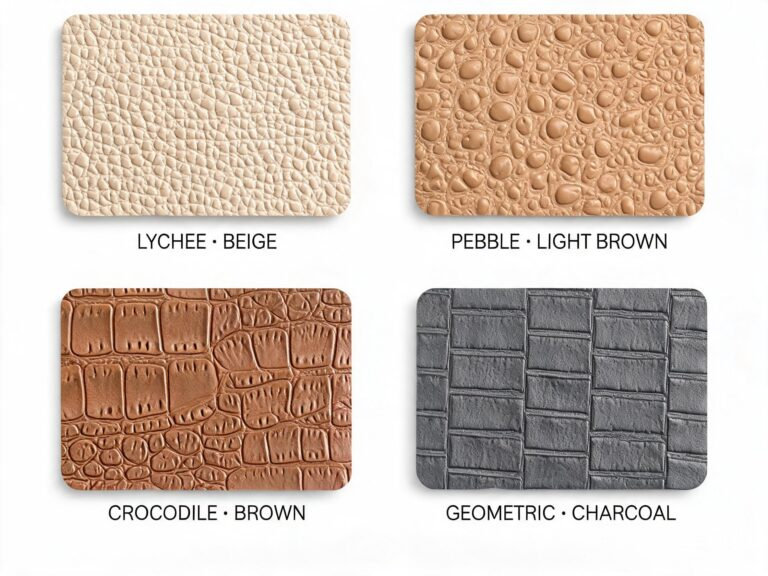
Color and branding (Spec 5). Earbud case covers are brand products — the color, texture, and debossed logo are part of the brand identity. Silicone leather offers Pantone TPG matching with Delta E ≤ 1.0 accuracy, custom embossing for brand logos, and metallic/pearlescent finishes for premium positioning. The color stability of silicone polymer means the brand color will not fade or yellow over the product’s life — even with daily pocket carry and UV exposure from sunlight.

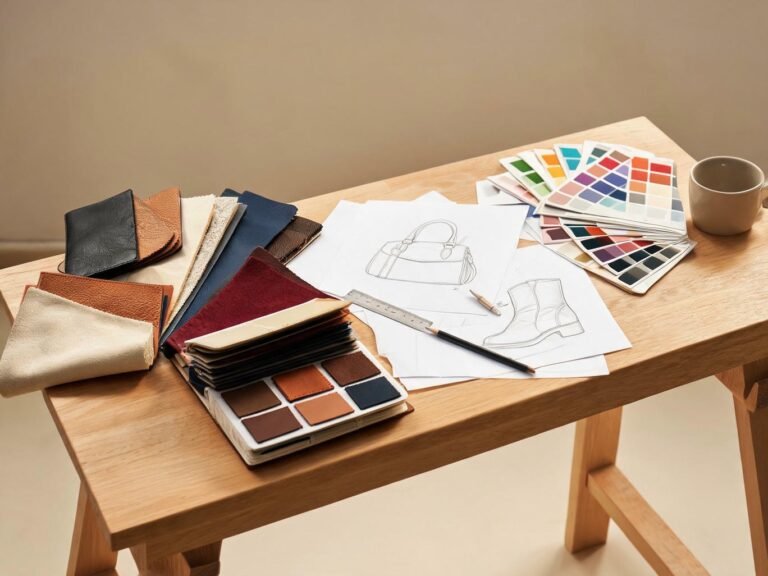
3C electronics leather — earbud case covers demand thin gauge, precision die-cutting, and brand-specific color matching at micro scale.
Cleanability (Spec 6). Earbud cases are handled daily and exposed to skin oils, pocket lint, and environmental dirt. PU leather absorbs skin oils over time, causing a darkened, greasy appearance at contact points. Silicone leather’s non-porous surface repels oils and can be wiped clean with alcohol — no degradation, no discoloration, no conditioning required. For broader 3C applications, see our 3C accessories page.
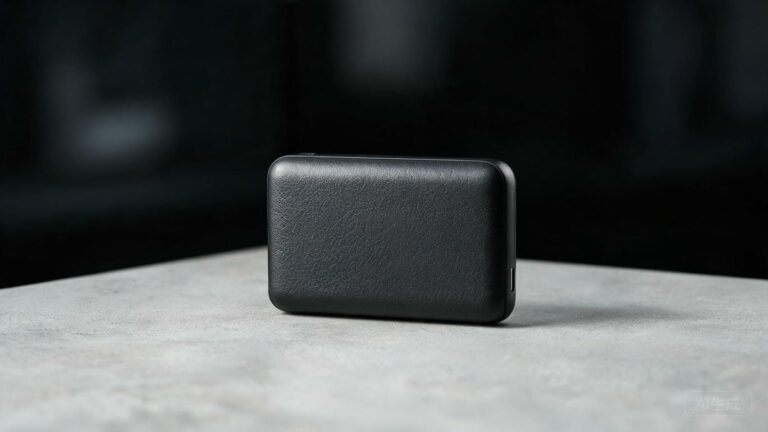
3C electronics overview — silicone leather at 0.23–0.8mm for earbud cases, phone cases, and wearable accessories with precision die-cutting and brand color matching.
Frequently Asked Questions
What MOQ should I expect for custom earbud case leather?
TOPSUN’s standard MOQ is 500 meters. At 0.6mm thickness and 1350mm width, 500 meters of silicone leather yields approximately 8,000–10,000 earbud case covers (depending on the case dimensions and nesting efficiency of the die-cut pattern). For a custom color matched to your Pantone reference, the lab formulation process adds 3–5 days to the lead time. Custom embossing rollers for brand-specific texture patterns take 7–10 days. Standard formulations are available in 7–15 days.
Can silicone leather be die-cut with the precision needed for earbud case cutouts?
Yes — silicone leather die-cuts cleanly with steel rule dies, rotary dies, and laser cutting. The material does not delaminate at cut edges, does not require edge sealing, and maintains dimensional stability after cutting (no shrinkage or warping). Tolerances of ±0.2mm are achievable with steel rule dies; ±0.1mm with laser cutting. The charging port cutout, hinge gap, and LED indicator window can all be precision-cut in a single die strike. For die-cut tolerance specifications, see our die-cut tolerance guide.
Small Scale, Big Specifications
Earbud case leather is a precision material application where every specification is magnified by the small surface area. A scratch that would be invisible on a sofa is the first thing a consumer sees on a 60mm earbud case. A color mismatch that would blend into a car interior is immediately obvious on a product that sits next to branded packaging. A frayed edge that would be hidden under a seat cushion is the primary visual detail on a pocket accessory. Silicone leather’s Ultra Thin Collection — at 0.23–0.8mm thickness, with clean die-cut edges, Pantone-accurate color, excellent grip, and non-porous cleanability — is the material platform that meets every micro-scale specification that earbud case covers demand. In a product category where millimeters matter, the material specification does too.
About TOPSUN
TOPSUN manufactures earbud case leather in its Ultra Thin Collection — providing silicone-coated material at 0.23–0.8mm thickness with precision die-cut compatibility, Pantone-matched brand colors, and the grip, scratch resistance, and cleanability that micro-form-factor consumer electronics demand.
With ASTM D3363 verified pencil hardness, Delta E ≤ 1.0 color accuracy, non-porous oil-repellent surface, and clean die-cut edges that do not fray or delaminate, our silicone leather is engineered for the precision scale of earbud case covers and 3C accessories — where every millimeter of material specification is visible to the consumer.